Lighting Repair in Fort Pierce
Lighting repair in Fort Pierce fixes flickering fixtures, dead lights, faulty dimmers and worn switches across homes from Downtown to Hutchinson Island, ZIPs 34950 and 34949, near the Sunrise Theatre and Jetty Park, with same-day visits for your home and business, 24/7.
Most lighting faults in Fort Pierce are a failed driver, a worn dimmer, a loose connection, or a corroded outdoor fitting — not the bulb. A lighting repair visit finds the cause at the fixture, the switch, or the panel, fixes it to code, and tests the full circuit before leaving.
What lighting repair covers in Fort Pierce
Lighting repair covers every fixed light in the home: ceiling fixtures, recessed cans, chandeliers, under-cabinet lights, wall sconces, bathroom vanity lights, outdoor and landscape fixtures, security lights, and the switches and dimmers that control them. When a light misbehaves, the fault can sit in the bulb, the fixture, the switch, the wiring, or the breaker — and each one is fixed differently. Our lighting installation team traces the fault to its source instead of swapping parts and hoping.
A repair visit starts with the symptom, not the fixture. A light that flickers when the air conditioner starts points to a different cause than a light that will not turn on at all, and a buzzing dimmer points to another cause again. The visit tests voltage at the fixture, checks the switch and the connections in the box, and looks at the panel when more than one light is affected. That is how a lighting repair in Fort Pierce stays a single visit instead of a second call.
Signs your lights need repair, not a new bulb
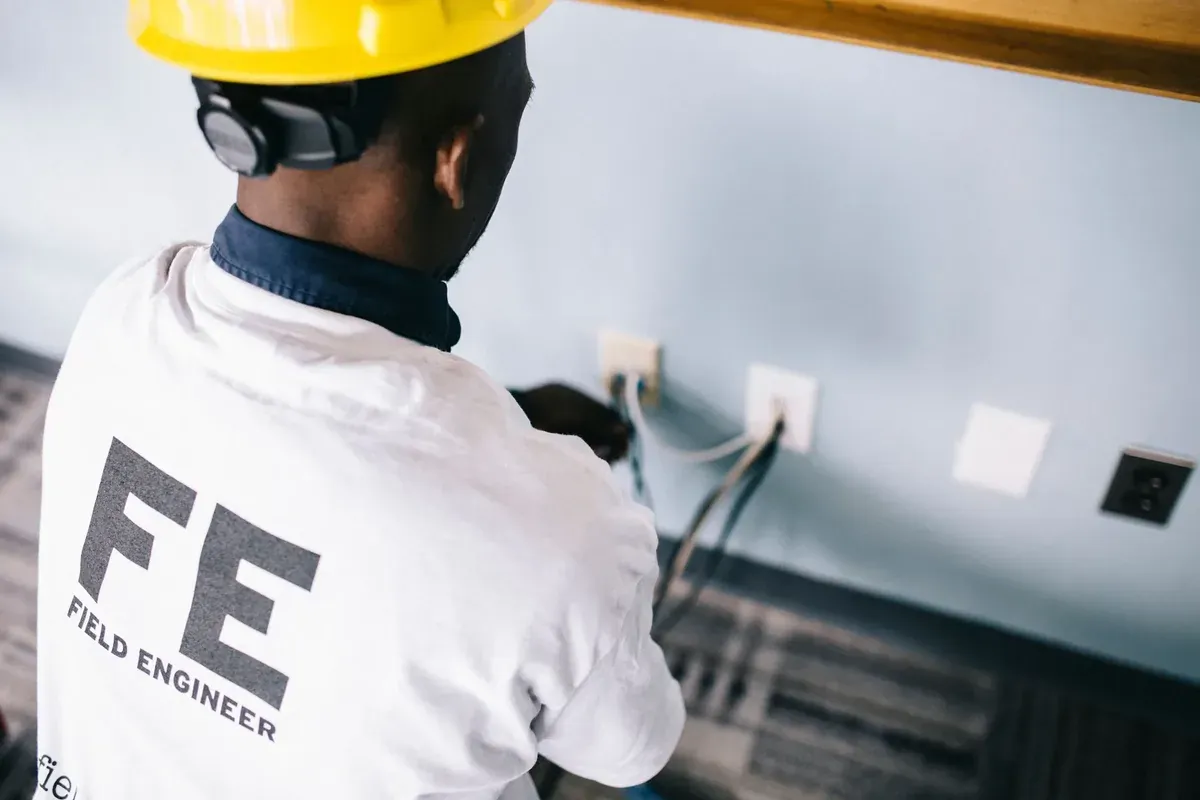
A new bulb fixes a burned-out bulb. It does not fix a light that flickers after the bulb is changed, a fixture that works only when the switch is held, a dimmer that buzzes, a switch plate that feels warm, or a breaker that trips when the lights come on. Those are circuit faults, and they stay until the connection, the switch, or the fixture is repaired. If the same light has eaten three bulbs in a few months, the bulb was never the problem.
Call the same day when a switch plate is hot or discoloured, when you smell something hot near a fixture or switch, or when a light sparks. Those are the signs of a loose or arcing connection, and the circuit should stay off until it is checked. Our electrical repair team treats those calls as urgent, and the emergency electrician is available around the clock when a lighting fault is a safety risk.
Ready to talk?
Flickering, buzzing, and dead fixtures: what each symptom means
Flicker that follows a new LED bulb usually means the bulb and the dimmer do not match. The LED flicker and dimmer guide explains the pairing checks, and a repair visit fits a dimmer rated for LEDs when the pairing is the cause. Flicker that affects every light in the house, or that follows a tap on the switch plate, points instead to a loose connection — and that is the cause to rule out first, because a loose connection can heat up.
A buzz from a dimmer or a fixture usually comes from the dimmer chopping the power or a driver vibrating inside the bulb, and it settles when the right dimmer is fitted. A buzz that comes with a warm plate or a smell is different, and it means the circuit should be switched off. A fixture that is dead while the breaker is on usually has a failed driver, a failed socket, or an open connection in the box — the visit tests each point in order and replaces only the part that failed.
Repair or replace: how we decide on a light fixture
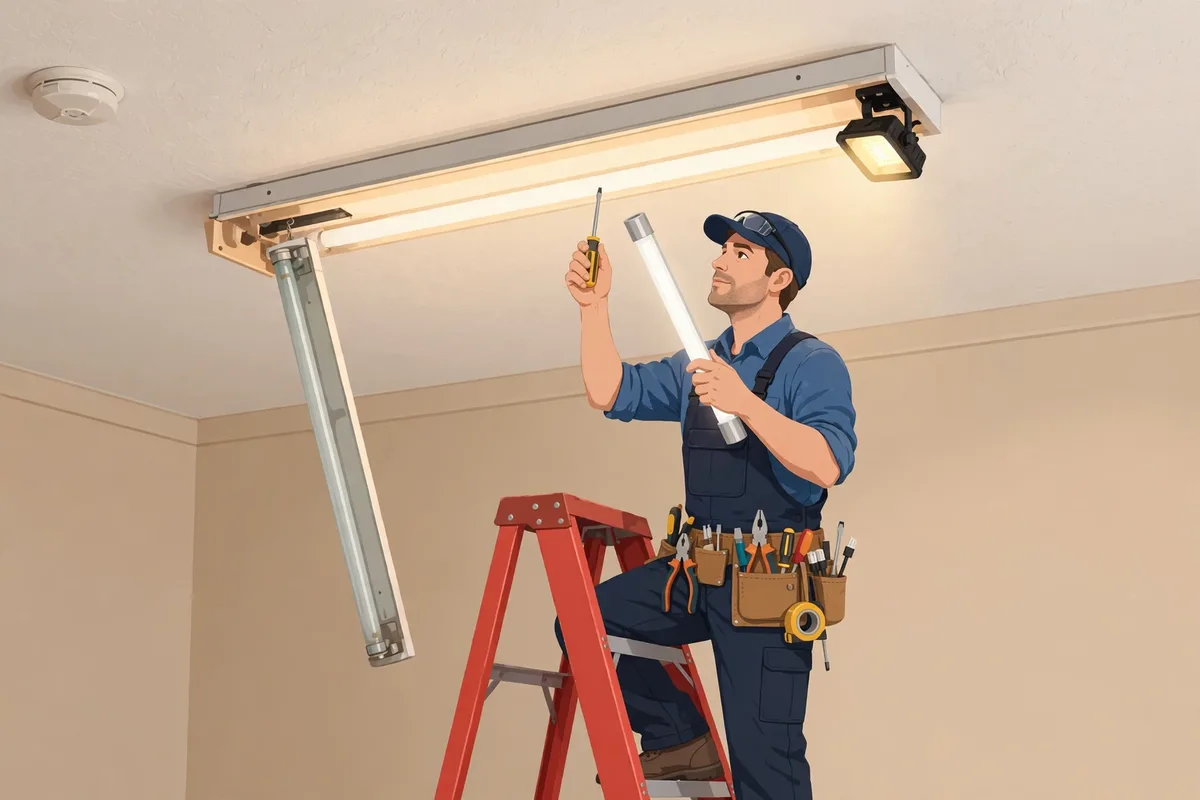
A fixture is repaired when the fault is in a replaceable part — a driver, a socket, a switch, a ballast, or a connection — and the fixture itself is sound. A fixture is replaced when the housing is cracked or corroded, when parts are no longer made for it, or when the repair would cost more than a new fixture that carries a warranty. The visit explains the choice before any work starts, and the exact price is confirmed on the call, so there is no surprise at the end.
Chandeliers and heavy fixtures get an extra check: the box that carries them. Our chandelier and under-cabinet guide explains why a heavy fixture needs a fan-rated or fixture-rated box, and a repair visit checks that the box is rated for the weight before the fixture goes back up. Recessed lights get the same treatment — a can that has overheated or a trim that no longer sits flush is usually a heat or fitting problem, not a bulb problem.
Dimmer switch and LED driver faults
Most dimmer faults in Fort Pierce come from a dimmer built for incandescent bulbs driving LEDs. The dimmer chops the power to dim, the LED driver cannot smooth that signal at a low load, and the result is flicker, buzz, or a light that drops out at low settings. The fix is a dimmer rated for LEDs and a total load above the dimmer's minimum — and the dimmer switch guide explains which dimmer types suit which bulbs.
A failed LED driver is the other common fault. The driver turns household power into the low-voltage power the LEDs need, and when it fails the fixture goes dead, dims unevenly, or flickers even on a plain switch. Drivers are replaced as a part, and the visit checks that the replacement driver matches the fixture's voltage and wattage. When a whole set of recessed lights fails together, the fault is usually in the shared driver or the circuit feeding them, not in six bulbs at once.
Ready to talk?
Outdoor and security lighting repair
Outdoor fixtures in Fort Pierce fail differently from indoor ones. Salt air corrodes sockets and connections, rain gets into fittings that were never sealed for it, and photocells and motion sensors fail first. A security light that stays on all day usually has a failed photocell; one that never comes on usually has a failed sensor, a tripped GFCI, or a corroded connection. Our security lighting team checks the sensor, the seal, and the circuit in that order.
Landscape lighting has its own faults: a transformer that has failed, a low-voltage cable nicked by a shovel or a mower, or fixtures that have filled with water. The visit tests the transformer output first, then walks the cable run, because a single nick can take down a whole run of lights. Floodlights and porch lights get the same circuit-first check, and any fitting that has rusted through is replaced with one rated for outdoor use in a coastal climate.
What a lighting repair visit runs, step by step
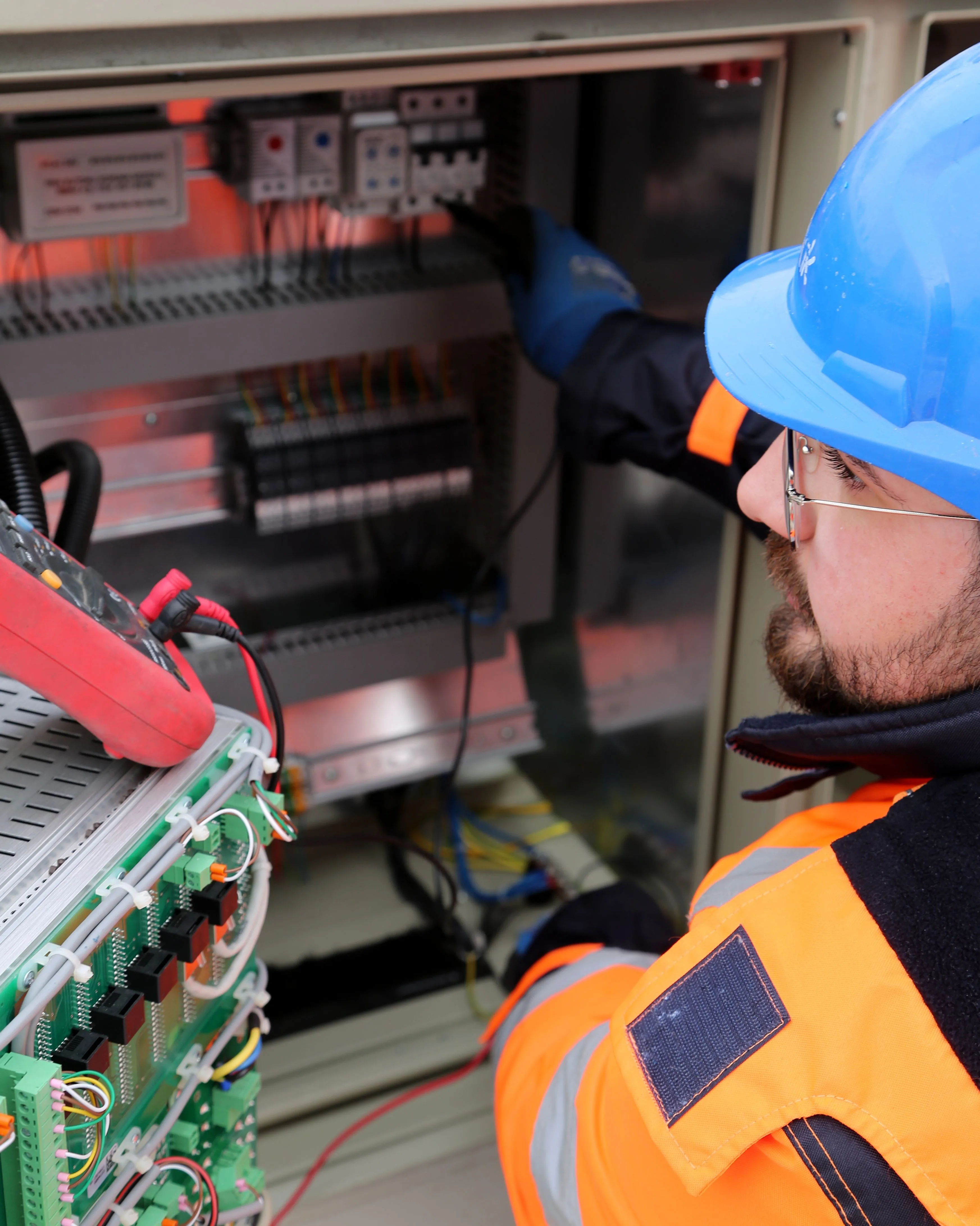
The visit starts with the symptom and the rooms affected, then tests the fixture, the switch, and the breaker in order. The electrician checks voltage at the fixture, opens the switch box to look at the connections, and checks the panel when more than one light is affected. Once the cause is found, the repair is explained, the exact price is confirmed, and the work is done — driver, socket, switch, dimmer, or connection — before the circuit is tested again.
Testing is the part that matters most. A repaired light is switched on and off, dimmed through its full range, and left running while the connections are checked for heat. Outdoor lights are tested after dark when the photocell or sensor can be proved. The visit ends with the circuit tested end to end, and any fixture that cannot be repaired safely is quoted for replacement instead of being left half-fixed.
Fort Pierce notes: salt air, storms, and older ceilings
Homes near the water — Hutchinson Island, South Beach, and the riverfront — see outdoor fixtures corrode faster than inland homes, and the fix is a sealed fitting rated for coastal use rather than the same fitting again. Older homes in Downtown and Lincoln Park often have cloth or early plastic wiring behind the switch, and a lighting repair there includes a check that the connections are sound, because a loose connection in old wiring is the fault that heats up.
After a storm, lighting faults often trace to water in an outdoor fitting or a surge that took out drivers across several fixtures. The storm damage guide explains what to check after a storm, and a lighting repair visit after one starts at the panel and works outward, because a surge can leave more than one fault behind it.
Why call Fort Pierce Electric Pros for lighting repair
Lighting repair is diagnosis first and parts second, and the diagnosis is what keeps the fault from coming back. Our electricians are licensed and insured, with 23 years of experience and Master Electrician Certification, and the visit is available 24/7 with same-day service across Fort Pierce. Call (772) 218-3629 and describe the symptom — which lights, when it started, and what the switch does — and the visit will bring the parts that match it.
Frequently asked questions
How much does lighting repair cost in Fort Pierce?
The price depends on the fault: a switch or dimmer replacement, a driver or socket replacement, and a wiring repair are different jobs, and the exact price is confirmed on the call before any work starts. The visit itself finds the cause first, so you pay for the repair that fixes it rather than a round of part swaps. Call (772) 218-3629 for your exact price.
Can I replace a light fixture myself?
A like-for-like fixture swap on a sound circuit is a job many homeowners do, but it is not a repair when the fault is in the wiring, the switch, or the panel. If the breaker trips, the plate is warm, the fixture sparks, or more than one light is affected, stop and call — those are circuit faults, and working on them without checking the circuit first is how a small fault becomes a bigger one.
Why do my lights flicker after I changed the bulb?
Flicker after a bulb change usually means the new bulb and the dimmer do not match — a non-dimmable bulb, or a dimmer built for incandescent loads driving LEDs. One non-dimmable bulb in a set can make the whole set flicker. If the flicker follows a tap on the switch plate, or the whole house flickers, the cause is more likely a loose connection, and that should be checked the same day.
Why does my security light stay on all day?
A security light that stays on in daylight usually has a failed photocell, which is the sensor that tells the light when it is dark. A light that never comes on usually has a failed motion sensor, a tripped GFCI, or a corroded connection. The visit checks the sensor, the seal, and the circuit in that order, and replaces the part that failed rather than the whole fixture.
Should I repair or replace a chandelier?
Repair it when the fault is in a socket, a wire, or a switch, and the fixture itself is sound. Replace it when the housing is cracked or corroded, when parts are no longer made, or when the repair would cost more than a new fixture with a warranty. The visit also checks the box that carries it — a heavy fixture needs a fan-rated or fixture-rated box, and that check comes before the fixture goes back up.
Do you repair outdoor and landscape lighting?
Yes. Outdoor and landscape lighting repair covers photocells, motion sensors, transformers, low-voltage cable runs, floodlights, porch lights, and fixtures that have corroded or filled with water. The visit tests the transformer first, then walks the cable run, because one nicked cable can take down a whole run of lights. Fixtures that have rusted through are replaced with ones rated for outdoor use in a coastal climate.
Ready to talk?