
Storm-Damaged Service Drop and Mast Fort Pierce
A storm-damaged service drop mast Fort Pierce homeowners find after high wind leaves one question: who repairs it, the utility or an electrician? For homes in ZIPs 34950 and 34947, from Downtown to Fort Pierce South, the answer starts where the line meets the house.
Call Now to Speak to a Specialist
Open 24 hours a day, 7 days a week.
Storm damaged service drop mast Fort Pierce repairs follow one rule: call the utility first. The utility owns the line from the pole and the meter; the mast, weatherhead, and meter base on your house are yours, repaired by your electrician. The utility makes the line safe, the electrician rebuilds your side, and the utility reconnects after inspection.
The parts of your service entrance, and what each one does
The service entrance is the short run of equipment between the utility pole and your panel, and a storm can damage any part of it while the street keeps its power. The service drop is the overhead wire from the pole to your house. The point of attachment is where that wire meets the house. The service mast, also called a riser, is the steel pipe that holds the line up and carries your wires down. The weatherhead is the hooded cap on top of the mast that keeps rain out of it. Below that sit the meter base, which holds the meter, and the service entrance conductors that run down to your panel.
Each part has one job, and storm damage to any one of them can leave the house dark. Wind and falling limbs bend the mast, pull it away from the wall, or tear the drop from the weatherhead. A mast that leans changes the tension on the drop, and a weatherhead that cracks lets rain into the pipe and down toward the meter base. That is why the visit checks the whole run, not just the part that looks broken: a storm damaged service drop mast Fort Pierce homeowners call about is often a mast problem and a weatherhead problem at the same time.
Who owns what: the utility’s side and your side
The general pattern is the same wherever you look: the utility owns the line from the pole to the point where it attaches to your house, and it owns the meter itself. The mast, the weatherhead, the meter base, and the wiring from the weatherhead down to your panel are yours — homeowner equipment, repaired by your electrician. That is the pattern utilities publish for their own territories, and it is the pattern this guide follows. The exact line for your address is confirmed by the serving utility on the call, because Fort Pierce addresses are served by more than one provider and each draws its own line — the serving utility is checked by exact address, not assumed. That is the utility vs electrician Fort Pierce answer in one line: the utility owns the line and the meter, and you own the rest. Who repairs a storm damaged service mast Fort Pierce homeowners find after high wind is the electrician on the house side, once the utility has made the line safe.
The split matters because the utility will not reconnect power to a house whose mast or meter base is damaged. The line crew can make the drop safe and restore the street, but the house side has to be rebuilt first, and only a licensed electrician rebuilds it. If you call the electrician first, the first thing we ask is whether the utility has been told — and if you call the utility first, the first thing they ask is whether the house side is damaged. Both calls happen; the order is what saves time. That rebuild is the service drop repair Fort Pierce homeowners call us for: the mast, the weatherhead, and the meter base, rebuilt and inspected so the utility can reconnect. Our emergency electrician service in Fort Pierce covers storm-damage calls around the clock, and our electrical repair service covers the house-side rebuild.
The repair runs in one order: utility, electrician, inspection, utility
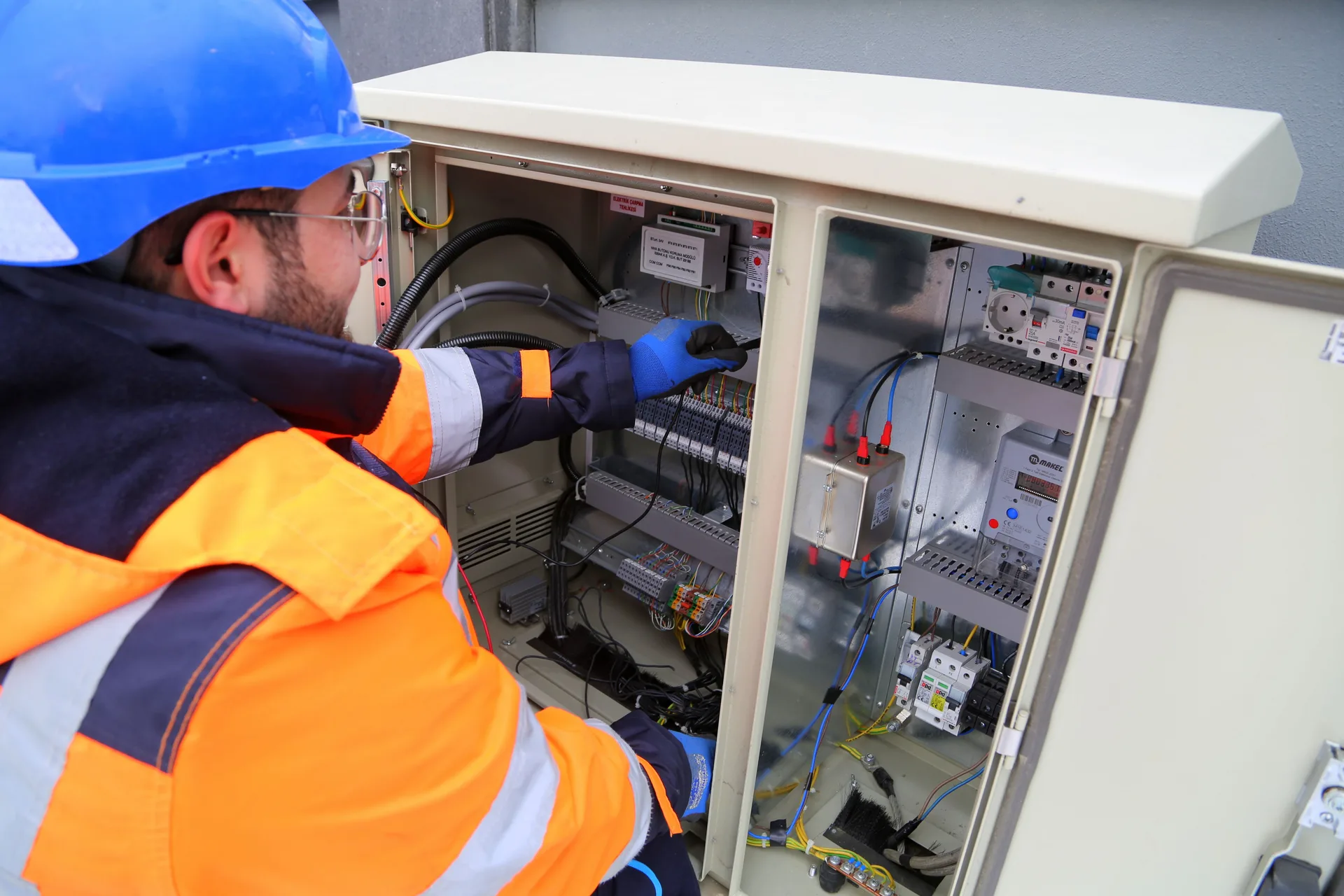
The repair runs in one order, and the order never changes. First, call the utility and report the damage: a downed line, a bent mast, a hanging drop, or an outage. Second, the utility makes it safe — the line is de-energised and the downed wire is removed or secured, so nobody is working near a live conductor. Third, your electrician rebuilds the house side: the mast, the weatherhead, the meter base, and the service entrance conductors, under a permit where one is needed. Fourth, the work is inspected where an inspection is needed. Fifth, the utility reconnects the drop and fits the meter, and the power comes back.
What slows it down after a big storm is the queue, not the job itself. Utility crews work the main lines first, then the individual service drops, so a house with a damaged mast waits behind the streets with no power at all. That is another reason to call early: the electrician’s part of the job can be ready before the utility reaches your street, instead of starting after it. The permit and inspection route is confirmed on the call, because it depends on the job and the exact address — including whether your address falls under the City of Fort Pierce or St. Lucie County. Our hurricane electrical prep checklist covers the before, during, and after of a storm, and our no-power guide covers the street test that tells you whether the fault is yours or the utility’s.
A mast bent by the storm, or a line hanging low?
What to do, and what never to do, after storm damage
Stay away from any downed power line Fort Pierce storms leave on the ground or hanging low, and treat every downed line as live, even if it looks slack or dead. A line that looks dead can still be energised, and a line on a fence or a tree can energise both. Call 911 if there is fire, sparking, or immediate danger, then report the line to your utility. Do not touch the mast, do not try to straighten it or reattach the drop, and do not go near the meter base if it is damaged, sparking, or wet. Do not run a generator through a household outlet to get the lights back: backfeeding through an outlet is dangerous and illegal, and power goes through a proper transfer switch — our portable generator safety guide covers the safe route.
What you can do safely is look from a distance and note what you see: a mast leaning or pulled from the wall, a weatherhead cracked or missing, a drop hanging low or detached, scorch marks or a burning smell near the meter, and whether the neighbours have power. Those answers are the first thing the utility and the electrician ask for, and they decide which crew comes first. If water has reached the panel or outlets, leave the circuit off and read our electrical safety after flooding guide before you touch anything.
How to tell the mast is damaged
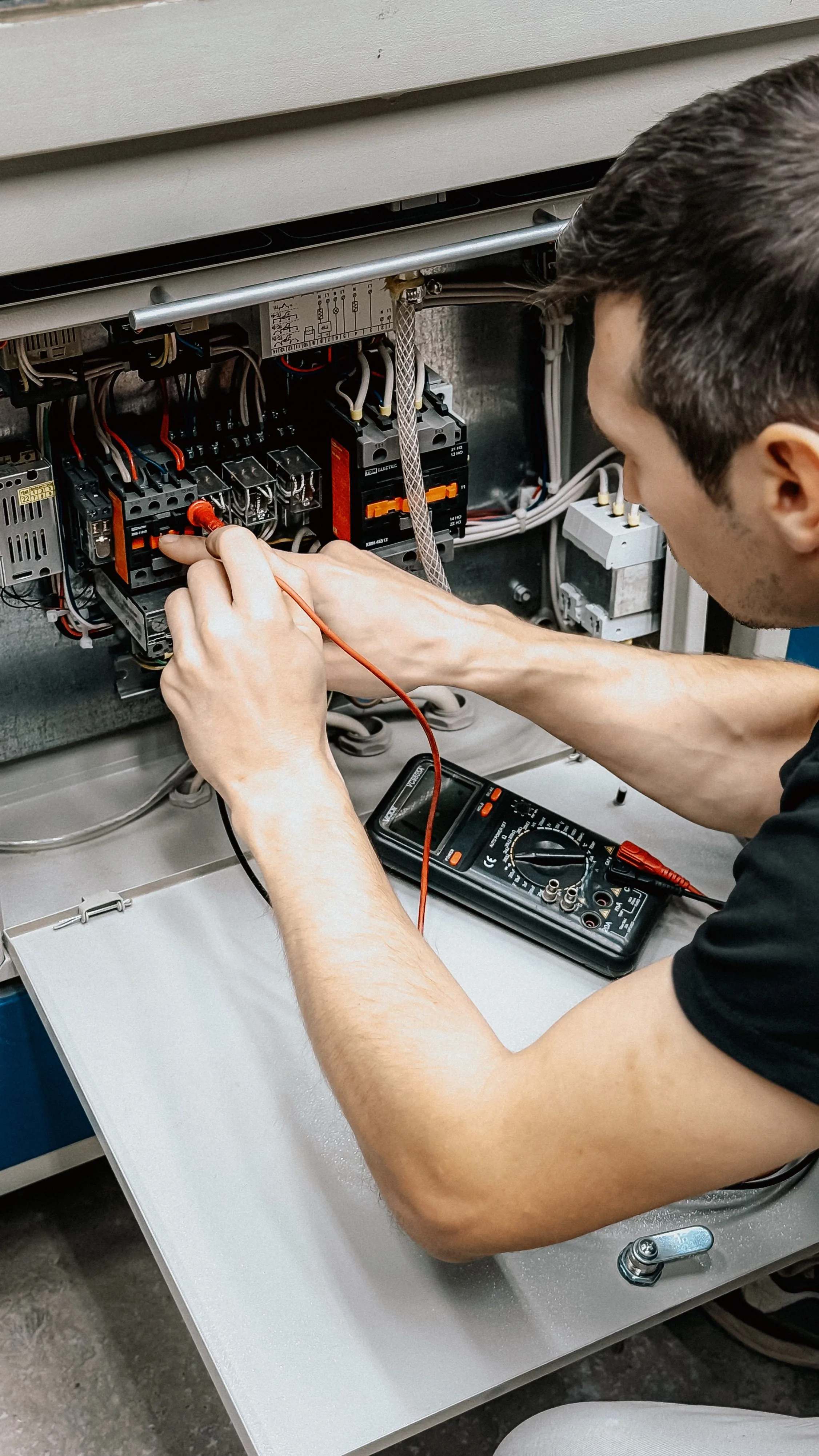
The clear signs are hard to miss: the mast leaning or pulled away from the wall, the weatherhead cracked or torn off, the drop hanging low or detached from the house, sparking or buzzing at the attachment point, a burning smell near the meter, or no power while the neighbours have power. Any one of those is a call-now repair — the utility will not reconnect until that equipment is fixed, and a damaged mast left through the next storm gets worse, not better. No power after storm Fort Pierce homeowners report, with the neighbours lit, almost always points to the house side of the meter.
A mast can also look straight and still be damaged: a cracked fitting, a loosened mount, or water inside the meter base after wind-driven rain. Meter base storm damage Fort Pierce visits find is often water inside the base after wind-driven rain, or a base cracked where the mast pulled away. A storm damaged weatherhead Fort Pierce homeowners report is the same story: the cap cracks, rain gets into the pipe, and the meter base below it pays for it. If the storm was strong enough to take the drop down, the mast gets checked, not assumed fine. Salt air adds its own wear to the same parts — our salt-air corrosion guide explains what it does to outdoor gear — and an older panel behind the meter base can change the scope of the job. Federal Pacific and Zinsco panels are obsolete, and our Federal Pacific vs Zinsco guide explains why they change it; our electrical panel repair guide covers the panel side. Our 24-hour emergency electrician guide covers what counts as a call-now job after hours.
A mast bent by the storm, or a line hanging low?
What sets the cost, and what to have ready when you call
Service mast repair Fort Pierce quotes move with the scope of the house-side rebuild, not a flat rate. The mast height and whether the meter base also needs work, access to the mast and the roofline, whether the service entrance conductors or the panel also need work, and the permit and inspection route all change it. Whether the work is an emergency call or a scheduled repair changes it too. The exact price is confirmed on the call, after the damage is seen — this guide carries no dollar figures, because a mast-only repair and a mast-plus-meter-base-plus-panel job are different jobs.
What to have ready when you call: your address and ZIP, what you saw — a bent mast, a hanging drop, sparking, a burning smell — whether your neighbours have power, your panel’s brand and size, and photos from a safe distance if you have them. Those answers turn a call into a visit that starts with the right check, instead of a visit that starts by searching for the problem. Storm damaged service drop mast Fort Pierce repairs are settled fastest when the utility has already been told and the house side is already described — call (772) 218-3629 any time; we are open 24/7, and same-day service is available. For the wider picture, the Fort Pierce Electric Pros homepage lists the services and areas we cover.
Storm-Damaged Service Drop and Mast Fort Pierce: frequently asked questions
Who repairs a storm-damaged service mast in Fort Pierce?
A storm damaged service drop mast Fort Pierce homeowners report after high wind is repaired in two parts: the utility makes the line safe and owns the drop line and the meter, and your electrician rebuilds the mast, the weatherhead, and the meter base on the house side. The utility reconnects power once the repair passes inspection.
Who owns the service drop line to my house?
The utility owns the overhead line from the pole to the point where it attaches to your house, and it owns the meter. The mast, the weatherhead, and the meter base on the house are yours. The exact line for your address is confirmed by the serving utility on the call, because Fort Pierce addresses are served by more than one provider.
Why will the utility not reconnect power until the mast is fixed?
Reconnecting to damaged equipment risks fire, arcing, and backfeed onto lines crews are working on. The repair has to be made and, where one is needed, inspected first — then the utility reconnects and fits the meter. Skipping that order is what leaves a house waiting longest.
What do I do if a power line is down in my yard?
Stay away and treat it as live, even if it looks slack or dead. Call 911 if there is fire, sparking, or immediate danger, then report the line to your utility. Do not touch it, drive over it, or try to move it, and keep children and pets away until the utility makes it safe.
Can I straighten or reattach the mast myself?
No. The mast carries live service conductors and the drop is still connected to the pole. Straightening or reattaching it yourself risks electrocution and can damage the meter base further. An electrician rebuilds the house side, and the utility reconnects after inspection.
What should I tell you when I call about storm damage to the service drop?
Your address and ZIP, what you saw — a bent mast, a hanging drop, sparking, or a burning smell — whether your neighbours have power, and your panel’s brand and size. With those answers the call ends with a clear scope and a visit booked. Call (772) 218-3629, 24/7.
Ready to talk?