
Dimmer Switch Installation Fort Pierce: LED Guide
Dimmer switch installation Fort Pierce starts with compatibility, not with the switch: the bulbs, the dimmer and the fixture must agree, or the lights flicker and buzz. This guide covers homes in Lakewood Park and Fort Pierce North, ZIPs 34946 and 34950, and the checks before a new dimmer.
Call Now to Speak to a Specialist
Open 24 hours a day, 7 days a week.
A dimmer switch installation Fort Pierce visit starts with the lights you already have: which bulbs, which fixture, and how many switches control it. Those three answers decide whether a new dimmer will work quietly or flicker, and the visit checks them before anything is fitted. Call (772) 218-3629 with your bulb and fixture details.
Why dimmers and LEDs argue
A dimmer switch installation Fort Pierce job usually starts with a swap that already happened: the old bulbs went, LED bulbs went in, and the lights started flickering. The cause is usually not the bulb and not the wiring, but the dimmer itself. Older dimmers were built for the heavy, steady load of incandescent bulbs, and LED bulbs draw far less power and behave differently, so a dimmer that was perfect for the old bulbs can be wrong for the new ones.
The technical split is between leading-edge and trailing-edge dimming, and in plain words it is about how the dimmer trims the power. Leading-edge dimmers, the older type, chop the front of each power wave, which suited resistive incandescent loads. Trailing-edge dimmers chop the end of the wave, which suits the electronic drivers inside LED bulbs, runs quieter and works at much lower loads. Matching the dimmer type to the bulb type is the first check on any dimmer visit.
That mismatch is why a dimmer that worked for years can suddenly misbehave after a bulb change, with no wiring fault at all. The fix is not a brighter bulb or a different brand of bulb alone, but a dimmer that suits the bulbs actually fitted. Our flickering lights guide explains a different flicker cause, when lights dim as the air conditioning starts, and the two should not be confused.
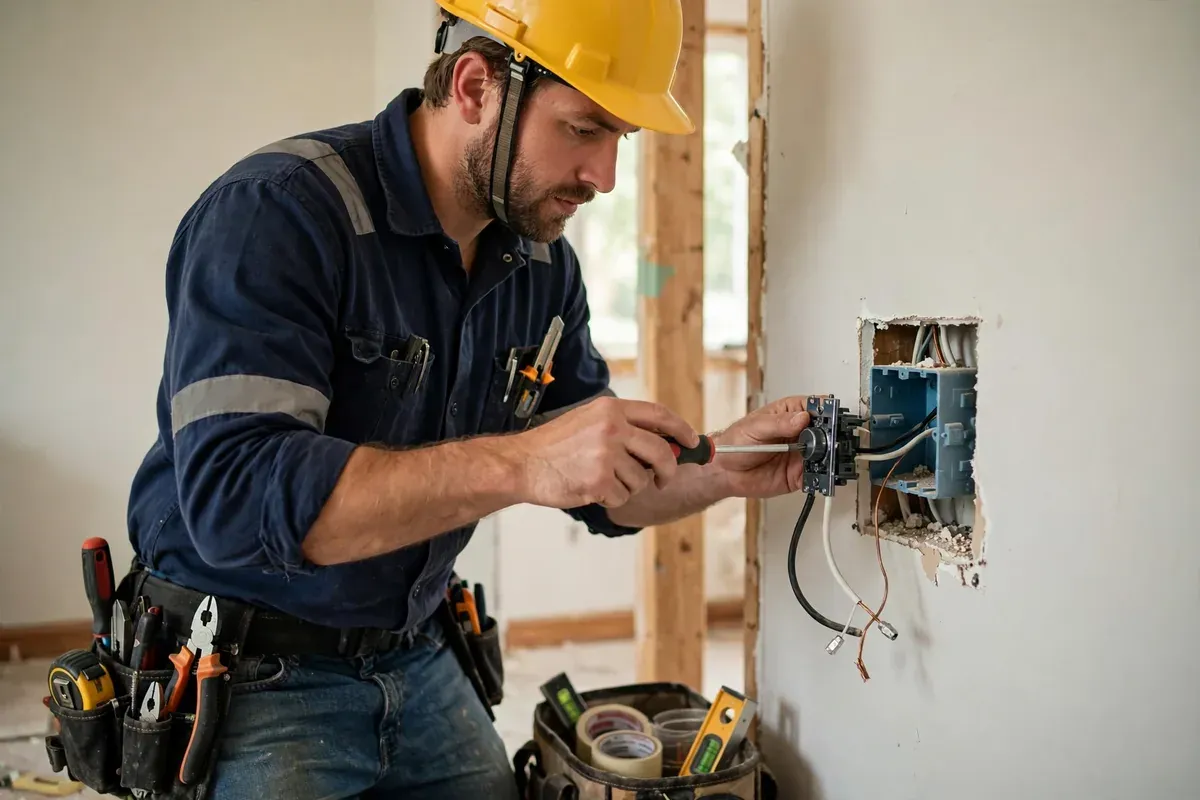
The compatibility check: bulb, dimmer and fixture must agree
Three things must agree before a dimmer is fitted: the bulbs must be marked dimmable, the dimmer must be rated for LED loads, and the fixture must suit the combination. A bulb that is not marked dimmable will flicker, strobe or fail early on any dimmer, because its driver fights the dimmer instead of following it. The bulb's own packaging states whether it is dimmable, and a bulb that does not say so is not.
The dimmer's rating matters just as much. LED dimmers state a minimum and a maximum load, and both ends matter: too many watts and the dimmer overheats, too few and the dimmer cannot hold a steady output, so the lights chatter or drop out at low settings. A single small LED on a dimmer built for a large load is a common cause of flicker, and the visit counts the total load on the circuit before choosing the dimmer.
The fixture is the third part of the check. A chandelier, a row of recessed downlights and a single pendant each present a different load and a different driver arrangement, and the dimmer must suit all of them together. Our chandelier and under-cabinet lighting guide covers sizing and placement for those fittings, and the dimmer visit uses the same fixture details to choose the dimmer. Our lighting installation page covers the fitting work for those fixtures. Compatibility lists published by dimmer and bulb makers are a useful starting point, and the visit confirms the combination in the home.
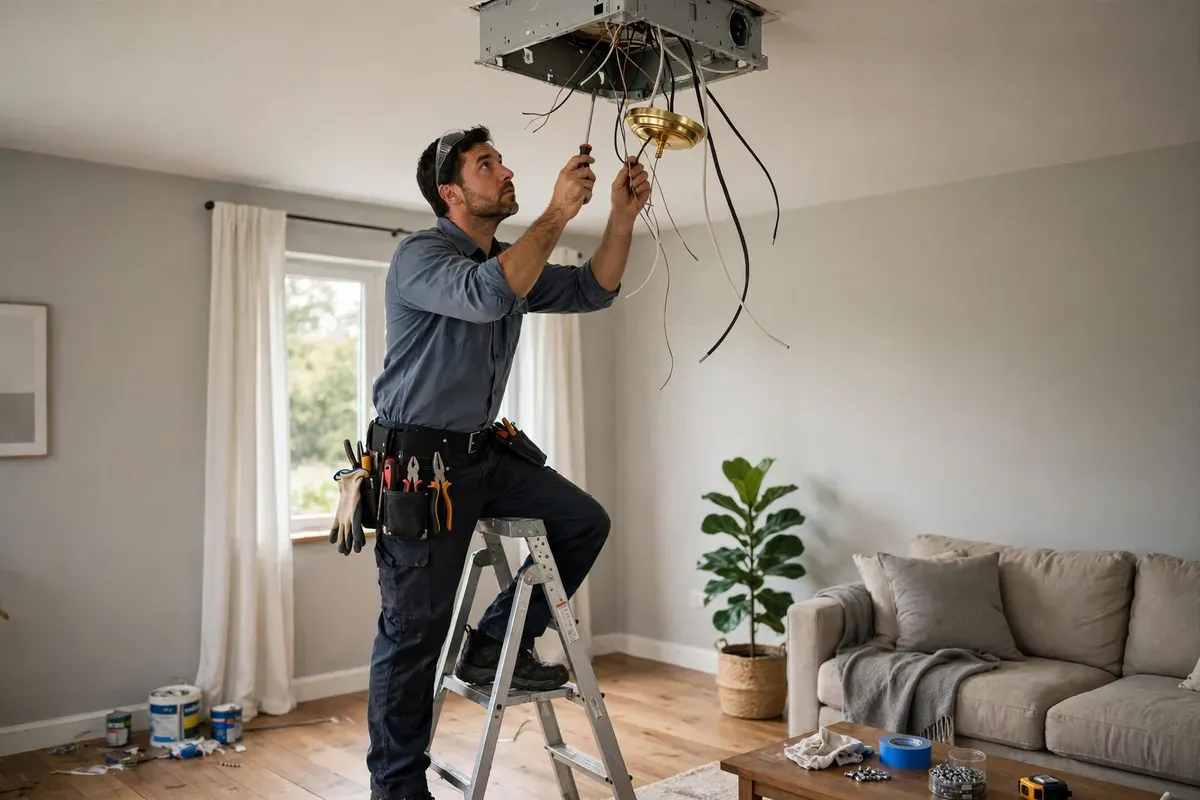
Lights flickering on a dimmer?
Flicker, buzz and drop-out: what each symptom points to
Flicker at low settings usually points to a load below the dimmer's minimum, or to a dimmer type that does not suit the bulbs. Buzzing usually points to the same mismatch, or to a dimmer working hard against a load it was not built for. Drop-out, where the lights cut out below a certain setting or refuse to turn on until the dimmer is pushed higher, usually points to the dimmer's low-end setting, which the electrician adjusts on the visit so the dimmer never drops low enough to lose the bulbs.
A hot dimmer is a different matter and should not be ignored. A dimmer that feels hot to the touch may be overloaded, may have a loose connection behind it, or may be failing, and it should be switched off and checked rather than used. Do not keep using a hot, buzzing or sparking switch while waiting for a visit; switch it off at the switch and call (772) 218-3629. Our electrical repair page covers the wider switch and circuit faults that a hot dimmer sometimes reveals.
Not every flicker is a dimmer problem. Lights that dim when a large appliance starts, or that flicker across the whole house, point to a circuit or supply question rather than a dimmer, and the visit will say so rather than fitting a new dimmer to a problem it cannot fix. That is the value of a check before a fitting: the right fix is fitted once, instead of the wrong fix fitted twice.
Single-pole, 3-way and smart dimmers
A single-pole dimmer controls a light from one switch, which covers most rooms. A 3-way dimmer controls the same light from two switches, such as the two ends of a hallway or the top and bottom of a stairs, and the wiring behind it is different. The visit checks how many switches control the light before choosing the dimmer, because a single-pole dimmer fitted where a 3-way is needed will not work, and the fix is a different device, not a different setting.
Smart dimmers add a radio or a Wi-Fi connection, so the light can be controlled from a phone or a voice assistant, and some need a neutral wire in the switch box while others do not. Whether the box has a neutral wire is a question for the visit, because older switch boxes often do not carry one, and the choice of smart dimmer depends on what the wiring actually holds. Smart-home wiring covers the wider connected-home work that a smart dimmer sometimes leads into.
The choice between a standard dimmer and a smart dimmer is about how the room is used, not about which is better in general. A bedroom or a dining room where the light is set once an evening suits a standard dimmer, while a room where the light is controlled from several places or on a schedule suits a smart one. Say how the room is used on the call, and the visit can recommend from the facts instead of from a catalogue.
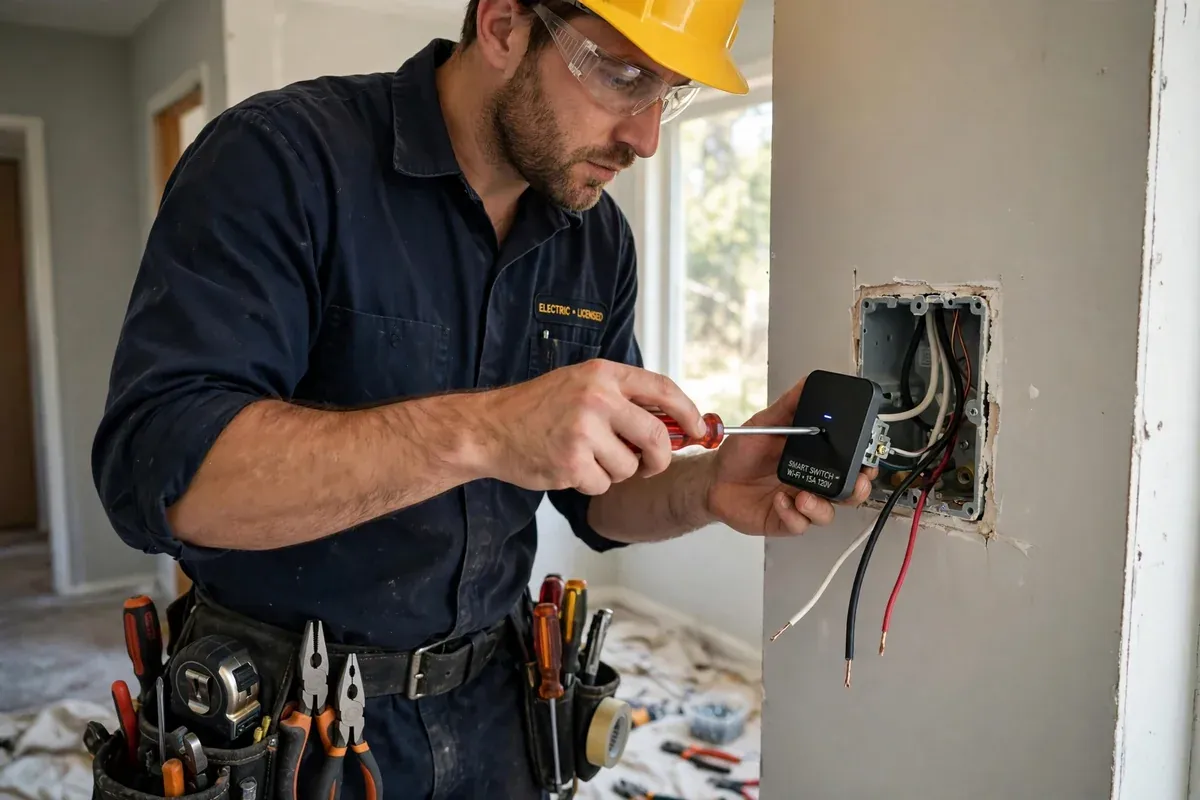
Lights flickering on a dimmer?
What a dimmer visit covers
The visit starts with the three compatibility answers: the bulbs, the fixture and the switches that control it. Then the electrician checks the switch box, the wiring behind it and the load on the circuit, and confirms the dimmer type that suits them all. Only then is the dimmer fitted, and the low-end setting is adjusted on the visit so the lights hold steady at their lowest setting instead of flickering or dropping out.
After the fitting, the lights are tested across the full dimming range, from the lowest setting to full brightness, and the result is shown before the visit ends. A dimmer that flickers at its lowest setting after fitting has not been finished, and the visit should not end until the full range is steady. If the check finds a wiring fault, a failing switch or a circuit that needs more work, that is explained and quoted separately, not folded into the dimmer job.
Exact price and timing are confirmed on the call and the visit, because the scope depends on the fixture, the number of switches and what the box holds. A single-switch swap on a healthy circuit is a short job, while a 3-way conversion, a smart dimmer without a neutral wire, or a circuit that needs attention first is a longer one. A written, itemised estimate is given before work starts, so the price is agreed with the facts in front of you. Our outlet and switch installation page covers the device-fitting work that often shares a visit with a dimmer job. The Lakewood Park area page shows one of the neighbourhoods this guide covers.
What to have ready when you call
- The fixture: chandelier, downlights, pendant, or a single bulb.
- The bulbs: LED or incandescent, and whether they are marked dimmable.
- How many switches control the light, and where they sit.
- The symptom, if there is one: flicker, buzz, drop-out, or a hot switch.
- Whether you want a standard dimmer or a smart dimmer, and how the room is used.
A dimmer switch installation Fort Pierce call with those five answers takes minutes and ends with a clear next step. Exact price and timing are confirmed on the call, and the dimmer is chosen from the bulbs and fixture you actually have, not from a guess. Call (772) 218-3629 to start.
Dimmer Switch Installation Fort Pierce: LED Guide: frequently asked questions
Do all LED bulbs work with a dimmer switch?
No. Only bulbs marked dimmable should be used on a dimmer, because a non-dimmable LED has a driver that fights the dimmer instead of following it, which causes flickering, strobing or early failure. Check the bulb's packaging or base for the word dimmable, and if it does not say so, it is not. The visit confirms the bulbs before choosing the dimmer.
Why do my LED lights flicker on a dimmer?
Usually because the dimmer and the bulbs do not suit each other. Older leading-edge dimmers were built for incandescent loads, while LED bulbs need a trailing-edge or universal LED dimmer. A load below the dimmer's minimum, or a non-dimmable bulb on the circuit, causes the same flicker. The visit checks the dimmer type, the total load and the bulbs, then fits the dimmer that suits them.
Can a dimmer switch control more than one light?
Yes, if the total load suits the dimmer. A dimmer can control a row of downlights or a chandelier with several bulbs, but the combined wattage must sit inside the dimmer's stated minimum and maximum load. Too little load and the lights chatter at low settings; too much and the dimmer overheats. The visit counts the load before choosing the dimmer.
Do I need a neutral wire for a dimmer switch?
It depends on the dimmer. Some smart dimmers need a neutral wire in the switch box, while many standard dimmers do not. Older switch boxes often do not carry a neutral wire, so whether one is present is a question for the visit. The choice of dimmer follows from what the wiring actually holds, not from a general rule.
What is a 3-way dimmer switch?
A dimmer that controls one light from two switch positions, such as the two ends of a hallway or the top and bottom of a stairs. A standard single-pole dimmer controls a light from one switch only, so a light with two switches needs a 3-way dimmer and different wiring behind it. The visit checks how many switches control the light before choosing the device.
Can a dimmer be fitted where a standard switch is now?
Usually, yes, if the box, the wiring and the load suit the dimmer. The visit checks the switch box, the circuit load and the bulbs, then fits the dimmer that suits them. If the box is damaged, the wiring is old, or the load is wrong for a dimmer, that is explained and quoted separately before any fitting starts.
Ready to talk?