
Electrical Repair in Fort Pierce, FL
Tripping breakers, flickering lights, and dead outlets around 34950 and 34946 — diagnosed to the cause first, so you pay for the fix, not a guess.
Tell us what is happening, when it started, and what was running at the time.
What is electrical repair?
Electrical repair traces a fault — a tripping breaker, flickering lights, a dead outlet, or one dark room — back to the circuit, connection, or device causing it. Call (772) 218-3629, Mon–Sat 9:00–18:00, and tell us what happened, when it started, and what was running each time it happened.
Tell the provider what happened, and when — that detail does more work than any part swap. Residential electrical repair in Fort Pierce is electrical fault finding: a diagnostic electrical service, or electrical troubleshooting in Fort Pierce, that traces the symptom, whether it is a breaker that trips, lights that flicker, one room with no power, or a dead outlet, back to the circuit, connection, or device causing it. Your call is matched to an electrician for repairs in Fort Pierce who diagnoses before recommending a fix. Done right, electrician repair fixes the cause, not just the symptom it showed, and electrical fault repair in Fort Pierce means the same discipline: find it first, then fix it. A troubleshooting electrician works from the pattern you describe, and an electrical repair service worth calling diagnoses before it quotes any fix. Do not keep resetting a breaker that trips again and again; note what was running each time, and pass that pattern on when you call.
Repair is the triage page for the whole site. A tripping problem may stay as a repair, or it may lead to a panel upgrade if capacity is the cause, to rewiring if wiring type is the cause, or to an emergency visit if warning signs are present. A repair page that jumps straight to a panel sale, without diagnosis, is not a repair page — it is a sales page.
Signs you need electrical repair
- A breaker trips repeatedly, or trips when a specific appliance runs.
- Lights flicker, dim, or go out when a large appliance starts.
- An outlet is dead, intermittent, or warm to the touch (warm = urgent, see emergency page).
- A GFCI outlet trips repeatedly, or will not reset.
- A switch, outlet, or fixture buzzes, crackles, or smells burnt (burnt = urgent).
- Power is out in one room or one circuit, while the rest of the house has power.
- A fault comes and goes — worse in rain, worse in summer, worse when the air conditioner runs.
Options compared: repair, panel, rewiring, or utility?
| Pattern you see | Most likely first step | Why |
|---|---|---|
| One circuit trips, panel good, capacity enough | Repair | Single circuit, single fault |
| Whole house flickers, panel warm/buzzing | Emergency, then panel | Panel or service problem, not a single circuit |
| Repeated tripping, panel full, new load added | Panel check, then upgrade or subpanel | Capacity, not a faulty breaker alone |
| Old wiring type, repeated faults, insurer flag | Rewiring assessment | Wiring type, not just panel |
| Whole street out, no panel signs | Utility first | Grid problem, not a home problem |
| House only out, neighbors have power | Emergency/repair triage | Home-side problem, panel or service |
| Dead outlet, GFCI tripped elsewhere | Repair (GFCI reset + check) | One GFCI can protect several outlets downstream |
Note what was running, when it started, and whether it is one circuit or the whole house, before you call. That pattern is the single most useful thing you can bring to a repair visit, and it is free.
How a repair visit runs, step by step
Infographic: Electrical repair diagnosis process
- Describe the pattern. What is happening, when it started, what was running, and whether it is one circuit or the whole house. That pattern decides where diagnosis starts.
- Check panel and breaker. Panel condition, breaker condition, and whether the panel is full, flagged, or undersized — before any circuit work, so a repair is not wasted on a panel problem.
- Test the circuit. Outlets, fixtures, wiring, and GFCI protection are tested one by one, not replaced one by one in the hope that the fault goes away.
- Fix and verify. Repair the actual fault, retest under load, and explain next steps honestly — including whether panel, rewiring, or further diagnosis is needed, and whether the problem can safely wait.
Cost and what changes the price
A repair quote is only as good as the diagnosis behind it. What moves the number is how long the fault takes to find, the parts fitted, how easy the wiring is to reach, and whether the diagnosis uncovers panel, wiring, or service work underneath. Ask for scope and price in writing before work starts.
Infographic: Repair cost factors flowchart
Time, safety, permits, and local rules
Time required: a single faulty outlet or breaker is typically a single visit, once diagnosis is done. An intermittent fault, a fault that only appears under load, or a fault in a finished wall or attic takes longer, because diagnosis, not repair, is the work. Ask your provider for the expected diagnosis time for your specific pattern, not a general “quick fix” claim.
Safety: do not open the panel interior, do not hold a breaker on, do not replace a breaker with a larger one, and do not touch wet equipment. If there are warning signs — sparks, burning smell, smoke, warm or buzzing panel — see the emergency page first, not the repair page. A GFCI that trips repeatedly is protecting you; do not bypass it.
Permits, broadly speaking: Florida Building Code 105.1 requires a permit before installing, altering, or replacing a regulated electrical system, with an application to the building official first. Most single-circuit repairs do not need the same permit path as a panel replacement, but panel, service, and rewiring work that follows diagnosis may need a permit and inspection, depending on scope and jurisdiction (City of Fort Pierce vs St. Lucie County, by exact address). As a rough guide, Fort Pierce city is largely served by Fort Pierce Utilities Authority (FPUA) and outside the city largely by Florida Power & Light (FPL), but which utility serves your exact address comes down to your exact address.
Local considerations: summer air-conditioning load makes tripping and flickering more common in Fort Pierce, because a large AC starting load can expose a weak breaker, a loose connection, or an overloaded circuit. Afternoon thunderstorms and hurricane-season moisture can expose outdoor and garage faults. Older homes in Downtown and Lincoln Park are more likely to have older wiring and panels, which makes rewiring or panel follow-up more likely after a repair visit. Coastal homes on Hutchinson Island and South Beach face salt-air corrosion on outdoor equipment and panels. Those are patterns, not per-home facts.
Seasonal considerations and DIY vs hiring
Repair calls spike in summer, under AC load and storms, and a fix that holds in winter can return when summer load returns — which is why diagnosis under load matters. Never hold a breaker on or fit a larger one to stop tripping. The breaker keeps tripping guide explains the pattern to note before you call.
Fault that comes and goes? Call and describe the pattern.
How a fault is tracked down, step by step
A good diagnosis starts with the symptom, not the part. The provider tests with a meter, checks for heat at connections, and isolates circuits one at a time until the fault shows itself. That sequence matters because several faults share the same symptom: a tripping breaker can come from an overloaded circuit, a short circuit, a ground fault, a loose neutral, or an open ground, and each one is fixed differently.
Faults that come and go deserve a note, not a shrug. Write down when the fault appears, what was running at the time, and whether it clears on its own. A fault that vanishes when someone comes to look at it is still a fault, and the pattern in your notes is often what points to the cause. If an appliance case gives even a small shock, stop using that appliance and leave its circuit off until a provider has checked it.
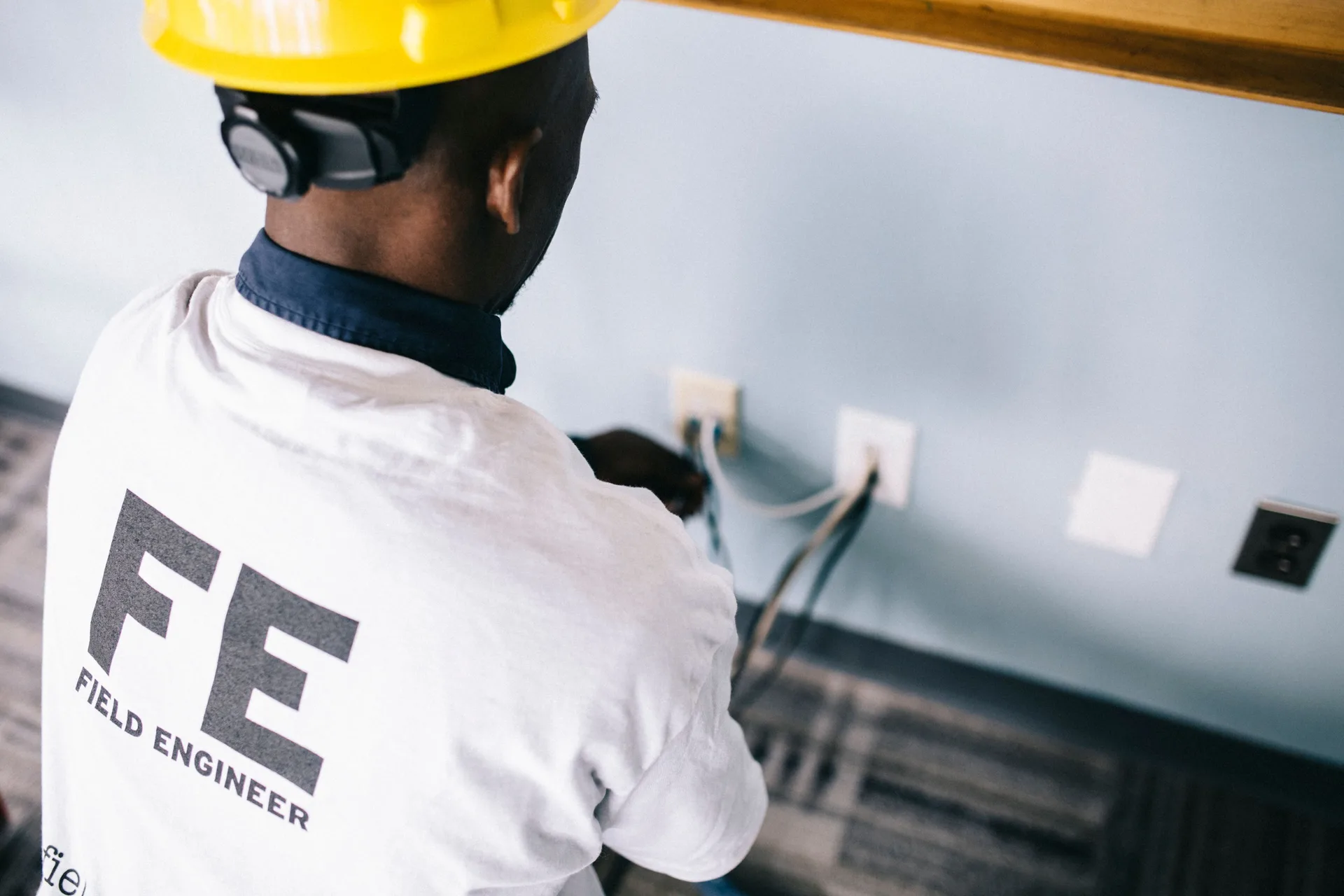
What electrical repair work looks like
Related services and areas
Repair work often leads to, or follows, other services. A tripping problem may lead to panel upgrade if capacity is the cause, or to rewiring if wiring type is the cause. A new outlet or switch may be a separate outlet and switch job, not a repair. An unsafe problem is an emergency first, not a scheduled repair.
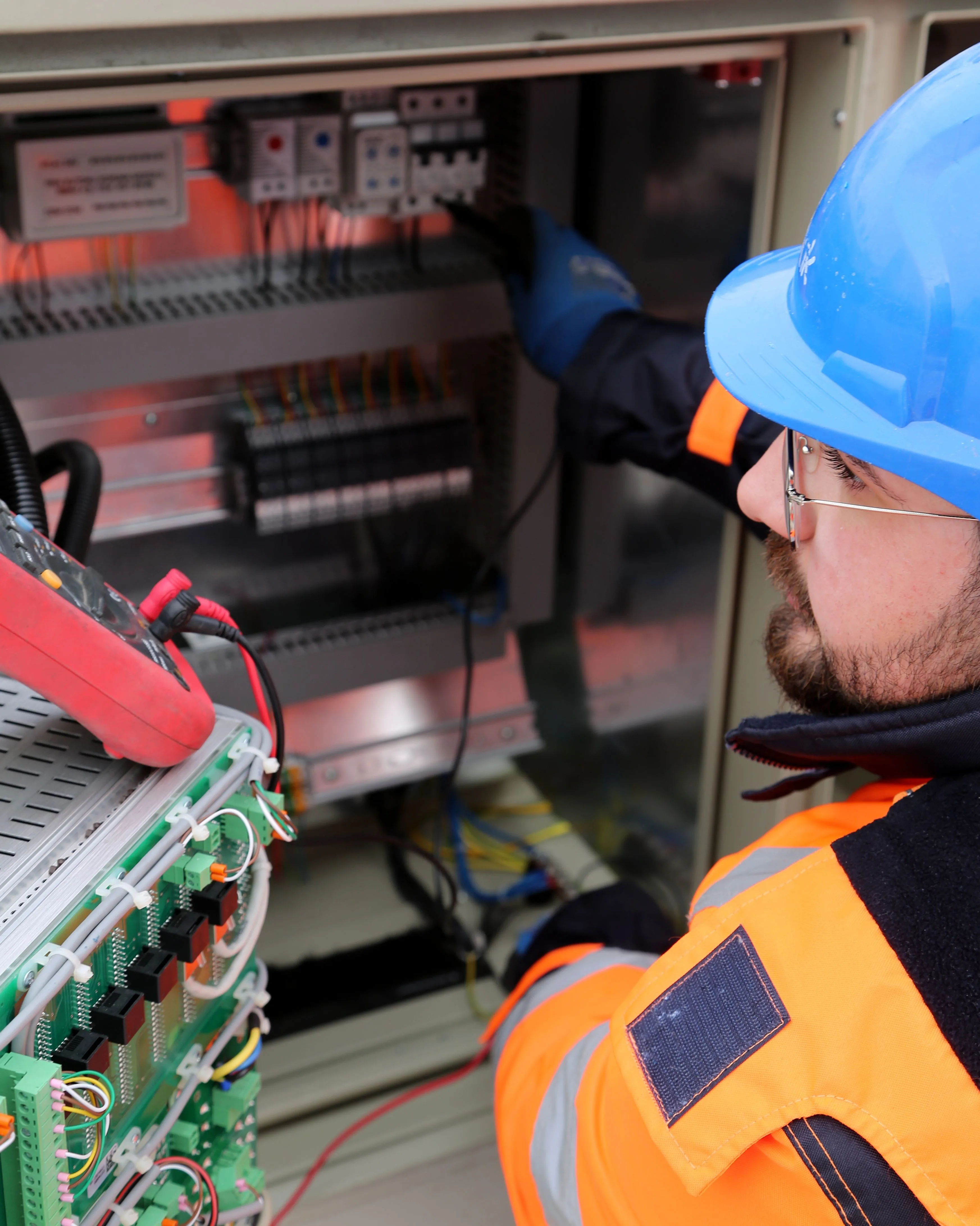
Electrical repair is needed across Fort Pierce, including Downtown, Lincoln Park, and Fort Pierce South. See the service areas hub for the full list, and tell us your town or ZIP when you call.
When the fault is in one room only
A fault in one room points to that room's circuit; a fault across the whole house points to panel, service, or supply. Tell the provider exactly which rooms are affected and which are not. A warm outlet, or a breaker that trips the moment it resets with nothing plugged in, should be left off and diagnosed — see why an outlet stops working.
Older homes, damp areas, and who may do the work
Older Fort Pierce homes still carry fuse boxes and aging wiring, and a fuse box added to piecemeal over the years deserves a full look rather than one more fuse. Damp rooms need GFCI protection that trips on a leak — a GFCI that trips repeatedly is reporting a fault, not misbehaving. Salt air adds its own corrosion pattern, covered in our salt-air corrosion guide.
Frequently asked questions: electrical repair in Fort Pierce
Why does my breaker keep tripping in Fort Pierce?
A breaker trips to protect a circuit. Common causes are an overloaded circuit, a faulty appliance, a faulty breaker, or a wiring fault. Note what was running when it tripped, whether it trips immediately or after a time, and whether it is one circuit or several — that pattern points to the cause.
Why do my lights flicker?
Flickering can be a loose bulb or fixture, a loose connection, a shared circuit with a large appliance, or a panel or service problem. Flickering across the whole house, or flickering with a warm panel or burning smell, is more serious than a single flickering bulb — treat warning signs as urgent.
Why is one outlet dead?
A dead outlet can be a tripped GFCI elsewhere on the circuit, a tripped breaker, a loose connection, or a faulty outlet. Check for a tripped GFCI in a bathroom, kitchen, garage, or outdoors first, because one GFCI can protect several outlets downstream. If the cause is not clear, call for diagnosis.
How much does electrical repair cost in Fort Pierce?
It depends on what the diagnosis finds, and that is the honest answer. A quick fix on one circuit costs less in time and parts than tracking an intermittent fault, and panel or wiring work found underneath changes the scope entirely. Ask for scope and price in writing before work starts, based on a look at your system.
Is electrical repair an emergency?
It depends on warning signs. Sparks, burning smell, smoke, a warm or buzzing panel, or a breaker that will not reset are emergencies — see the emergency page first. A dead outlet, a single flickering light, or a tripping breaker with no heat or smell is usually a scheduled repair.
Do I need a panel upgrade or just a repair?
A repair fits a single faulty circuit with a good panel and enough capacity. A panel upgrade fits a full, undersized, or flagged panel, or a home adding major load. Diagnosis first shows which one fits — a repair that does not fix capacity will trip again when the same load returns.
What should I tell a provider when I call?
Tell them what is happening, when it started, what was running at the time, whether it is one circuit or the whole house, and whether neighbours have power. That pattern — timing, load, and scope — is what a provider uses to decide whether it is a circuit, panel, service, or utility problem.
Can I fix a tripping breaker myself?
Resetting a breaker once, after checking what was running, is a homeowner action. Opening a panel, replacing a breaker with a larger one, or holding a breaker on is not. A larger breaker can let a fault keep heating without tripping, which is how an electrical fire starts.
What if the fault comes and goes?
Write down when it appears, what was running at the time, and whether it clears on its own. A fault that vanishes before a provider arrives is still a fault, and the pattern in your notes often points to the cause. Tell the provider the full pattern when you call, including any buzzing, warmth, or smell, and leave the affected circuit off if anything feels hot or smells of burning.
Ready to get it diagnosed? Call and describe the fault.