
LED Lights Flicker or Buzz on a Dimmer Switch in Fort Pierce
LED lights flicker on a dimmer switch Fort Pierce homes notice after swapping to LEDs: the bulbs and the dimmer were never tested together, and the fix is a different bulb or dimmer, in Lakewood Park or Fort Pierce North, ZIP 34946 or 34950 — call and describe the symptom.
Call Now to Speak to a Specialist
Open 24 hours a day, 7 days a week.
You fit LED bulbs, reach for the dimmer, and instead of a clean fade you get a wavering flicker, a hum, or a buzz you can hear across the room. LED lights flicker on a dimmer switch Fort Pierce when the dimmer and the bulbs do not suit each other — and the symptom tells you which part to change.
Name the symptom: each one points to a different cause
Flicker is a visible shimmer or pulse, steady at every setting or only near the bottom of the dimmer. Buzz or hum is a sound from the bulbs themselves or from the dimmer in the wall. Ghosting is a faint glow, or a slow blink, from the bulbs when the dimmer is off. Pop-on is the lights staying dark at a low setting, then coming on once you raise the slider. Drop-out is the lights shutting off before the slider reaches the bottom. Uneven dimming is bulbs on the same dimmer settling at different brightness or color. Each symptom points to a different cause, and the rest of this guide follows the symptom.
The most common story is the simplest: an older dimmer built for incandescent bulbs, now feeding LEDs that draw a fraction of the load. The dimmer chops the power to dim, and the LED’s small driver cannot smooth that chopped signal at such a low load — so the light output wavers as a flicker, and the fast switching sets small internal parts vibrating, which you hear as a buzz. Nothing is broken: the bulb is fine, and the dimmer works. They were simply never designed to work together.
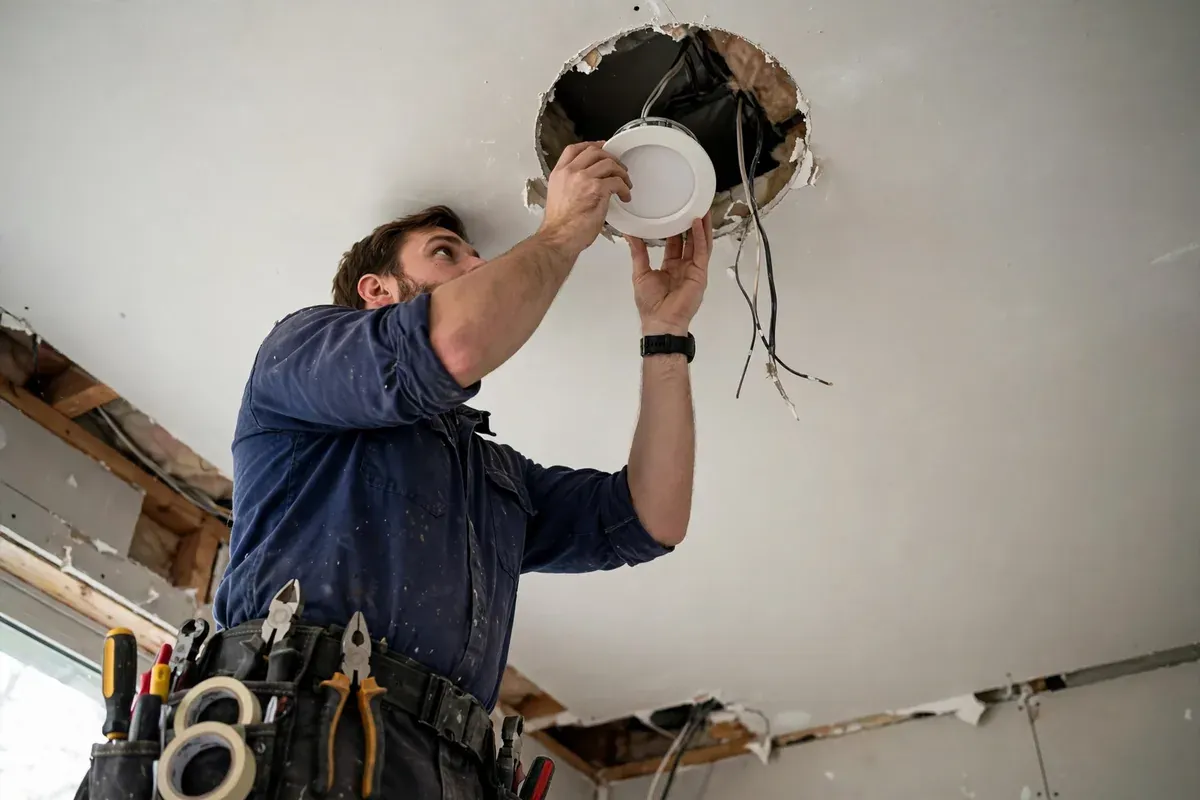
LEDs flickering on a dimmer in your home?
Check the bulbs before you blame the dimmer
When LED lights flicker on a dimmer switch Fort Pierce homeowners have just fitted, the bulb check comes first: the word “dimmable” on the box, the same bulb type across the whole circuit, and no non-dimmable bulb hiding in the mix. A bulb not marked dimmable has no dimming circuitry inside, and it will flicker, drop out, or refuse to dim on any dimmer, no matter which switch it is on. One mismatched bulb in a set of six can make the whole circuit misbehave, and cheap drivers buzz more than well-made ones — so the bulb check is the cheapest fix in the guide, and the one to try first.
Change one thing at a time. Swap one bulb for a known dimmable LED from the dimmer maker’s tested list, and watch what happens: if the flicker follows the bulb, the bulb is the cause; if every bulb on the circuit flickers, the dimmer is the suspect. Check the packaging or the product page for the explicit word “dimmable” — and if the bulbs came with the house, or from a mixed box in the garage, assume nothing until each one has been checked. Our lighting installation service covers the fitting side, and the outlet and switch service covers the switch itself.
Then check the dimmer
Read the dimmer’s label without taking the plate off: if it lists only incandescent or halogen loads, it was designed for old filament bulbs, and LEDs may flicker, buzz, or drop out on it. A dimmer built and labeled for LEDs — trailing-edge or universal — is designed to control that small load smoothly across the full range. The dimmer installation guide covers fitting one, and this guide is the diagnosis half: which part to change, and in which order.
Two settings decide the bottom of the range. An older dimmer may need a minimum total wattage the LEDs never reach — a single 9-watt bulb on its own can fall below that threshold and cause buzzing or flicker even when the bulb and the dimmer are individually compatible. And a low-end trim adjustment, set by the electrician on the visit, stops the flicker where the slider meets the bottom. If the dimmer buzzes and the plate feels warmer than usual, stop and call: a warm plate is not a compatibility quirk, it is a fault.
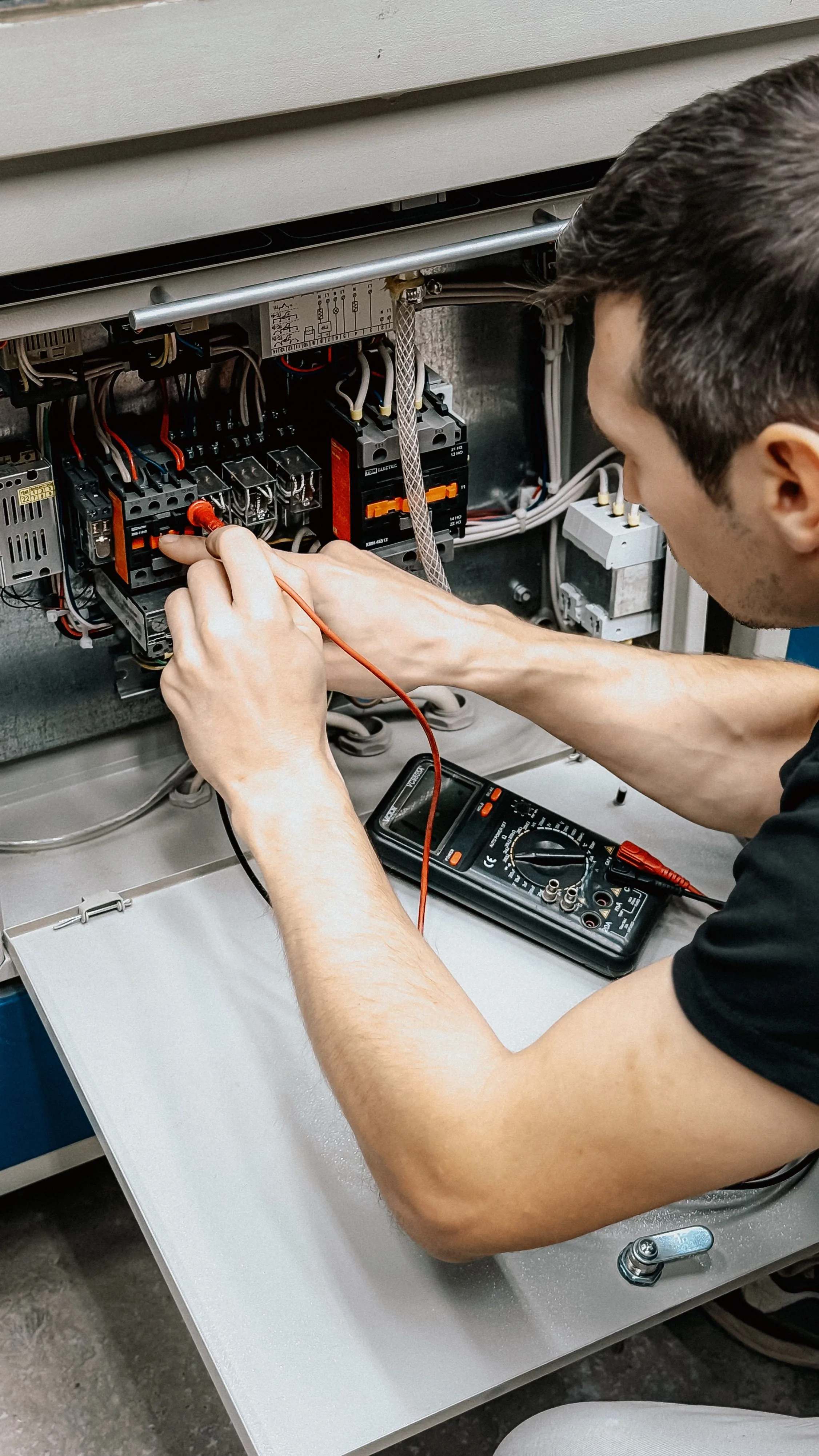
Dimmer buzzing with a warm plate? Stop and call.
When it is not the bulb or the dimmer
Flicker that follows a touch, a tap on the switch plate, or a door closing points to a loose connection, not a bulb problem — and so does flicker on a plain on-off switch that continues after you try a new bulb. A loose connection is the one cause in this guide with a real safety dimension: the intermittent contact makes small arcs, which can themselves buzz and feed an unstable voltage to the bulb. Stop using that circuit and call. The breaker-tripping guide explains what a loose connection does to a circuit, and the warm-outlet guide covers the same fault at the outlet — both end at the same place, which is a visit.
Flicker across the whole house when a large load starts is a different question: the voltage dip of an air conditioner starting, which the flickering-lights guide covers, is common where the air conditioning shares a service with the rest of the house. Lights that flicker in one room only point to that room’s circuit instead, and lights that flicker at random, stay dim, or flicker after a storm point to the wiring, not the bulbs. The visit tests the circuit and the panel before deciding, and it does not guess from the symptom alone.
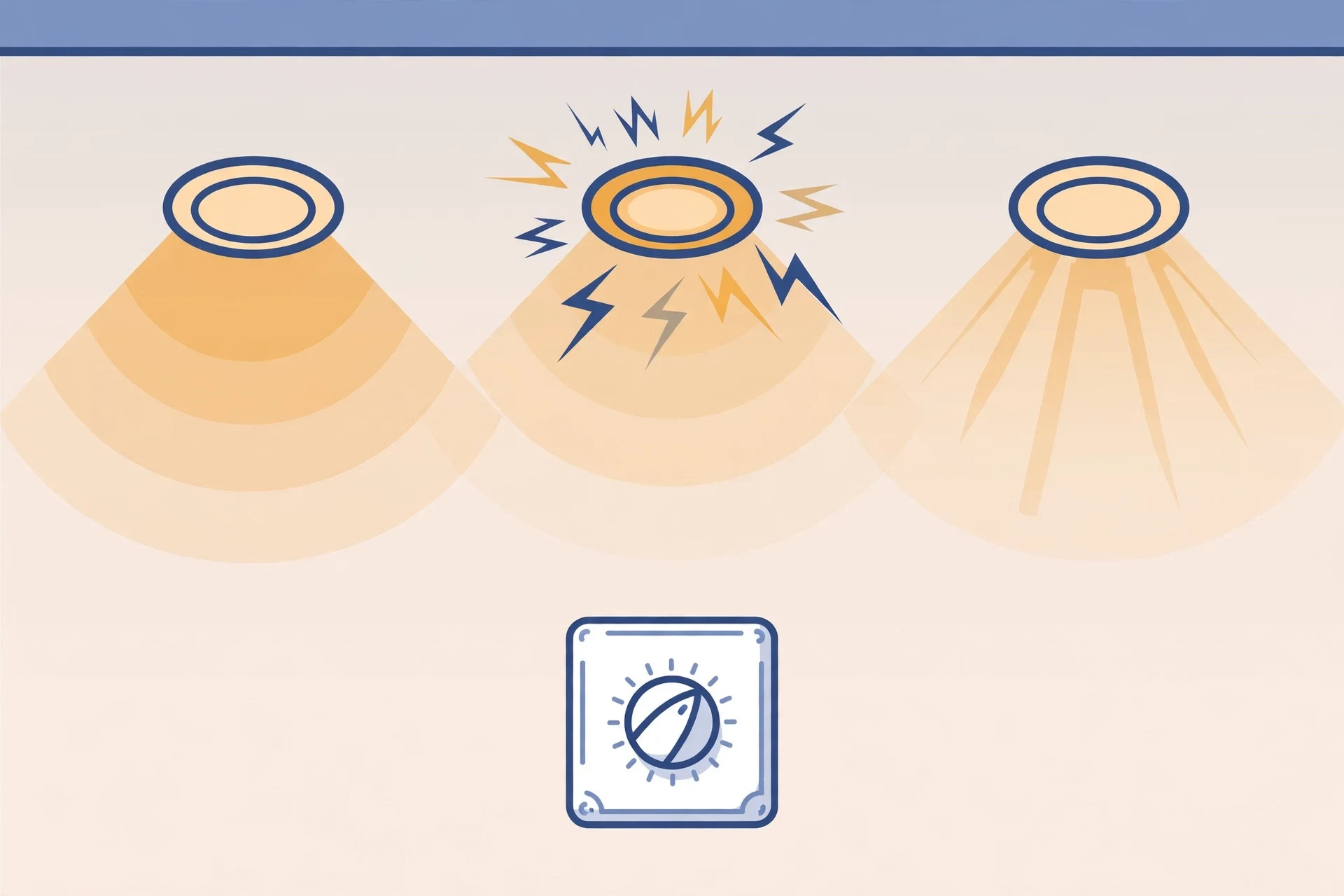
Flicker that follows a tap on the switch? Call us.
LED Lights Flicker or Buzz on a Dimmer Switch in Fort Pierce: frequently asked questions
Why do my LED lights flicker on a dimmer switch?
LED lights flicker on a dimmer switch Fort Pierce visits usually trace to one of three causes: a non-dimmable bulb, a dimmer built for incandescent loads, or a total load below the dimmer’s minimum. The dimmer chops the power to dim, and the LED’s driver cannot smooth that chopped signal at such a low load — so the light output wavers. The visit checks the dimmer type, the total load, and the bulbs, then fits the right dimmer.
Why do LED lights buzz on a dimmer?
The fast electrical switching sets small internal parts vibrating — in the bulb’s driver — and you hear it as a buzz or hum. Dimmer and bulb incompatibility is the most common cause, and falling below the dimmer’s minimum load is the next. A loose connection can buzz too, and it is the cause to rule out first: if the buzz follows a tap on the switch plate, or the plate feels warm, stop and call.
Can any LED bulb be used with a dimmer?
No. A bulb must be specifically designed for dimming, and the box or product page must carry the explicit word “dimmable”. Non-dimmable LEDs often flicker, buzz, drop out, or fail early on a dimmer circuit, and no dimmer will fix a bulb that was never built to dim. Check every bulb on the circuit — one non-dimmable bulb in the mix can make the whole set misbehave.
What is the difference between leading-edge and trailing-edge dimmers?
A leading-edge dimmer, also called TRIAC or forward-phase, chops the front of the power wave and was built for incandescent bulbs. A trailing-edge dimmer, also called ELV or reverse-phase, is typically better suited to LED lighting, and universal LED dimmers cover both. The dimmer installation guide covers fitting one; this guide is the diagnosis — match a dimmable bulb to a dimmer rated for LEDs, and most flicker and buzz settles on its own.
My lights glow faintly when the dimmer is off. Is that a fault?
Usually not — that is ghosting, a faint glow or slow blink from a small leakage current when the dimmer is off, and it is a compatibility quirk rather than a fault. If the glow is bright, if the bulbs blink steadily, or if the dimmer buzzes with it, call: the visit checks the dimmer and the wiring, because a bright ghost or a blinking set can point to a wiring fault rather than a pairing problem.
When should I call an electrician about flickering LEDs?
Call the same day when the switch plate is hot or discolored, when you smell something hot, when the dimmer buzzes and the plate is warmer than usual, or when the flicker follows a tap on the plate or continues on a plain on-off switch after a new bulb. Those are wiring faults, not pairing problems. If there is smoke or any sign of fire, call 911 first — and never open the switch or the panel yourself.
Ready to talk?