
100 Amp vs 200 Amp Service in Fort Pierce, FL
100 amp service suits a smaller Fort Pierce home with gas cooking and heating, while 200 amp service suits a larger or all-electric home adding an EV charger, heat pump, or pool equipment. A load calculation decides, not square footage alone. Call (772) 218-3629 and tell us your main breaker number and planned large loads.
Think of amp service as the size of the main pipe into your home: a 100 amp service can deliver up to 100 amps at once, and a 200 amp service can deliver twice that. Neither one makes your lights brighter or your appliances run better on an ordinary day. What changes is how much you can run at the same time before the system runs out of headroom.
Need an electrician in Fort Pierce? Adding a big load or planning a service change? Call and tell us your panel size and what you want to power.
What amp service actually means
Every home has a main breaker with a number on it, usually 100 or 200. That number is the rating of the service, and it caps the total current the home can draw. Inside the panel, individual breakers protect individual circuits, but the main breaker guards the whole load. When the total demand pushes past the service rating, the main breaker trips, and the whole house goes dark.
To find your own rating, look at the main breaker at the top of the panel. The number is printed on its handle or on a label inside the panel door. If you cannot find it, a provider can read it during a panel check. Do not open the panel interior yourself to look for it.
100 amp vs 200 amp service, compared
| Feature | 100 amp service | 200 amp service |
|---|---|---|
| Total capacity | Up to 100 amps at once | Up to 200 amps at once |
| Typical fit | Smaller homes with gas heat and cooking, modest loads | Larger homes, all-electric homes, homes adding big loads |
| Big-load headroom | Tight once AC, pool equipment, and kitchen loads run together | Room for an EV charger, pool, or workshop alongside daily loads |
| Panel space | Often fewer spare breaker spaces | Usually more spaces for new circuits |
When 100 amps is still enough
Plenty of smaller Fort Pierce homes run fine on 100 amps. If your home is modest in size, uses gas for cooking or water heating, and you have no plans for an EV charger, a pool heater, or a workshop full of power tools, 100 amps may cover your daily life with room to spare. The test is not the age of the house or its square footage alone. It is what actually runs at the same time on a hot afternoon.
Watch for the warning signs instead of guessing. Breakers that trip when the air conditioner and the kitchen run together, lights that dim hard when a big motor starts, or a panel with no spare spaces left all point to a service that is near its limit.
What pushes a home from 100 amps to 200 amps
Big loads do the pushing, and Fort Pierce homes stack them up fast. Central air conditioning is the largest single load in most homes here. Add a pool pump, an electric range, an electric water heater, and a Level 2 EV charger, and the EV, AC, and pool load together changes the math quickly. Each of those loads is fine on its own. Together, on a summer evening with the oven on and the car charging, they can pass what a 100 amp service can carry.
Future load matters just as much as today's load. A garage that might hold an EV charger one day, a pool you plan to heat, or a home office that grows into a workshop all argue for sizing once rather than twice. That is why providers talk about a panel upgrade as a capacity decision, not a cosmetic one.
How a load calculation decides
That rating is your home's electrical service capacity, and guessing it from house size gets this wrong too often. Amp service sizing starts with real loads, not square footage, and that is how you answer: how many amps does my house need? With numbers instead of guesses. A load calculation adds up the home's real loads, applies the standard demand rules for things that never all run at once, and compares the result with the service rating. Motors get counted with their starting current in mind, because an air conditioner compressor draws far more for a second at startup than it does while running.
An amp service comparison only makes sense after that calculation. Sometimes the calculation shows the service is fine and the real problem is one overloaded circuit, which a dedicated circuit or a subpanel can fix. Other times it shows the whole service is short, and only a service upgrade solves it. Either way, the calculation comes first, and the work follows it.
How a load calculation works
Step 1: list every large load in the home. Step 2: add running loads and starting currents for motors. Step 3: compare the total with the service rating. Step 4: decide — headroom, subpanel, load management, or service upgrade.
100 amp versus 200 amp decision guide
Problem is spaces only and service has capacity: subpanel may fit. Problem is total load: service upgrade fits. New large load planned: load calculation first, then decide. Unsure: panel check and load calculation before any work.
Subpanel, load management, or full upgrade?
Three answers fit three different problems, and total amp capacity decides among them. A subpanel fits when the service has capacity but the panel has no spare spaces. Load management fits when one large load, like an EV charger, can pause while the rest of the house peaks. A full service upgrade fits when the total load itself exceeds the service rating. A provider should explain which problem you actually have before recommending any of them.
What changes the cost
Scope decides the job, so no single figure is published here. Panel condition, whether the service entrance and meter equipment also need work, how far new circuits must run, and permit and inspection steps all shape the final scope. A provider should price your panel and your loads after looking at them, not your ZIP code.
Fort Pierce notes
Heat is the local factor. Air conditioning runs longer and harder here than in cooler climates, so a service that coped in a mild winter can show its limits in August. Salt air also ages outdoor service equipment over time, which is one more reason a provider should look at the whole service, not just the panel label, before deciding.
Next step
Start with the number on your main breaker and a list of your large loads, then call and describe them, including whether a 200 amp service upgrade or a smaller fix fits. The panel upgrade page explains how that work is scoped. If an EV charger is the load driving the question, read the EV charger installation page first, and consider an electrical inspection if your panel is older or its brand is unknown to you.
What about 150 amps, and does an upgrade mean rewiring the house?
Between the two sizes you hear about most, a middle size exists: 150-amp service. It shows up in some homes built in the 1980s and 1990s. A 150-amp panel does not change how the decision gets made. What matters is still the load calculation for your home, not the label on the panel.
Another detail surprises callers. Sometimes the utility already delivers 200 amps to the meter while the panel inside is rated for 100 amps. In that case the upgrade is panel-side work only: a new panel, a new meter base, and service conductors rated for the higher current. Your existing branch circuits move over to the new panel.
That answers a worry we hear often. Upgrading service does not mean rewiring the whole house. Walls stay closed and the wiring already in them stays put, except for any new circuits you are adding at the same time.
Two loads deserve a special mention when you plan ahead. A heat pump replacing gas heat, and an induction range replacing a gas range, each add a large continuous draw. Either one can be the load that tips a 100-amp home over its comfortable margin. If your panel is being replaced anyway for age or damage, size it for the additions you expect in the next few years. Paying for the job once beats paying for it twice.
Photos and quick reference
Checklist: what to note before you call about service size
- The number on your main breaker.
- Every large appliance you own, and when it usually runs.
- Whether breakers trip when several large loads run together.
- Any large load you plan to add, such as a charger or pool equipment.
- Whether your panel still has spare breaker spaces.
What a 200-amp upgrade changes at your home
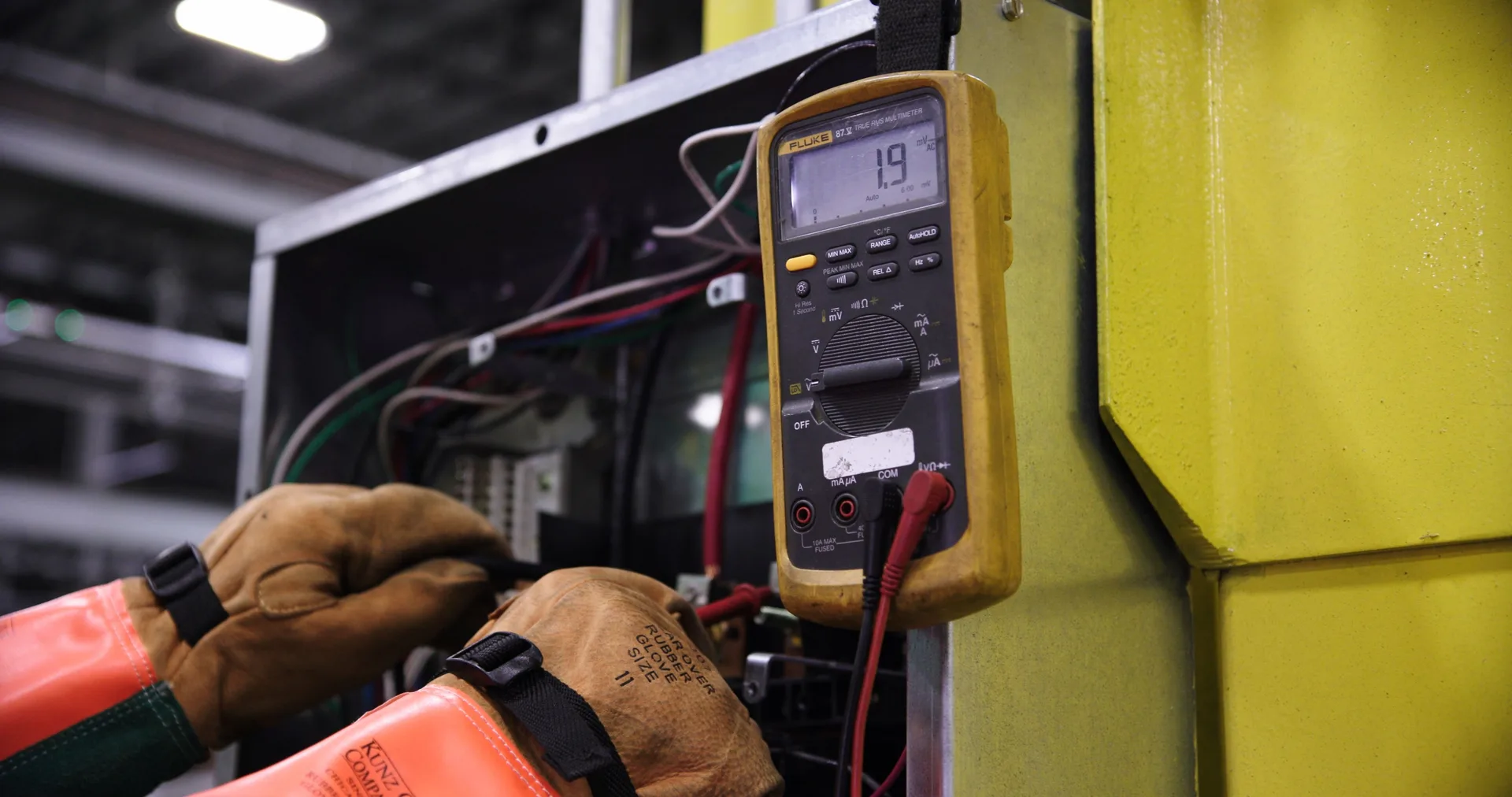
A 200-amp upgrade changes the service entrance, not just the breaker box. The panel is replaced, the meter base is replaced, and the service conductors from the utility connection to the panel are replaced with conductors rated for the higher current. Your existing branch circuits move across to the new panel, so an upgrade does not mean rewiring the whole house.
The work is coordinated with the utility and the local building department, and inspection follows the work. What shapes the scope is the panel condition, access to the panel and meter, the conductor route, and permit and inspection coordination. A provider gives you a written price after looking at your service, because those factors differ from home to home. When you call, tell us your current main breaker number, whether the panel has spare spaces, and which large loads you plan to add.
Need an electrician in Fort Pierce? Adding a big load or planning a service change? Call and tell us your panel size and what you want to power.
Frequently asked questions
How do I know what amp service my home has now?
Read the number on the main breaker at the top of your panel, or check the label inside the panel door. That number, usually 100 or 200, is your service rating. If you cannot find a label, or the panel looks damaged, do not open the interior to hunt for it. A provider can identify the rating safely during a panel check.
Is 100 amp service enough for a modern home?
It can be, if the home is smaller, uses gas for its biggest heating and cooking loads, and has no EV charger, pool heater, or workshop drawing large power. It gets tight fast in an all-electric home, or when air conditioning, kitchen loads, and a pool run together. A load calculation, not a rule of thumb, gives the honest answer for your home.
What loads push a home from 100 amps to 200 amps?
Central air conditioning is usually the largest load, followed by electric ranges, electric water heaters, pool equipment, and Level 2 EV chargers. One of them alone rarely forces an upgrade. The push comes when several run at once on a hot evening, or when a new large load is planned and the existing service has no headroom left.
Does a 200 amp panel use more electricity?
No. A 200 amp service only raises the ceiling on what your home can draw at once; it does not make your appliances use more power. Your usage depends on what you run and for how long, not on the service rating. Upgrading capacity without changing habits leaves your consumption essentially unchanged.
Can I just add a subpanel instead of upgrading to 200 amps?
A subpanel helps when the problem is panel space, not total capacity. If your service still has headroom but the panel is full, a subpanel adds breaker spaces. If the total load already exceeds the service rating, a subpanel does not add capacity, and a service upgrade is the fix that actually solves the problem.
Do I need a permit for a service upgrade?
In general, service upgrade work in Florida involves a permit and an inspection, because it changes the home's main electrical equipment. The exact requirements depend on your city or county, so the provider handling the work should confirm what your local building department requires before work starts.
How long is power off during a service upgrade?
Power is off while the old service equipment is replaced and the new panel is connected and tested, which is typically part of one workday, though the exact window depends on the scope and on utility coordination. Your provider should tell you the expected outage window before work begins so you can plan around it.
Should I upgrade to 200 amps before adding an EV charger or pool?
Get a load calculation first, before buying equipment or booking work. If the calculation shows headroom, the charger or pool can often be added without an upgrade. If it shows the service is already near its limit, upgrading first avoids a second round of work later, when the new load is already installed.
Need an electrician in Fort Pierce? Call now and describe the problem.