
Generator Maintenance and Monitoring in Fort Pierce
A generator that starts when the storm hits, not one you discover too late. Generator maintenance and monitoring in Fort Pierce keeps your standby unit exercised, tested, and watched between visits.
When you call, tell us the generator make and model, the last exercise date, and any fault code on the display.
Generator maintenance and monitoring keeps a standby generator ready for storm season, with scheduled visits and alerts that flag faults early. Call (772) 218-3629 and tell us the generator make and model, the last exercise date, and any fault code on the display, so a provider can check the battery, transfer switch, and service history first.
Signs your generator needs attention
- Missed or failed exercise runs. A generator that skips its self-test, or fails one, is flagging a fault. Do not wait for the next storm to find out what it is.
- A fault code on the display. Write the code down before clearing it. That code tells the provider where to start.
- Slow or rough starting. A tired battery, stale fuel, or worn spark plugs all show up first as a slow start.
- Fluid leaks or odd smells. Oil, fuel, or coolant leaks need attention before the next run, not after.
- Alerts you do not understand. A monitoring alert you ignore is no better than no monitoring at all. Ask the provider what each alert means.
- No service in over a year. Oil ages, batteries weaken, and filters clog whether the generator runs or not.
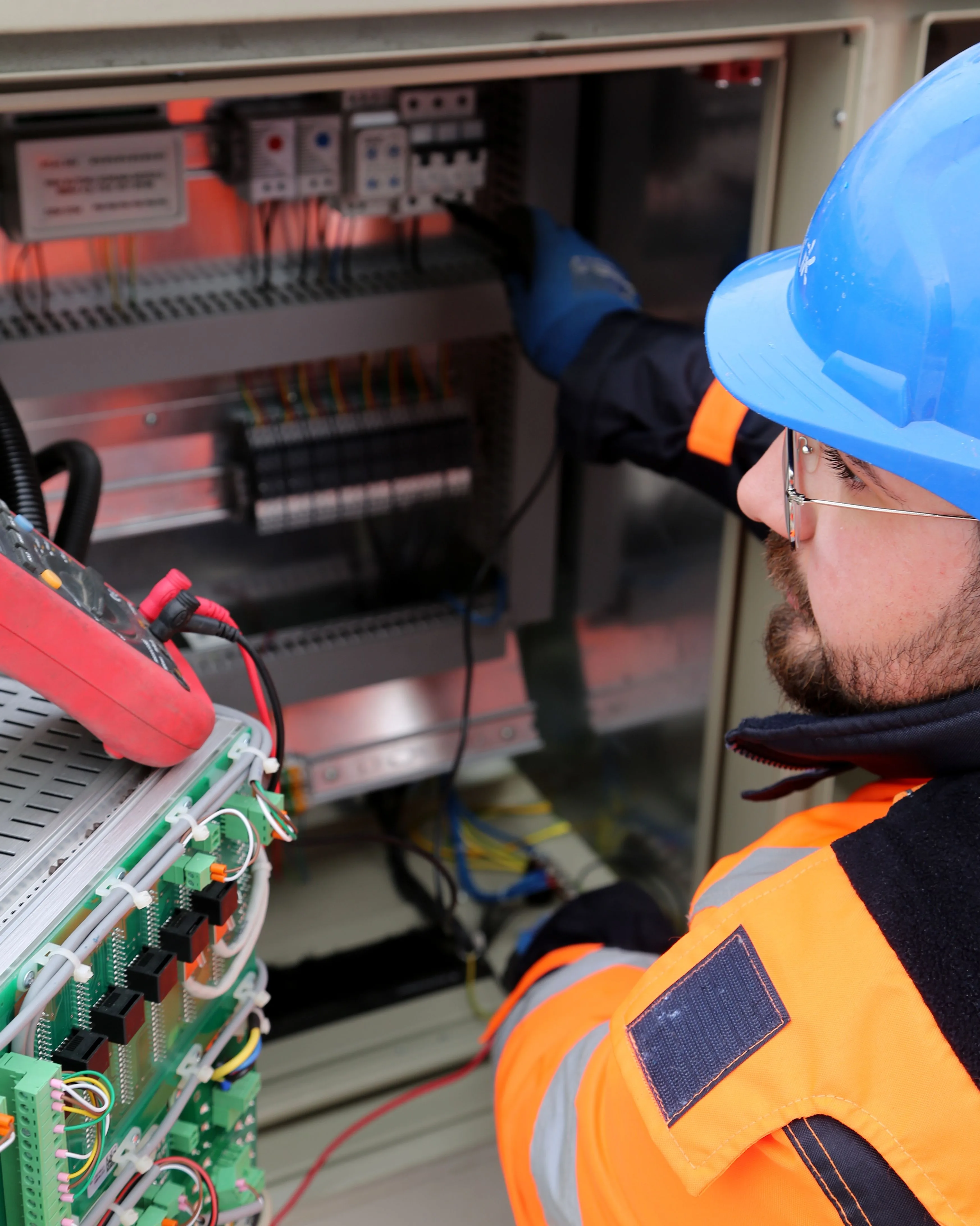
This photo shows the panel-side work that a service visit can involve, alongside checks on the unit itself.
What you get from the visit
The visit is judged on what it leaves working, not on how much it explains.
- A standby unit exercised and tested under load, not just looked at.
- A written health report after each visit, separating routine service from parts needed.
- Alerts between visits that flag a missed exercise or a fault early.
- Service scheduled before storm season, when parts and visits are still available.
Options compared: visit-only, monitoring, and combined cover
| Option | Best for | Watch out for |
|---|---|---|
| Visit-only maintenance | A home where someone tracks service dates reliably | Faults between visits stay hidden until the next visit |
| Monitoring only | A home that wants alerts without scheduled visits | Alerts do not fix oil, batteries, or filters by themselves |
| Combined plan | Storm-season homes wanting visits plus alerts | Needs a compatible unit and connection for monitoring |
| Storm-season readiness check | A one-off check before hurricane season | Does not replace routine oil, battery, and filter service |
Generator health monitoring is the monitoring half of a combined plan: alerts plus a report you can read. Think of it this way: maintenance fixes the machine, monitoring watches it between visits. Either alone leaves a gap. A combined plan closes the gap for homes that cannot afford a surprise on a storm night.
What generator maintenance and monitoring covers
Maintenance is the hands-on part: oil and filter service, battery testing, spark plug inspection, controller checks, and a run test that proves the unit can carry load. Generator monitoring in Fort Pierce is the watchful part: alerts when the generator exercises, faults, or runs, sent to your phone so a problem surfaces before a storm, not during one.
In short, maintenance fixes the machine and monitoring watches it between visits. Either alone leaves a gap.
What a maintenance visit covers
Standby generator upkeep is mostly this list, repeated on schedule. Ask for a written report after each visit. It should list the oil and filter service, the battery and charging system check, the spark plug inspection where the unit has them, the controller and fault-code review, the fuel and coolant check, the transfer switch test, and the run test under load. If a visit report lists only “checked OK,” ask what exactly was checked.
Infographic: Generator maintenance visit flow
Check history and faults first. Inspect and service the unit. Test under load. Report findings and set the next visit.
Wi-Fi or cellular: which monitoring keeps talking in an outage?
A monitor that reports over home Wi-Fi goes quiet when home internet drops, which often happens in the same storm that takes the power out, while a cellular monitor keeps reporting. Treat a missed exercise as the earliest warning, not a minor glitch, and keep a fuel note with the alerts: after any long run, check the tank level, oil, and battery before the next storm. Read more in the generator maintenance, exercise, and battery guide.
Generator due a service before storm season? Call and tell us the make, model, and last exercise date.
What changes the cost
No single Fort Pierce generator-service price fits every unit, so here is what moves it. Unit size and type come first: a large liquid-cooled unit needs more oil, more filters, and more time than a small air-cooled one. Visit frequency comes second, since a plan with more visits costs more in service than a single yearly visit. Monitoring comes third, because a monitoring setup needs compatible hardware and a connection, and some plans charge a subscription for alerts.
Parts found during the visit — a weak battery, worn spark plugs, a tired filter — add their own piece, which is why a written report matters: it separates routine service from parts the unit actually needed. Ask for a written, itemized price before the visit, with parts priced as found.
How a maintenance visit runs, step by step
- History and fault-code review. The provider reads the controller, notes fault codes, and checks when the unit last exercised and last had service.
- Fluid and filter service. Oil and filters are serviced, fuel and coolant are checked, and leaks are looked for.
- Battery and charging check. The battery is tested under load and the charging system is confirmed, since a dead battery is the most common no-start cause.
- Transfer switch test. The switch is tested to confirm the home moves to generator power and back cleanly. For new-generator work, see generator installation in Fort Pierce.
- Run test and report. The unit runs under load, monitoring alerts are confirmed where fitted, and you get a written report of what was done and what needs attention.
Fort Pierce notes for generator upkeep
Generator maintenance in Fort Pierce follows the storm calendar: schedule the main service visit before the season, not during it, when every provider is booked and parts run short. After a storm, check the unit even if it ran well: storm runs are long and hard, and they use up oil, fuel, and battery life faster than a short exercise run.
Salt air near the coast also corrodes terminals and housings faster than inland, so battery terminals and connections deserve a look at each visit. For a wider wiring check, see electrical inspection in Fort Pierce, and for brand-specific installs, see Generac generator installation in Fort Pierce.
Call right away if
Fuel leaks, a burning smell, or a generator that will not shut off need a call before the next run. Never run a portable generator indoors or in a garage, and never clear a fault code and ignore it. If anyone feels dizzy or nauseous near a running generator, get everyone outside and call 911.
This page covers Fort Pierce ZIPs 34950 and 34949.
How to choose a provider for maintenance and monitoring
Before you agree: generator maintenance checklist
- Did the provider read the fault codes and service history before quoting?
- Does each visit end with a written report listing what was checked?
- Was the transfer switch included, not just the generator?
- For monitoring, was your unit's compatibility confirmed first?
- Was the price written and itemized, with parts priced as found?
A standby generator service in Fort Pierce should start with the controller, not with a quote. A provider who quotes without reading the controller is guessing at the unit's health. The code read takes minutes and sets the whole visit up. The same report-first approach applies to generator upkeep in Fort Pierce North and across the city, and for exercise and battery basics, see the generator exercise and battery guide.
Mistakes to avoid with generator upkeep
- Clearing a fault code without writing it down.
- Skipping service because the generator “never runs.”
- Paying for monitoring on a unit that cannot support it.
- Servicing the generator while ignoring the transfer switch.
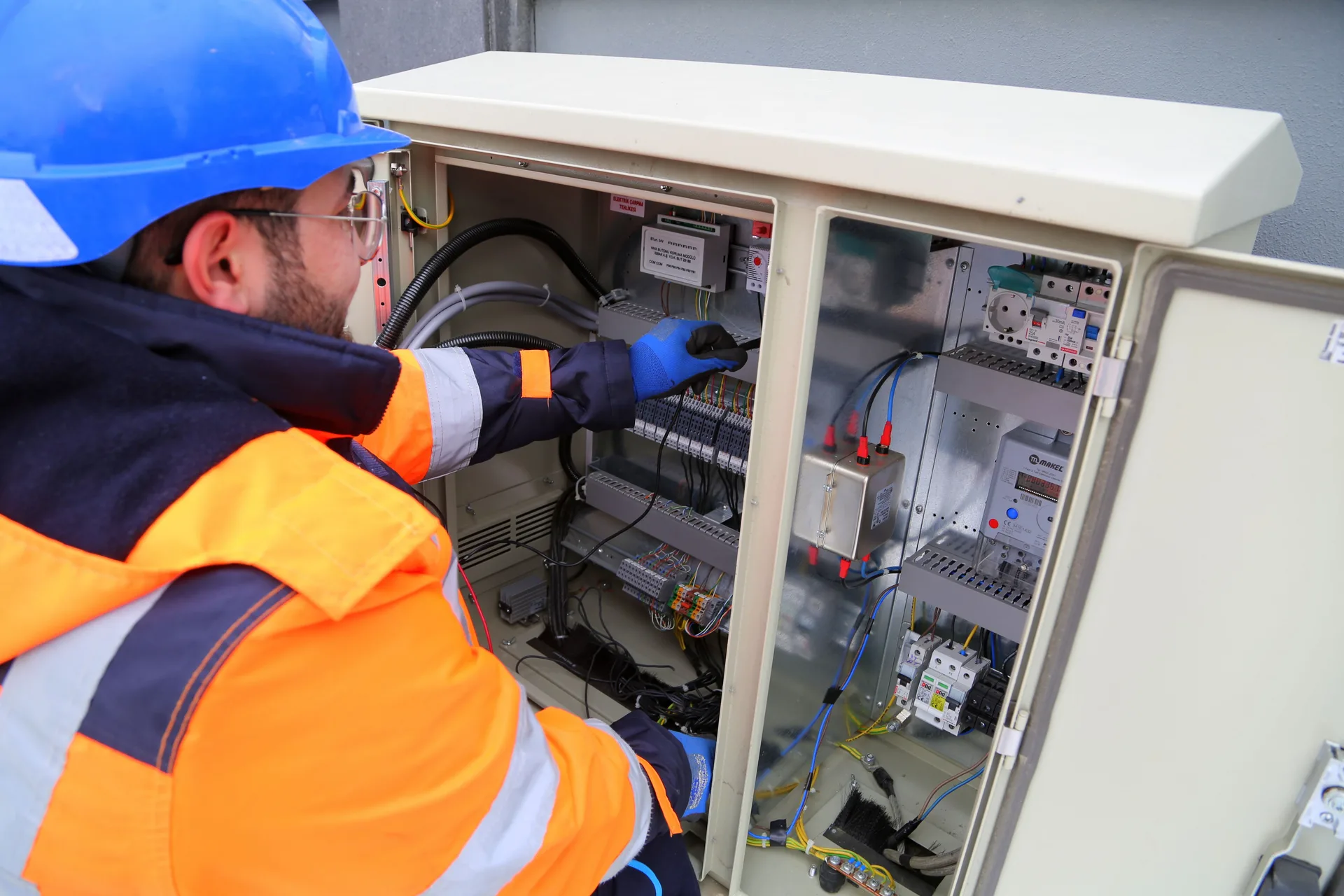
An outdoor panel like this is part of the system a maintenance visit checks, together with the generator unit.
Who watches the alerts
Monitoring only helps if an alert reaches someone who acts on it. Before a monitoring plan starts, name who receives alerts, on which phone or email, and what that person should do when a missed exercise or a fault alert arrives, instead of letting alerts pile up unread.
Also tell the provider whether the monitor reports over home Wi-Fi or over cellular, and whether the account and app access stay with the home if internet service changes. A monitor tied to a Wi-Fi network that changes can go quiet without anyone noticing, which is exactly the gap monitoring is meant to close.
Frequently asked questions: generator maintenance and monitoring in Fort Pierce
How often should a standby generator exercise?
Most standby generators run a short self-test, called an exercise run, on a regular schedule set by the maker, often weekly or monthly. The exercise run keeps the engine limber and can flag a fault before a storm arrives. Follow the schedule in your unit's manual, and treat a missed or failed exercise run as a reason to call, not as a detail to ignore.
What does generator maintenance include?
A maintenance visit usually covers an oil and filter service, a battery and charging check, a spark plug inspection where the unit has them, a controller and fault-code review, and a run test under load. Fuel, coolant on liquid-cooled units, and the transfer switch get checked too. Ask the provider for a written report after each visit, so you can see what was checked and what needs attention.
Can I monitor my generator remotely?
Yes, if your unit supports it. A remote monitoring setup sends alerts to your phone when the generator exercises, faults, or runs, and some setups let you check status while you are away from home. Monitoring needs a compatible unit and a connection, usually cellular or Wi-Fi. Ask the provider whether your unit supports it before paying for a monitoring plan.
What should I do if my generator will not start after a storm?
Note any fault code on the display before touching anything, then check the obvious: fuel supply, breaker position, and whether the unit is in automatic mode. Do not keep cranking a unit that will not start, and do not run a portable generator indoors or in a garage, since exhaust fumes can kill. Call a provider with the fault code ready.
Is a maintenance plan worth it?
A plan suits a home that depends on the generator during storm season and wants scheduled visits, a written health report, and priority booking without remembering the schedule itself. A visit-only setup suits a home where someone reliably tracks exercise runs and service dates. Either way, the unit needs regular attention; a plan just moves the remembering onto the provider.
Does remote monitoring replace the yearly service visit?
No. Monitoring watches the generator between visits and flags faults, missed exercises, and low-battery warnings, but it cannot change oil, replace a filter, test a battery under load, or prove the transfer switch carries the house. Those jobs need a hands-on visit. Think of monitoring as the early warning and the visit as the work itself, and keep both on schedule for storm season.
Need an electrician in Fort Pierce? Call now and describe the problem.