
Ceiling Fan Installation in Fort Pierce, FL
A fan that hangs steady, runs quiet, and answers the control you want — fitted on a fan-rated box, serving Fort Pierce ZIPs including 34950 and 34982.
When you call, tell us your ceiling height and slope, whether a light already hangs there, and whether you want separate fan and light control.
What is ceiling fan installation?
Ceiling fan installation fits a fan on a fan-rated box braced to the framing, with wiring, switch, and remote or wall control set up and balance-checked. Tell us your ceiling height and slope, whether a light already hangs there, and whether you want separate fan and light control.
The box check comes first: is your ceiling box fan-rated and braced to a joist for a fan's weight and motion? A light-only box is not a safe substitute, however solid it feels on day one.
You reach a provider through Fort Pierce Electric Pros. The provider checks the box, wiring, and switch before fitting anything, then mounts the fan, sets up the remote or wall control, and balance-checks it.
Signs you need a new fan, a new box, or a wobble fix
- You want a fan where a light fixture is, or where there is no fixture at all.
- A fan wobbles, clicks, hums, or moves at the mount.
- A fan was fitted to a light-only box, or the box type is unknown.
- You want a remote, a separate fan and light control, or a smart control, and the existing switch does not support it.
- A fan is in a room with a high ceiling, a sloped ceiling, or an outdoor porch, and needs a suitable mount and rod length.
- A fan is warm, smells burnt, or sparks — warm or burnt = urgent, see the emergency page first if there is heat, smell, or sparks.
Options compared: fan types and controls
| Option | When it fits | When it does not fit | Key limit |
|---|---|---|---|
| Standard ceiling fan | General rooms, bedrooms, living areas | Outdoor porches without outdoor rating | Needs fan-rated box and support |
| Outdoor / damp-rated fan | Porches, patios, covered outdoor areas | Indoor-only fan outdoors | Rating must match location (damp vs wet) |
| Fan with light kit | Room lighting plus air movement | Separate light and fan control not fitted | Needs separate fan and light control where you want it |
| Remote / smart control fan | High ceilings, remote control, scheduling | No suitable receiver, incompatible control | Control compatibility matters |
| Wobble fix / re-mount | Existing fan wobbles, mount loose, box not fan-rated | Fan motor or blades damaged beyond repair | Fixes mount and balance, not a damaged motor |
Box first, fan second. If the box is not fan-rated, the fan choice does not matter — the box must be replaced first. A provider should show you the box type before fitting a fan, not after.
How ceiling fan installation runs, step by step
Infographic: Ceiling fan installation process
- Box and support check. Check whether the box is fan-rated, and whether support is suitable for fan weight and motion. If not, replace the box first — that is part of the job, not an extra.
- Wiring and switch. Check the circuit, and fit a switch, remote, or control that gives separate fan and light control where you want it.
- Fit fan. Mount the fan, fit blades and light kit, and set rod length for ceiling height and slope where it applies.
- Balance and test. Check wobble and balance, test controls, and hand over instructions for use, including what to do if wobble returns.
Cost and what changes the price
Two fan jobs can look identical from the floor and price very differently. Whether a fan-rated box and brace are already there, what wiring and switch work is needed, how high and accessible the ceiling is, and whether a remote or wall control is fitted — those are the levers. A replacement on an existing fan-rated box is one job; a fan where no fixture exists at all is another. Ask for a written price after a look at your ceiling and box, and confirm whether box replacement, control setup, and the fan unit itself are in it.
Infographic: Ceiling fan cost factors flowchart
Time, safety, permits, and local rules
Time: a replacement on an existing fan-rated box is typically a single visit, once the box is checked. A new fan where there is no fixture, a box replacement, or a high-ceiling mount takes longer.
Safety: do not hang a fan from a light-only box, do not ignore a fan that moves at the mount, and do not use an indoor fan outdoors without an outdoor rating. If a fan is warm, smells burnt, or sparks, see the emergency page first. Outdoor fans need a rating that matches location (damp vs wet) — a damp-rated fan in a wet location is not a safe substitute.
On permits: Florida Building Code 105.1 requires a permit before installing or altering a regulated electrical system, with an application to the building official first. Whether a single fan needs the same permit path as panel work depends on scope and jurisdiction — check by address before work starts.
Local considerations: Fort Pierce porches, patios, and outdoor living make outdoor and damp-rated fans more common here than in a purely indoor market. Coastal homes on Hutchinson Island and South Beach need outdoor ratings and salt-air considerations for porch fans, because salt-air corrodes outdoor equipment faster than inland equipment. Older homes in Downtown and Lincoln Park may have light-only boxes, which makes a box check essential before any fan is fitted.
Seasonal considerations and DIY vs hiring
Fan work runs year-round, with a summer spike when air movement matters most. A fan moves air and can make a room feel cooler, but it does not cool air itself or replace air conditioning in Fort Pierce summer heat.
The box check is the reason to hire a provider for fan work: fitting a fan to a light-only box, wiring without a suitable switch, or mounting on a high or sloped ceiling without suitable support are the common mistakes. For the full box-check explainer, read the ceiling fan rated box guide.
Common mistakes to avoid
- Hanging a fan from a light-only box, instead of a fan-rated box.
- Ignoring a wobble that is getting worse, or a fan that moves at the mount.
- Using an indoor fan outdoors, without an outdoor rating.
- Fitting a fan without separate fan and light control, then finding you cannot control them separately.
- Using a balancing kit alone for a mount problem, instead of checking the box and support.
- Accepting a phone estimate that changes after the box is looked at, instead of a written price after a box check.
Decision checklist: choosing a provider for fan work
- Do they check the box and support before recommending a fan, and show you the box type?
- Do they give a written, itemized price (fan unit, box replacement if needed, wiring/switch, controls) after looking at your ceiling?
- Do they explain fan rating (indoor vs damp vs wet) in plain words, and what it means for your location?
- Do they test wobble and balance, and hand over control instructions?
- Can you verify their license through Florida DBPR, if you want to check? Ask the provider directly for their license number.
Fan wobbling, or a new fan to fit? Call now and tell us your ceiling height and slope.
High ceilings, sloped ceilings, and outdoor fans
On a vaulted or sloped ceiling, a downrod drops the fan to a height where it moves air properly, and a sloped adapter keeps the mount level. Without the right rod length, a fan can sit too high to be felt or too low to be comfortable.
Outdoor fans need a damp rating for a covered porch, and salt air shortens their life further. For fan-and-light combinations, ask whether the fan and light switch separately.
What ceiling fan installation looks like in a room
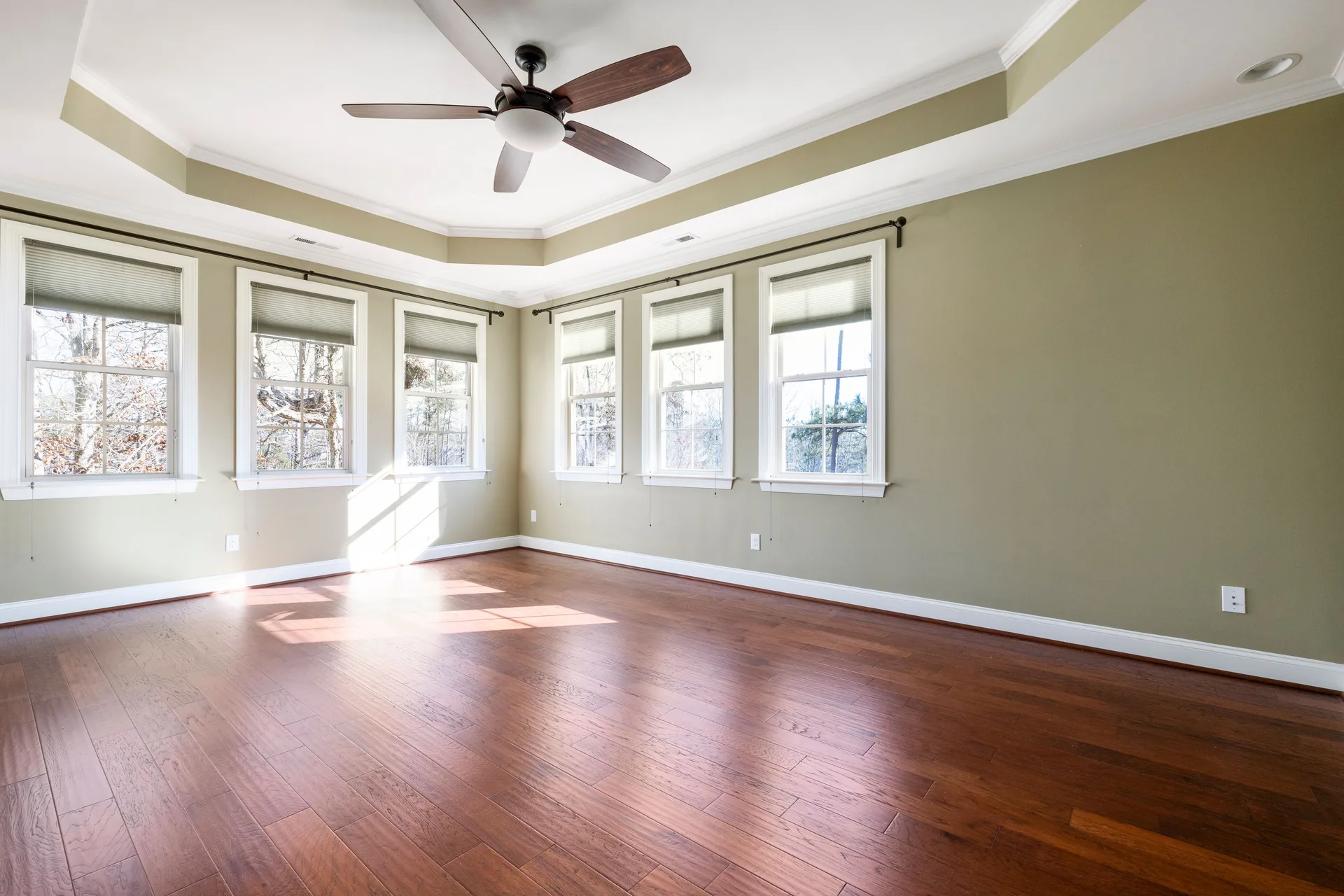
Related services and areas
Fan work often follows or precedes other services. A new light may be a lighting job, not a fan job, because fixture and box requirements differ. A new switch may be an outlet and switch job. A wobble problem that is a mount problem may stay as fan work, not repair, unless the cause is a circuit fault. An unsafe fan is an emergency first, not a scheduled fan job.
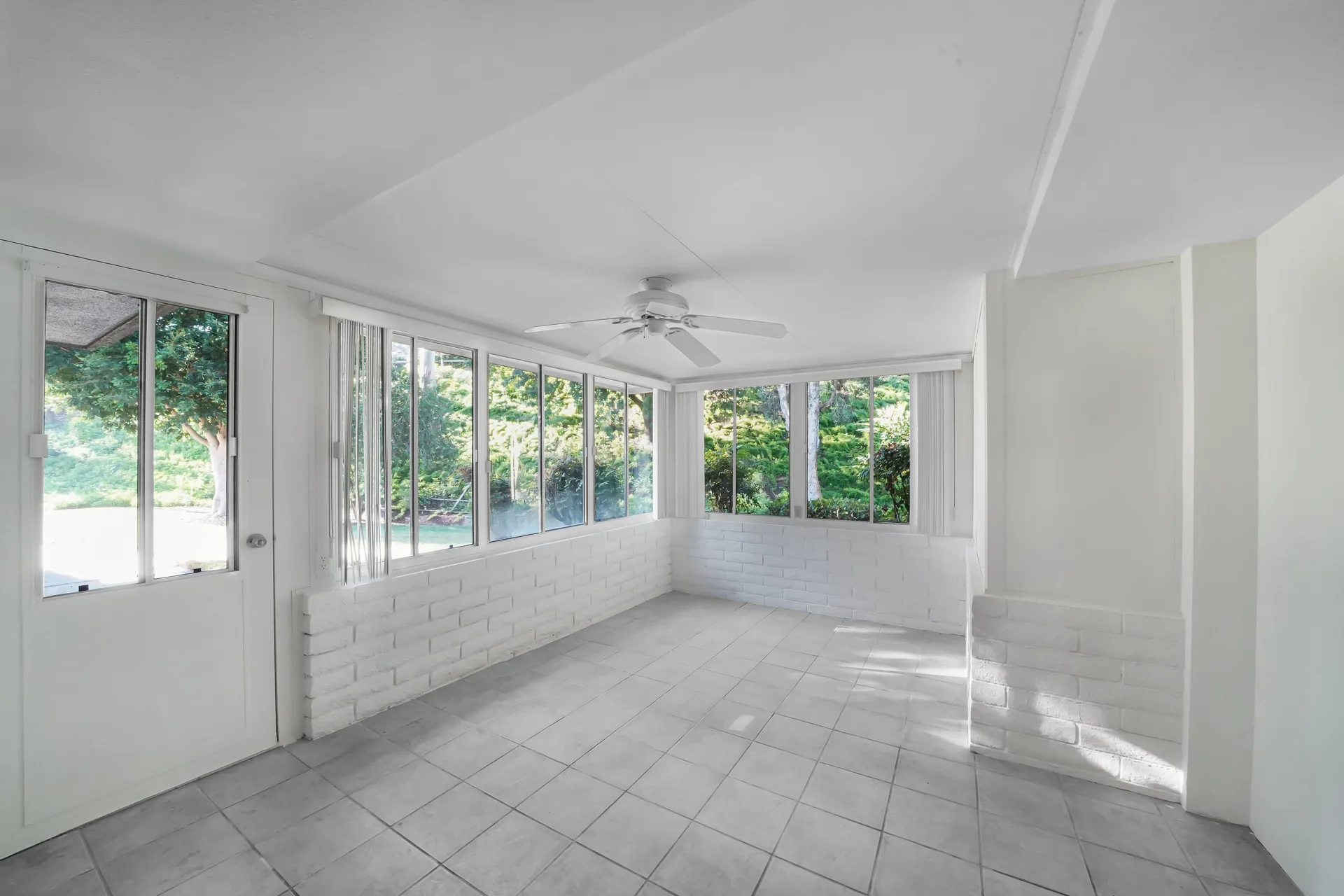
Ceiling fan installation is needed across Fort Pierce, including Downtown, Hutchinson Island, and Fort Pierce North. See the service areas hub for the full list, and tell us your town or ZIP when you call.
When the remote and the wall switch disagree
A fan that answers the remote sometimes and ignores the wall switch usually has a control problem, not a motor problem: the wall switch must stay on for the remote receiver in the canopy to work. Tell the provider which control works and which does not.
A fan fitted where only a light hung before needs more than a swap: the light box must be replaced with a fan-rated box braced to the framing. Ask the provider to show you the box type before the fan goes up, not after.
Fan direction by season, and swap versus new wiring
A ceiling fan does not cool air; it moves it. Downward airflow gives the cooling feel most people want in summer, while reverse recirculates warm air near the ceiling in cooler months — check your fan's instructions for how its direction is switched.
Time follows the wiring case, not the fan: a straight swap onto an existing fan-rated box is simplest, a light-only box that must be replaced adds a step, and a room with no wiring needs a new circuit run, a switch drop, and a braced box.
Frequently asked questions: ceiling fan installation in Fort Pierce
Can I install a ceiling fan where a light fixture is?
Sometimes. A light fixture box is not automatically a fan-rated box. A ceiling fan needs a box rated for fan weight and motion, with suitable support. A provider should check the box and support before fitting a fan, rather than hanging a fan from a light-only box.
Why does my ceiling fan wobble?
Wobble can be unbalanced blades, a loose mount, a bent blade bracket, or a box that is not fan-rated. Check blade alignment and mounting first, but do not ignore a wobble that is getting worse, or a fan that moves at the mount — that needs a check, not a balancing kit alone.
Do I need a fan-rated box?
Yes, for a ceiling fan. A fan-rated box is made and supported for fan weight and motion, while a light-only box is not. Fitting a fan to a light-only box is a common mistake that can lead to a fan loosening over time, even if it feels solid on the day it is fitted.
How much does ceiling fan installation cost in Fort Pierce?
It varies with the ceiling, not just the fan. A replacement on an existing fan-rated box is a smaller job than a fan where wiring, a box, and a switch all need adding, and ceiling height and controls add further variables. Ask for a written price after a look at your ceiling and box, with box work and controls itemized.
Can I add a fan to a room with no wiring?
Yes, a fan can be added where wiring can be routed safely, but circuit, wall and ceiling access, and fan-rated support all matter. A provider should check the nearest circuit, panel capacity, and ceiling access before giving a price, rather than promising a fan anywhere without a look.
What is the difference between a fan and a light with a fan?
A ceiling fan moves air and may include a light kit. A light fixture with a fan function still needs fan-rated support and a suitable switch or remote. The difference that matters for installation is support and control — fan weight and motion, plus separate fan and light control where you want it.
Can a ceiling fan help with air conditioning in Fort Pierce?
A ceiling fan moves air and can make a room feel cooler, which may let you set air conditioning slightly higher, but a fan does not cool air itself and does not replace air conditioning. In Fort Pierce summer heat, a fan is a comfort and circulation aid, not an air-conditioning substitute.
Do I need a permit for a ceiling fan in Fort Pierce?
Under the Florida Building Code, a permit is generally required before installing or altering a regulated electrical system, with an application to the building official first. Whether a single fan needs the same permit path as panel work depends on scope and jurisdiction — check by address before work starts.
Can a fan go on a high or sloped ceiling?
Yes, with the right hardware. A downrod drops the fan to a height where it moves air properly, and a sloped adapter keeps the mount level on a vaulted ceiling. Without the right rod length, a fan can sit too high to be felt or too low to be comfortable. Tell the provider your ceiling height and slope when you call, so the fitting and the rod length are planned before the visit.
Need an electrician in Fort Pierce? Call now and describe the problem.