
Commercial Electrician in Fort Pierce, FL
Power planned around your trading hours, so work fits your business — not the other way around. Serving Fort Pierce ZIPs including 34950 and 34951.
When you call, tell us your business type, what is happening, and when your business can be without power.
What is commercial electrical work?
A commercial electrician handles offices, restaurants, retail shops, and warehouses, where larger panels, more circuits, and downtime planning shape every job. Tell us your business type, what is happening, and when your business can be without power.
For a business, the first question is never just the fault — it is what stops while the power is off. Commercial work covers panels, circuits, lighting, outlets, and service work, planned around your business hours and downtime window, not just around a single visit.
That covers office electrical service, retail fit-out, and restaurant electrical work, plus parking lot lighting where the site needs it. New construction wiring is mentioned only where a provider confirms it — do not assume it is offered.
Signs a business needs commercial electrical work
- Breakers trip when kitchen equipment, HVAC, or warehouse equipment runs together.
- Lights flicker, dim, or go out across a whole floor or building, not just one room.
- A panel is full, and there is nowhere left to add a circuit for new equipment.
- An inspector or insurer flagged the panel, wiring, or service.
- You are fitting out, expanding, or changing use (office to restaurant, retail to warehouse), and the existing service does not match the new load.
- Parking lot, security, or outdoor lighting is damaged, outdated, or missing.
- A panel is warm, smells burnt, or sparks — warm or burnt = urgent, see the emergency page first if there is heat, smell, or sparks.
Options compared: commercial work types
| Work type | When it fits | When it does not fit | Key driver |
|---|---|---|---|
| Commercial panel upgrade | Panel full, undersized, flagged, new major load | Single faulty circuit, good panel | Capacity and downtime planning |
| Commercial circuits / outlets | New equipment, new layout, dedicated circuits | Panel capacity too low | Load and circuit count |
| Commercial lighting | Offices, retail, warehouses, parking lots | — (fixture and circuit scope varies) | Fixture count and circuit scope |
| Commercial repair | Single fault, tripping, flickering, dead circuit | Whole-building panel or wiring problem | Diagnosis first, then panel or wiring |
| New construction wiring | Only if a provider confirms it (B2B, different buyer) | Not assumed on this page | Only where a provider confirms it |
Downtime first, scope second. A commercial provider should plan around your business hours and downtime window, not just around a single visit. Ask for that planning in writing, before work starts.
How commercial work runs, step by step
Infographic: Commercial electrical work process
- Business and load assessment. Check business type, load (including three-phase where it applies), panel, and circuits. That assessment decides panel, circuit, or repair scope.
- Downtime plan and permit. Plan around business hours and downtime window, file the permit, and schedule work in phases where possible.
- Phased work. Work circuit by circuit, with power restored where possible, and business disruption kept as low as scope allows. A commercial job that shuts a whole building without a downtime plan has not been planned.
- Inspection and handover. Inspector visits, panel directory is handed over, and next steps are explained in plain words, including maintenance and what to watch for.
Commercial work at a glance
What’s included
- Business and load assessment, including three-phase where it applies
- Downtime plan and permit, work phased around business hours
- Inspection and handover with a panel directory
Benefits
- Power restored where possible as work goes circuit by circuit
- Disruption kept as low as scope allows
- A handover pack and next steps explained in plain words
Who it’s for
- Offices, restaurants, retail shops, and warehouses
- A panel that is full, or breakers that trip when equipment runs together
- A fit-out, expansion, or change of use the existing service does not match
Cost and what changes the price
Commercial pricing follows scope, not square footage alone. Building type, service size including three-phase where it applies, circuit count, the condition of the panel and wiring, access, permit and inspection coordination, and the downtime plan you agree together all shape it. A single office outlet and a restaurant panel upgrade are both ‘commercial work’ and nothing alike in price, so ask for an itemized written price after a walk-through of your building, and confirm whether downtime planning and inspection coordination are inside it.
Infographic: Commercial cost factors flowchart
Time, safety, permits, and local rules
Time depends on building type, service size, circuit count, and downtime window. A single commercial circuit is typically a single visit, once diagnosis is done; a panel upgrade, a fit-out, or a change of use takes longer, with phasing and inspection.
Safety: do not open the panel interior, do not hold a breaker on, and do not ignore a warm, buzzing, or burnt-smelling panel. If there are warning signs, see the emergency page first. Commercial buildings with public access, kitchens, and warehouses have additional safety considerations — a provider should plan around public access and kitchen or warehouse operations, not just around circuits.
Permits: Florida Building Code 105.1 requires a permit before installing, altering, or replacing a regulated electrical system, with an application to the building official first. Whether the City of Fort Pierce or St. Lucie County handles your permit depends on your exact address, and commercial scope often needs landlord, tenant, and building management coordination too.
Local considerations: Downtown Fort Pierce businesses (restaurants, retail, offices in the marina district) are more likely to need panel and circuit work for kitchen and HVAC loads, and for change-of-use fit-outs. Fort Pierce North businesses (airport and business-park corridor) are more likely to need warehouse and larger-service work. Hutchinson Island and South Beach businesses (condos, hotels, restaurants) face salt-air corrosion and coastal placement considerations. Those are patterns, not per-building facts.
Seasonal considerations and DIY vs hiring
Commercial work runs year-round, with a spike during fit-out, expansion, and change of use, and before summer when HVAC and kitchen loads rise. A job planned during a fit-out is often simpler in wall and ceiling work, because ceilings and walls are already open.
Commercial electrical work is not a DIY job, and it is not a residential job with a larger panel. What helps the provider: business type, what is happening and when, downtime window and business hours, landlord or building management contacts, and new equipment or layout plans.
Common mistakes to avoid
- Treating a commercial job as a residential job, with a residential panel and circuit plan.
- Adding equipment without a load calculation, then finding the panel cannot carry it.
- Shutting a whole building without a downtime plan, instead of phasing work.
- Ignoring landlord, tenant, or building management coordination until after work starts.
- Accepting a phone estimate that changes after the building is looked at, instead of a written price after assessment.
- Skipping permit and inspection coordination, or assuming jurisdiction without checking your address.
Decision checklist: choosing a provider for commercial work
- Do they assess business type, load, and panel before recommending panel, circuit, or repair scope?
- Do they give a written, itemized price (panel, circuits, lighting, permit/inspection) after looking at your building?
- Do they plan around your business hours and downtime window, in writing, before work starts?
- Do they handle permit, landlord, and building management coordination where it applies?
- Do they label every circuit and hand over a directory when work is finished?
- Can you verify their license through Florida DBPR, if you want to check? Ask the provider directly for their license number.
Keeping your business running? Call now and tell us your business type and downtime window.
The commercial details that protect trading hours
Three commercial details change the plan: exit and emergency lighting must be tested so escape routes stay lit when power fails; fit-out power must be mapped to the new layout before walls close; and point-of-sale circuits need their own capacity, since a register sharing a circuit with kitchen equipment trips at the worst hour. Read how downtime is planned in the commercial downtime guide.
New equipment raises a supply question — three-phase or single-phase only — since some commercial equipment needs three-phase. Ask whether work can be staged around trading hours, and what that staging does to the schedule and scope.
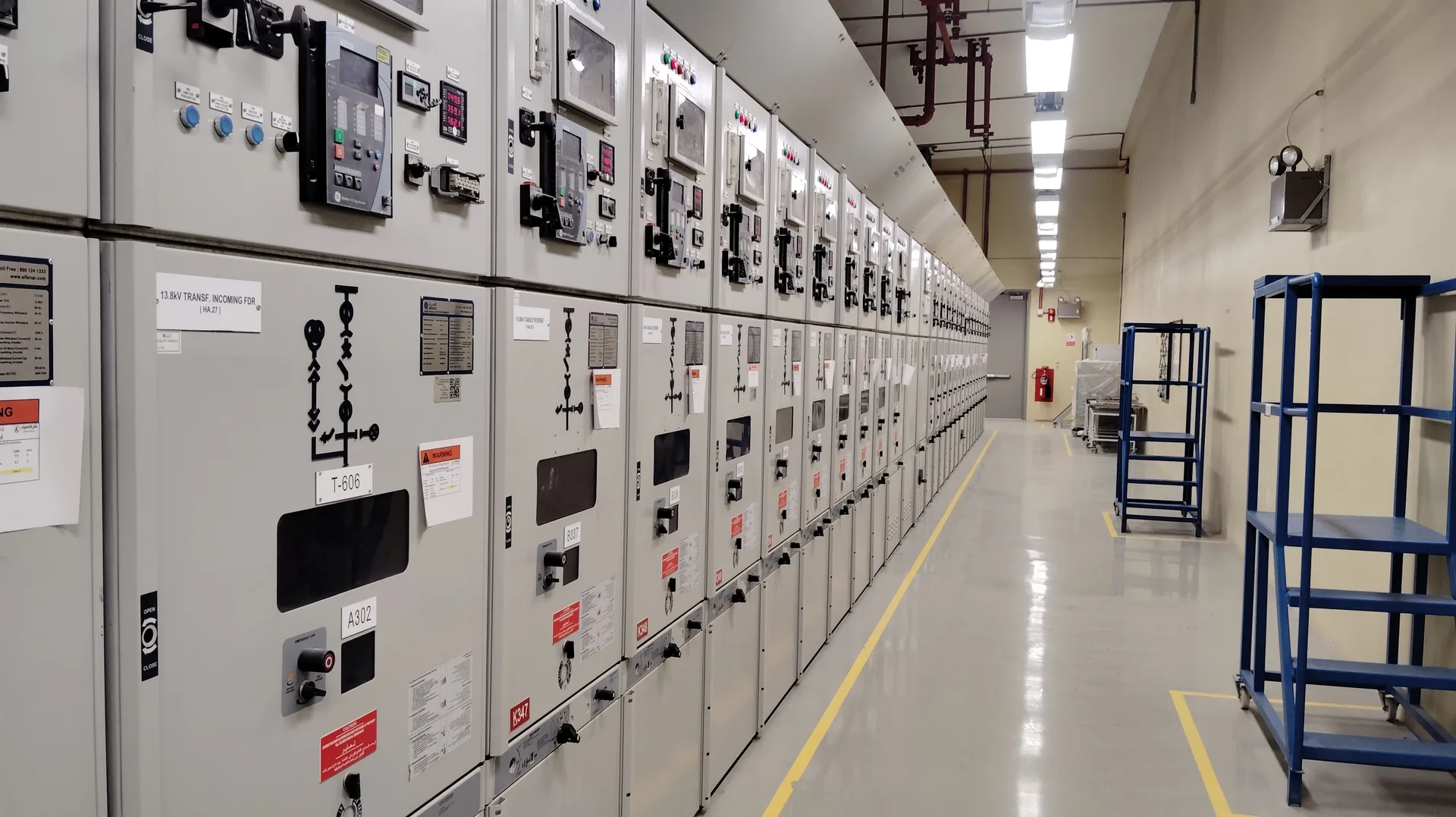
What commercial electrical work looks like
Related services and areas
Commercial work often follows or precedes other services. A panel check may lead to panel upgrade or to the commercial panel upgrade page. Parking lot lighting goes on the parking lot lighting page. A single faulty circuit may stay as electrical repair for diagnosis, not commercial panel work. An unsafe problem is an emergency first, not a scheduled commercial job.
Commercial electrical work is needed across Fort Pierce, including Downtown, Fort Pierce North, and Hutchinson Island. See the service areas hub for the full list, and tell us your business type and town or ZIP when you call.
One provider across several sites, and the handover pack
One point of contact, one schedule, and one set of records across every site keeps small faults from being handled differently at each location. Ask whether maintenance can run on a single cycle across all your sites, and how faults found at one site are reported back to you.
When work finishes, ask what the handover pack contains before work starts: updated panel schedules, a labeled circuit directory, and a maintenance schedule for panels, lighting, and emergency fittings.
Lot, sign, and pole lighting, and the upgrades that drive commercial work
Parking lot, security, and sign lighting brings its own access problem: poles and high fittings are often reached by bucket truck, so pole height, truck access, and whether the lot can stay open during the work all shape the plan. Tell the provider the pole heights, the fixtures that are out, and whether the lot must stay lit and open.
Two other drivers sit behind much commercial scope: code-driven upgrades after a change of use, new equipment, or a failed inspection; and fit-outs that include telecom and data points planned with the circuits, not added after the walls close.
Frequently asked questions: commercial electrician in Fort Pierce
What is a commercial electrician in Fort Pierce?
A commercial electrician works on business premises — offices, restaurants, retail, warehouses, and other commercial buildings — where load, downtime, and code scope differ from homes. Commercial work covers panels, circuits, lighting, outlets, and service work, with a focus on keeping a business running.
How is commercial electrical work different from residential?
Commercial work differs in load (three-phase where it applies, larger service, more circuits), in downtime cost (a business loses revenue while power is off), and in scope (more fixtures, more circuits, more inspection and coordination). A provider should plan around business hours, not just around a single visit.
How much does commercial electrical work cost in Fort Pierce?
Commercial work is priced by scope, so no single number covers it. Building type, service size, circuit count, panel and wiring condition, access, permit and inspection coordination, and downtime planning all shape the written, itemized price. Ask for that price after a walk-through of your building.
Can commercial work be done outside business hours?
Sometimes, depending on the provider, the scope, and the building. Hours are Monday to Saturday, 9:00 to 18:00. Ask a provider directly about scheduling around business hours, and do not assume out-of-hours work is available. Agree the downtime window and the out-of-hours question in writing before work is booked, so a busy trading day is never the day a circuit goes dark.
Do I need a commercial panel upgrade?
A commercial panel upgrade fits a panel that is full, undersized, or flagged, or a business adding major load (kitchen equipment, HVAC, EV charging, warehouse equipment). A load calculation and a panel check show whether an upgrade, a subpanel, or a repair fits — see the commercial panel page for full detail.
What about parking lot lighting?
Parking lot lighting covers fixtures, poles, and circuits for commercial parking lots. This page covers commercial work in general; parking lot lighting detail is on the parking lot lighting page. Poles, fixtures, and circuits age differently, so ask what the provider checks first: the pole base, the fixture, or the circuit feeding it.
Do I need a permit for commercial electrical work in Fort Pierce?
The Florida Building Code generally requires a permit before installing, altering, or replacing a regulated electrical system, with an application to the building official first. Whether the City of Fort Pierce or St. Lucie County handles your permit depends on your exact address, and commercial scope often needs more coordination than a home job.
What should I tell a provider when I call about a business?
Tell them your business type, what is happening, when it started, what was running, whether it is one circuit or the whole building, and when your business can be without power. Downtime window, business hours, and load are the three things a commercial provider needs first.
What is exit and emergency lighting testing?
Exit and emergency lighting must stay lit when power fails, so escape routes remain visible. Testing checks that each fitting switches to its backup source and stays lit for the required period, and that damaged or dim units are found before an emergency finds them. Ask the provider how testing is recorded for your building, since a written record is what shows the checks actually happened.
Need an electrician in Fort Pierce? Call now and describe the problem.