
Parking Lot Lighting in Fort Pierce
Even light across every lane, walkway, and entrance after dark. Parking lot lighting in Fort Pierce keeps customers and staff moving safely, with no dark patches to guess at.
When you call, tell us how many poles and fixtures the lot has, which areas stay dark, and whether lights fail by pole, row, or whole lot.
Parking lot lighting keeps driving lanes, walkways, and entrances evenly lit after dark, so customers and staff can move safely. Call (772) 218-3629 and tell us how many poles and fixtures the lot has, which areas stay dark, and whether lights fail by pole, row, or whole lot, so a provider can trace the fault and plan a night check.
Signs your parking lot lighting needs attention
- Dark patches between poles. A failed fixture, or poles spaced too far apart, leaves gaps where people walk unseen.
- Lights that flicker or cycle on and off. A failing lamp, driver, or ballast often flickers before it dies outright.
- Whole rows out at once. A row-wide failure usually points to a circuit or underground wiring fault, not to the fixtures.
- Lights on during the day, or off at night. A failed photocell or a timer set wrong wastes power by day and leaves the lot dark by night.
- Leaning, rusted, or damaged poles. Vehicle strikes, storm wind, and base corrosion all weaken poles, and a leaning pole needs attention before it becomes a falling pole.
- Dim, yellow light that hides markings. Old HID lamps dim with age, so a lot can look lit while actually giving far less light than it once did.

Even light across a lot at night is the goal: drivers and walkers should see lanes, crossings, and parked cars without dark patches.
What you get from the visit
The visit is judged on what it leaves working, not on how much it explains.
- Even light across lanes, walkways, and entrances, with no dark patches.
- LED fixtures that switch on at full brightness and show faces and markings clearly.
- A pole-by-pole plan, so the lot never closes all at once for the work.
- A night check after fitting, plus a log of poles, fixtures, and controls for the next repair.
Options compared: new poles, retrofit, and controls
| Option | Best for | Watch out for |
|---|---|---|
| LED retrofit on existing poles | A lot with sound poles and old fixtures | Pole spacing and wiring still set the light pattern |
| New poles and fixtures | A lot with missing, damaged, or badly spaced poles | Trenching, conduit, and pole bases add work |
| Single-fixture repair | One or two failed lights on an otherwise sound lot | Repeat failures may mean the fixtures are past their best |
| Photocell controls | Lights that should follow dusk and dawn | A failed photocell leaves lights on all day or off all night |
| Timer or motion controls | Lots with quiet hours or staff-only areas | Settings need matching to real opening hours |
Parking lot light repair in Fort Pierce usually starts with the same question: is it one pole, or a whole row? For most lots, a retrofit is the sensible first step: keep the poles, swap the fixtures to LED, and fix the controls. New poles enter the picture only when poles are damaged, missing, or so badly spaced that no fixture swap can even the light out.
Diagram: even parking lot light, pole to pole
Poles spaced so light pools overlap. Driving lanes and walkways stay lit. No dark patches between poles. Photocell or timer switches lights on at dusk.
What parking lot lighting covers
Together they make up commercial site lighting: light where people drive, walk, and enter. The system has four parts. Poles hold the fixtures up high enough to spread light. Fixtures, usually LED today, make the light. Controls — photocells, timers, or motion sensors — decide when lights switch on and off. And underground wiring ties the poles back to the panel. A fault in any one part can darken a whole row.
In short, good lighting is even lighting. Bright pools under one pole with dark gaps between poles help nobody.
Pole height, spacing, and light shape
Layout guides commonly relate pole spacing to pole height: taller poles spread light farther, so they can sit farther apart, while short poles need closer spacing to avoid dark gaps. A planning rule of thumb puts spacing at roughly two and a half to three times the mounting height, but the real answer comes from a walk of the lot and the fixture's light pattern, not from height alone.
Light shape matters as much as brightness. Some fixtures throw light in a wide square around the pole, others throw it forward along a driving lane, and fitting the wrong shape leaves bright pools in one place and dark patches in another. Ask what pattern each fixture gives, and whether entrances, walkways, and crossings get their own coverage rather than borrowing light from the nearest driving lane.
Glare and spill deserve a line in the plan too. Unshielded fixtures can throw light into neighboring properties and drivers' eyes, while a shield, a warmer color, or a dimming schedule can keep the lot lit without annoying the street next door. Surge protection belongs on the same list: outdoor pole circuits take storm and power-event hits that indoor circuits never see, and one surge can darken a row at once.
Finally, plan the after-dark check and the record. A night walk after fitting proves the coverage, and a simple log of poles, fixtures, controls, and faults turns the next repair from a search into a fix. Lots near the coast should add a base and fitting check to that log, since salt air attacks pole bases and lens seals first.
Dark patches in your lot after dark? Call and tell us how many poles the lot has and where it stays dark.
What changes the cost
Think of the whole setup as one parking area lighting system, priced by poles, fixtures, wiring, and controls together. No single Fort Pierce lot-lighting price fits every property, so here is what moves it. Pole count and fixture count come first. Wiring condition comes second: a lot with sound underground wiring is a smaller job than one with faults that need locating and trenching. Pole work comes third, since new poles, bases, and conduit cost far more in labor and materials than a fixture swap on an existing pole.
Access and timing matter too. Tall poles need lift equipment, and work planned around business hours may need night testing. Ask for a written, itemized price after the provider has walked the lot and counted poles, fixtures, and controls.
How a parking lot lighting visit runs, step by step
- Lot walk and count. The provider walks the lot, counts poles and fixtures, notes dark patches, and checks pole condition at the base.
- Fault finding. Failed fixtures are traced to lamp, driver, ballast, photocell, or wiring, and row-wide failures are traced to the circuit.
- Option and control choice. Retrofit, repair, or new poles are chosen per area, with photocell, timer, or motion controls matched to opening hours.
- Fit and wire. Fixtures are swapped or poles set, wiring is run or repaired, and controls are set and tested.
- Night check. The lot is checked after dark to confirm even coverage, with no dark patches on walkways or entrances.
Fort Pierce notes: storms, salt air, and business hours
A parking lot lighting installation in Fort Pierce has to survive storm wind and salt air, which wear outdoor lighting faster than indoor work. Poles near the coast corrode at the base, photocells cloud over, and a storm can take out a row in one night. A routine walk of the lot after a storm catches those failures before customers do.
Business hours shape the work as well. Most lots cannot close for a day, so plan pole-by-pole work and night testing around your quiet hours. Commercial outdoor lighting in Fort Pierce is the same idea outside: poles, fixtures, and controls kept working night after night. For indoor commercial work, see commercial electrician service in Fort Pierce, and for a wider wiring check, see electrical inspection in Fort Pierce. Lighting inside the building follows the same even-coverage idea; see lighting installation in Fort Pierce.
Call right away if
A leaning or cracked pole, exposed wiring, or a pole hit by a vehicle needs a call before anyone walks near it. Keep people clear of the pole and switch the circuit off at the panel only if you can do so safely. If a pole has fallen on a car or a person, call 911 first.
This page covers Fort Pierce ZIPs 34950 and 34945.
How to choose a provider for parking lot lighting
Before you agree: parking lot lighting checklist
- Did the provider walk the lot and count poles, fixtures, and controls?
- Was a night check planned, so dark patches are found, not assumed away?
- Were pole bases checked for corrosion or vehicle damage?
- Was the work planned around your business hours, pole by pole?
- Was the price written and itemized by poles, fixtures, wiring, and controls?
A provider who quotes from a phone description has not seen the poles, the wiring, or the dark patches. Insist on the walk first. The same walk-first approach applies to lot lighting in Downtown Fort Pierce and to commercial lots across the city, and for downtime planning, see the commercial electrical downtime guide.
Mistakes to avoid with parking lot lighting
- Swapping fixtures without checking pole bases and wiring.
- Leaving a failed photocell in place, so lights burn all day.
- Lighting the driving lanes while leaving walkways and entrances dark.
- Ignoring a leaning pole until a storm finishes the job.
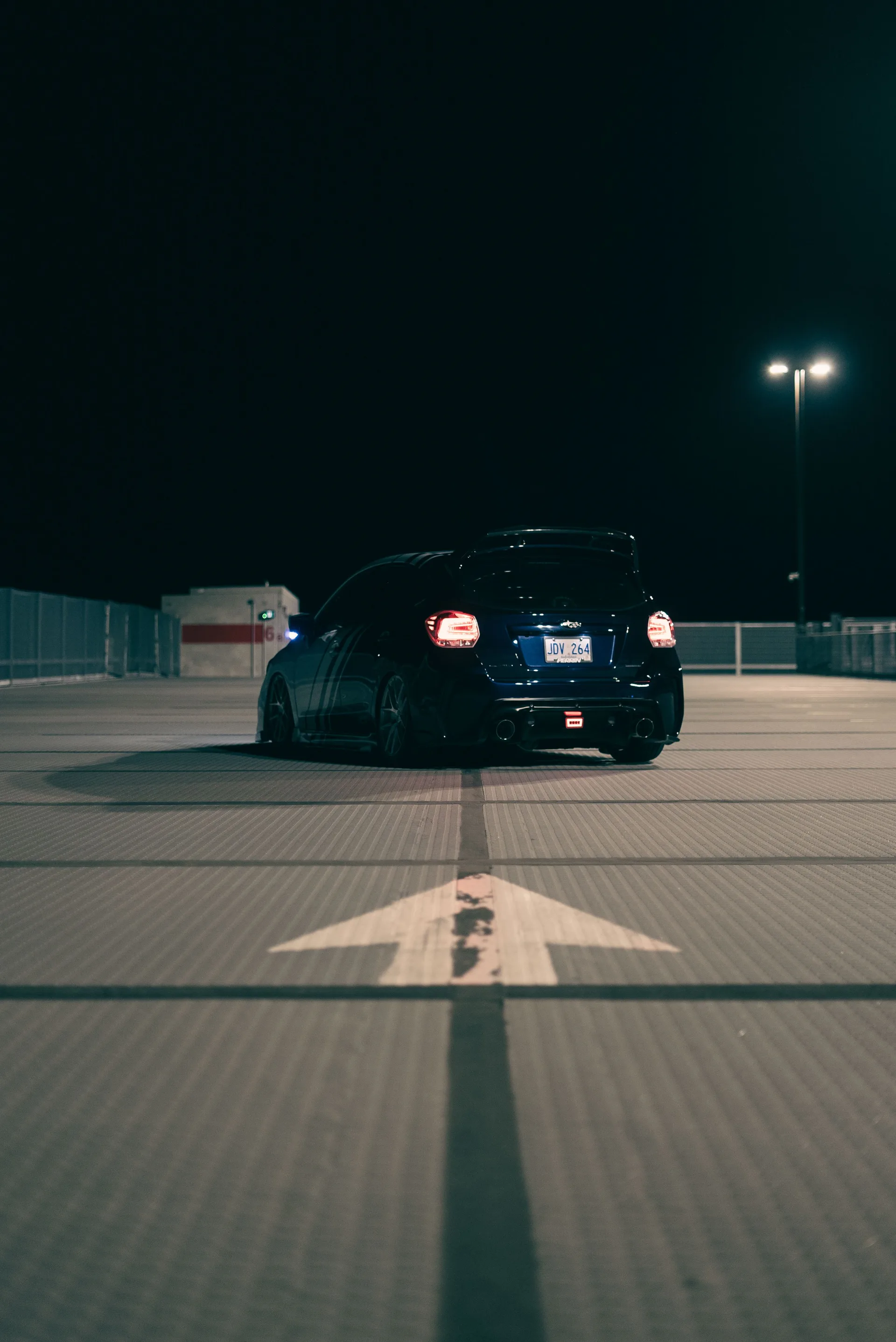
An empty lot at night shows the problem plainly: any dark patch is a place a driver or walker cannot read clearly.
Beach-side lots: keep the light on the lot
Near the beach, a good lot light points down at the lot and nowhere else. Downward fixtures with shields keep light off neighboring property and off the beach side, while a bare bulb or an upward-tilted fixture throws light where it does not belong. Tell the provider whether the lot sits beach-side, so shielding and fixture direction are planned for that address and checked with a night walk. Related reading: salt-air electrical corrosion in Fort Pierce.
Frequently asked questions: parking lot lighting in Fort Pierce
What lighting does a parking lot need?
A parking lot needs even light across driving lanes, walkways, and entrances, with no dark patches where people walk to their cars. Pole lights carry the open lot, wall lights cover building edges and doors, and controls decide when everything switches on and off. A provider walks the lot at night to find the dark spots before recommending fixture counts or pole spots.
LED vs old parking lot lights?
LED fixtures use less power than older HID or metal halide lights, switch on instantly at full brightness, and give a whiter light that makes faces and markings easier to see. Old fixtures also need regular lamp and ballast swaps, while LEDs cut that routine down. A retrofit keeps your existing poles and swaps the fixtures and controls, which is a smaller job than a new pole layout.
Who maintains parking lot poles and fixtures?
The property owner usually arranges maintenance, either through a provider visit when lights fail or through a scheduled inspection plan that checks poles, fixtures, photocells, and wiring on a routine. A plan catches a failing photocell or a leaning pole before the whole lot goes dark. Ask the provider what a visit covers and how often the lot should be walked at night.
Can you fix just one or two broken lot lights?
Yes. A single failed fixture is often a lamp, driver, ballast, photocell, or wiring fault on that pole, and it can be fixed without touching the rest of the lot. If the same fixtures keep failing, or parts are no longer available, the provider may suggest an LED swap for those poles instead of another short-lived repair.
Will the lot stay open while you work?
In most cases, yes. Fixture work happens pole by pole, and trenching or conduit work can be done in sections so the lot never closes all at once. Tell the provider your busy hours up front, so pole work and any night testing can be planned around customers and staff.
Why do new LED fixtures still leave dark patches?
Because brightness alone does not fix layout. If poles sit too far apart for their height, or the fixture throws light in the wrong shape for the lane, gaps stay dark no matter how bright each fixture is. A failed photocell, a wrongly aimed fixture, or a dead fixture in the row can leave the same pattern. Ask the provider to walk the lot at night, check spacing and light shape, and test each control before more fixtures are ordered.
Need an electrician in Fort Pierce? Call now and describe the problem.