
Smoke and Carbon Monoxide Detector Installation in Fort Pierce
One alarm wakes the whole house. Smoke and carbon monoxide detector installation in Fort Pierce puts linked alarms where they sense danger first, in bedrooms and on every level.
When you call, tell us your bedroom and level count, any chirping or failed-test unit, and whether fuel-burning appliances or a garage are present.
Smoke and carbon monoxide detector installation puts linked alarms in the rooms that matter, so one alarm wakes the whole house. Call (772) 218-3629 and tell us your bedroom and level count, any chirping or failed-test unit, and whether fuel-burning appliances or a garage are present, so a provider can count the detectors your home needs.
Signs your detectors need attention
Detectors fail quietly, which is exactly why a routine check matters. Look out for:
- Chirping. A regular chirp usually means a low backup battery. Swap it right away, not next weekend.
- No sound on the test button. Press the test button monthly. Silence means the unit needs a battery, or replacing.
- Old units with no visible date. If you cannot find a manufacture date, treat the unit as past its best and plan a replacement.
- Detectors that never sound together. Trip one unit during a test. If the rest stay silent, the link between them is broken.
- Detectors in the wrong rooms. A bedroom with no detector, or a detector sitting right beside a bathroom door where steam sets it off, needs moving.
- Frequent false alarms. Steam, dust, or a detector placed too close to a kitchen can cause nuisance alarms that tempt people to pull the battery out. Never do that; move or replace the unit instead.
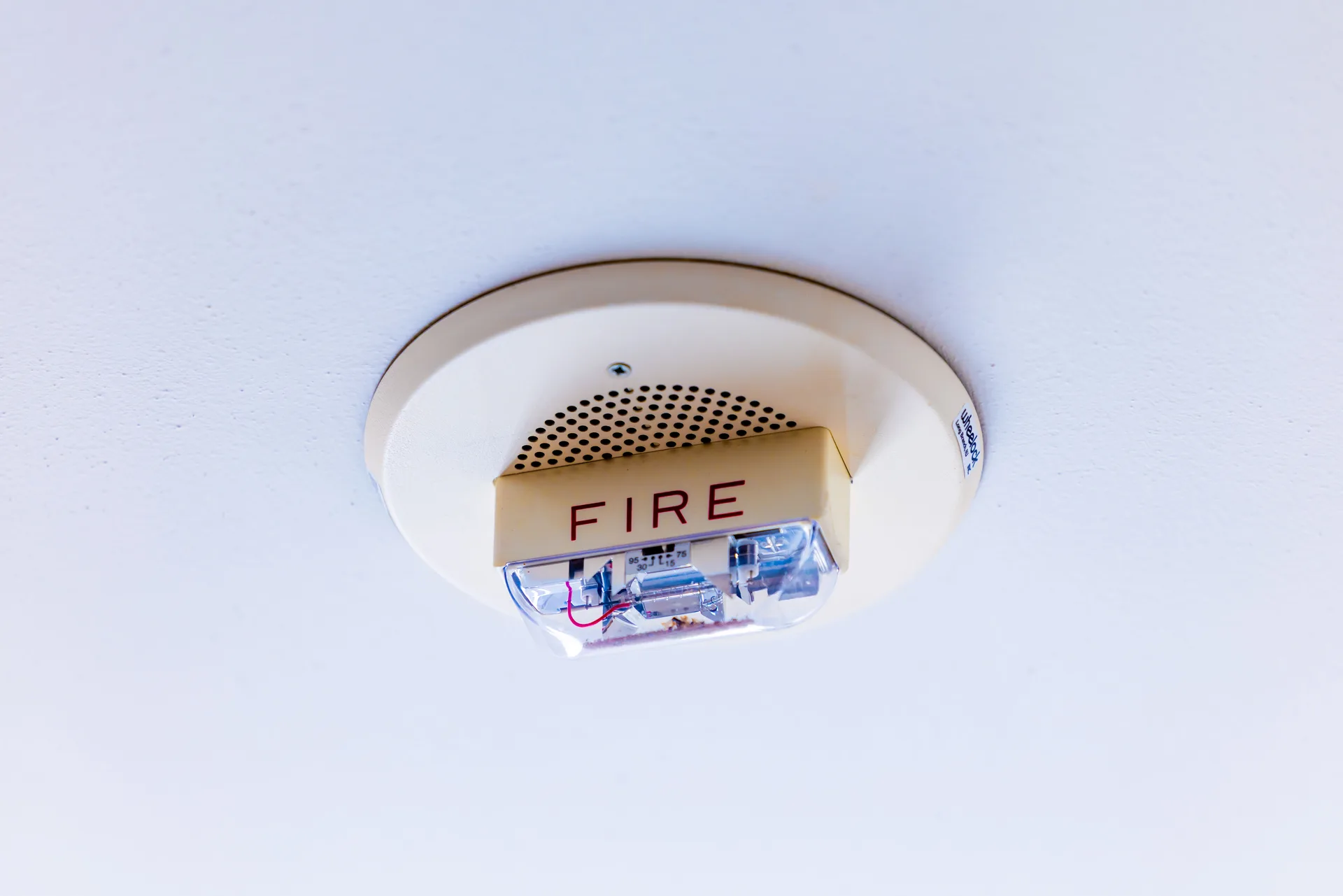
A ceiling unit like this is the kind of device the page's placement guidance is about: one that sounds where people sleep and gather.
What you get from the visit
The visit is judged on what it leaves working, not on how much it explains.
- Linked alarms, so one alarm wakes the whole house.
- Detectors placed inside bedrooms, outside sleeping areas, and on every level.
- A layout agreed in writing before fitting, with the whole set tested together.
- Combination or separate units matched to each room, not one type everywhere.
Options compared: battery, hardwired, and combination detectors
Pick from the table by weighing wiring work against reliability.
| Option | Best for | Watch out for |
|---|---|---|
| Battery-only, standalone | Adding one detector fast with no wiring | One alarm only; battery must be kept fresh |
| Battery, wireless interconnected | Linking a whole home without new wiring | Units must be built to link; test the link after fitting |
| Hardwired alarm with battery backup | A full-home system that survives a power cut | Needs wiring and a circuit check |
| Combination smoke and CO | Fewer devices on the ceiling | Placement must suit both smoke and CO sensing |
| Sealed-battery units | No battery swaps for the life of the unit | The whole unit is replaced at end of life |
For most existing homes, wireless interconnected battery units are the practical middle ground: an interconnected detector system where every alarm sounds together, with no new cable runs. Where wiring is already in place, or a renovation opens the ceilings, hardwired units with battery backup are the stronger choice.
Diagram: how interconnected detectors sound together
One detector senses smoke or gas. It signals the other detectors. Every unit sounds. Battery backup keeps units sounding during a power cut.
What smoke and CO detector installation covers
Installation means choosing the right units, placing them where they can sense danger first, wiring or linking them, and testing the whole set. A detector in the wrong spot, or one that never links to the rest, gives a false sense of safety.
In short, two kinds of danger need two kinds of sensing, placed where they sense danger first and linked so the whole house hears them.
Counting detectors for your home
Fire-safety guidance commonly calls for a smoke detector inside every bedroom, one outside each sleeping area, and one on every level of the home, including a basement where the home has one. A typical three-bedroom, two-story home therefore needs several detectors, not one per floor, and a room added later without a detector leaves a gap that one hallway unit cannot cover.
Carbon monoxide detectors follow a related but different pattern: outside each sleeping area and on every level, plus near fuel-burning appliances and an attached garage, where the home has them. A CO detector placed only beside the furnace, or only in the kitchen, misses the spot that matters most, which is the hallway where sleeping people will hear it.
Keep smoke detectors clear of kitchens, bathrooms, and supply vents, since steam, cooking smoke, and moving air all cause false alarms that tempt people to pull a battery out. Never do that: a silenced detector protects nobody. If a detector chirps or alarms for no clear reason, note which unit it is and tell the provider, instead of removing it.
Age matters as much as placement. Fire-safety guidance commonly puts smoke alarm life at about 10 years and carbon monoxide alarm life at roughly 5 to 7 years, and the manufacture date printed on the unit is the check. If the date is missing or past, plan a replacement even when the test button still sounds.
Detectors chirping, or past their date? Call and tell us your bedroom and level count.
What changes the cost
No single Fort Pierce detector price fits every home, so here is what moves it instead. Unit count comes first: a home with more bedrooms and levels needs more detectors. Wiring comes second: hardwired units need cable runs and a circuit check, while battery units skip that work. Combination units can trim the count, since one device covers two jobs in some spots.
Access changes the work too. High ceilings, finished ceilings that hide cable routes, and a panel that needs a new circuit all add time. Ask for a written, itemized price after the provider has walked the home and counted the spots, rather than a quote given sight unseen.
How a detector visit runs, step by step
- Walk-through and count. The provider walks every level, notes bedrooms, sleeping areas, fuel-burning appliances, and the garage, and counts the spots that need coverage.
- Unit and link choice. Battery, hardwired, or combination units are chosen per spot, with the link method — wired or wireless — settled for the whole set.
- Circuit check for hardwired units. The provider checks the circuit that will feed the detectors. For related circuit work, see outlet and switch installation in Fort Pierce.
- Fit and place. Units are mounted clear of fans, vents, and steam sources, then wired or linked.
- Test every unit, then test the link. Each detector is tested alone, then one unit is tripped to confirm every alarm sounds. A smoke detector install is only finished when that link test passes. You are shown the test button routine and the battery plan.
Fort Pierce notes: older homes, storms, and power cuts
A carbon monoxide detector installation in Fort Pierce follows the same rule as smoke: near sleeping areas and fuel-burning appliances, linked so the whole house hears it. A smoke detector installation in Fort Pierce follows the same layout-first rule: every bedroom, outside each sleeping area, and on every level. On the Treasure Coast, two local facts shape detector work. First, older homes often have detectors that were never linked, or rooms that were added without a detector at all. Second, storm-season power cuts are common, which is why battery backup matters so much here: a hardwired detector without a fresh backup battery goes silent exactly when the lights go out.
After a storm, check the detectors along with the rest of the house. A unit that chirps after power returns is telling you the backup battery ran down during the cut. For a wider safety check of the home's wiring, see electrical inspection in Fort Pierce, and for whole-home protection, see residential electrician service in Fort Pierce.
Call right away if
A CO alarm sounding, or anyone feeling dizzy, headachy, or nauseous near a fuel-burning appliance, means get everyone outside into fresh air first, then call 911. Do not go back inside to hunt for the source. For smoke, sparking, or a burning smell, call 911 first as well.
This page covers Fort Pierce ZIPs 34950 and 34947.
How to choose a provider for detector installation
Judge the provider on placement and testing, not on how fast they can hang units.
Before you agree: detector checklist
- Did the provider walk every level and count bedrooms, sleeping areas, and fuel-burning appliances?
- Was the link method explained — wired or wireless — and will the link be tested after fitting?
- Was battery backup covered, including what happens during a power cut?
- Was the price written and itemized by unit count and wiring work?
- Did you get a plain testing routine: monthly test button, battery plan, replacement dates?
Ask for the detector layout in writing: which rooms get which units, and how they link. A provider who cannot sketch that layout has not planned the job. That layout-first approach is the standard for smoke and carbon monoxide detector installation in Fort Pierce, FL. The same layout-first approach applies to detector work in Lincoln Park and across Fort Pierce.
Mistakes to avoid with detectors
- Pulling a battery out to silence a nuisance alarm instead of moving the unit.
- Putting a smoke detector inside a bathroom or right beside the kitchen stove.
- Mixing units that cannot link, then assuming the whole house will sound together.
- Forgetting the backup battery, so a storm power cut silences hardwired units.
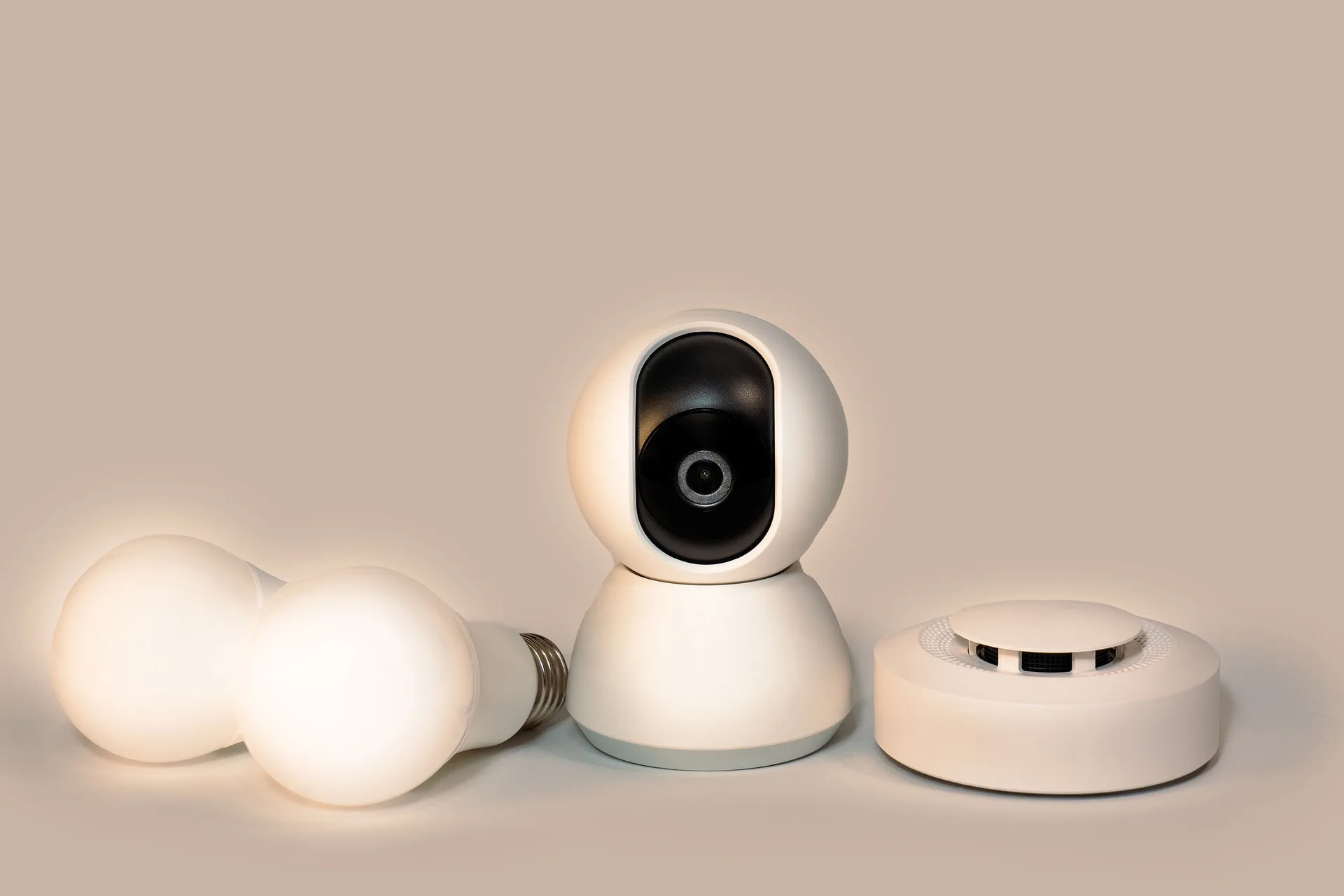
Modern detectors often sit alongside other home sensors, so checking the whole set together avoids a gap in one room.
Ionization, photoelectric, or both
Ionization units respond faster to fast, flaming fires, while photoelectric units respond faster to slow, smoldering fires that make more smoke before flames show. Neither type replaces the other, and the sensor type does not change the placement rules: inside bedrooms, outside sleeping areas, and on every level still govern where units go. Tell the provider which type you already have in each spot, so replacements match.
Frequently asked questions: smoke and carbon monoxide detectors in Fort Pierce
Where should smoke and CO detectors go?
Put smoke detectors inside every bedroom, outside each sleeping area, and on every level of the home. Put carbon monoxide detectors outside sleeping areas and on any level with a fuel-burning appliance, such as a furnace, water heater, or fireplace, and near an attached garage. Keep detectors away from fans, vents, and steam, which can delay or confuse them.
Hardwired vs battery detectors?
Hardwired detectors run on your home's wiring with a battery backup, so they keep working through a power cut. Battery-only detectors are easier to add, and wireless interconnected battery units can link together without new wiring. Hardwired, interconnected units are the stronger setup where the wiring allows it, because one alarm can set off every alarm in the house.
How often should detectors be replaced?
Check the manufacture date printed on the back of each unit and follow what that unit's maker states, since sensors wear out over time. Many homes replace smoke and CO units on the same schedule to keep it simple. Test every detector monthly with its test button, and swap the backup battery the moment a unit starts chirping.
Can one detector cover smoke and CO?
Yes. A combination smoke and CO alarm handles both jobs in a single unit, which can cut the number of devices on your ceiling. Combination units still need the right spots: smoke sensing belongs where smoke rises first, and CO sensing belongs near sleeping areas and fuel-burning appliances. Ask the provider whether a combination unit fits each spot or whether separate units serve you better.
What does interconnected mean?
Interconnected means every alarm sounds when any one of them trips. A fire or CO leak in a far room can then wake people sleeping at the other end of the house. Wired interconnection links units through cable, while wireless interconnection links them by radio signal. Either way, test the link after fitting: trip one unit and confirm the rest sound.
How old is too old for a detector?
Check the manufacture date printed on the unit. Fire-safety guidance commonly puts smoke alarm life at about 10 years and carbon monoxide alarm life at roughly 5 to 7 years, since sensors wear out whether or not the unit has ever sounded. If the date is missing, or the unit is past those ages, plan a replacement. Test the button monthly either way, and swap a backup battery as soon as a chirp starts.
Need an electrician in Fort Pierce? Call now and describe the problem.