
Outlet and Switch Installation in Fort Pierce, FL
New outlets, GFCI protection, dimmers, and smart switches around 34950 and 34947 — on circuits checked first, so the new device works safely.
Tell us the room, the device type, and what the circuit feeds today.
What is outlet and switch installation?
Outlet and switch installation adds or replaces outlets, GFCI protection, dimmers, 3-way switches, and smart switches — after the circuit and panel behind them are checked. Call (772) 218-3629, Mon–Sat 9:00–18:00, and tell us where you need power, what will run on it, and whether the spot is wet or outdoors.
Count the plugs you actually need, then check the circuit behind them. Outlet and switch installation in Fort Pierce covers a new outlet or a replacement outlet, GFCI outlets for wet areas, USB outlets, dimmers, 3-way switches, and smart switches — but the device is only half the job, and the circuit, breaker, and wiring behind it are the other half. When you call Fort Pierce Electric Pros, the new outlet installer in Fort Pierce checks the electrical outlet wiring, circuit, and panel first. One warning sign deserves a fast call, not a wait: an outlet that feels warm, holds plugs loosely, or shows scorch marks needs diagnosis before it is used again. Receptacle installation may sound like a small job, yet a worn two-prong outlet or a GFCI wired the wrong way can turn small into serious. Switch wiring matters as much as outlet wiring: a 3-way switch wired wrong leaves a light that only works from one end. A switch replacement is often bundled with an outlet job when the switch beside it is cracked or buzzing. A dimmer switch install needs a dimmer matched to your bulbs, or the lights will buzz and flicker at low settings. That is outlet installation in Fort Pierce done the careful way: device, circuit, and panel all checked.
GFCI protection has its own wet-area rules and troubleshooting (tripping, downstream protection, test and reset). This page covers outlets and switches in general; GFCI-specific detail is on the GFCI outlet page.
Signs you need a new outlet or switch
- You use extension cords or power strips because there is no outlet where you need one.
- An outlet is dead, loose, warm, or cracked — warm or cracked = urgent, see the emergency page first if there is heat, smell, or sparks.
- A bathroom, kitchen, garage, or outdoor outlet has no GFCI protection.
- A circuit trips when a specific appliance runs, because that appliance needs a dedicated circuit.
- You want dimmers, three-way control, or smart switches, and the existing switches do not support them.
- You are renovating, adding a home office, or adding a workshop, and the existing outlets do not match the new layout.
Options compared: outlet and switch types
| Type | When it fits | When it does not fit | Key limit |
|---|---|---|---|
| Standard outlet | General rooms, low-load devices | Wet areas, large appliances, shared overloaded circuit | No ground-fault protection |
| GFCI outlet | Bathrooms, kitchens, garages, outdoors, wet/damp areas | — (required in wet areas, as a general rule) | Trips on ground fault — do not bypass it |
| USB outlet | Bedrooms, offices, charging without adapters | Large appliances, wet areas without GFCI | Charging only, not a power circuit |
| Dedicated circuit outlet | Microwave, space heater, workshop tool, large appliance | Low-load general use | Needs panel capacity and a dedicated breaker |
| Dimmer | Compatible lights, mood and energy control | Lights not rated for dimming | Compatibility with lights matters |
| Smart switch | Remote control, scheduling, voice control | No neutral wire, incompatible lights, no hub/app if required | Needs neutral, hub, and compatible lights |
Circuit first, outlet second. If the circuit is overloaded, or the panel is full, a new outlet alone will trip again. A circuit check and a panel check come before a price, not after.
How outlet and switch installation runs, step by step
Infographic: Outlet and switch installation process
- Circuit check. Check circuit load, panel capacity, and whether GFCI protection is needed for the location. This decides standard vs GFCI vs dedicated circuit.
- Route and placement. Route the cable from the nearest suitable circuit or panel, and place the outlet where you actually need power — not where it is easiest to fit, and not across a walkway.
- Install. Fit the outlet or switch, breaker, and wiring, with a suitable box and cover. Outdoor outlets need weather protection and a suitable enclosure.
- Test. Test the outlet, test GFCI trip and reset where it applies, and hand over instructions for use, including what to do if the GFCI trips.
Cost and what changes the price
Small device, wide range of jobs — that is why outlet pricing resists a single number. The moving parts are the device itself, circuit length and route, whether a dedicated circuit is needed, and whether the panel needs work. Ask for those factors itemized in a written price after a look at your panel and room.
Infographic: Outlet cost factors flowchart
Time, safety, permits, and local rules
Time required: a single outlet or switch on an existing circuit is typically a single visit, once the circuit is checked. A dedicated circuit, a long route, a finished-wall route, or panel work takes longer, and those steps should be booked before a time promise is made. Ask your provider for the expected time for your specific route and circuit, not a general “quick job” claim.
Safety: do not bypass a GFCI that trips repeatedly, do not use a cracked or warm outlet, and do not overload a circuit with power strips and extension cords as a permanent solution. If an outlet is warm, smells burnt, or sparks, see the emergency page first. Outdoor outlets need weather protection — a standard indoor outlet outdoors is not a safe substitute.
On permits, the general rule is: Florida Building Code 105.1 requires a permit before installing, altering, or replacing a regulated electrical system, with an application to the building official first. Whether a single outlet needs the same permit path as panel work depends on scope and jurisdiction (City of Fort Pierce vs St. Lucie County, by exact address) — check before work starts, not after. As a rough guide, Fort Pierce city is largely served by Fort Pierce Utilities Authority (FPUA) and outside the city largely by Florida Power & Light (FPL), but which utility serves your exact address is decided by your exact address.
Local considerations: Fort Pierce homes with pools, outdoor living, and garage workshops are more likely to need GFCI and dedicated-circuit work than a home with only general-room outlets. Older homes in Downtown and Lincoln Park may have ungrounded outlets or older wiring, which makes a circuit check essential before adding a new outlet. Coastal homes on Hutchinson Island and South Beach need weather protection for outdoor outlets, because salt-air and moisture affect outdoor equipment.
Seasonal considerations and DIY vs hiring
Outlet work runs year-round, spiking with renovations, home-office setups, and outdoor projects, and summer AC load can trip a circuit that coped in winter. Replacing a switch plate or resetting a GFCI once are homeowner actions; wiring a new outlet or fitting a GFCI is not. GFCI vs AFCI protection is explained in our GFCI vs AFCI guide.
Need a new outlet or switch? Call and tell us the room and device.
Outlet and switch types worth knowing by name
Not every outlet is the same device. A 240-volt outlet feeds dryers, ranges, and similar equipment, and it needs its own circuit sized for that load. Tamper-resistant outlets have internal shutters that help keep small objects out, and they are the usual choice where children are present. Outdoors, a weather-resistant outlet with an in-use cover keeps rain out while a cord stays plugged in.
USB and USB-C combination outlets add charging points without an adapter, but they still draw from the same circuit, so a row of them does not create extra capacity. In bedrooms and living areas, AFCI protection guards against arcing faults in the wiring itself, which is a different job from the ground-fault protection a GFCI outlet provides. Ask which protection each new outlet carries, since the two are often confused.
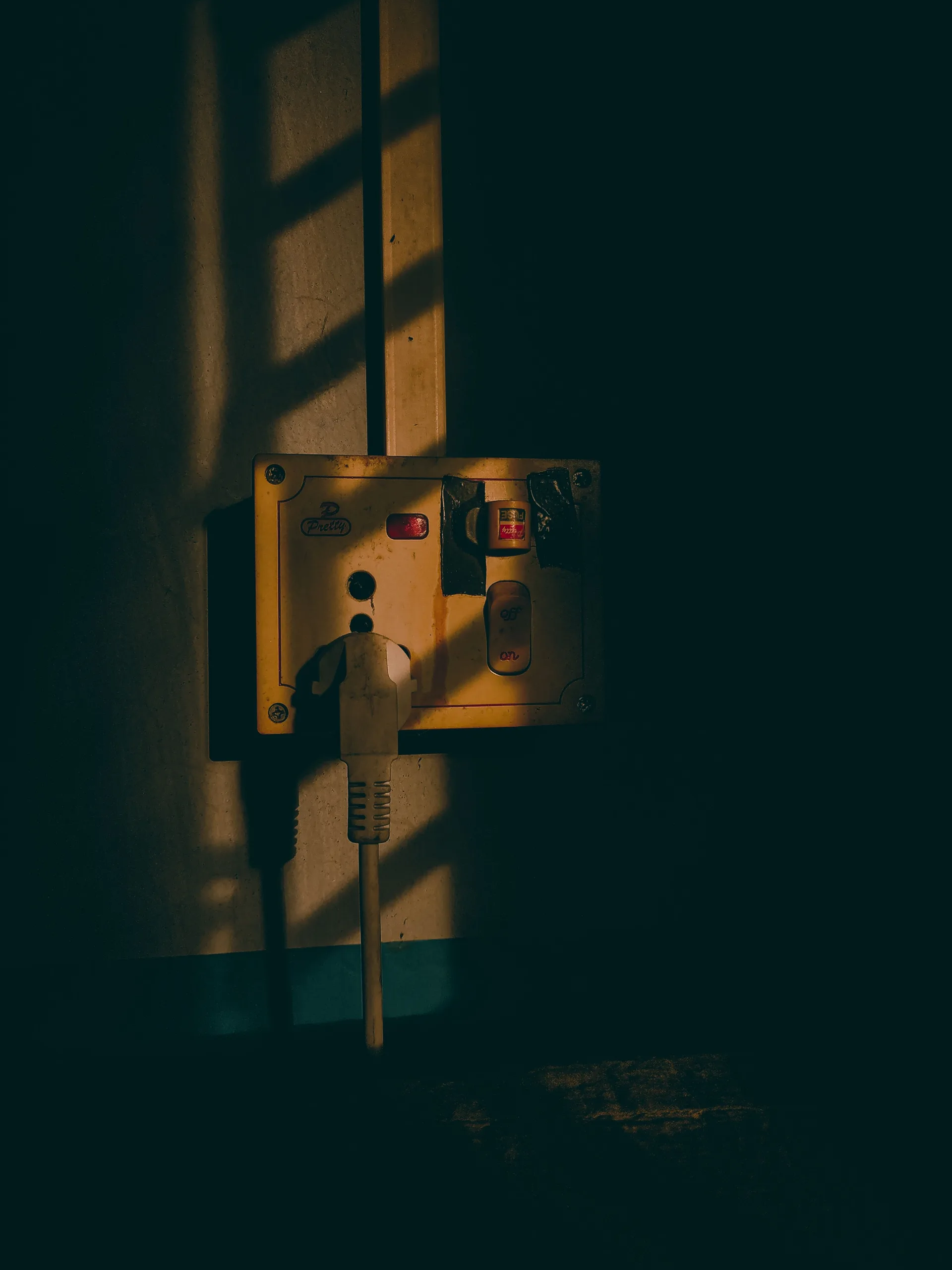
What outlet and switch work looks like
Related services and areas
Outlet work often follows or precedes other services. A dead outlet may stay as electrical repair for diagnosis, not a new outlet. A full panel may lead to panel upgrade. A new light may be a lighting job, not an outlet job. GFCI detail goes on the GFCI outlet page. An unsafe outlet is an emergency first, not a scheduled outlet job.

Outlet and switch installation is needed across Fort Pierce, including Downtown, Fort Pierce North, and Hutchinson Island. See the service areas hub for the full list, and tell us your town or ZIP when you call.
New outlets, wall damage, and the half-room that went dead
A new outlet does not have to mean a cut-up wall: where the cavity or attic gives a route, cable can be fished through, and any cut should be kept small and explained first. When half a room goes dead at once, the cause is often upstream — a tripped GFCI or a failed connection breaking the chain. See why an outlet stops working.
Permits for outlet work, and the safety steps that come first
Permit rules for outlet work turn on what changes, not on the room it happens in. A direct, like-for-like replacement of a device on existing wiring is generally treated differently from new wiring, a new circuit, or a panel change, and minor replacements typically need no city permit — but the general rule is not the rule for your address, so confirm jurisdiction with the provider or the building department before work that adds wiring or circuits. Whether a homeowner or a handyman may do the work in Florida follows the same logic: it depends on the job, and panel or new-circuit work belongs with a provider. Cost follows the same split: device count, circuit work, and any panel work move the figure, so a swap and a new run share a name and little else.
Two safety steps come before any outlet or switch is touched: switch the circuit off at the breaker, and test that the outlet or switch is dead before touching it. A device that looks off because its switch is down may still be live from another feed, and a three-way switch can be fed from either end, so testing is what proves the circuit is off rather than assumed off. Tell the provider about any outlet that is warm, loose, or scorched before the visit, and leave that circuit off until it has been checked.
Frequently asked questions: outlet and switch installation in Fort Pierce
What is a GFCI outlet, and where do I need one?
A GFCI outlet protects against ground faults by shutting off power quickly when current leaks, for example in a wet area. GFCI protection is typically required in bathrooms, kitchens, garages, outdoors, and other wet or damp locations. One GFCI can protect several outlets downstream on the same circuit.
Why is one outlet dead when others work?
A dead outlet can be a tripped GFCI elsewhere on the circuit, a tripped breaker, a loose connection, or a faulty outlet. Check for a tripped GFCI in a bathroom, kitchen, garage, or outdoors first, because one GFCI can protect several outlets downstream. If the cause is not clear, call for diagnosis.
Do I need a dedicated circuit for a new outlet?
It depends on load. A dedicated circuit is needed for large appliances and for loads that would overload a shared circuit. A new outlet for a phone charger is different from a new outlet for a microwave, a space heater, or a workshop tool. A provider should check circuit load before adding an outlet.
How much does outlet installation cost in Fort Pierce?
There is no one-size outlet number, because the job varies so much. Device type, circuit length and route, wall and access work, and any dedicated circuit or panel work all feed the written price. Ask for that price after someone has seen your panel and room, with GFCI protection and any dedicated circuit spelled out.
Can I add an outlet where there is no wiring?
Yes, a new outlet can be added where wiring can be routed safely, but circuit length, wall work, and panel capacity all matter. A provider should check the nearest circuit, panel capacity, and wall access before giving a price, rather than promising an outlet anywhere without a look.
What is the difference between a dimmer and a smart switch?
A dimmer controls brightness for compatible lights. A smart switch adds remote control, scheduling, and voice control, and may need a neutral wire and a hub or app. Not every light works with every dimmer or smart switch — compatibility with your lights and wiring matters more than the switch brand.
Why does my GFCI keep tripping?
A GFCI trips when it detects a ground fault, which can be a faulty appliance, moisture, a damaged cord, or a faulty GFCI itself. Do not bypass a GFCI that trips repeatedly. Unplug appliances one by one to narrow the cause, and call for diagnosis if the cause is not clear.
Do I need a permit for a new outlet in Fort Pierce?
Generally, the Florida Building Code requires a permit before installing or altering a regulated electrical system, with an application to the building official first. Whether a single outlet needs the same permit path as panel work depends on scope and jurisdiction — check by address before work starts.
What is a tamper-resistant or weather-resistant outlet?
A tamper-resistant outlet has internal shutters that help keep small objects out of the slots, and it is the usual choice where children are present. A weather-resistant outlet is built for outdoor exposure, and outdoors it sits behind an in-use cover that keeps rain out while a cord stays plugged in. Ask which type each new outlet is, since the two protections solve different problems.
Ready to add or replace? Call and describe the job.