
Outlet Not Working? GFCI Reset Guide for Fort Pierce, FL
A dead outlet in a Fort Pierce home is often a tripped GFCI somewhere nearby, not a dead outlet itself. This guide walks through safe checks in order, explains what a GFCI trip means, and shows when to stop and call a provider.
A dead outlet is most often a tripped GFCI on the same circuit, a tripped breaker, or a failed outlet. Unplug everything on the circuit, then check nearby GFCI outlets before the breaker. Call (772) 218-3629 and tell us which room the dead outlet is in, whether any GFCI will not reset, and whether the outlet feels warm or buzzes.
Need an electrician in Fort Pierce? Outlet dead after a GFCI reset? Call and tell us which outlets are out and whether the reset button holds.
What is a GFCI outlet?
A GFCI outlet is a safety outlet that watches for a tiny imbalance between the current going out and the current coming back. That imbalance can mean current is leaking through moisture, a damaged cord, or a person, so the GFCI shuts power off in a fraction of a second. The shutoff is the protection working, not a fault in itself.
A GFCI outlet looks like a standard outlet with two small buttons in the middle, usually marked TEST and RESET. One GFCI outlet can also protect other standard outlets wired after it on the same circuit. That is why the outlet that trips is often not the outlet that goes dead: the bathroom outlet by the sink may protect the second bathroom outlet, an outdoor outlet, or a garage outlet nearby.
GFCI protection is common in rooms where water and electricity meet, such as bathrooms, kitchens, garages, laundry areas, and outdoors. In a Fort Pierce home, humidity, summer storms, and outdoor outlets exposed to rain and salt air make trips more likely than in a dry indoor room, and a trip after a storm is a common first clue.
Why an outlet stops working
A dead outlet has a short list of usual causes, and working through them in order saves a needless call-out and avoids a wrong guess. The causes below cover most cases a homeowner meets.
- A tripped GFCI elsewhere. Another GFCI on the same circuit has tripped and cut power to this outlet. This is the most common cause in bathrooms, kitchens, and outdoor areas.
- A tripped breaker. The breaker for the circuit has tripped, cutting power to every outlet on that circuit, not just one.
- A failed outlet. The outlet itself has worn out or its internal contacts have failed, especially in older homes.
- A loose or damaged connection. Wiring behind the outlet has loosened or been damaged, which needs a provider — never open the outlet yourself.
- A faulty appliance or cord. Something plugged in has a fault that trips the GFCI or breaker every time it runs.
If several outlets go dead at once, the cause is usually further back — a breaker or a GFCI feeding the group — rather than one bad outlet. If only one outlet is dead while its neighbors work, the outlet itself or its own connection is the likelier cause.
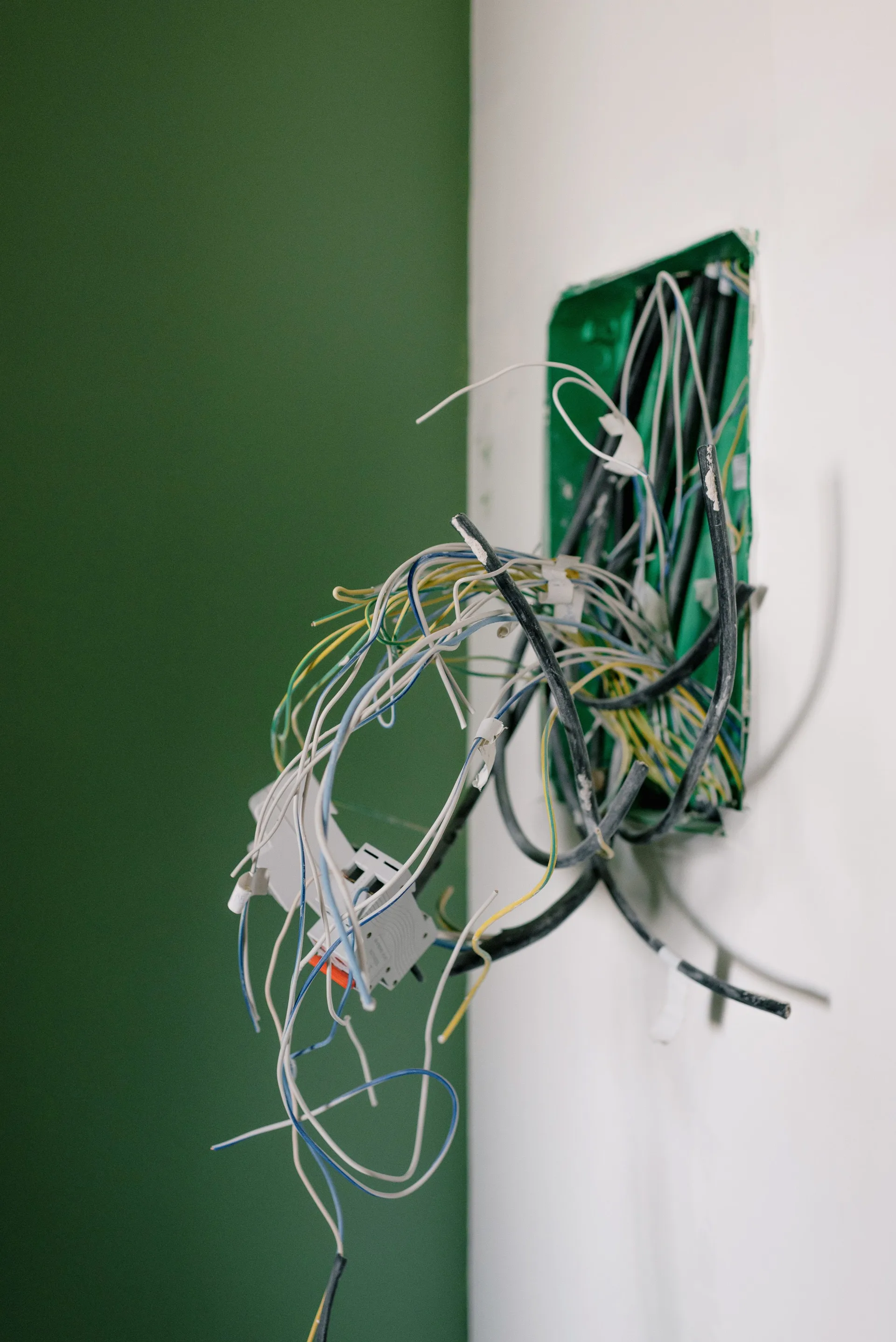
Only open an outlet box with the power off and only if you know what you are doing; anything uncertain belongs to a provider.
Safe GFCI reset steps, in order
Resetting a GFCI is safe only when the outlet looks and feels normal: no warmth, no scorching, no buzzing, and no burning smell. Follow these steps in order, and stop at the first sign of trouble.
- Unplug everything on the dead circuit. Unplug appliances, chargers, and tools from the dead outlet and nearby outlets on the same circuit, so a faulty item cannot trip the GFCI again at once.
- Find every GFCI outlet nearby. Check bathrooms, the kitchen, the garage, the laundry area, and outdoor outlets. Look for a GFCI whose RESET button is popped out or whose indicator shows it has tripped.
- Press RESET firmly once. Press the RESET button until it clicks in. Power should return to the protected outlets. If the button will not stay in, do not force it.
- Test with one simple item. Plug in one ordinary item, such as a lamp, and confirm it works. Then plug items back one at a time, watching for a repeat trip.
- Check the breaker if no GFCI resets. Go to the panel and look for a breaker that is off or sitting between on and off. Switch it fully off, then fully on, once. Do not open the panel interior, and do not hold a breaker on.
- Stop if it trips again. A GFCI or breaker that trips a second time is telling you something is still wrong. Leave it tripped and call a provider rather than resetting it again and again.
Stop and stay clear if: the outlet is warm, scorched, or buzzing, you smell burning, you see sparks, or water has reached the outlet. Do not touch it, do not reset it, and call 911 if there is fire or anyone is hurt. For a downed line outside, call the utility for your address.
GFCI reset steps at a glance
Step 1: unplug loads. Step 2: press RESET once. Step 3: if it holds, add loads back one at a time. Step 4: if it trips again, leave it off and call a provider.
What to check yourself vs what needs a provider
Homeowner-safe checks are limited to what you can do without opening anything: unplugging items, finding and pressing a GFCI RESET button, checking a breaker handle, and looking at the outside of an outlet. Those checks are safe because they do not expose wiring or live parts.
Everything past the outlet face needs a provider. That includes opening an outlet, replacing an outlet, opening a panel, tracing a circuit, and any work on wiring that looks burnt, brittle, or water-damaged. Fort Pierce homes from the 1950s to the 1980s often have older wiring and outlets that have seen decades of humidity, so a connection that looks simple from outside can be fragile inside. A provider can test the circuit properly and find whether the fault is the device, a connection, or a wire.
| Task | Who | Why |
|---|---|---|
| Unplug items, press GFCI RESET | Homeowner | No wiring exposed |
| Check a breaker handle | Homeowner | Panel interior stays closed |
| Replace or open an outlet | Provider | Live wiring and connections inside |
| Trace a dead circuit | Provider | Needs testing tools and circuit knowledge |
| Warm, scorched, or buzzing outlet | Provider | Sign of damage that resetting cannot fix |

A dead outlet is often not the outlet itself: a tripped device elsewhere, a tripped breaker, or a loose connection upstream can all cut power.
When a GFCI keeps tripping
A GFCI that trips once after a storm or a wet appliance may simply have done its job. A GFCI that trips again and again is a different story: something on the circuit is still leaking current, or the GFCI device itself has failed. Repeated tripping is a fault to find, not a nuisance to reset past.
To narrow it down, unplug everything on the circuit and reset once. If it holds with nothing plugged in, plug items back one at a time and note which one trips it. If it trips with nothing plugged in, the fault is in the circuit, an outlet, or the GFCI device itself, and a provider should test it. Outdoor outlets in Fort Pierce deserve a close look here: rain, sprinklers, and salt air can leave moisture in an outdoor box, and a weather cover that no longer seals lets that moisture in.
Never defeat the protection to stop the tripping. Replacing a GFCI with a standard outlet, or wiring around it, removes the safety device that is warning you. If a GFCI is old and will not reset even with nothing connected, a provider can test it and replace it with the right protected outlet for that room and circuit.
Fort Pierce notes
Fort Pierce homes mix older houses in Downtown and Lincoln Park with newer homes in Fort Pierce North and Fort Pierce South, and the dead-outlet story differs by age. Older homes may have outlets that predate GFCI protection in some rooms, or a single GFCI protecting a long run of outlets, so one trip can darken several rooms. Newer homes usually have more GFCI outlets, so the tripped one is closer to the dead one — but a garage or outdoor GFCI can still control a bathroom outlet in ways that surprise owners.
Coastal homes on Hutchinson Island and South Beach add moisture to the picture. Salt air corrodes outlet parts and outdoor covers over time, and a corroded GFCI may trip more often or fail to reset. If an outdoor outlet trips after every heavy rain, the cover, the box seal, or the device itself may need attention from a provider rather than another reset.
Mistakes to avoid
The most common mistake is resetting a tripping GFCI again and again without finding why it tripped. Each reset without a cause found is a missed warning. Another is assuming the dead outlet is the broken one and replacing it without checking the GFCI that feeds it — the new outlet will stay dead, and the real fault stays hidden.
Do not plug a tripping appliance into a different outlet to dodge the trip: if the appliance is the fault, it will trip the next GFCI too, and it may be unsafe to use. Do not use an outlet that is warm, loose in the wall, or holding plugs so loosely that they fall out. A plug that will not stay in is a worn outlet, and worn contacts can overheat. Finally, never work on an outlet or panel with wet hands, while standing in water, or with the circuit live.
Two cases the first checks can miss
Two dead-outlet cases catch people who have already checked every GFCI and breaker. The first is a half-hot outlet, an outlet controlled by a wall switch, where one half is switched and the other is always live. If the switch is off, the switched half looks dead, and no reset will fix it, because nothing has tripped. Check the wall switches in the room before assuming a fault. The second is a worn outlet: if plugs fall out, sit loosely, or need wiggling to work, the outlet's contacts have worn and can overheat, and that outlet needs a provider to replace it, not another reset.
A GFCI that will not reset has its own short list of reasons, and knowing them stops wasted resets. It may have no power on its supply side, because a breaker is off or an upstream GFCI has tripped. Its supply and load wires may be reversed, a common mistake after a do-it-yourself replacement, which modern devices deliberately block by refusing to reset. A fault may still be present on the circuit. Or the device may have failed its own internal self-test and locked itself out at the end of its life, which is the device protecting you by refusing to pretend it still works. In every one of those cases, the answer is the same: stop resetting, leave it off, and call a provider. One habit prevents most of these surprises: press TEST, then RESET, on every GFCI outlet once a month, so a failed device is found on an ordinary day rather than during the outage or storm when you need it.
Related services
For a new or replacement protected outlet, see outlet and switch installation in Fort Pierce, and for GFCI protection fitted as its own job, see GFCI outlet installation in Fort Pierce. If several outlets are dead or a breaker keeps tripping, electrical repair in Fort Pierce covers circuit fault-finding, and electrical inspection in Fort Pierce can check an older home's outlets and circuits as a whole.
Two cases trip people up: a gfci outlet not working but breaker is on, which usually points to a tripped GFCI upstream or a failed device rather than the breaker, and a gfci outlet not working outside, where weather and moisture are often part of the story. Think of this page as a dead outlet fix checklist and a dead outlet diagnosis in one, not a single button press. A gfci outlet not working with no light at all is a third clue — no light can mean no power reaching it, not just a tripped button.
When the RESET button will not stay in
A RESET button that will not stay in is different from a GFCI that trips again later. A button that refuses to latch usually means there is still no power reaching the outlet, a fault still present on the circuit, or the device itself has reached the end of its working life. Do not force the button, tape it down, or swap in a standard outlet: a GFCI that cannot reset is telling you the protection is not available.
Check the breaker once, check for another tripped GFCI upstream, and make sure everything on the circuit is unplugged. If it still will not reset, leave the circuit off and call, reporting which GFCI will not reset, whether its breaker held, and whether moisture or a recent storm is involved.
Need an electrician in Fort Pierce? Outlet dead after a GFCI reset? Call and tell us which outlets are out and whether the reset button holds.
Frequently asked questions
Where is the GFCI that controls my dead outlet?
The controlling GFCI is often a different outlet nearby, usually in the same bathroom, kitchen, garage, or outdoor area. One GFCI outlet can protect several standard outlets downstream on the same circuit. Check every GFCI outlet in nearby rooms and outdoors, including garage and patio outlets, before assuming the dead outlet itself has failed.
Why will my GFCI not reset?
A GFCI will not reset if it has no power, if a fault is still present, or if the device itself has failed. Check the breaker first, unplug everything on that circuit, and try once more. If it still will not reset, or if it trips again the moment something is plugged in, stop resetting it and ask a provider to check the circuit.
Does a tripped GFCI mean something is dangerous?
Not always, but treat it as a warning worth respecting. A GFCI trips when it senses a small imbalance that can mean current is leaking somewhere it should not go, including through moisture or a damaged cord. A one-off trip after a storm or a wet appliance deserves a careful check. Repeated trips, buzzing, warmth, or a burning smell mean stop and call.
Can I reset a GFCI if the outlet feels warm?
No. Do not reset or keep using an outlet that feels warm, looks scorched, smells burnt, or buzzes. Leave it alone, unplug anything connected if you can do so safely without touching the outlet face, and call a provider. Warmth and scorching point to a problem inside the outlet or wiring that resetting cannot fix.
My breaker is fine but the outlet is still dead — what next?
Check every GFCI outlet in nearby rooms, then check whether other outlets on the same circuit work. If several outlets are dead, the problem is further back on the circuit and needs a provider. Do not open the outlet or the panel yourself. A provider can test the wiring and find whether the fault is a failed device, a loose connection, or a damaged wire.
Should a dead outlet be replaced with a GFCI outlet?
That depends on the room and the circuit, and a provider should decide it. Bathrooms, kitchens, garages, and outdoor areas commonly use GFCI protection, but the right choice depends on what the circuit already protects and how it is wired. Replacing an outlet is not a like-for-like swap when protection, wiring, and box condition all matter.
Need an electrician in Fort Pierce? Call now and describe the problem.