
Whole-House Surge Protection and Florida Lightning in Fort Pierce
Whole-house surge protection puts a guard at your panel: when a surge arrives from the grid, from switching, or from lightning nearby, the protector diverts excess voltage to ground before it reaches your circuits and appliances. This guide explains how that guard works and what it can and cannot do.
Whole-house surge protection puts a guard at your panel that diverts excess voltage to ground before it reaches your circuits and appliances. It handles nearby-lightning and grid surges, not a direct strike to the house. Call (772) 218-3629 and tell us whether its status light changed, what stopped working after a storm, and whether your panel has room for one.
Need an electrician in Fort Pierce? Want storm-season surge cover? Call and tell us your panel space and the main loads to protect.
How a surge reaches your home
Most surges do not come from a lightning bolt hitting your roof. They come through the wires into your home: a lightning strike nearby sends a surge through the grid, a utility switching event sends one through the supply, or a large motor starting sends one through your own circuits. That is why panel protection matters even for homes that have never been struck — the surge path is the wiring, not the sky directly above the house.
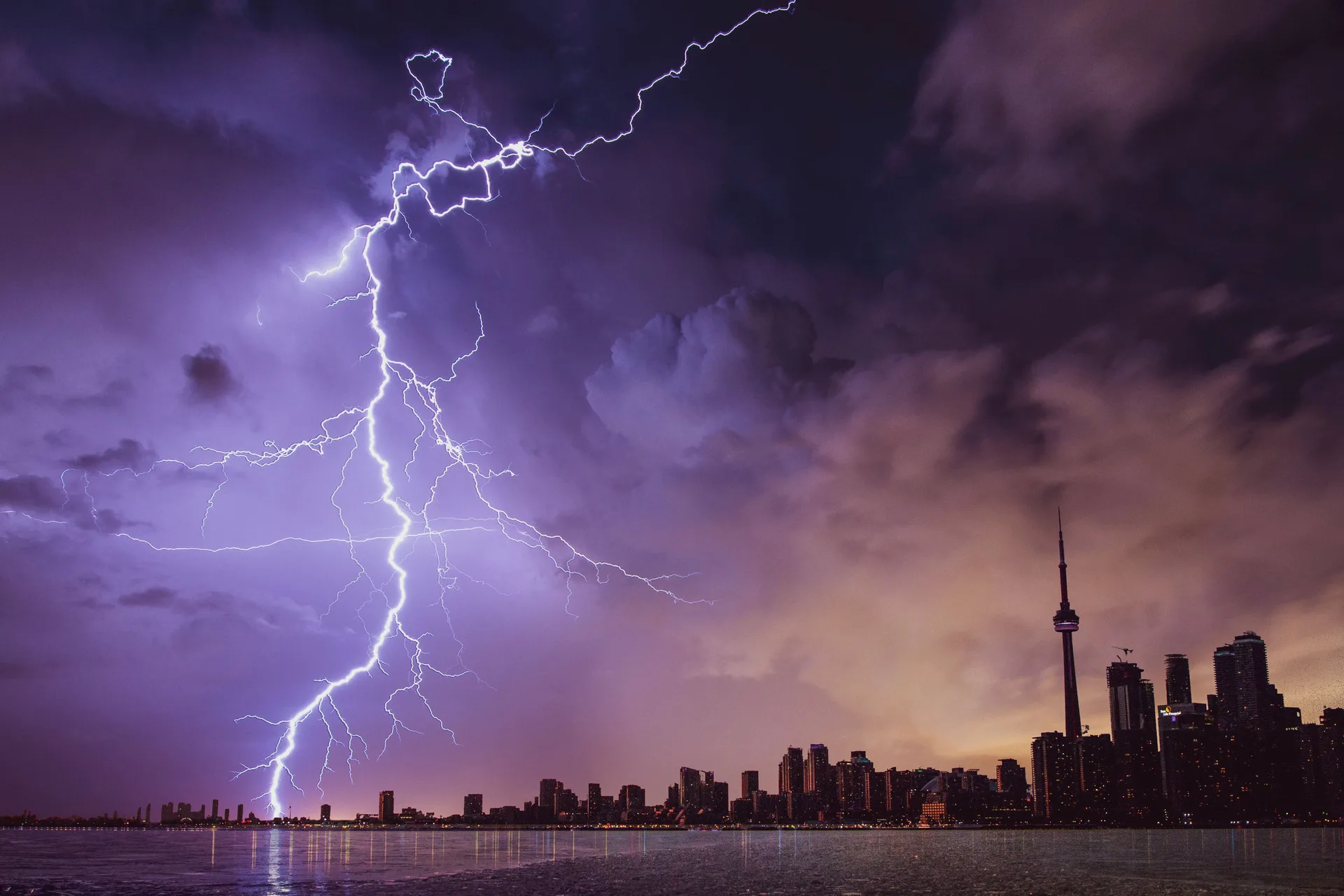
A surge can arrive from lightning, grid switching, or a fault nearby, and it travels in on the same wires that feed the home.
Layered protection: panel plus plug-in
| Layer | Where it sits | What it guards | Limit |
|---|---|---|---|
| Panel protector | At the main panel | Whole home's circuits and hardwired loads | Some surge can still pass through |
| Plug-in strip | At the outlet | Sensitive electronics on that outlet | Guards only what is plugged into it |
| Unplugging | By hand, before a storm | Portable valuables, completely | Cannot cover hardwired loads |
The layers work together: the panel device takes the large surge, the plug-in device takes what remains for sensitive electronics, and unplugging removes portable valuables from the path entirely. Any one layer alone leaves a gap that another layer covers.
Layered surge protection
Layer 1: panel protector diverts the large surge to ground. Layer 2: plug-in strip guards sensitive electronics at the outlet. Layer 3: unplugging removes portable valuables from the surge path entirely.
Florida lightning, in general terms
Florida sees frequent lightning, and that frequency is why surge protection matters more here than in drier, less storm-prone states. No lightning count, rank, or statistic is quoted here, because this guide does not rely on one: the practical point stands without it. A strike does not need to hit your home to cause damage — a nearby strike can push a surge through the grid and into your panel, and that is the surge a panel protector is built to divert. A direct strike to the home itself is a different scale of event, and no surge protector alone is presented as protection against it; that is what a lightning rod system is for, and it is a separate system.
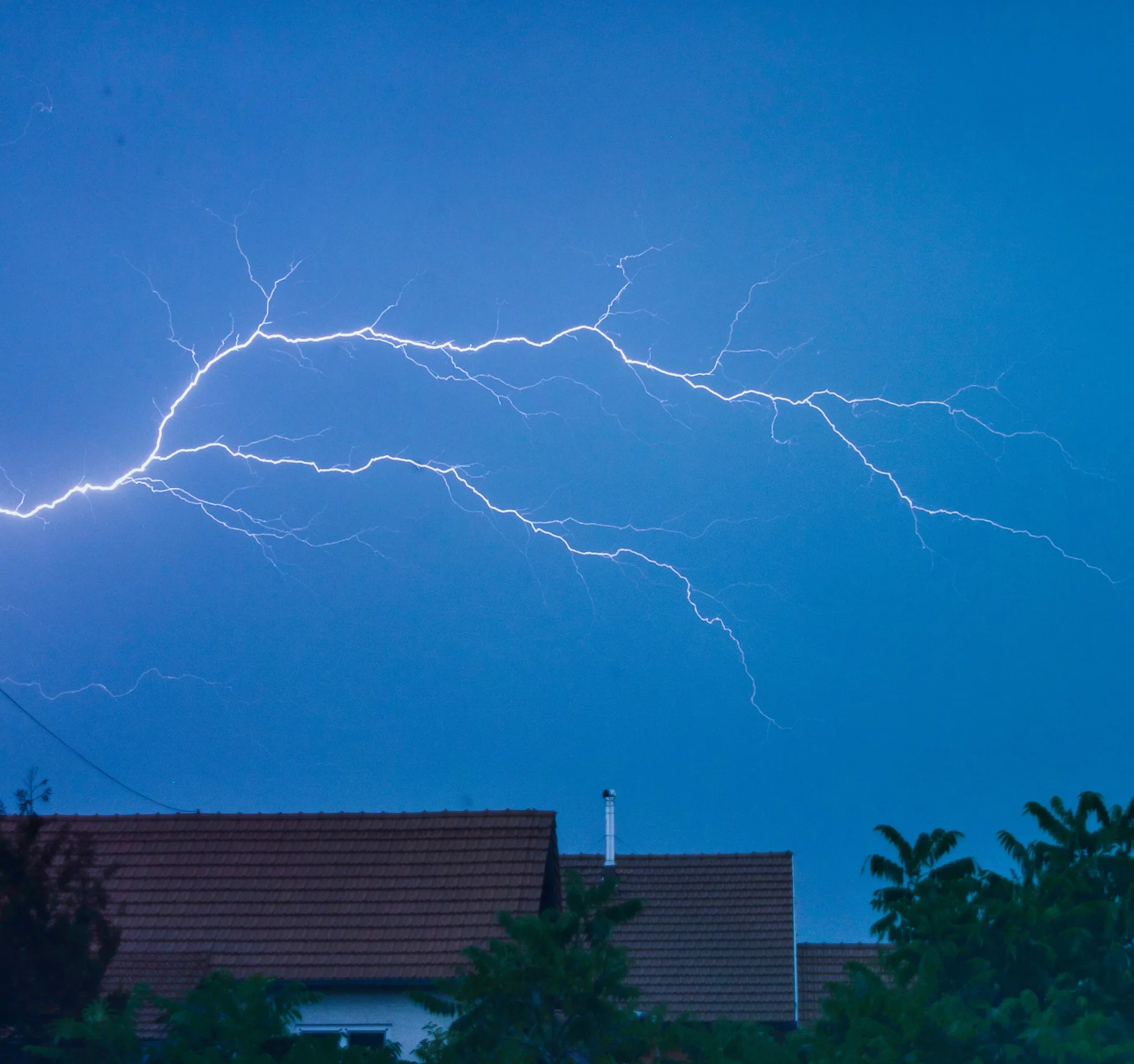
No protector guards against every direct strike, which is why unplugging portable electronics during a storm still helps.
When a protector needs replacing
- Its indicator light shows protection is no longer active, or there is no indicator and it has absorbed a known major surge.
- It feels hot, smells of burning, or shows scorch marks — replace it promptly and do not leave it in service.
- It is very old and its protective capacity is unknown — a check during a panel visit is the sensible step.
- After any direct or nearby lightning event that caused damage elsewhere in the home, have the protector checked even if it looks fine.
A dead protector looks identical to a live one from outside, which is why the indicator light — and a check after a major surge — matter more than appearance.
What surge protection can and cannot do
Can: divert grid, switching, and nearby-lightning surges away from circuits and appliances. Cannot: guarantee protection against a direct lightning strike, or replace a lightning rod system. Needs: indicator checks and replacement after major surges.
Choosing the right panel protector
A provider should match the protector to your panel: capacity for your service size, space in the panel, and a grounding system that can carry a diverted surge safely. A protector fitted to a panel with poor grounding cannot divert a surge properly, which is why a panel check is part of a surge job, not an optional extra. Ask what the indicator light shows, how you will know when protection is spent, and whether the protector is covered by a connected-equipment warranty — and get the answers in writing, not as a verbal promise.
What changes the cost
Surge protection has no one price here, because surge protection spans a panel device, plug-in strips, and sometimes panel work to fit the device. What changes the cost is the protector type and capacity, panel condition and space, access, and permit and inspection coordination where it applies. A provider should price your specific panel and protection plan after looking at it, not from house size alone.
The three layers, and the ground they depend on
Surge protection works in layers, and competitor guides for Florida homes all describe the same three. A Type 1 device sits at the service entrance, on the supply side of the main disconnect, and handles high-energy external surges from lightning and grid events. A Type 2 device sits at the main panel, on the load side of the disconnect, and clamps what gets past the first layer plus surges generated inside the home. A Type 3 device is point-of-use protection: a quality plug-in protector at the home office, home theater, or computer, which cleans up the residual surge that reaches that outlet. One layer alone leaves a gap, which is why a panel device plus plug-in protection for sensitive electronics is the usual recommendation, not either one on its own.
Two entry points and one limiting factor are routinely missed. Surges do not only arrive on power lines: cable television, internet, and telephone lines entering the home can carry them too, so ask a provider about protection for those entry points as well as the panel. And a surge device is only as good as the ground it shunts to: if the grounding electrode system has corroded, which salt air in Fort Pierce makes more likely, the device cannot divert a surge effectively, so a ground check belongs in the same visit as the device. Short, straight leads between the device and the panel also matter, because extra wire length lets more voltage through. Check the device's status light once a month and after any major storm, since a unit that has absorbed repeated surges wears out and needs replacing, and remember the transfer moments: when utility power drops and when it returns, and when a standby generator transfers, the grid is at its dirtiest, which is why surge protection matters more, not less, in a home with backup power. Internal surges count too: every time a large motor such as an air conditioner or pool pump cycles, it creates a small spike, and those small spikes degrade sensitive electronics over time even without a single lightning strike nearby.
That layered approach is what whole house surge protector lightning coverage means in practice, and it is also the honest answer to lightning damage home electrical worries: reduce the surge that reaches equipment, check the ground it depends on, and never promise protection against a direct hit. Florida storm surge risk, in the electrical sense, is this everyday lightning and switching exposure, not a single storm.
Related services
Whole-house surge protection in Fort Pierce · Panel upgrade in Fort Pierce · Generator installation in Fort Pierce · Electrical inspection in Fort Pierce · Electrical repair in Fort Pierce · All services
Think of surge protection as layered protection, not a single device: the panel unit handles the big incoming surge, and point-of-use protectors guard the electronics you care most about. Check the panel unit status light after any big storm — a light that has gone out can mean the device has already spent itself — and remember that an indirect surge from a nearby strike is the common case a panel device is built for, not a direct hit. Florida lightning surge protection is really lightning surge protection: a guard against the surges lightning sends down the lines, and against lightning damage to home electrical systems from nearby strikes, not a promise against a direct hit.
A second protector at the outdoor air conditioner
Panel protection guards every circuit, but the outdoor air conditioner deserves its own mention: its compressor and control board sit outside, connected by their own run, and they are among the most expensive single items a surge can damage. A dedicated protector at the outdoor unit adds a second layer right where that equipment connects, catching what remains after the panel unit has done its work.
This is a complement to panel protection, not a replacement for it, and it does not change the direct-strike limit: no panel or unit protector is built to absorb a direct strike to the house. When you call, report the air conditioner age and type if known, whether it stopped after a storm, and whether your panel protector's status light has changed.
Need an electrician in Fort Pierce? Want storm-season surge cover? Call and tell us your panel space and the main loads to protect.
Frequently asked questions
What does whole-house surge protection actually do?
A whole-house surge protector, installed at the panel, diverts excess voltage from a surge away from your home's circuits before it reaches appliances and wiring. It guards against surges from the grid, from switching, and from nearby lightning, by giving that excess voltage a safe path to ground. It is a protective layer, not a guarantee: no device can promise to stop all damage from every surge, especially a direct lightning strike.
Is a panel surge protector enough on its own?
Usually not on its own. The standard approach is layered: a panel-mounted protector guards the whole home's circuits, and plug-in strips guard sensitive electronics such as computers and televisions at the outlet. The panel device handles the large surge; the plug-in device handles what remains. One layer without the other leaves either the circuits or the sensitive devices less protected than they could be.
Does surge protection help against Florida lightning?
Yes, in general terms. Florida sees frequent lightning, and lightning does not have to strike your home directly to cause a surge — a strike nearby can send a surge through the grid, phone lines, or cable lines into a home. Whole-house surge protection is designed for exactly that kind of surge. A direct strike to the home itself is a different scale of event, and no surge protector alone is presented here as protection against it.
What is the difference between a surge protector and a lightning rod?
They protect against different things. A lightning rod system gives lightning a controlled path to ground, protecting the structure from a direct strike. A surge protector diverts excess voltage on electrical circuits, protecting appliances and wiring from surges. A home can have one, the other, or both, and neither replaces the other — they are complementary systems, not alternatives.
Do surge protectors wear out?
Yes. Surge protectors absorb surges over time, and their protective capacity drops with each significant event. Many panel protectors have an indicator light showing whether protection is still active, and plug-in strips often have no indicator at all. If a protector's indicator shows it is no longer protecting, or after a known major surge, it should be checked and replaced — a dead protector looks identical to a live one from outside.
Should I unplug things during a storm even with surge protection?
Unplugging valuable portable electronics during a storm is still sensible, because it removes them from the surge path entirely. Surge protection guards what stays plugged in, especially hardwired loads such as air conditioning that cannot be unplugged. The two together — protection for what stays, unplugging for what can go — is stronger than either alone.
Can a surge protector cause a fire?
A failed or damaged surge protector can itself be a fire risk, which is why a protector that shows heat, smell, scorch marks, or a dead indicator should be replaced promptly and not left in service. A properly installed, undamaged protector from a reputable maker, installed at the panel by a provider, is not presented here as a fire risk — but any electrical device that is damaged should be treated as suspect until checked.
Do I need a permit for whole-house surge protection?
In general terms, Florida Building Code 105.1 requires a permit before installing, altering, or replacing a regulated electrical system, and panel-mounted surge protection installed in the panel falls in that category. Whether the City of Fort Pierce or St. Lucie County handles your permit depends on your exact address. A provider should confirm the route and handle permit and inspection coordination as part of the job.
Need an electrician in Fort Pierce? Call now and describe the problem.