
Flickering Lights When Your AC Turns On in Fort Pierce
A brief dim when the air conditioner starts is often normal, because a big motor draws a surge and voltage dips for a second before recovering. Flickering that lingers, spreads, or comes with heat or smell is a warning sign. Call (772) 218-3629 and tell us which lights flicker, how long it lasts, and whether heat or smell is present.
Your air conditioner compressor is the largest motor in most Fort Pierce homes. At startup it draws far more current for a second than it does while running, and that surge causes a voltage drop across the home. In short, flickering lights when AC turns on usually mean a startup dip, not a failing fixture. Lights dim briefly, then recover as the motor settles. That one-second dip, happening only when the AC starts, is the normal version of this problem.
Need an electrician in Fort Pierce? Lights flickering when the AC starts? Call and tell us which lights flicker and whether the whole house dims.
Normal dip vs warning sign
| Pattern | Likely meaning |
|---|---|
| Brief dim, only when AC starts, recovers in a second | Normal startup voltage dip |
| Flicker in one light only, rest steady | That fixture, bulb, or its connection |
| Flicker across many rooms when AC starts | Panel, service, or supply issue worth checking |
| Flicker with heat, smell, buzzing, or scorch marks | Urgent: stop and call a provider |
| Flicker that is getting worse over weeks | A connection loosening over time; get it checked |
Why it only happens when the AC turns on
The common flickering lights causes in this pattern are startup surge, loose connections, and overloaded circuits. The AC is the trigger because it is the biggest startup load in the house, and the AC electrical load dwarfs every other startup load. Smaller loads, lights, fans, televisions, do not draw enough at startup to move voltage noticeably. When the compressor kicks on, the surge travels through the same panel and service that feed your lights, so the dip shows up in the lights first. In a new house, the same dip can still appear if the AC circuit shares capacity tightly with lighting circuits, which is why "new" does not rule out "needs checking."
One light flickers, the rest are fine
Light flicker diagnosis starts with narrowing the problem before you widen it. Lights dimming briefly at startup is the normal version; that brief voltage fluctuation, lasting about a second, is the surge passing. One flickering light usually means that fixture: a loose bulb, a failing bulb, a loose connection in that fixture, or a dimmer that does not match the bulb type. Swap the bulb first, check that it sits firmly, and try a different bulb type if the fixture is on a dimmer. If the flicker follows the fixture, not the bulb, the fixture or its connection needs attention. If several lights on different circuits flicker together, the problem sits wider, toward the panel or supply.
Loose connections: the quiet danger
A loose connection heats up every time current passes through it, and the heating and cooling cycle loosens it further. That slow worsening is why flicker that grows over weeks deserves attention even when it started as a mild annoyance. A loose neutral, the wire that balances voltage across the home's two halves, is the most serious version: it can make some circuits run high and others low, damaging appliances. A provider can test for it, but a homeowner should never open a panel to look.
Does flickering mean I need a panel upgrade?
Not necessarily. Flicker from a single overloaded circuit can be fixed with a dedicated circuit for the AC or by moving load. Flicker across the whole house, a panel with no spare panel capacity, or a panel flagged as unsafe points toward a panel upgrade instead. A load calculation and a panel check decide which one fits, and guessing wrong in either direction wastes money or leaves a fault in place.
Safe checks you can do
- Note whether the flicker is brief or lingering, one light or many rooms.
- Swap the bulb in a single flickering fixture and check the dimmer match.
- Check whether the pattern started after a new appliance, a storm, or recent work.
- Feel, without opening anything, whether a switch plate or outlet is warm.
- Stop and call if you find heat, smell, buzzing, or scorch marks.
Normal dip versus warning sign
Normal: brief dim only when the AC starts, clears in a second. Warning: many lights flicker together, flicker lasts longer, or flicker comes with burning smell, buzzing, a hot plate, or a breaker trip.
Flickering light causes at a glance
AC startup load: brief dip at startup. Bulb or dimmer: one light, dimmer mismatch. Loose connection: flicker plus buzzing, heat, or smell — urgent. Overloaded panel: whole-house dim at startup. Supply dip: neighbors affected too.
Utility or provider?
Call a provider for flicker inside your home: panels, circuits, fixtures, and connections. Call your utility when the problem sits outside: flicker across the whole street, a damaged service drop, or flicker that began after storm damage to lines. If neighbors report the same flicker at the same times, that points to the supply side. If only your home flickers, that points inside.
Fort Pierce notes
Air conditioning runs longer and harder here than in cooler climates, so a marginal circuit shows its weakness sooner and more often. Salt air also ages outdoor service connections over time, which is one more reason a provider should look at the service entrance as well as the indoor panel when flicker spans the whole house.
Next step
Write down the pattern: whether the AC flicker is brief or lingering, one light or many, only with the AC or all the time. That is why lights dim when AC starts and recover a second later, in the normal case. That note tells a provider where to start. Electrical repair covers fixture and connection faults, the breaker tripping guide covers the related tripping pattern, and lighting installation covers fixture and dimmer upgrades.
Inrush current, a weak capacitor, and causes that stack up
The mechanism behind the dip has a name: inrush current. When the compressor motor starts from a standstill, it draws a short burst of current much larger than its normal running draw. That burst pulls voltage down across the whole service for a fraction of a second, and lights dim in step. A healthy system recovers immediately. The dip itself is physics, not proof of a fault.
One cause sits on the air conditioner rather than the wiring. The start capacitor helps the compressor motor spin up smoothly, and as it weakens with age, the unit pulls extra power for longer at each start. Lights then dim more severely and stay dim longer than they used to. A weakening capacitor is an HVAC-side check, and it is worth mentioning to the provider alongside the electrical checks, since fixing the wiring alone will not cure a failing capacitor.
Causes often stack. A modest voltage dip plus a slightly loose connection plus a weak capacitor together produce flicker that none of the three would cause alone. That stacking is why a provider measures voltage at the panel while the air conditioner starts, rather than guessing from a description. The measurement shows how deep the dip runs and whether it is even across the service.
Two fixes deserve a mention beyond dedicated circuits and panel work. A soft-start device installed on the compressor reduces the startup burst itself, easing the dip at its source. And light type matters to what you notice: LEDs and incandescent bulbs show small voltage dips more readily than other lights, so visible flicker alone does not prove a fault. What proves a problem is flicker that is strong, lasting, or paired with heat, smell, or tripping breakers.
Photos and quick reference
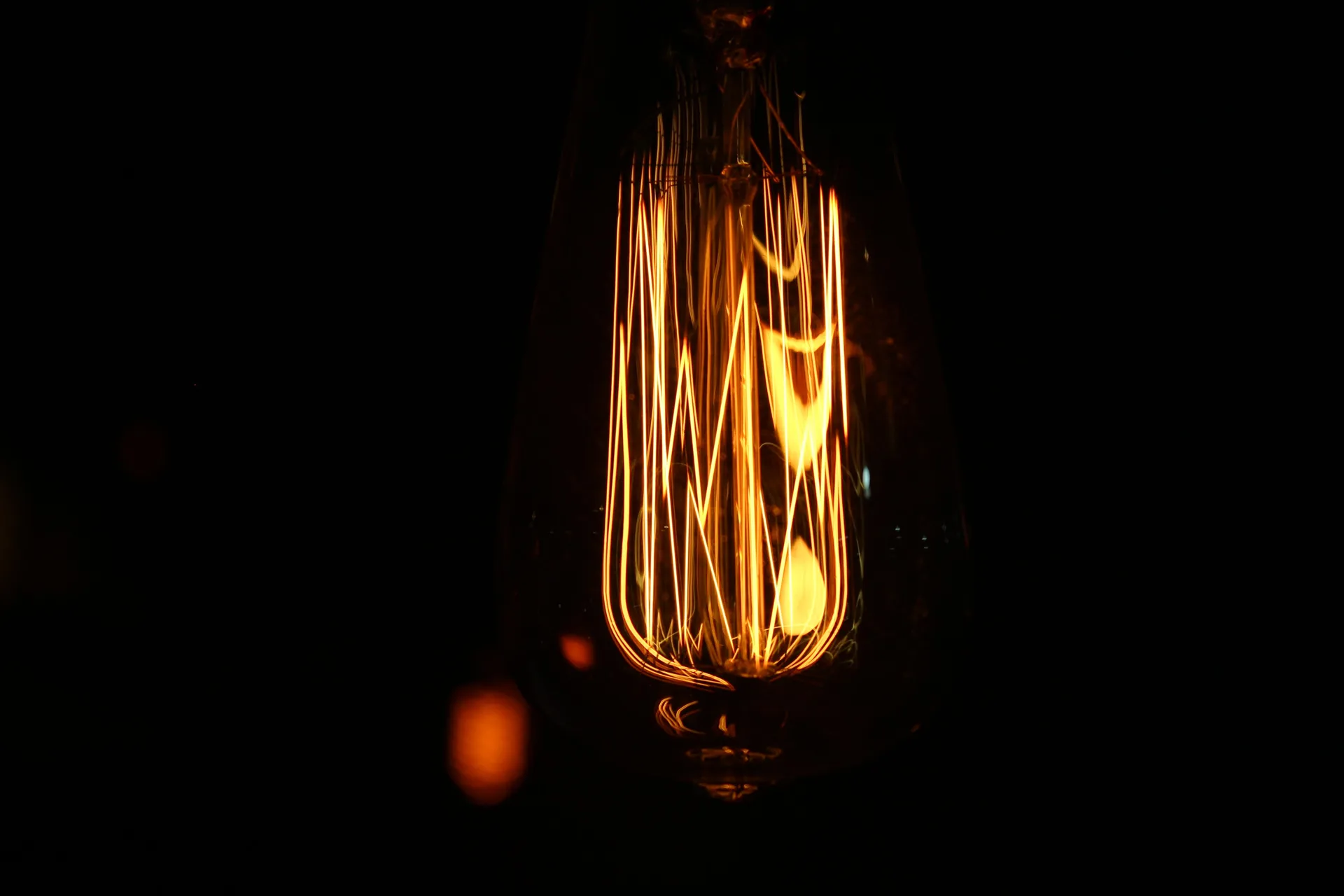
Window air conditioner flicker: three quick checks
A window unit has three checks worth doing before assuming a wiring fault. Plug it directly into a wall outlet rather than a power strip, since window units should run on a direct outlet. Check the plug, cord, and outlet for looseness or damage, since a poor connection both flickers lights and overheats. Then try a different outlet on a different circuit: if the flicker stops, the original outlet or circuit was the weak link.
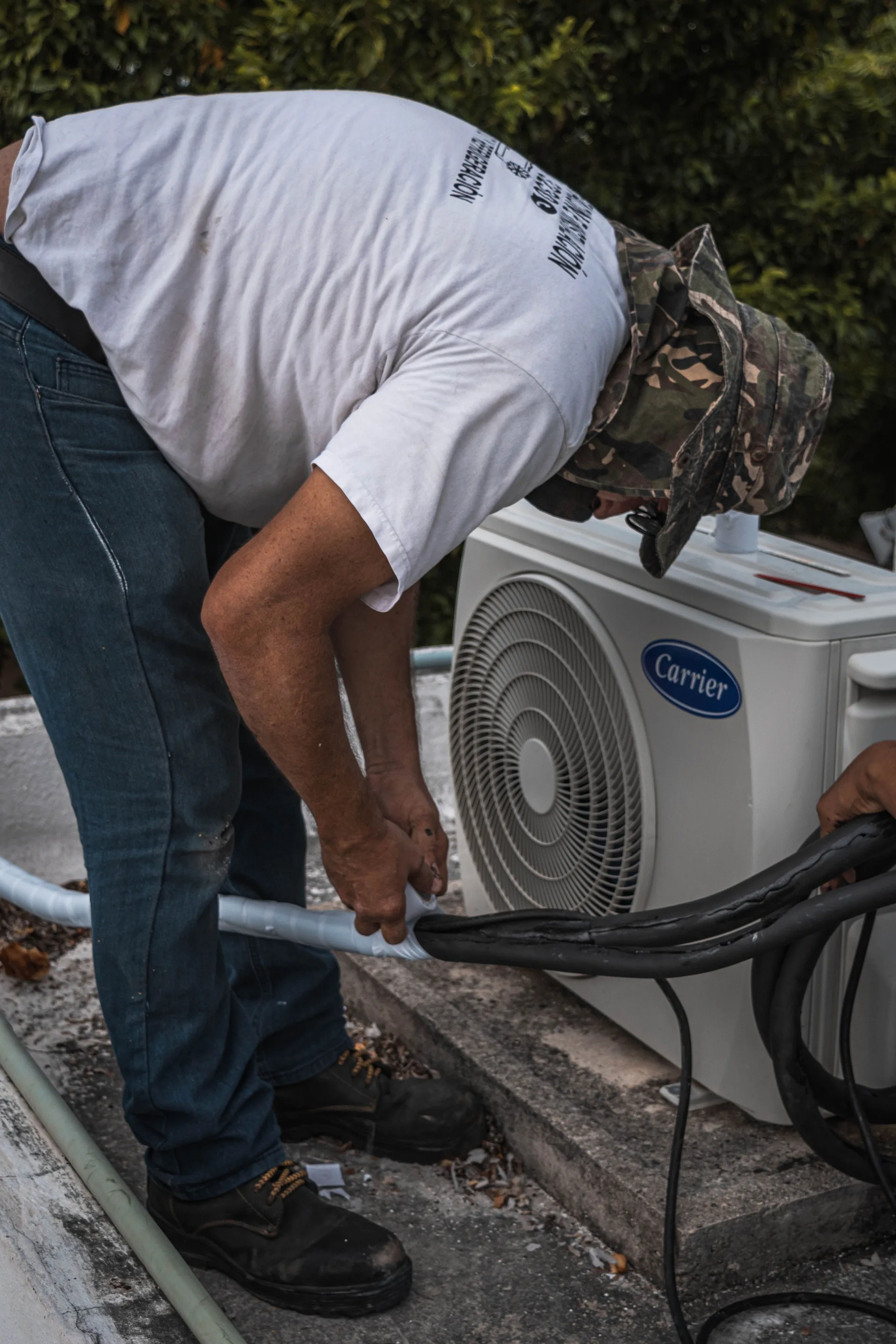
If the flicker persists across outlets, the cause sits wider, in the wiring, panel, or supply, and a provider should check it. A window unit ideally runs on its own properly rated circuit. When you call, tell us whether the flicker follows the unit across outlets, which lights flicker, and whether the outlet or cord feels warm.
Need an electrician in Fort Pierce? Lights flickering when the AC starts? Call and tell us which lights flicker and whether the whole house dims.
Frequently asked questions
Is it normal for lights to dim when the AC starts?
A brief dim, lasting about a second and recovering on its own, is usually normal. The air conditioner compressor draws a large surge at startup, which pulls voltage down momentarily. Flicker that lingers, spreads across many rooms, or comes with heat, smell, or buzzing is not normal and should be checked.
Why does it only happen when the AC turns on?
The air conditioner is the largest motor in most homes, so its startup surge is the only load big enough to move voltage noticeably. Smaller loads do not draw enough at startup to dim lights. That is why the pattern tracks the AC exactly, and why a new house can still show it if circuits share capacity tightly.
One light flickers, but the rest are fine. What does that mean?
It usually means that fixture, not the whole system. Try a different bulb, check that the bulb sits firmly, and check whether the dimmer matches the bulb type. If the flicker follows the fixture rather than the bulb, the fixture or its connection needs attention from a provider.
Can a loose connection cause flickering?
Yes, and it is the cause to take seriously. A loose connection heats up every time current passes, and the heating cycle loosens it further, so flicker that worsens over weeks fits this pattern. A loose neutral is the most serious version, since it can push voltage high on some circuits and damage appliances.
Does flickering mean I need a panel upgrade?
Not necessarily. Flicker from one overloaded circuit can be fixed with a dedicated circuit or by moving load. Flicker across the whole house, a panel with no spare capacity, or a panel flagged as unsafe points toward a panel upgrade instead. A load calculation and a panel check decide which fits.
Should I call the utility or an electrician for flickering lights?
Call a provider for flicker inside your home: panels, circuits, fixtures, and connections. Call your utility when the problem sits outside, such as flicker across the whole street, a damaged service drop, or flicker that began after storm damage to lines. If neighbors report the same flicker, that points to the supply side.
Can I ignore flickering if it only happens sometimes?
Brief dimming only when the AC starts can be left alone, but flicker that is spreading, lingering, or worsening should not be ignored. Intermittent flicker with heat, smell, buzzing, or scorch marks needs prompt attention, not patience. When in doubt, note the pattern and ask a provider.
What will a provider check for flickering lights?
The provider checks the pattern first: which lights, when, and how long. Then the fixture and dimmer for single-light flicker, the circuit load and connections for one-circuit flicker, and the panel, service entrance, and neutral connection for whole-house flicker. A load calculation follows if capacity looks tight.
Need an electrician in Fort Pierce? Call now and describe the problem.