
Video Doorbell Wiring Fort Pierce: Power Guide
Video doorbell wiring Fort Pierce explained for homes in Lakewood Park and Fort Pierce North, ZIPs 34946 and 34950: transformer, existing wiring, chime and outdoor fitting checks to settle before you buy a wired doorbell, and what to have ready for the call.
Call Now to Speak to a Specialist
Open 24 hours a day, 7 days a week.
Video doorbell wiring Fort Pierce starts with power, not with the camera: a wired doorbell needs a transformer and bell wire that can feed it all day, and many older doorbell circuits cannot. Check the transformer, the existing wiring and the chime, and the fitting becomes a straightforward visit. Call (772) 218-3629 with your doorbell model in hand.
How a wired video doorbell gets its power
A wired video doorbell does not run from the mains directly. It runs from a low-voltage doorbell circuit: a transformer steps the mains supply down to the low voltage the doorbell needs, and thin bell wire carries that power from the transformer, through the chime, to the button position at the door. The camera, the motion sensing and the Wi-Fi radio all draw from that same low-voltage supply, all day, which is why a wired video doorbell asks more of its circuit than a simple chime ever did.
Battery video doorbells are a different case. They run from a rechargeable cell and are usually fitted without a transformer, though some models can also connect to existing bell wiring to trickle-charge between uses. If your home has no doorbell wiring at all, a battery model avoids the wiring question entirely, but it adds charging routine instead. The choice between wired and battery should therefore start with the wiring you already have, not with the camera features alone.
That distinction matters for the visit too. A wired swap on a healthy existing circuit is a short job, while a home with no bell wiring, a failed transformer or damaged wire is a circuit job first and a doorbell job second. Our doorbell and intercom installation in Fort Pierce page covers the fitting itself, and this guide covers the power checks that decide what that fitting involves.
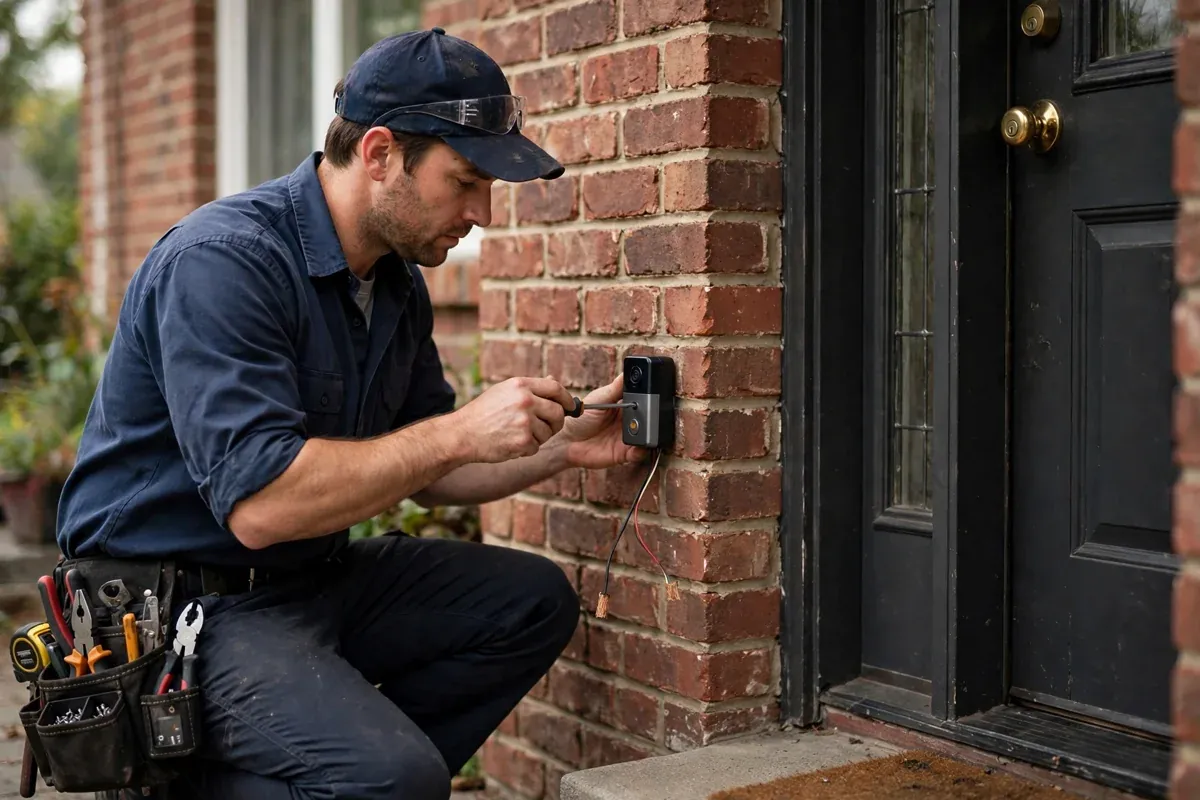
The transformer check: the most common reason a wired doorbell misbehaves
The transformer is the first thing a wired doorbell visit checks, because it is the most common cause of trouble. Every wired video doorbell states, in its own instructions, the voltage and power it needs, and the transformer already in the home must meet that requirement. Many older transformers were sized for a simple mechanical chime, which rings for a second and then rests, not for a camera that stays powered, senses motion and streams video all day.
An underpowered transformer shows itself in frustrating ways: a doorbell that reboots, drops offline, loses its video feed, or works for a while and then fails on a busy day. Those symptoms look like a Wi-Fi problem or a faulty doorbell, and people often replace the doorbell before anyone checks the power feeding it. A visit that measures the transformer against the doorbell's stated requirement settles the question in minutes, and a transformer replacement, where needed, is a small job compared with a doorbell replaced twice.
Transformer location is part of the same check. Transformers often sit near the panel, near the chime, or in a utility space, and finding it is the first step to reading its rating. If the transformer cannot be found, or its rating plate cannot be read, that is a question for the visit, not a reason to guess: the mains side of a transformer is not a place for trial and error. Do not open a panel or handle transformer mains wiring yourself; describe what you can see and let the visit handle the rest.
Doorbell losing power or going offline?
The existing wiring check: bell wire, route and condition
After the transformer comes the bell wire itself: the thin low-voltage wire that runs from the transformer to the chime and on to the door. The visit checks whether that wire is present at the door position, whether it is continuous, and whether its condition suits a camera that draws power all day. Wire that is cut, corroded, painted over, or buried behind a remodel may look fine at the button and still fail to deliver steady power.
Route matters as well. Bell wire often runs through walls and lofts in ways that are easy to disturb during other work, and a wire that was fine for a chime can still be marginal for a camera if a connection has loosened over the years. Connections at the transformer, at the chime and at the button are all checked, because a single loose connection can starve the doorbell just as surely as an undersized transformer.
One more wiring question deserves a direct answer: how many wires reach the door position. A simple chime needs two conductors, and most wired video doorbells do too, but a position wired for an intercom or a second button may carry more, and a position with a single damaged conductor may carry effectively none. Counting and testing the conductors on the visit, rather than assuming from the button plate, is what turns a doorbell swap into a working install. Our smart home wiring in Fort Pierce covers the wider low-voltage work that a doorbell job sometimes leads into.
No existing doorbell? A new power route, settled on the visit
Homes without any doorbell wiring are not ruled out for a wired video doorbell, but the job changes shape. Instead of a swap, the visit plans a new low-voltage route: where the transformer will sit, how the bell wire reaches the door position, and whether the panel has room for the transformer circuit. That route may be short and simple, through an adjacent garage wall, or longer, through a loft or finished rooms, and the length and access decide the scope.
This is also where the wired-versus-battery decision earns a second look. A battery doorbell avoids the new route entirely, at the cost of a charging routine and a camera that may sleep between events, depending on the model. A wired doorbell costs a circuit job now and then runs continuously without charging. Neither choice is wrong in general; the right one depends on the route, the access, and how the household actually uses the door.
What should not happen is a new circuit guessed without a visit. Panel room, transformer position and wire route are all specific to the home, and a price or a plan given without them is a guess. Describe the door position, the nearest panel location and whether any bell wiring exists, and the visit can plan the route properly. Our outlet and switch installation in Fort Pierce page covers the device-fitting work that often shares a visit with a doorbell job.
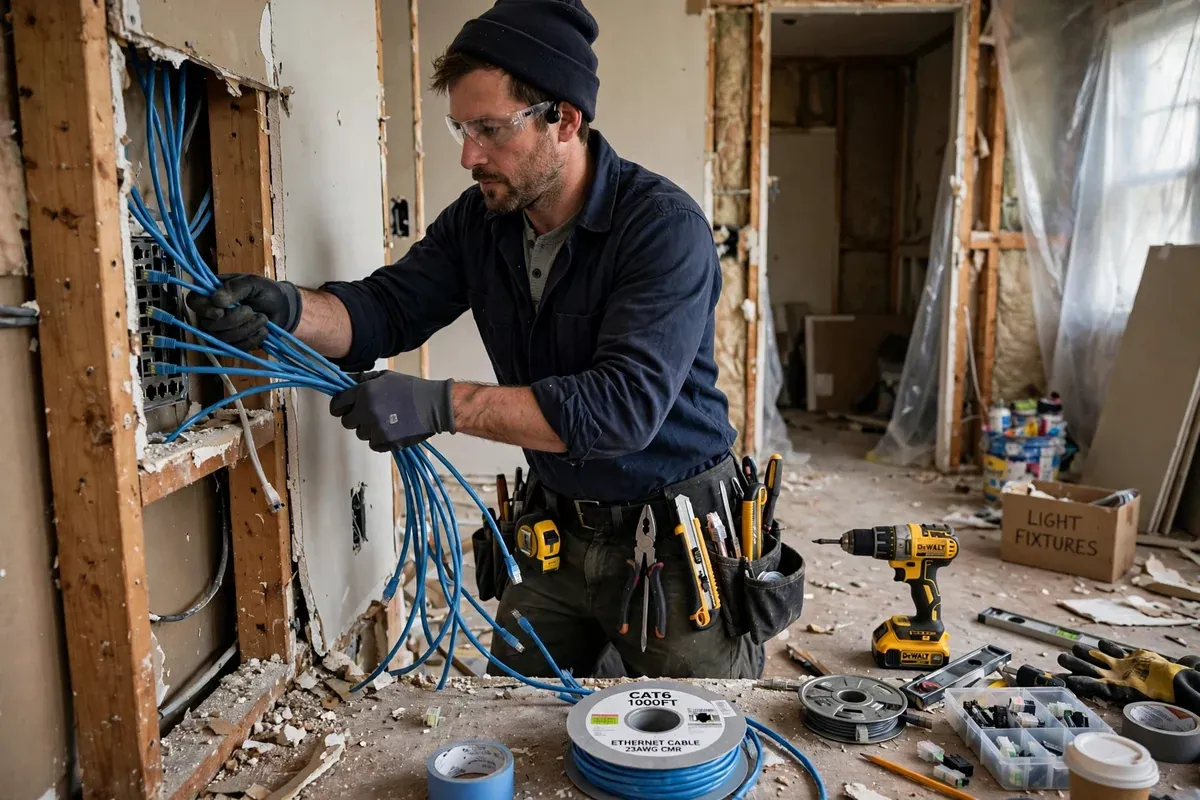
The chime question: keep it, bypass it, or rely on alerts
Every wired video doorbell raises the chime question, and the answer depends on the doorbell model and the transformer. Some video doorbells ring the existing indoor chime, so visitors hear the familiar sound inside the home. Some need the chime bypassed, so the transformer powers the camera alone and the alert comes through the phone instead. Some offer both, depending on the transformer and the settings chosen.
The bypass question matters because it changes the wiring at the chime, not just at the door. A chime bypassed for a powerful transformer must not be reconnected casually later, and a chime kept in circuit must suit the transformer's rating and the doorbell's requirement together. This is a small piece of wiring with an outsized effect on whether the doorbell works reliably, which is why it is settled from the doorbell's instructions and the wiring found on the visit, not from a general rule.
Households should also decide what they want to hear. A home where someone is often away from their phone may value a physical chime, while a home that lives on phone alerts may not miss it. That preference, stated before the visit, lets the fitting match the household instead of defaulting to whichever outcome the wiring happens to allow. A GFCI versus AFCI comparison explains a different protection question in the same spirit: the device must suit the circuit it sits on.
Doorbell losing power or going offline?
Outdoor fitting in Fort Pierce: weather, salt air and the mounting surface
A video doorbell lives outside, and in Fort Pierce that means rain, sun and salt air working on the button position year-round. The fitting must suit that exposure: the mounting surface must hold the unit firmly, the wire entry must be sealed against driven rain, and the unit must sit where it is not constantly soaked by a dripping eave or blasted by a sprinkler. Those are fitting questions, not product features, and they are answered by looking at the actual door position.
Salt air deserves its own mention for coastal homes, because it corrodes connections and fittings that would last for years inland. A doorbell position on an exposed coastal wall faces a harder life than one under a deep porch roof, and the visit should note that difference rather than fitting every doorbell the same way. Our salt air corrosion guide explains how coastal exposure affects outdoor electrical gear more generally.
Mounting surface is the last outdoor question. Brick, stucco, wood and siding each take a different fixing, and a doorbell mounted to a surface it cannot grip will loosen, tilt, and eventually strain its own wiring. A firm, level mount, a sealed wire entry and a position with a clear view of visitors are the three marks of a doorbell fitting done for Fort Pierce weather, not just for the day it is fitted. The Lakewood Park area page and the Fort Pierce North area page show the neighbourhoods this guide covers.
What to have ready when you call
- The doorbell model you own or plan to buy, and its stated power requirement if the instructions give one.
- Whether any doorbell wiring exists at the door, and whether an indoor chime rings today.
- Where the transformer sits, if you know, and whether you can see a rating plate on it.
- The door position: mounting surface, porch cover, and exposure to rain and sun.
- Whether you want to keep the indoor chime, or are happy with phone alerts alone.
A video doorbell wiring Fort Pierce call with those five answers takes minutes and ends with a clear next step, not a guess. Exact price and timing are confirmed on the call, and the doorbell is fitted after the transformer and wiring checks, not before them. Call (772) 218-3629 to start with your door's answers.
Video Doorbell Wiring Fort Pierce: frequently asked questions
How does a wired video doorbell get its power?
A wired video doorbell runs from the home's low-voltage doorbell circuit: a transformer steps the mains supply down to the low voltage the doorbell needs, and thin bell wire carries that power to the button position. Battery models are different, because they run from a rechargeable cell and only use wiring, if at all, to trickle-charge.
Does my existing doorbell transformer suit a video doorbell?
Not always, and the doorbell's own instructions state the voltage and power it needs. Many older chime transformers were sized for a simple chime, not for a camera that stays powered all day, so an underpowered transformer is a common reason a new video doorbell misbehaves. The visit checks the transformer rating against the doorbell's requirement before anything is fitted.
What if my home has no existing doorbell wiring?
A new doorbell position still needs a power route, and that route is settled on the visit: where the transformer will sit, how the low-voltage wire reaches the door, and whether the panel has room for the transformer circuit. Homes without any doorbell wiring are not ruled out, but the job is a new circuit question, not a simple swap.
Can I keep my indoor chime with a video doorbell?
Sometimes, and it depends on the doorbell model and the transformer. Some video doorbells ring the existing chime, some need the chime bypassed so the transformer powers the camera alone, and some rely on the phone alert instead. Which outcome applies is confirmed from the doorbell's instructions and the wiring found on the visit.
Why does my video doorbell lose power or go offline?
Power is the first suspect when a wired video doorbell drops out, because an undersized transformer or a poor bell-wire connection starves the camera. Wi-Fi coverage and the doorbell's own settings are the next checks, but a doorbell that keeps losing power is a wiring question first. Call (772) 218-3629 and describe when it drops out.
Does outdoor fitting matter for a video doorbell in Fort Pierce?
Yes, because the button position lives outside in rain, sun, and salt air, and the fitting must suit that exposure. Mounting surface, weather sealing, and the wire entry all affect how long the install lasts on a coastal home. Those fitting questions are raised on the visit, so the doorbell is mounted for Fort Pierce weather, not just for the day it is fitted.
Ready to talk?