
EV Charger Charging Time Estimator for Fort Pierce
EV charger charging time estimator for Fort Pierce, FL: pick Level 1 or Level 2 and the miles you need back near 34951 or Indian River State College, and see an approximate charging time, with a plain explanation of every result.
Open 24 hours a day, 7 days a week.
Your answer, in plain words
Pick a charger type, enter the miles you need back, and the estimator gives an approximate charging time. It is approximate only: your car, battery, and circuit change the real figure, and your panel capacity decides what can actually be installed.
Use the tool
How the estimate works
Level 1 charging from a standard outlet adds about 4 miles of range per hour, while a dedicated Level 2 circuit adds about 25 miles per hour. The tool divides your miles by that rate, so 100 miles works out to about 25 hours on Level 1 and about 4 hours on Level 2. Those rates are typical figures, not promises for your car: battery size, state of charge, temperature, and the charger itself all move the real time.
Need an electrician in Fort Pierce?
Why panel capacity decides the answer
A Level 2 charger is a large new load, and many Fort Pierce homes need a panel check or a load calculation before one can be added safely. If your panel is full, old, or already tripping, the charger may need an upgrade, a sub-panel, or a smaller charger setting first. That is why the estimator ends with a call: we check the panel, then confirm what is installable and give your exact quote.
What to have ready when you call
Know your car and charger if you have chosen one, where you want it fitted, how far that spot is from your panel, and how many miles you drive in a typical day. That lets us size the circuit and check the panel in one visit. See our EV charger installation service, our Tesla Wall Connector installation service, our panel upgrade service, Fort Pierce South, and the full tools hub.
Need an electrician in Fort Pierce?
What your result means
Your result is a planning guide, not a promise for a particular car or charger. A short approximate time means overnight charging will usually cover your driving, a medium time means you need to plan the plug-in hour, and a long time means Level 2, a panel check, or a different routine is worth discussing on the call.
- Read the approximate time, then compare it with the hours your car actually sits plugged in overnight.
- Note whether your usual daily miles fit inside that window, or whether the car would still be short in the morning.
- Call us with the charger type, the miles, and the panel location, and we will check what is installable.
If the time fits your overnight window
A result that sits comfortably inside your overnight window is the simplest outcome. Plug in when you get home, let the car charge through the night, and start the next day with the miles you need. Even here, keep a small margin: a cold snap, a nearly full battery, or a shared circuit can slow the last part of a charge, so charging earlier rather than later is the safer habit. If your routine changes — a longer commute, a second driver, or a weekend trip — run the estimator again with the new miles before assuming the same routine still works.
If the time is tight overnight
A tight result means the car can probably get there, but only if nothing slips. Plug in the moment you arrive home, avoid sharing the circuit with other heavy loads during the charge, and set the car to start charging at once rather than on a delayed start. Tell us about the tight window on the call, because it changes the advice: a dedicated circuit, a different charger position, or a panel check may turn a tight routine into a comfortable one. A tight result is also a reason not to buy a charger first and ask about the circuit afterwards.
If the time is longer than your overnight window
A result longer than your overnight window is not a failed result — it is useful information. It usually points to Level 2, because the faster approximate rate closes the gap for most daily routines, or to a panel check, because a home that cannot yet support Level 2 needs that question answered first. The next step is concrete: call (772) 218-3629, describe the miles and the window, and ask for a panel and load check. We will confirm what can be installed, what needs an upgrade or a sub-panel first, and give your exact quote in writing before work starts. Never open a panel yourself, and never work on live wiring, to test capacity or to fit a charger.
Level 1 versus Level 2 in a Fort Pierce home
Level 1 and Level 2 answer different daily-driving questions, and the right choice depends on miles, parking, and panel capacity rather than on charger branding alone. Level 1 suits a light daily routine with a long overnight window, while Level 2 suits a heavier routine, a shared car, or a short window before the next morning departure.
| Feature | Level 1 | Level 2 |
|---|---|---|
| Power source | Standard outlet | Dedicated circuit, checked against panel capacity |
| Typical approximate rate | About 4 miles per hour | About 25 miles per hour |
| Best for | Light daily driving and long overnight parking | Heavier daily driving, shared cars, and short overnight windows |
| Overnight fit | Suits a few dozen miles overnight | Suits a full daily routine overnight in most cases |
| What to check first | Outlet condition and circuit load | Panel rating, spare capacity, and load calculation |
| Installation shape | Often the simplest setup | A fitted charger, a dedicated circuit, and a confirmed route from the panel |
When Level 1 is genuinely enough
Level 1 is enough when the maths stays small: a short commute, a car that sits parked for a long stretch overnight, and no second driver adding miles the same night. In that pattern, the slower approximate rate still returns the day's miles with hours to spare, and there is no need to change the panel or add a dedicated circuit. The honest test is a full week, not a single good night: if a busy day, a detour, or a late arrival home would leave the car short the next morning, the routine is already telling you that Level 1 is at its edge. See the panel upgrade quiz if you suspect the panel, rather than the charger, is the limiting factor.
When Level 2 earns its place
Level 2 earns its place when the overnight window is short, the daily miles are high, or two drivers share one car. The faster approximate rate turns a charge that would run past breakfast into one that finishes during the night, and it gives a margin for cold weather, a nearly full battery, and the slower final stretch of charging. Level 2 is also the point where the panel question becomes unavoidable: a dedicated circuit is a large new load, so a load calculation, a check of spare capacity, and a look at existing loads all come before installation. Our EV charger installation service and our Tesla Wall Connector installation service both start from that panel check, and our panel upgrade service covers the homes that need more capacity first.
What the charger choice does not decide
The charger choice does not decide your panel capacity, your wiring condition, or the route from the panel to the parking spot. Those are site facts, and they are why two neighbours with the same car can get different advice. Distance matters: a charger close to the panel is a different job from one at the far end of a garage or across a driveway, and older wiring can add repair work before a new circuit is connected safely. Buying the charger before the panel check risks owning hardware the home cannot yet support, so the order matters: check the panel, confirm the circuit, then choose the charger that fits both.
Charging around Fort Pierce life
Fort Pierce routines shape charging more than any brochure does, because commutes, coastal weather, and storm season all change when a car is home and plugged in. A plan that works for a quiet week in Lakewood Park still needs a storm-season version, and a coastal home faces different wear on outdoor equipment than an inland garage.
Our service area covers Fort Pierce ZIP codes 34945, 34946, 34947, 34949, 34950, 34951, 34981, and 34982, including Downtown Fort Pierce, Hutchinson Island, Fort Pierce North, and Fort Pierce South. Salt air is a real factor near the coast, especially around Hutchinson Island and South Beach: outdoor fittings, covers, and connections face corrosion that an inland garage may never see, so outdoor charger positions deserve a weatherproof plan and a regular visual check for rust, damage, or loose covers. Storms matter too. A summer storm can interrupt power, and a charger is no help during an outage, so a storm-season routine means charging earlier in the day when a storm is forecast, keeping a usable margin for an unexpected trip, and knowing what to do if the power goes out. Our storm outage checklist and our whole-house surge protection service cover the wider home-protection side of that planning.
One local detail is worth checking on the call, because it varies by exact address: Fort Pierce Utilities Authority serves city addresses, while Florida Power and Light serves addresses outside the city, and the serving utility is confirmed per exact address rather than assumed from a neighbourhood name. That matters for service questions, outage reporting, and any upgrade paperwork, so have your exact address ready when you call. Landmarks help us picture the job too: a home near Fort Pierce City Marina, Indian River State College, or the downtown waterfront may have a different parking layout, driveway route, or panel position from a suburban home in Lakewood Park, and those details change the circuit route. Tell us the parking spot and the panel location on the call, and we will confirm the best route on a visit.
- Charge earlier than you think you need to when a storm is forecast or a long trip follows the next morning.
- Keep a margin above the miles you expect to need, rather than planning to arrive home nearly empty every night.
- Check outdoor charger covers and connections visually for salt-air corrosion, damage, or standing water after storms.
- Note the parking spot, the panel location, and the distance between them before you call, so the visit can be planned in one trip.
- Confirm your exact address on the call, so the serving utility and the service area can be checked precisely.
- Run the estimator again whenever your commute, your overnight window, or the number of drivers changes.
Before you buy a charger: a practical checklist
Buying a charger before checking the home is the most common avoidable mistake in this whole process, because the panel, the route, and the parking spot decide the job. Work through this checklist first, and you will arrive on the call with everything needed for a clear answer and a written quote.
- Your usual daily miles, and the longest single day you drive in a normal week.
- Your overnight window: the hour you usually arrive home and the hour you usually leave.
- Your charger shortlist, if you have one, including whether you want a Tesla Wall Connector or another brand.
- Where the car parks, and where you would like the charger fitted.
- Where the panel sits, and how far that spot is from the parking position.
- Whether the panel has tripped, buzzed, or shown damage, and whether the wiring is older or unknown.
- Whether the charger position is indoors, in a garage, or outdoors and exposed to salt air and storms.
- Your exact address, so the service area and serving utility can be confirmed precisely.
Safety first, always
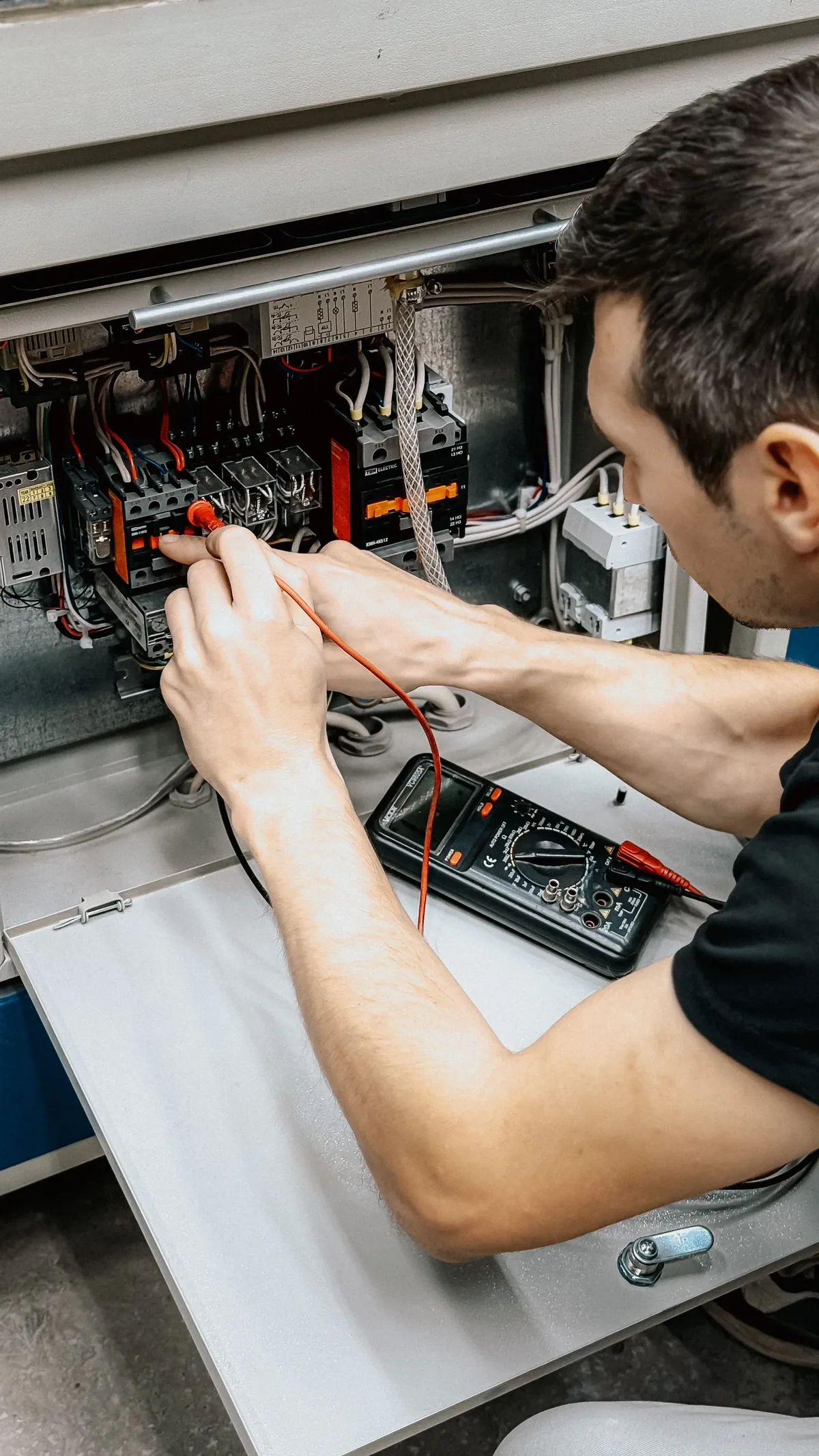
Never open a panel yourself, and never work on live wiring, to test capacity, to fit a charger, or to reset a fault you do not understand. Panels carry live parts even when a single breaker is off, and a mistake can injure you or damage the home's wiring. If a breaker trips repeatedly, if you smell burning, or if you see scorching, sparking, or water near electrical equipment, leave it alone and call (772) 218-3629. Fort Pierce Electric Pros is open 24 hours a day, 7 days a week, with same-day service, 23 years of experience, and licensed and insured electricians holding Master Electrician Certification. If the situation feels urgent, our emergency electrician service and our emergency triage quiz are the right first steps, and our electrical inspection service covers a full check when you want the whole home assessed. You can also check your coverage first with the service-area ZIP checker.
Frequently asked questions
How long does it take to charge an EV at home in Fort Pierce?
It depends on the charger: Level 1 from a standard outlet adds about 4 miles per hour, while Level 2 on a dedicated circuit adds about 25 miles per hour. Use the estimator above with your miles to see the difference, then call us to check your panel.
What is the difference between Level 1 and Level 2 EV charging?
Level 1 uses a standard outlet and is slow, best for overnight top-ups of a few dozen miles. Level 2 uses a dedicated circuit and is far faster, best for daily driving. Level 2 needs a circuit and panel check before installation.
Can my Fort Pierce home support a Level 2 charger?
That depends on your panel rating, existing loads, and spare capacity, which a load calculation confirms. Some homes can add one straight away, while others need an upgrade or a sub-panel first. Call (772) 218-3629 and we will check your panel.
Does cold or hot weather change EV charging time?
Yes, temperature, battery state of charge, and the car itself all change charging speed. The estimator uses typical rates, so treat its time as approximate and plan a margin, especially for a long trip the next morning. Plan a margin and charge earlier than you think you need.
Where should an EV charger be installed at home?
Usually in or near the garage, as close to the panel as practical, since distance affects the circuit and the work involved. Tell us the spot and the panel location on the call, and we will confirm the best route on a visit.
How much does EV charger installation cost in Fort Pierce?
There is no fixed figure, because charger type, panel capacity, distance from the panel, and any permit or inspection shape the figure. This estimator never shows a price. Call (772) 218-3629 for your exact quote, agreed in writing before work starts.
Ready to talk?