
Emergency Electrical Repair Fort Pierce
Emergency electrical repair Fort Pierce: some faults are fixed on the call and some are made safe for a return visit, for homes in 34945 and 34946 including Lincoln Park and St. Lucie Village, and this guide explains which outcome your fault is likely to get and why.
Emergency electrical repair Fort Pierce is not one kind of visit. Some faults are fixed on the call, and some are made safe and finished on a return visit. This guide explains the difference and what to do while you wait. Call (772) 218-3629 if anything smells hot, buzzes, sparks, or leaves you without power.
Emergency electrical repair Fort Pierce: fixed, or made safe?
The honest answer to most emergency calls is that it depends on what the fault is, and this post exists to make that answer useful before anyone arrives. Emergency electrical repair Fort Pierce covers two outcomes: a fault that is repaired completely on the visit, such as a failed breaker, a damaged outlet, or a loose connection that can be remade safely, and a fault that is made safe on the visit and finished later, such as panel damage that needs parts, a mast or meter fault that needs utility coordination, or flood damage that must dry and be inspected before it is re-energised.
That distinction is not a delay tactic. Making a fault safe means removing the danger now: isolating a damaged circuit, disconnecting a dangerous fitting, or leaving a panel off until the part or the utility step is ready. A repair that pretends a damaged panel is fixed, or re-energises flood-damaged wiring, would be worse than no repair at all. The emergency visit's first job is safety, and its second job is a complete repair wherever safety allows it.
Why this question is being asked more often is visible at state level, not city level. Google Trends for Florida over the past 12 months shows rising interest in emergency electrical repair, up 130 percent in the rising-query list for that period, alongside residential and commercial electrical repair. Fort Pierce city-level Trends data for this term is not shown by the tool, so no city figure is claimed here; the Florida rise is reported as Florida data, and the post is built on the repair question itself, not on an invented local volume.
What usually gets fixed on the emergency call
A single failed breaker is the most common same-visit fix. Breakers wear out, trip repeatedly, or refuse to stay on, and a matched replacement breaker, chosen for the panel brand and type, restores the circuit the same night. Our electrical panel repair guide explains which panel faults are repaired and which mean replacement, and a single-breaker fault sits firmly on the repaired side.
A damaged outlet or switch is the second same-visit fix, provided the wiring behind it is sound. A cracked outlet, a switch that sparks, or a fitting that has overheated can be replaced once the circuit is isolated and the wiring is checked, and the circuit returns the same night. A loose connection that has not yet damaged the surrounding parts is the third: it is remade, tested, and the circuit is restored, which is why a breaker that trips repeatedly deserves a call early, before a loose connection becomes heat damage.
A dead circuit with a simple cause also belongs here. A tripped GFCI that will not reset because the outlet itself has failed, or a circuit isolated by a faulty device, can be found and fixed on the visit, and our breaker keeps tripping guide covers the symptom family in full. The common thread in all of these is that the fault is contained: one part, one circuit, and sound wiring around it.
What gets made safe, and finished on a return visit
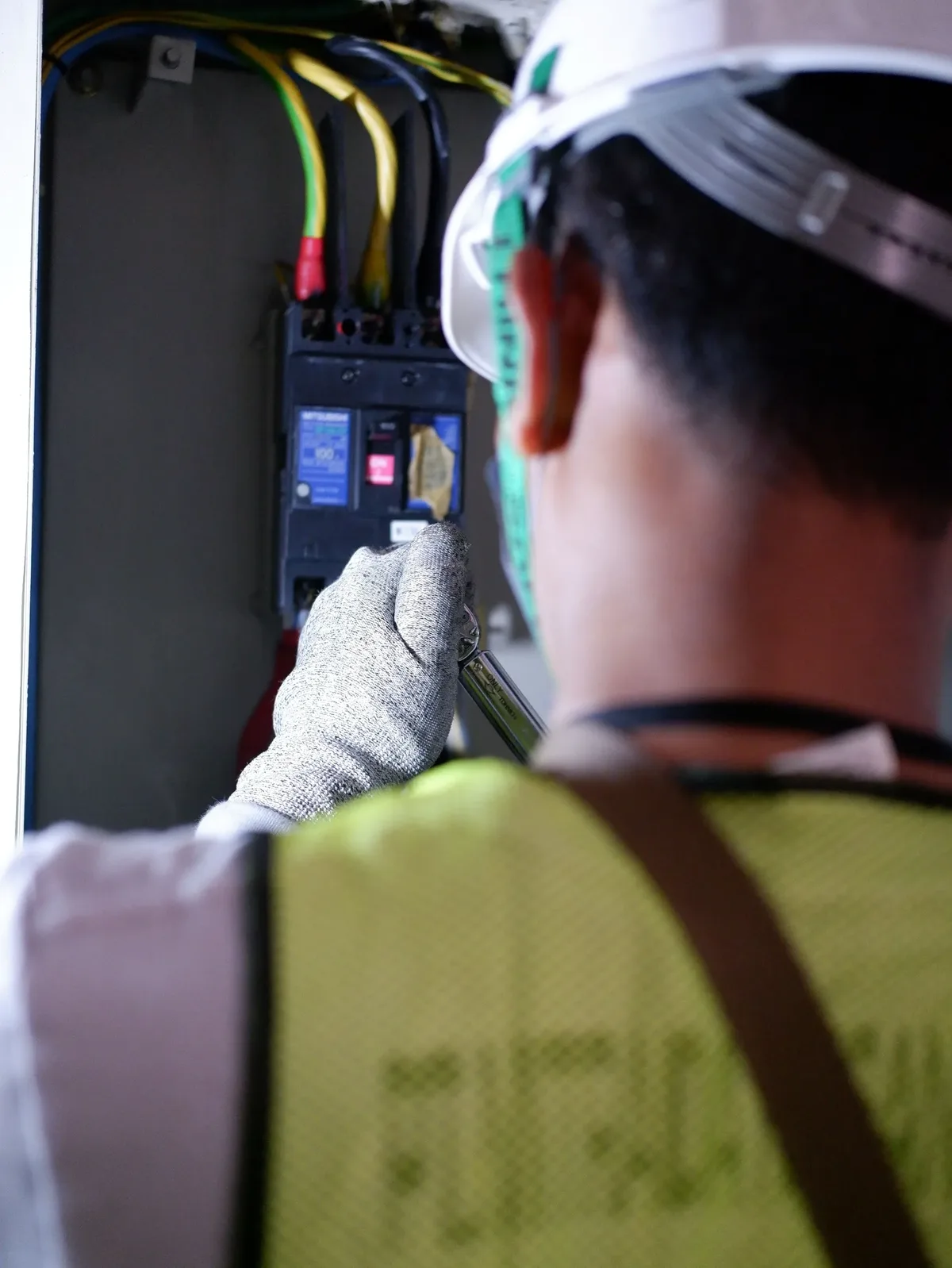
Panel damage is the most common made-safe outcome. A bus bar that is scorched or pitted, a panel that is hot across several breakers, or a Federal Pacific or Zinsco panel whose protection cannot be trusted cannot be repaired by swapping one breaker, and the safe outcome is to isolate the panel or the affected circuits and return with the replacement. The emergency visit removes the danger that night; the replacement finishes the job on the return visit, and pretending otherwise would leave the risk in place.
Utility-side faults are the second made-safe outcome. A damaged service mast, a meter fault, or a service drop problem belongs partly to the utility, and the house-side work cannot be completed until the utility step is done. In Fort Pierce, that coordination is confirmed on the call, because the utility boundary differs by address, and the emergency visit isolates the house side, documents what the utility must do, and returns once that step is complete. The same logic applies to flood damage: wiring and equipment that have been under water must not be re-energised until they have dried and been inspected, and the emergency visit makes the area safe and schedules the return.
Parts and permits are the third reason for a return visit, and they are honest ones. A panel-specific breaker, a transfer component, or a part matched to an older panel may not be on the van at night, and work that needs inspection cannot be finished until the inspection step is available. The emergency visit should say plainly what is waiting, a part, the utility, or an inspection, and when the return happens, rather than leaving a house half-finished without an explanation.
Not sure what the symptom means? Call before it gets worse.
What the electrician does first on an emergency repair call
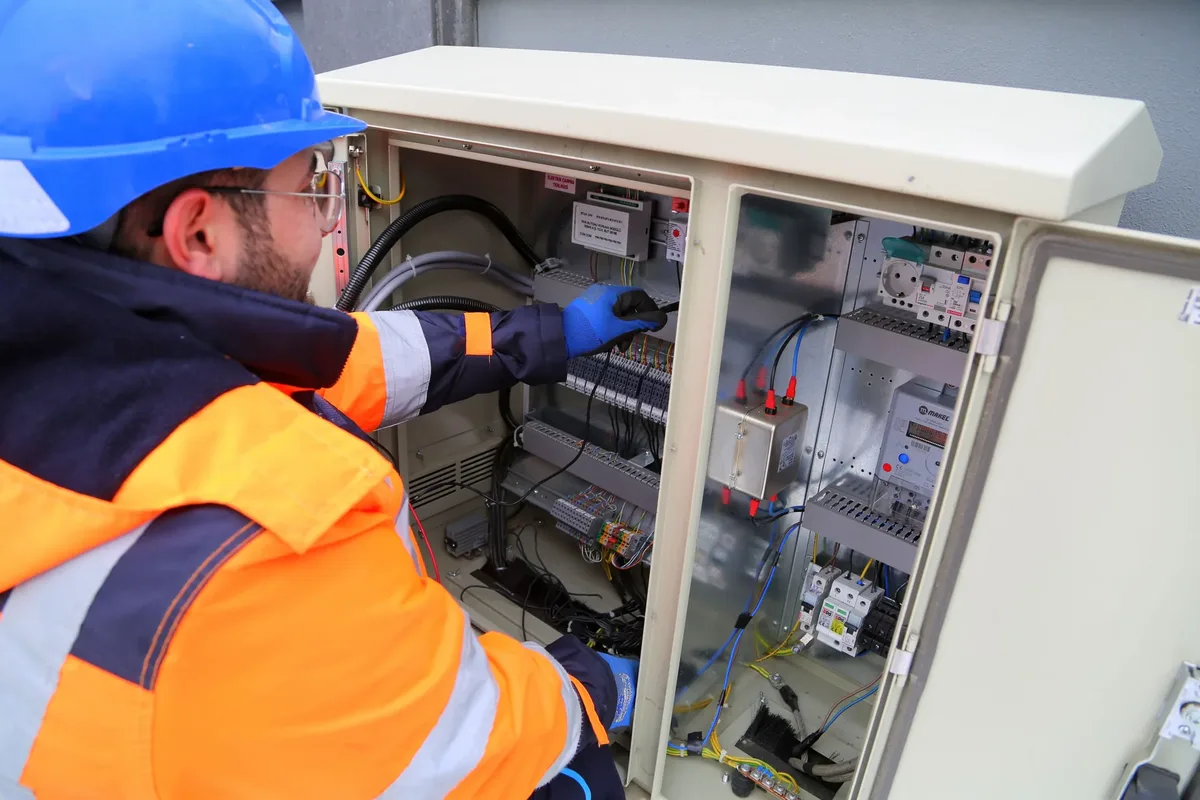
The first step is always the danger check, not the repair. The electrician asks what happened, when, and what smells, sounds, or looks wrong, then checks the panel, the affected circuit, and any visible damage without opening live equipment in front of you. A panel that is hot, buzzing, or smells of burning changes the visit immediately: it is isolated, people are kept clear, and the repair conversation starts from safety, not from parts.
The second step is isolation. The faulty circuit, or the whole panel if the fault is panel-wide, is switched off and left off, and the rest of the house is checked to confirm what still works. That check matters, because a house that has lost one circuit is a different job from a house that has lost everything, and our no power guide explains how to tell a house fault from a utility fault before anyone arrives. Isolation is what makes the house safe to sleep in while a part or a utility step is awaited.
The third step is the plain explanation: what was found, whether it is fixed tonight or made safe for a return, what the return needs, and what to avoid until then. An emergency visit that leaves you unsure which outcome you got has not finished its job, even if the danger is gone, so ask for that explanation in those exact words: fixed, or made safe, and what comes next.
What not to do while you wait for emergency repair
Do not keep resetting a breaker that trips at once, smells hot, or buzzes. Each reset pushes current through a fault that has already announced itself, and a breaker that refuses to stay on is doing its job. Leave it off, keep people away from the panel, and wait for the visit. The same rule applies to a GFCI that trips the instant it is reset: it is reporting a fault, not a nuisance.
Do not open the panel, work on wiring, or replace parts yourself on an emergency call. Panels carry live parts in some configurations even with the main breaker off, and a homeowner repair made at night, under stress, risks shock and risks turning a contained fault into panel damage. Reading the panel brand from the outside label is safe; anything behind the cover is the electrician's work, and the same applies to outlets and switches that show scorching or heat.
Do not re-energise flood-damaged equipment, and do not touch anything near water. Water and electricity together are a same-day danger, not a wait-and-see one, and equipment that has been flooded stays off until it has been inspected. If there is smoke, fire, or any risk to life, call 911 first, then call us about the house-side repair.
Cost factors for emergency electrical repair in Fort Pierce
Exact price and timing are confirmed on the call, and emergency repair cost is cost-factors only, as on every page of this site. The factors are the fault found, whether it is fixed on the visit or made safe for a return, the parts matched to the panel or device, the time of the call, access to the fault, and any utility or inspection coordination the job needs. A single breaker on a weeknight and a panel replacement after flood damage are different jobs, and no single figure honestly covers both.
One warning belongs here: an emergency quote that promises a complete fix before anyone has seen the fault is a warning sign. The honest sequence is inspection, then the fixed-or-made-safe answer, then the price for that outcome, with a written price before work starts. If the visit finds a panel that must be replaced, the repair price and the replacement price are different conversations, and they should be presented as such.
What to have ready when you call saves time at every step: the symptoms and when they started, which circuits are affected, whether anything smells hot, buzzes, sparks, or shows scorching, the panel brand if you can read it safely from the label, and whether water is involved. That short list is what turns a midnight call into a visit that arrives prepared.
Not sure what the symptom means? Call before it gets worse.
Frequently asked questions
Will my emergency repair be finished on the same visit?
Sometimes, and sometimes not, honestly. A single failed breaker, a damaged outlet, or a loose connection is usually fixed on the visit. Panel damage, a utility-side fault, or flood damage is made safe on the visit and finished on a return, once the part, utility step, or inspection is ready.
What does made safe mean?
It means the danger is removed now: the faulty circuit or panel is isolated and left off, the area is checked, and you are told what the return visit needs. It is not a half-finished repair left unexplained; it is the safe outcome when a complete fix cannot honestly be done that night.
Is a hot, buzzing, or burning-smell panel an emergency?
Yes. Keep people away from it, do not open it, and do not keep resetting its breakers. If there is smoke or fire risk, call 911 first. A hot or buzzing panel is a same-day call, and the visit starts with isolation, not parts.
What should I do if only part of my house has no power?
Note which circuits are dead and which still work, check the main breaker once, and do not keep resetting a breaker that trips at once. That list helps separate a house fault from a utility fault, and it is the first thing the electrician will ask on the call.
How much does emergency electrical repair cost in Fort Pierce?
There is no fixed figure, because the fault decides it: a single breaker is a different job from a panel replacement, and a same-visit fix is a different job from a made-safe plus return visit. Call (772) 218-3629 for your exact range and a written price before work starts.
What should I have ready when I call?
The symptoms and when they started, which circuits are affected, whether anything smells hot, buzzes, sparks, or shows scorching, the panel brand if readable from the label, and whether water is involved. That list turns the call into a visit that arrives prepared.
Your next step for emergency electrical repair in Fort Pierce
Emergency electrical repair Fort Pierce starts with one call and one honest answer: fixed tonight, or made safe tonight and finished on a return visit, with the reason given plainly. Call (772) 218-3629, describe the fault, and we will attend in Lincoln Park and St. Lucie Village in 34945 and 34946, and across Fort Pierce, open 24 hours a day, 7 days a week, with same-day service offered and exact timing confirmed on the call. For the full service list, start at our emergency electrician in Fort Pierce page, or see our Electrician in Fort Pierce, FL homepage.
Call Fort Pierce Electric Pros for help in Fort Pierce.