
EV Charger Installation in St. Lucie Village, Fort Pierce
EV charger installation St. Lucie Village Fort Pierce starts with the panel: older village homes beside the Indian River Lagoon often need a subpanel or a capacity decision before a Level 2 charger goes in, in ZIP 34946 or 34950 — call and tell us your street.
Call Now to Speak to a Specialist
Open 24 hours a day, 7 days a week.
A home charger turns overnight parking into a full battery, but only if the circuit behind it is built for the load. EV charger installation St. Lucie Village Fort Pierce is a panel-first job: a dedicated 240-volt circuit, a load calculation, and a charger placed where the car actually parks.
The panel decision comes first in a village home
St. Lucie Village is a historic village of older homes on Lagoon-side lots, and the electrical issues are village issues: panels that need a repair, subpanel, or replacement decision, outdoor circuits exposed to damp and salt air, and the smaller jobs older homes collect over time. A Level 2 charger is a large continuous load, so the visit starts at the panel: it counts the spaces in use, adds up the loads already served, and applies the 125% continuous-load rule — the breaker is sized above the charger’s steady draw, not at it. The St. Lucie Village area page sets out the village work in full, and the panel decision is the one that shapes the rest.
That is why EV charger installation St. Lucie Village Fort Pierce starts at the panel, not at the charger: the charger is the easy part, and the capacity behind it is the decision. A subpanel can be the right answer when the main panel is sound but full; a replacement is the answer when the panel itself is the problem, and only an inspection tells which one applies. A charger fitted to a full panel will trip, and a panel replaced for no reason wastes your money — so the capacity check is the part of the visit that saves the rest of it.
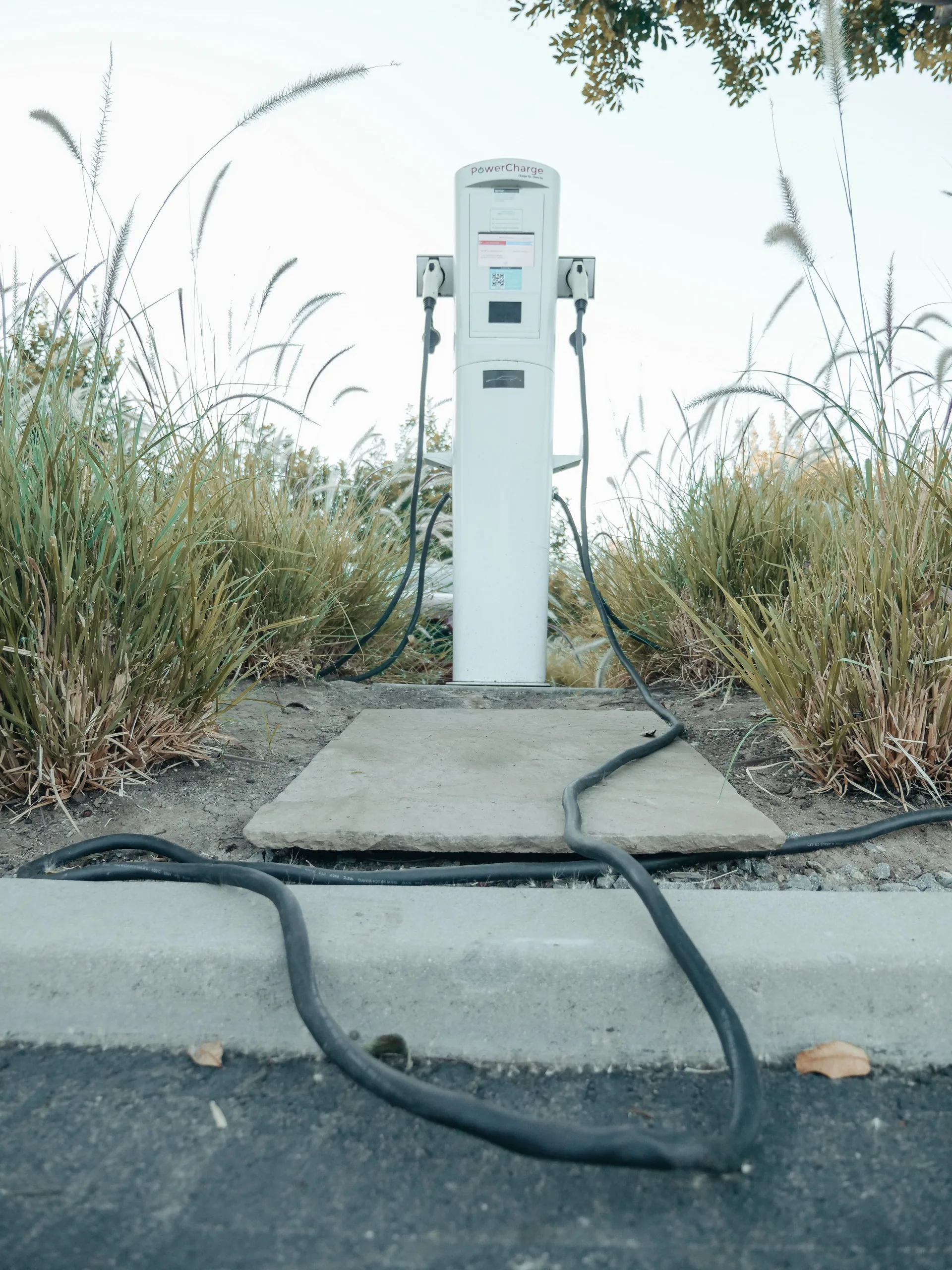
Charging an EV in St. Lucie Village?
Level 1, Level 2, and what a village garage needs
Level 1 charging uses a standard outlet and adds range slowly, overnight — enough for a short daily drive, and a poor fit for a long commute. Level 2 uses a dedicated 240-volt circuit and charges far faster, which is why most village homes that charge daily choose it. The choice depends on three things: how far the car drives each day, what the car’s onboard charger can take, and what the panel can carry — and the visit asks all three before recommending either one. Most village homes that charge daily choose Level 2, and EV charger installation St. Lucie Village Fort Pierce usually means a Level 2 circuit, a load calculation, and a charger placed where the car actually parks.
Where the car parks decides where the charger goes. A garage wall near the charging port keeps the cable short and out of the way; a charger on the wrong wall means a cable across the garage floor, which is a trip hazard and a daily annoyance. Driveway parking needs an outdoor-rated unit, weatherproof fitting, and GFCI protection, and Lagoon-side damp and salt air are part of that decision, not an afterthought. The cable run from the panel to the charger — its length, its route, and whether it runs outdoors — is one of the cost factors, so exact price is confirmed on the call. The EV charger cost-factors guide sets out what moves the price.
Garage, driveway, or carport: where the charger goes
Village homes are individual: different layouts, different wiring histories, and different plans from their owners. One household parks in the garage and wants the charger on the wall beside the car; another parks on the driveway and needs an outdoor-rated unit with a weatherproof fitting; a third parks under a carport and needs the cable route thought through before anything is drilled. Each layout sets the charger position and the cable route, and an older garage may need its own circuit work first — the visit maps the route before it quotes the job.
Salt air and damp shape the outdoor half of the job. Lagoon-side circuits are exposed to both, so outdoor charger fittings are weatherproof and GFCI-protected, and the visit checks the existing outdoor circuits before adding a charger to them. A charger that shares a circuit with the pool equipment or the outdoor lighting is a charger that trips — so the charger gets its own dedicated circuit, sized by the load calculation, and the panel gets the final say on whether it fits. The EV charger panel-capacity guide explains how that calculation is done.
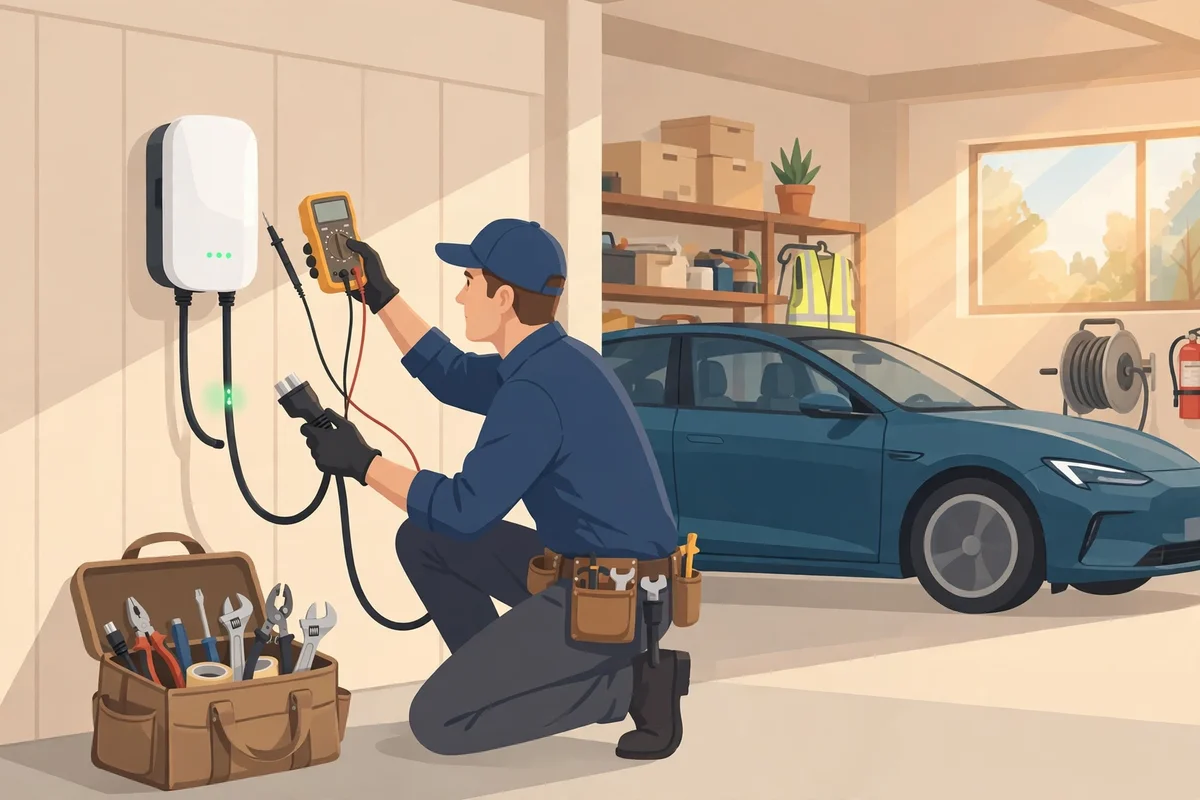
Not sure your panel can carry a charger?
What the visit checks before anything is fitted
The visit checks the panel label and the service size, counts the spare spaces, measures the run from the panel to the parking spot, and works out whether the charger needs a subpanel, a load-management device, or a full upgrade. Permit and inspection are questions to confirm for the exact address — the route is confirmed on the call, not assumed — and the charger itself is chosen after the capacity answer, not before it. Our EV charger installation service covers the fitting, and the visit explains what each option changes before anything is fitted.
What to have ready when you call: which side the car’s charging port is on, where the car parks, where the panel sits, and whether the garage already has a 240-volt circuit. With those four answers, the call ends with a clear scope and a visit time, and the visit starts from what you already know rather than from scratch. Tell us the street too — the village sits along US 1 beside the Indian River Lagoon, in ZIP 34946 or 34950, and the street tells us which end of the village you are on.
Ready to charge at home in the village?
EV Charger Installation in St. Lucie Village, Fort Pierce: frequently asked questions
Do I need a panel upgrade for an EV charger in St. Lucie Village?
Not always. A subpanel can be the right answer when the main panel is sound but full, or a load-management device can shed a large load while the charger runs. A full upgrade is the answer when the panel itself is the problem — damaged or obsolete. The visit decides by counting the spaces in use, adding up the loads, and applying the 125% continuous-load rule, and it explains what each option changes before anything is fitted.
What is the difference between Level 1 and Level 2 charging?
Level 1 uses a standard outlet and adds range slowly, overnight. Level 2 uses a dedicated 240-volt circuit and charges far faster, which is why most homes that charge daily choose it. The choice depends on how far the car drives each day, what the car’s onboard charger can take, and what the panel can carry — the visit asks all three, and the charger is chosen after the capacity answer, not before it.
Can an EV charger go outside in a village home?
Yes, with an outdoor-rated unit, weatherproof fitting, and GFCI protection. Lagoon-side circuits are exposed to damp and salt air, so the visit checks the existing outdoor circuits before adding a charger to them, and the charger gets its own dedicated circuit sized by the load calculation. Driveway parking needs the cable route planned too — a cable across a walkway is a trip hazard, and the charger belongs on the wall nearest the car’s charging port.
Does an EV charger need a permit in St. Lucie Village?
Permit and inspection are questions to confirm for the exact address — the route is confirmed on the call, not assumed. The EV permit guide explains the Florida route in general terms, and the visit confirms what applies to your street. Exact price and timing are confirmed on the call too, because they depend on the panel, the cable run, and whether the job needs a subpanel or an upgrade.
What does EV charger installation cost in St. Lucie Village?
Exact price is confirmed on the call, because it depends on the panel work, the cable run from the panel to the parking spot, the charger type, and the outdoor fitting. A short garage run on a panel with spare capacity is a smaller visit than a long outdoor run that needs a subpanel, and the call ends with a clear scope before anything is booked. Tell us the street, the parking spot, and the car’s charging port side.
Can I charge two EVs from one charger?
Some chargers share power between two cars, and the Tesla vs universal guide covers how power sharing works. Whether your panel can carry two charging loads is a load-calculation question: two Level 2 sessions at once is a large continuous load, and the visit checks the service size before recommending one. If the numbers do not fit, the options are a second circuit, load management, or a panel upgrade — and the visit explains what each one changes.
Ready to talk?