
EV Charging for Businesses Fort Pierce Guide
EV charging for businesses Fort Pierce explained for shops, offices, restaurants, hotels and fleets in Downtown Fort Pierce and Fort Pierce South, ZIPs 34950 and 34947, covering who gains most, what to check first, and what moves a quote before you order.
Call Now to Speak to a Specialist
Open 24 hours a day, 7 days a week.
EV charging for businesses Fort Pierce pays off where cars sit for a while: shops, restaurants, offices, hotels and fleet yards. If drivers stay an hour or more, a charger turns waiting time into a reason to visit, work or stay; if cars only stop for minutes, the gain is far smaller. Call (772) 218-3629 and describe your parking pattern.
What business EV charging actually means
Business EV charging is not one product. It can mean a charger for customers in a shop car park, a charger for staff at an office, a charger for guests at a hotel, or chargers for a fleet that must start each day ready to run. The hardware often looks similar from the outside, but the purpose changes the charger count, the location, and who is allowed to use it, so the purpose should be settled before any unit is ordered.
Most workplace and customer charging is Level 2 charging, which suits cars that sit for hours. Faster charging suits brief stops and fleets that must turn vehicles around quickly, but it changes the electrical demand sharply and may need panel work that a slower install avoids. The right question is never which charger is fastest in general, but how long your cars actually stay, and what they need to gain in that time.
Access is the other decision that shapes the whole job. A charger open to the public needs clear signage and a way for a visitor to start a charge without staff help, while a staff-only or fleet-only charger needs the opposite: a way to keep it reserved for the people it is meant for. Our commercial EV charger installation in Fort Pierce page covers the fitting itself, and this guide covers the business case that should come before it.
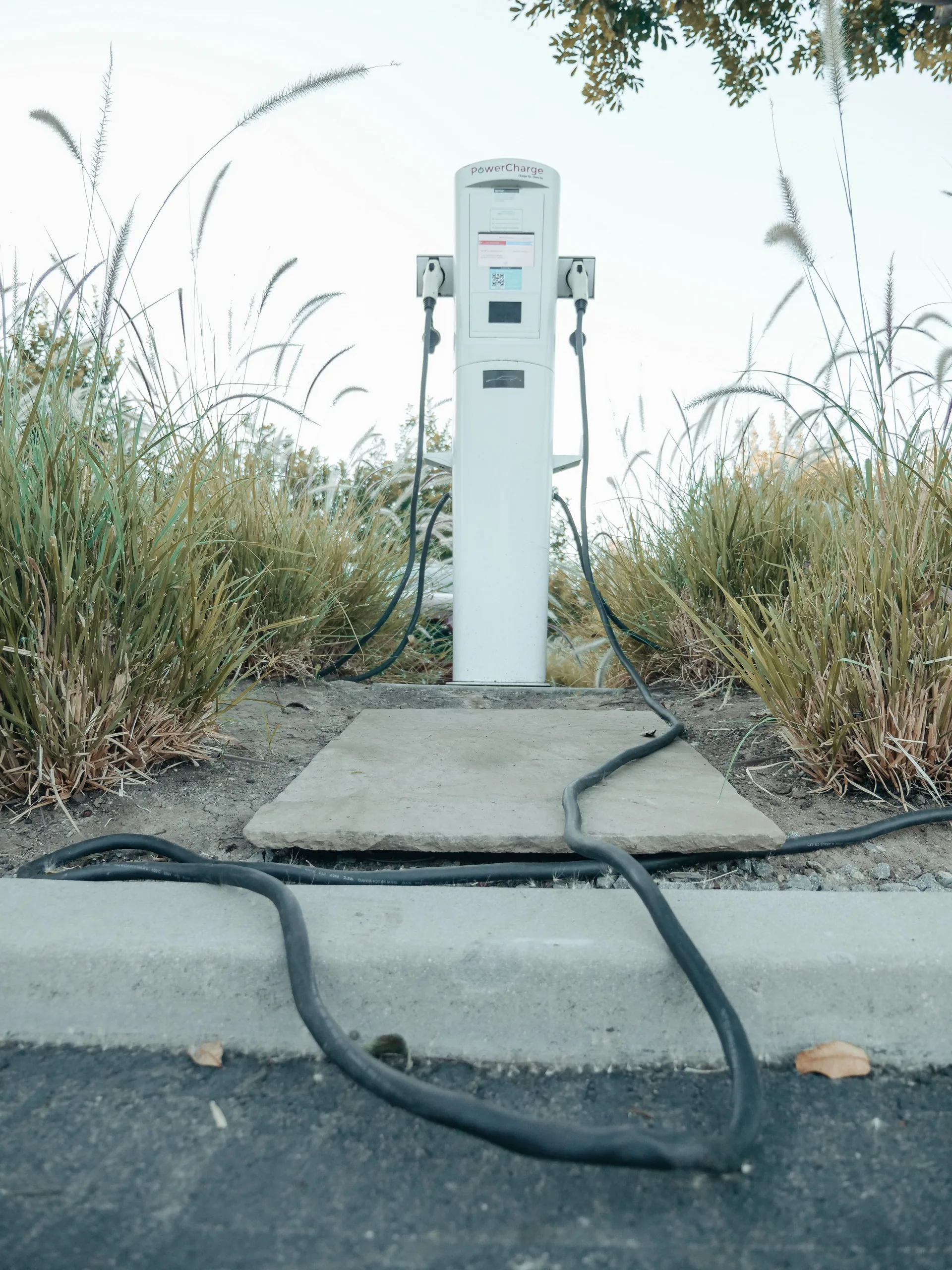
Shops and restaurants: charging that matches dwell time
Shops and restaurants are the classic case for customer charging, because a customer who plugs in stays longer. A grocery shop, a restaurant, a salon or a retail park already holds people for thirty minutes to a few hours, which is exactly the window in which Level 2 charging adds useful range. The charger does not need to fill a battery; it needs to make the visit easier than the visit to a competitor without one.
Placement matters as much as power. Chargers should sit where customers already park, where the cable run from the building is sensible, and where a charging car does not block deliveries or accessible bays. A charger tucked in a far corner that nobody sees, or placed where delivery trucks must pass, helps nobody. Walk the car park as a customer would, and the right bays usually show themselves.
For a shop or restaurant, the honest test is simple: do your customers stay long enough for charging to matter, and do they arrive by car in numbers that justify the bays? A busy lunch spot with a full car park passes that test easily. A drive-through with two-minute stops does not, and that business is better served by spending the same money elsewhere. Our commercial electrical downtime guide explains how to plan electrical work around trading hours, so a fitting does not cost a day of business.
Thinking about chargers for your business?
Offices and workplaces: charging as a staff benefit
Offices gain from EV charging in a different way: staff cars sit all working day, which is the longest dwell time any business can offer. A workplace charger does not need to be fast, because eight hours at Level 2 covers most commutes several times over. What it needs is enough units for the staff who actually drive electric cars, and a fair way to share them when demand grows.
The common mistake is to install one charger and call the job done, then discover that three more staff buy electric cars within a year. A better plan counts the cars on site today, asks how many staff are considering an electric car next, and leaves a sensible route for adding units later, even if only one or two are fitted now. Panel capacity and cable routes decided today determine whether that growth is a small job or a second major install.
Workplace charging also raises a policy question that should be settled before the fitting: who pays for the power, who gets priority when chargers are busy, and what happens when a visitor needs a charge. Those are business decisions, not electrical ones, but they affect the charger count and the access setup, so they belong in the first conversation, not in the week after the chargers go live. Our commercial electrician service in Fort Pierce covers the wider commercial work that a workplace install usually sits alongside.
Hotels, motels and multi-unit buildings
Hotels and motels are a strong case, because guests arrive in the evening, sleep overnight, and leave in the morning, which is the ideal charging window. A guest who can plug in on arrival and leave with a full battery has one less thing to plan, and a hotel that offers that has a genuine reason for an electric-car driver to choose it over the property down the road. Overnight charging also suits slower Level 2 units, which keeps the electrical demand manageable.
Multi-unit buildings, such as apartment blocks and condominiums, face a different version of the same question: residents need a reliable place to charge, but the building must decide how bays are allocated and how power is shared. A resident charger that one flat can monopolise will cause friction fast, so allocation and access rules matter as much as the charger itself. In both hotels and multi-unit buildings, the building's panel and parking layout decide how many chargers are realistic, and that check comes before any promise is made to guests or residents.
For both cases, the visit should answer three questions in order: how many cars need charging at once, how long those cars sit, and where the cable run from the panel to the bays actually goes. A hotel in Downtown Fort Pierce and a block in Fort Pierce South will answer those questions differently, because their car parks and panels differ, even when their charger count looks the same on paper. The Downtown Fort Pierce and Fort Pierce South neighbourhoods are the areas this guide covers.

Fleets and service yards: charging that starts the working day
Fleets are the most demanding business case, and also the most rewarding when the pattern fits. Delivery vans, service trucks and pool cars that return to the same yard each night can start every morning charged, which removes the daily hunt for a public charger and the downtime it causes. The key is the overnight window: if every vehicle is back by evening and out again in the morning, overnight Level 2 charging usually covers the fleet without faster units.
Where fleets differ from customer charging is simultaneity. Ten vans charging at once is a very different electrical load from ten customers arriving at different hours, and the panel, the service size and the charging schedule all have to be planned around that peak. Load management, which staggers or shares power between chargers, often matters more for a fleet than raw charger speed, because it keeps the peak within what the building can supply.
A fleet plan should also name which vehicles charge first if not all can charge at once, and what happens when a vehicle returns late or leaves early. Those routines sound like operational detail, but they decide the charger count and the panel work, so they belong in the planning conversation. Our EV charger panel capacity guide explains the load calculation that settles whether a building can feed the chargers it wants.
Thinking about chargers for your business?
What to check before installing business EV charging
Five checks decide most business installs, and all five are cheaper to answer before ordering than after. First, panel capacity: the load calculation settles how many chargers the building can feed, and whether the answer is a straightforward circuit, load management, or a panel upgrade. Second, parking layout: the bays, the cable route, and whether chargers sit where drivers already park. Third, charger count: how many cars charge at once at peak, not on an average day.
Fourth, access and payment: who may use the chargers, how a visitor starts a charge, and how the business accounts for the power. Fifth, the permit and inspection route, which is confirmed for the address before fitting day, not during it. Our EV charger permit guide explains how to check which jurisdiction covers an address, and our EV charger installation cost factors guide explains what moves an installed quote, including panel work, cable run and charger choice.
Exact price and timing are confirmed on the call, never guessed from a web page. A quote that skips the panel check or the parking walk is a quote for a charger, not for a working installation, and the difference shows up later as a second visit, a moved charger, or a panel upgrade nobody budgeted for.
What to have ready when you call
- The business type and what the chargers are for: customers, staff, guests, residents, or your own fleet.
- How many cars need charging at once at peak, and how long those cars sit.
- Your panel's location and size, if you know them, and whether breakers already trip when big loads run together.
- A rough parking layout: where drivers park now, and where a cable run from the building would go.
- Whether chargers should be public, staff-only, or fleet-only, and who pays for the power.
An EV charging for businesses Fort Pierce call with those five answers takes minutes and ends with a clear next step, not a guess. Exact price and timing are confirmed on the call, and chargers are ordered after the panel and parking checks, not before them. Call (772) 218-3629 to start with your building's answers.

EV Charging for Businesses Fort Pierce: frequently asked questions
Which Fort Pierce businesses benefit most from EV charging stations?
The businesses that gain most are the ones where cars already sit for a while: shops, restaurants, offices, hotels, and yards that run their own vans or trucks. A charger turns waiting time into a reason to stay, gives staff a place to charge at work, and lets a fleet start the day full. A business with only brief drop-offs gains less, so the parking pattern matters more than the business type alone.
Does a business need a panel upgrade for EV charging?
Sometimes, and the load calculation is how you find out. Some premises have the room and headroom for one or two charger circuits as they stand, while others need load management or a panel upgrade first. Our commercial panel and EV charger pages explain the checks, and the call confirms which outcome applies to your building before any charger is ordered.
Should business chargers be open to the public or staff only?
That depends on what the charger is for. A shop or restaurant usually wants customer access, an office usually wants staff access, and a fleet yard usually wants its own vehicles only. Access, signage, and any payment arrangement are decisions to settle before the fitting, because they affect how many chargers are needed and where they sit in the car park.
Is Level 2 charging enough for a business, or is faster charging needed?
For most workplaces, shops, and hotels, Level 2 charging fits the dwell time: cars sit for hours while people work, eat, shop, or sleep. Faster charging suits brief stops and busy fleets that must turn vehicles around quickly, but it changes the electrical demand sharply. Match the charger to how long cars actually stay, not to the fastest unit on the market.
What does a business EV charger installation involve?
The visit starts with the panel, the parking layout, and the cable route, then the charger count and access model are settled. After that comes the circuit work, the charger fitting, and the checks that confirm each unit charges as intended. Exact price and timing are confirmed on the call, because panel room, cable run length, and charger choice move every quote.
How much does business EV charging cost in Fort Pierce?
There is no fixed figure, because the building decides it: panel capacity, number of chargers, cable run length, charger type, outdoor versus covered fitting, and the permit and inspection route. Call (772) 218-3629 for your exact range and a written price before work starts; cost factors, not invented prices, are what a web page can honestly give.
Ready to talk?