
Fire Alarm Installation Fort Pierce FL
Fire alarm installation Fort Pierce for homes, shops, restaurants, and offices in 34950 and 34947, from Downtown Fort Pierce to Fort Pierce South: a panel-based system designed, fitted, and tested by local electricians, with horns, strobes, pull stations, and monitoring that work together.
Call Now to Speak to a Specialist
Open 24 hours a day, 7 days a week — call any time.
A fire alarm installation in Fort Pierce is a panel-based system built for the building: a control panel, zones of detectors, horns and strobes, pull stations, and monitoring where the building needs it. This page explains how the survey, the design, the install day, and the handover run — and what to have ready when you call.
What a panel-based fire alarm system is
Fire alarm installation Fort Pierce for a panel-based system starts with the building, not the catalogue. A panel-based system is one installation wired to work as a single system: detectors that sense smoke or heat, a control panel that takes the signal, notification appliances that tell everyone in the building, and monitoring where needed. Every device reports to the panel, which shows the zone that raised the alarm.
This page covers the installation service itself — survey, design, panel and zones, horns and strobes, pull stations, monitoring, and handover. Detector-only jobs are on our smoke and carbon monoxide detector installation page; placement, power, and testing are in our fire alarm installation guide.
The survey and walk-through: where the design starts
Every fire alarm system starts with a walk-through. We count the levels and rooms, note where people sleep and where the public gathers, and where the panel can go so staff can reach it.
The visit starts with questions, not a quote. What is the building used for, and how many people are in it at the busiest time? Is anyone sleeping behind a closed door, or working where a hallway alarm would not be heard? The answers shape the design.
System design: control panel, zones, and device layout
The control panel sits where staff can reach it quickly — usually near the main entrance — so the person in charge can see which zone raised the alarm. The building is split into zones by floor and area, so a kitchen signal is not confused with one from the second floor.
Device layout follows how each room is used. Smoke-sensing devices go where people gather and sleep; heat-sensing devices go where smoke-sensing devices would sound for everyday reasons, such as a kitchen. The panel carries its own battery backup, so it keeps working when the power fails. For business premises, see our commercial electrician page.
Notification appliances: horns, strobes, and pull stations
Horns and strobes are the part of the system everyone notices. The horn sounds the alarm through the building, and the strobe flashes so the signal reaches people who cannot hear it. They go along corridors, in large rooms, and at exits.
Pull stations are the manual call points — the red boxes by the exits that anyone can use to raise the alarm. They go beside exit doors and along escape routes. Every one is wired back to the panel and tested at handover.
Monitoring: who hears the alarm when the building is empty
Monitoring passes the alarm on when nobody is in the building to hear it. A shop closed for the night or an office empty over the weekend still needs someone to know when the panel raises an alarm, and monitoring carries that signal to a monitoring centre.
A monitored system also reports faults, not just alarms: a zone that stops reporting, a device that drops off, or a battery that needs attention. The path the signal takes is confirmed on the call.
Panel showing a fault, or a system that has never been tested? Call and we will check it.
Install day: what happens, in order
The panel goes in first, mounted where staff can reach it and wired to its supply and battery backup. Then the cable runs go in, following the routes agreed on the walk-through — through the attic, along an outside wall, or in surface conduit. Then the devices go in, zone by zone, with horns, strobes, and pull stations last.
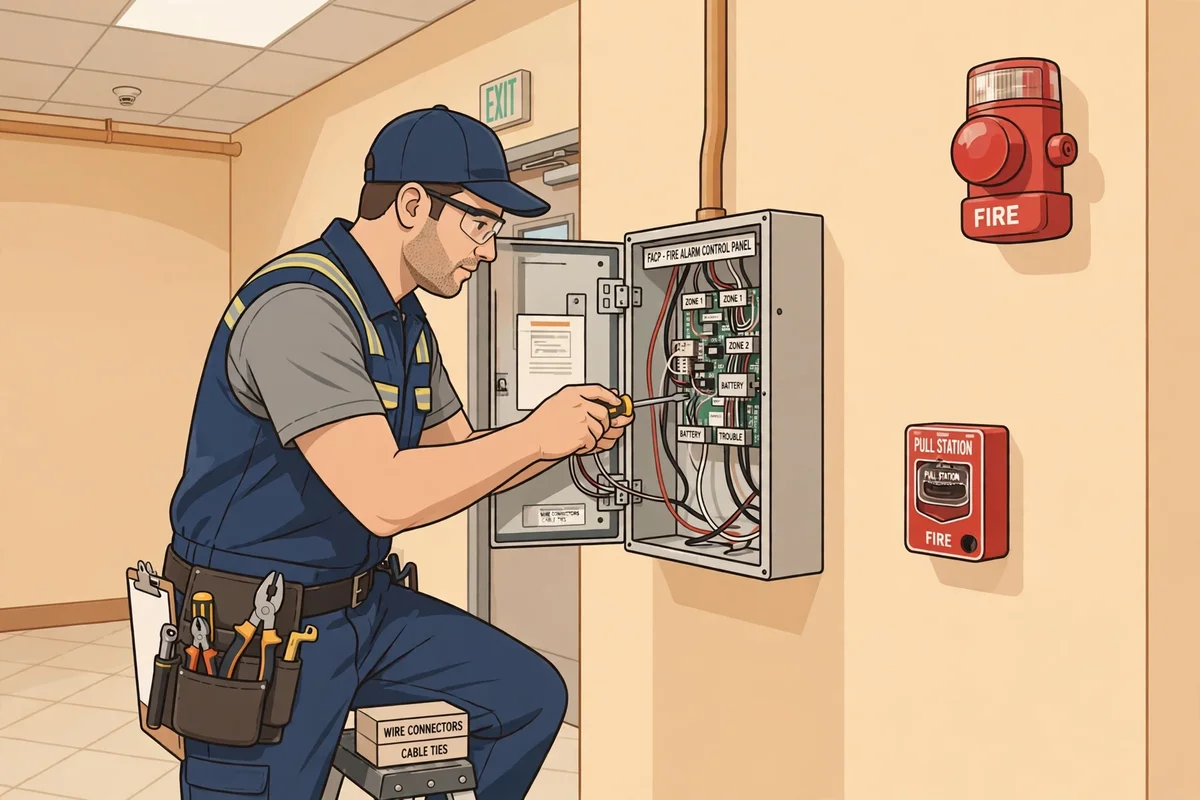
Work in a shop, restaurant, or office is staged around opening hours. Devices are labelled by zone, cable runs are kept tidy, and each zone is programmed under a name that means something — a floor, a wing, or a room.
Commissioning and handover: the checks before we leave
Commissioning is the part of the job that proves the system works. Every device is tested, every zone is checked at the panel, every horn and strobe is sounded, and the monitoring signal is confirmed. A device that does not report, or a horn that stays silent, is fixed before we leave.
Handover is a walk-through with the owner or the person in charge: what each light and button on the panel means and what to do when the alarm sounds. If the alarm sounds and there is smoke or fire, leave the building and call 911 first.
Opening a shop or taking on a new tenant? Call and we will plan the system around your opening hours.
Fault-finding on a panel system
A panel system tells you where the trouble is — that is the point of the zones. A zone showing trouble, a device that has stopped reporting, a battery warning, or a horn that stays silent each point to a part of the system, and we trace it zone by zone until the cause is found.
Never open the panel yourself, and never silence a sounding alarm without checking first. If the alarm sounds and there is smoke or fire, leave the building and call 911 first. For an urgent fault, see our emergency electrician page.
Upgrading or replacing an existing panel system
A panel system is replaced when the panel is old, parts are no longer available, the zones are too coarse to say where the alarm came from, or the building has grown past the system it has. Sound cable runs and devices are kept; the panel and anything past its life are replaced.
A replacement is staged so the building is never left without cover longer than needed: the new panel goes in, the zones are re-drawn around the building as it stands now, and every device is re-tested. For a full check of the wiring in an older building, see our electrical inspection page.
What changes the cost of a fire alarm system in Fort Pierce
No honest page can print one figure for every fire alarm job — size, zones, and cable routes all move the work.
- Building size and zone count. More floors and zones mean more devices and more cable.
- Panel and device count. A larger panel and more detectors, horns, and pull stations add to the job.
- Cable routes and walls. Block walls route differently from open ceilings in a new office.
- Monitoring. A monitored system adds the link to the monitoring centre and its setup.
- Access and timing. Work staged around opening hours, and work at height, add planning.
Exact price, timing, and availability are confirmed on the call. Call (772) 218-3629 for your exact range and a written price before work starts.
Fort Pierce conditions that shape a fire alarm system
Fort Pierce adds three local conditions. The first is the coast: devices near the Indian River Lagoon and the Fort Pierce Inlet face salt air, so outdoor-rated devices and sealed connections are used outside. The second is humidity: a panel battery in damp air ages faster. The third is the storm season: when a storm takes the power out, the panel battery keeps the system alive.
Older buildings in Downtown Fort Pierce have block walls and finished ceilings, so the zones and cable routes are planned on the walk-through. Fire alarm system installation Fort Pierce covers the whole city, including 34950, 34947, and 34945, from Downtown and Fort Pierce South to Lakewood Park and Hutchinson Island.
Before you call: the fire alarm checklist
Use this checklist before you call.
- Note the building type, its levels, and how many rooms hold people.
- Note whether any part of a system is already in place, and what the panel shows.
- Note where the panel sits, or where it could sit so staff can reach it.
- Note the hours the building is open, so work can be staged around staff and customers.
- Note what raised the need — a new tenant, a renovation, a fault, or a change of use.
Never work inside a live panel yourself, and never test an alarm with real smoke or flame.
Why call Fort Pierce Electric Pros for fire alarm installation
We are a professional, local Fort Pierce electrician team with 23 years of experience, licensed and insured, with Master Electrician Certification, open 24 hours a day, 7 days a week, with same-day service. A fire alarm installation Fort Pierce job starts with the walk-through and the building, not a device count. Call (772) 218-3629.
Our office sits at 1907 Okeechobee Rd, and we serve the whole city — from Downtown Fort Pierce and Fort Pierce South to Lakewood Park and Hutchinson Island. For the safety system that works alongside the alarm panel, see our emergency lighting installation page.
Fire alarm installation in Fort Pierce FL: frequently asked questions
What does a fire alarm system installation include in Fort Pierce?
A fire alarm system installation in Fort Pierce covers the survey, the panel and zone design, the fitting of detectors, horns and strobes, and pull stations, and the wiring. It ends with a full test of every device and a handover walk-through.
Do shops and restaurants in Fort Pierce need a panel-based fire alarm system?
A shop or restaurant that holds the public needs a signal everyone can hear and see, and a panel-based system provides it: horns and strobes in the dining room and kitchen, pull stations by the exits, and a panel that shows the zone.
How long does it take to install a fire alarm system in an office?
A small office is usually finished in one visit: walk-through, panel and devices, wiring, and a full test before we leave. A larger building with several floors or many zones takes longer.
Can a fire alarm panel be added to an older Downtown building?
Yes. Older buildings in Downtown Fort Pierce usually have block walls and finished ceilings, which change the cable route, not the result. The panel goes where staff can reach it, the zones follow the floors and rooms, and the cable runs through the attic or in conduit.
What happens if the fire alarm panel shows a fault?
A fault light means a zone or a device needs attention, and the panel shows which one. Call us and we will trace it zone by zone. Never open the panel yourself — if the alarm sounds and there is smoke or fire, leave the building and call 911 first.
How much does a fire alarm system cost in Fort Pierce?
There is no single figure, because the building size, zone count, device count, and cable routes decide the work. A small shop with one panel is a different job from a multi-floor office with many zones. Call (772) 218-3629 for your exact range and a written price before work starts.
Not sure your building is covered? Call and we will walk it with you.