
Fire Alarm Installation in Fort Pierce
Fire alarm installation Fort Pierce homes and shops need starts with placement, not the device: interconnected alarms in bedrooms, halls and every level, for homes in 34950 and 34945, from Downtown to Lincoln Park — wired so one alarm sounds them all.
Call Now to Speak to a Specialist
Open 24 hours a day, 7 days a week.
A fire alarm installation in Fort Pierce is the wiring and placement that makes every alarm sound together: hardwired alarms with battery backup, inside every bedroom, outside each sleeping area, and on every level, plus a panel, pull stations and monitoring where the building needs them. The exact layout for your address is confirmed on the call.
A detector and a fire alarm system are not the same job
A smoke alarm is one device on a ceiling. A fire alarm system is several parts wired to work as one: detectors that sense smoke or heat, a control panel that takes the signal, notification appliances — horns and strobes — that tell everyone in the building, and, where the building needs it, monitoring that passes the alarm on when nobody is there to hear it. Most Fort Pierce homes need the first kind done well: interconnected alarms, hardwired, with battery backup. A shop, a restaurant, a multi-unit building or a larger home may need the second kind, and the difference is decided by the building, not by the catalogue.
That distinction is why the visit starts with questions, not a quote. How many levels does the building have, and how many bedrooms? Is anyone sleeping behind a closed door where a hallway alarm would not be heard? Does the building hold the public, or staff who need a signal they can see as well as hear? Fire alarm installation Fort Pierce homeowners and shop owners ask for is planned from those answers, and the plan is written down before any work starts, so the price you are given covers the system your building actually needs.
Where alarms go: the placement rules that matter
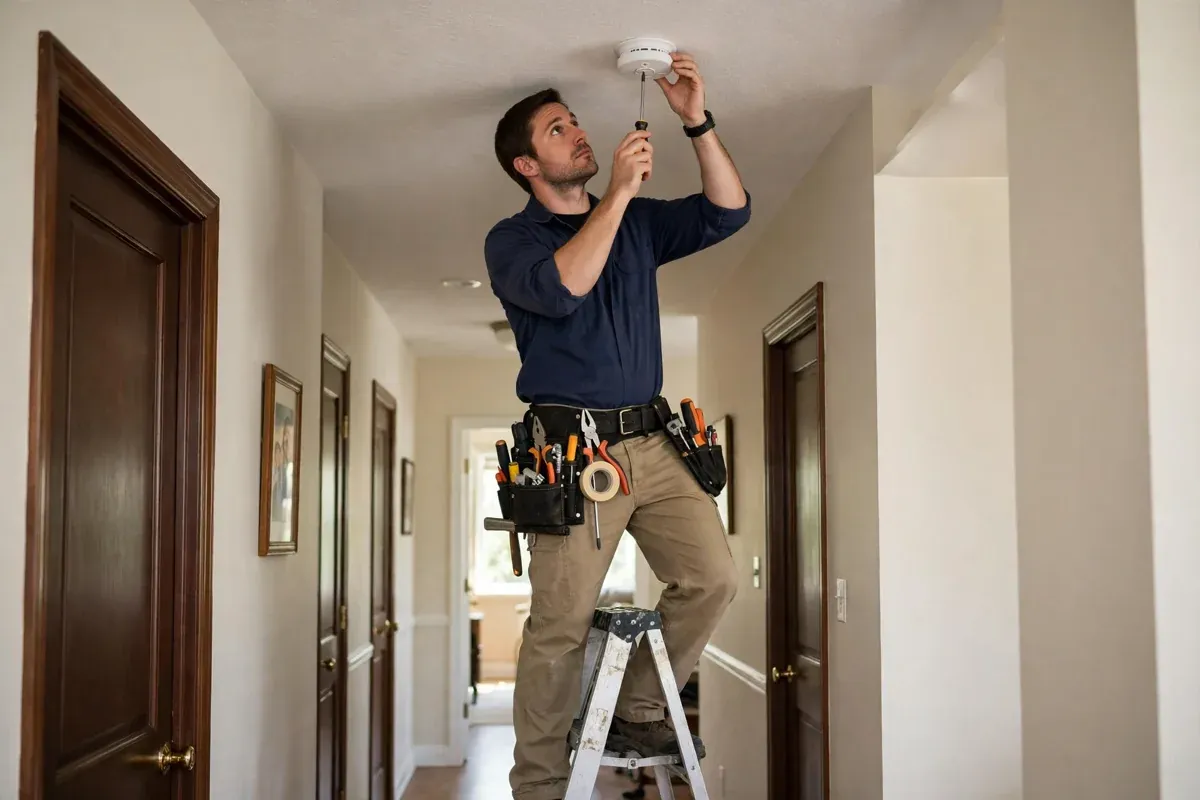
Placement is the part of a fire alarm installation that cannot be fixed later by buying a better device. The national guidance, NFPA 72, puts an alarm inside every bedroom, outside each separate sleeping area — usually the hallway that serves the bedrooms — and on every level of the home, including the basement. The reason is simple: a fire in a living room at night may not wake someone behind a closed bedroom door, and an alarm on another level may not be heard at all. Interconnection is what closes that gap: when one alarm sounds, they all sound.
The mounting details matter too. A ceiling-mounted alarm sits at least four inches from the nearest wall, clear of the dead air space where smoke does not reach; a wall-mounted alarm sits between four and twelve inches below the ceiling. Alarms stay at least ten feet from fixed cooking appliances, so everyday cooking does not set them off, and they are never painted over or covered — paint in the sensing chamber is a common reason an old alarm stops working. The exact requirements for a specific address depend on the local code in force, and that is confirmed on the call, because the right answer depends on your property. For the wider safety picture, our 4-point inspection guide explains what an inspector checks in the electrical section of an older Fort Pierce home.
Questions about your home?
Hardwired, battery, or both: power and interconnection
A hardwired alarm draws its main power from the building wiring, with a battery as backup, so it keeps working through a power cut. A battery-only alarm with a sealed ten-year battery is the usual answer where running new wiring is impractical, and it is replaced as a whole unit at ten years rather than given a fresh battery. What matters in either case is that the alarms are interconnected — hardwired through a traveller wire, or wirelessly where the listing allows it — so a fire detected in one room wakes the whole building. A single standalone alarm, however good, cannot do that job.
The sensing type matters as well. Ionization sensors respond fastest to fast, flaming fires; photoelectric sensors respond fastest to slow, smouldering fires, which is why combination alarms, or both types in the building, are the usual recommendation. Our smoke and carbon monoxide detector service covers the fitting, wiring and testing of hardwired alarms, and the same visit can check the carbon monoxide side — a detector that belongs near sleeping areas and fuel-burning appliances, and is often forgotten until a new alarm goes in.
When a panel-based fire alarm system is the answer
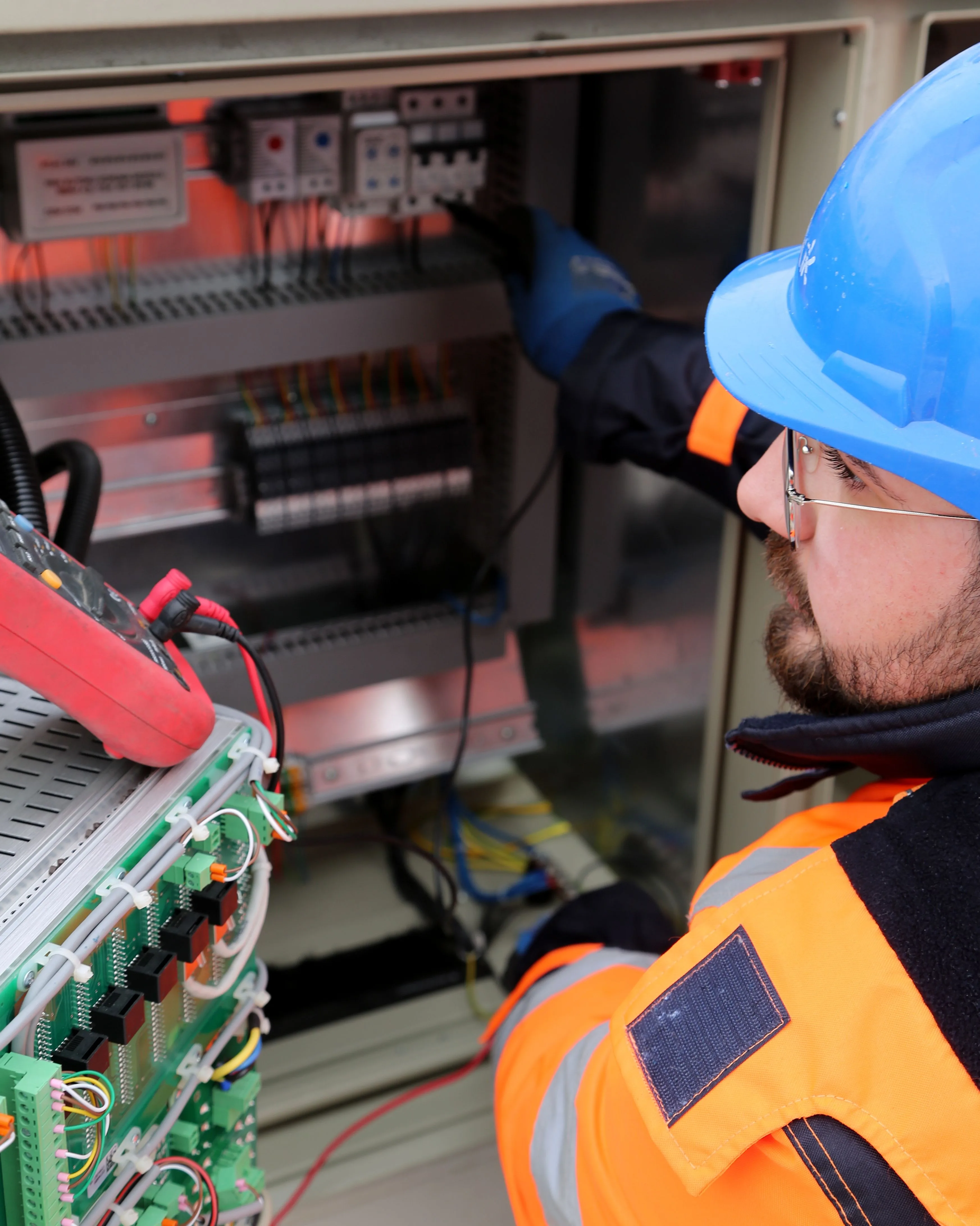
A panel-based system earns its place where one alarm cannot cover the building. A shop with a storeroom behind the sales floor, a restaurant with a kitchen at the back, a small office with rooms off a corridor, or a multi-unit building: in each of those, the panel is the brain that takes signals from every detector and pull station, works out which zone raised the alarm, and drives the horns and strobes everywhere at once. Pull stations at the exits let anyone raise the alarm by hand, and strobes give the warning to anyone who cannot hear it. Monitoring, where the building has it, passes the alarm to a monitoring centre when the building is empty.
The panel also changes how a fault is found. A detector that has failed, a zone with a wiring fault, or a battery that needs replacing shows on the panel instead of hiding until the night it matters, and the panel keeps a record of which zone raised the last alarm. That is the difference between a system and a set of devices, and it is why a panel-based job starts with a walk-through of the building rather than a count of ceilings. For a business, the same walk-through is where the downtime question is settled — see our commercial electrician service for how business work is planned around opening hours.
Questions about your home?
Testing, chirps, and the ten-year replacement
Every alarm should be tested once a month with its test button, and the test takes seconds: press, listen for all interconnected alarms to sound, and note any that stay silent. A chirp every minute or so is the alarm asking for something — usually a battery, or, on a ten-year sealed unit, a replacement — and it is never a reason to remove the battery and leave the alarm dead. An alarm that sounds for cooking steam or dust is telling you about its placement, not asking to be switched off: move the cause, or ask on the call whether the alarm sits too close to the kitchen or a bathroom.
The ten-year rule is the one most homes miss. Smoke alarms are replaced every ten years, because the sensing chamber wears out whether or not the alarm has ever sounded, and the manufacture date is printed on the back of the unit. Dust the vents when you test, keep paint and insect spray away from the chamber, and replace the whole unit — not just the battery — when its decade is up. If an alarm sounds and you smell smoke or see fire, leave the building and call 911 first; never test an alarm with real smoke or flame. Our electrical emergency guide covers the first steps when something electrical goes wrong before help arrives.
What to have ready when you call
- Your address in ZIP 34950 or 34945, and whether the building is a home, a shop, a restaurant, or a multi-unit property.
- How many levels and bedrooms the building has, and whether anyone sleeps behind a closed door.
- What is there now — battery alarms, hardwired alarms, a panel, or nothing — and how old the oldest unit is.
- Whether any alarm chirps, sounds for cooking, or stays silent on the test button.
- Whether the building needs a panel-based system, monitoring, or pull stations — or you are not sure, which is itself an answer.
A call with those answers ready ends with a clear scope and a written price — not a guess. Fire alarm installation Fort Pierce homes and shops get right is settled by placement, power and interconnection, not by the box the device came in. Call (772) 218-3629 any time; we are open 24/7, and same-day service is available. Tell us your area when you call — the Downtown Fort Pierce area page covers the work we do around the Sunrise Theatre, the Fort Pierce City Marina and the Downtown Farmers Market, and the electrical inspection service is the right first step when an older building's wiring has never been checked.
Fire Alarm Installation Fort Pierce: frequently asked questions
What is the difference between a smoke alarm and a fire alarm system?
A smoke alarm is a single device that sounds where it sits. A fire alarm system wires detectors, a control panel, pull stations and horns or strobes together, so one detector sounding sets off the whole building and the panel shows which zone raised the alarm. Most homes need interconnected alarms done well; shops, restaurants and multi-unit buildings usually need the panel-based system.
Where should smoke alarms be installed in a Fort Pierce home?
Inside every bedroom, outside each separate sleeping area, and on every level of the home, including the basement — that is the placement in the national guidance, NFPA 72. Ceiling-mounted alarms sit at least four inches from the nearest wall, and alarms stay at least ten feet from cooking appliances so everyday cooking does not set them off. The exact requirements for your address depend on the local code in force.
Do smoke alarms need to be hardwired or interconnected?
Hardwired alarms with battery backup are the standard for new work, and interconnection is what makes the system work — when one alarm sounds, they all sound. Where new wiring is impractical, sealed ten-year battery alarms, interconnected wirelessly where the listing allows it, are the usual answer. A standalone alarm that cannot wake the far bedroom is a gap, however good the device is.
How often should fire alarms be tested and replaced?
Test every alarm once a month with its test button, and replace every smoke alarm at ten years — the sensing chamber wears out whether or not the alarm has ever sounded, and the manufacture date is printed on the back of the unit. A chirp usually means a battery, or a replacement on a ten-year sealed unit, and it is never a reason to remove the battery and leave the alarm dead.
Does a shop or restaurant in Fort Pierce need a panel-based fire alarm system?
It depends on the building: a shop with a storeroom behind the sales floor, a restaurant with a kitchen at the back, or any building where one alarm cannot be heard everywhere usually needs a panel, pull stations at the exits, and horns and strobes throughout. The walk-through on the visit settles it, and the permit and inspection route for the address is confirmed on the call.
What should I tell you when I call about a fire alarm?
Your address in ZIP 34950 or 34945, the building type — home, shop, restaurant or multi-unit — how many levels and bedrooms it has, what is there now and how old the oldest unit is, and whether any alarm chirps, sounds for cooking, or stays silent on test. With those answers, the call ends with a clear scope and a written price. Call (772) 218-3629, 24/7.
Ready to talk?