
Generator Repair Fort Pierce FL
Generator repair Fort Pierce for a unit that will not start, will not stay on, or keeps showing controller alerts: call (772) 218-3629, describe the alert and what happened, we trace the fault across battery, controller, transfer switch, and wiring in 34950 and 34949, from Downtown to Hutchinson Island.
Call Now to Speak to a Specialist
Open 24 hours a day, 7 days a week.
Generator repair Fort Pierce: repair, maintenance, or replacement?
A generator repair Fort Pierce visit fixes a unit that has failed: it will not start, will not stay on, will not carry load, or keeps showing a controller alert. Maintenance keeps a healthy unit ready; repair finds and fixes a fault there. If the unit is at the end of its life, we say so on the call.
That distinction matters because a generator can fail quietly: a unit that cranks but never runs may look fine outside while its controller records failed starts and transfer faults. Reading those codes first, instead of swapping parts by guess, is what turns a visit into a fix.
See also our generator installation page for a new standby unit, and our generator maintenance and monitoring page for routine readiness checks.
Generator down in Fort Pierce?
What the symptom points to: a repair triage table
Generators fail in patterns. Describe your fault clearly on the call: the symptom, the controller message if there is one, and whether the unit tried to run at all.
| What you see or hear | What it often points to | What a repair visit checks first |
|---|---|---|
| Nothing happens when it should start | Dead or weak battery, failed starter circuit, or controller with no power | Battery voltage under load, starter wiring, fuses, controller power |
| It cranks but never runs | Ignition, fuel-solenoid wiring, or a sensor holding the unit off | Spark and fuel-solenoid circuits, sensors, controller fault codes |
| It runs, then stops after a few minutes | Overheating, low oil pressure, or a sensor shutting it down | Cooling airflow, oil-pressure sensor, shutdown code history |
| It runs but your home stays dark | Transfer switch fault, tripped breaker, or no output | Transfer switch contacts and controls, output voltage, breakers |
| It starts only with help or repeated tries | Weak battery, corroded terminals, or a failing starter | Battery age and charge, terminal corrosion, starter draw |
| Controller alerts keep coming back | A fault cleared but never fixed, or a failing sensor | Full fault history, sensor readings, sensor wiring |
Never backfeed your home by plugging a generator into a wall outlet: it can energise the grid connection, endanger utility workers and neighbours, and destroy the generator. If transfer equipment has failed, leave the unit off and call.
How a generator repair visit runs, step by step
A good repair visit follows the fault, and you hear the cause in plain words, with a written price, before any repair starts.
- Call and describe. Symptom, controller message, whether the unit cranks, and what changed since it last ran well.
- Make it safe. Unit left off, transfer switch position checked, damaged wiring or hot connections isolated before testing.
- Read the controller. Fault codes, start history, battery voltage, and exercise-run records narrow the fault to one system.
- Test the chain. Battery, starter, sensors, ignition and fuel-solenoid circuits, transfer switch, and output are tested in order.
- Agree the repair and the price. Cause, part, and price agreed in plain words, including any follow-up visit for a part on order.
- Repair, load-test, and hand over. Repair tested under load where possible, controller cleared, and you are told what to watch for.
If a part is not on hand, the unit is left safe and the return visit is booked on the call.
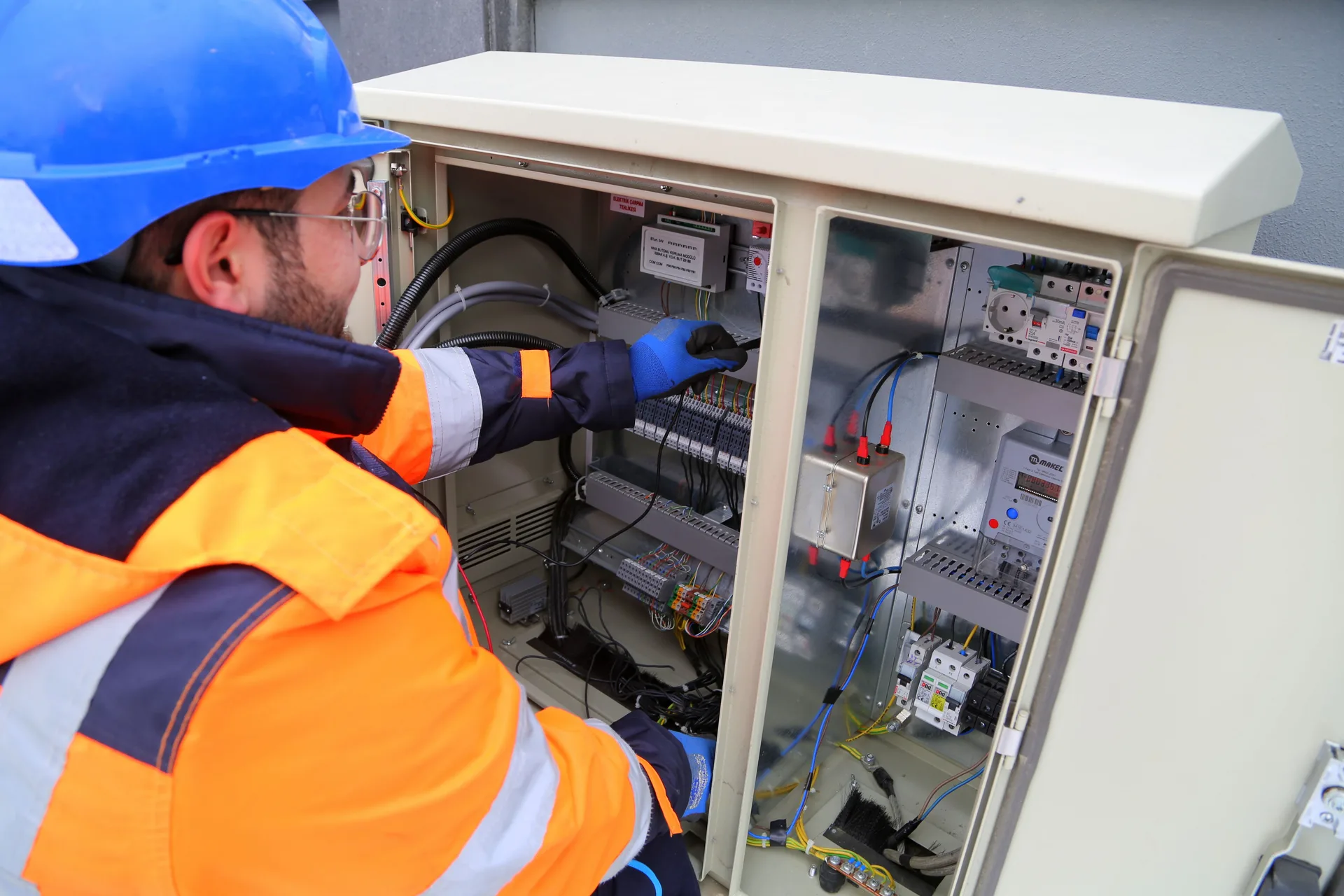
The electrical heart of the unit: battery, controller, and sensors
Most standby failures are electrical, and most sit in three places. The battery is first: it can light the controller and still collapse under starter current, which is why a no-load voltage reading tells you almost nothing and a test under load is the first real test on a no-start call.
The controller is second: it decides when to start, watches oil pressure and temperature, and records every failed start. Clearing its codes without fixing the cause only hides the next failure until the next outage. Sensors and their wiring are third: a failed sensor can stop a healthy engine, and corroded connectors and salt-air damage at outdoor terminals are common causes here, found by testing the circuit rather than swapping the sensor and hoping.
Controller alert that will not clear?
Transfer switch faults: when the generator runs but the house stays dark
A transfer switch fault is the most confusing failure, because the unit sounds healthy: the engine runs, yet the lights stay off or only some circuits return. The cause usually sits in the switch: contacts that no longer close cleanly, a control circuit that never sends the signal, or a breaker between switch and panel that has stayed tripped.
Diagnosis is methodical: voltage is checked at the unit, then the switch, then the panel, and the first place it disappears is where the fault lives. Our automatic transfer switch installation page explains how the switch should behave. Treat a switch fault as urgent even while grid power holds, because it only reveals itself during an outage.
Standby generator repair and portable generator repair
Standby and portable units fail differently. A standby unit is wired in through a transfer switch, so its faults span battery, controller, transfer equipment, and panel connection. A portable unit is simpler: its faults usually sit in starting, output receptacles, and cords.
One safety rule first for portable owners: never run a unit inside a garage, home, or enclosed porch, even with a door open, because exhaust fumes build up fast. Run it outdoors, clear of windows and doors, and keep it dry. If it trips its own breakers, will not hold voltage, or has damaged receptacles or cords, leave it off and call.
Repair or replace: the honest decision
Not every broken generator is worth repairing. A single failed battery or sensor on a unit that has otherwise run well is a clear repair; repeated controller faults, a switch that has failed twice, or parts no longer available point the other way.
Ask on the call: what failed, what will the repair change, what else is likely to fail soon, and what does a replacement change for your key circuits? If replacement is the honest answer, our Generac generator installation page covers sizing and transfer equipment for a new unit. If the fault sits in the engine or fuel hardware beyond the electrical controls, we say so plainly.
Repair or replace? Get the straight answer.
What changes the cost of generator repair in Fort Pierce
No honest page can print one figure for every repair. A battery swap is a short visit; a transfer-switch fault traced through three enclosures is longer, with parts and load testing. Hence cost factors here, and your exact range on the call.
- Finding the fault. A controller code that points straight at the fault costs less time than an intermittent fault that only appears under load.
- Parts. A battery or sensor on hand is a quick fix; a controller board or transfer-switch part on order means a make-safe first and a return visit.
- Access. A unit behind stored items, fencing, or heavy planting takes longer to reach and test than one with clear access.
Generator repair in Fort Pierce: salt air, storms, and older homes
Fort Pierce conditions shape generator faults in ways inland guides miss. Salt air attacks outdoor terminals, switch enclosures, and battery connections near the Indian River Lagoon and the Fort Pierce Inlet. Lightning can damage controllers, sensors, and transfer controls, and a unit that survives a storm may still log faults that appear only at its next exercise run, so check the display after any storm.
Homes in Hutchinson Island in 34949 and across Fort Pierce South in 34951 and 34947 see both patterns together, so the exercise-run record matters most there. Older homes add a third pattern: a unit wired years ago may now feed a panel that has since gained air conditioning, a pool pump, or an EV charger, so it starts fine and shuts down under load. We take repair calls across Fort Pierce, including 34945, 34946, 34947, 34949, 34950, 34951, 34981, and 34982. For warning signs in full, read our generator repair signs guide for Fort Pierce; for other urgent faults, see our emergency electrician page.
Before the visit: what to do and what never to do
Note the controller message word for word, whether the unit cranked, and what changed since it last ran well. Leave the unit off if it smells of burning, leaks fuel, or shows damaged wiring. Never backfeed through a wall outlet, bypass a transfer switch or interlock, or open live enclosures to poke at parts, and never reset a tripping breaker over and over to force a run. Fire, smoke, or injury means call 911 first.
Why call Fort Pierce Electric Pros for generator repair
We are a professional, local Fort Pierce electrician team with 23 years of experience, licensed and insured, certified, and holding Master Electrician Certification. On generator repair, the cause is traced before parts are swapped, the fix is explained in plain words, and the price is agreed in writing before work starts. Our base is 1907 Okeechobee Rd, Fort Pierce, FL 34950; we are open 24 hours a day, 7 days a week, with same-day service.
Generator Repair Fort Pierce FL: frequently asked questions
My standby generator will not start. What should I check first?
Read the controller display and note the message word for word, then check whether the unit cranks and whether any breaker has tripped. Do not keep cranking a unit that will not catch, and do not clear the codes: they are the diagnosis. Call (772) 218-3629 with the message.
How much does generator repair cost in Fort Pierce?
There is no single figure, because the fault decides the work: fault-finding time, the part needed, access, and load testing shape it. A battery or sensor swap is a short visit; a transfer-switch fault is longer. Call (772) 218-3629 for your exact range and a written price before work starts.
My generator runs but my house stays dark. Is that a transfer switch fault?
Often, yes. If the engine runs and the house stays dark, output is not reaching the panel, and the break is usually in the transfer switch, its controls, or a breaker between switch and panel. Leave the unit as it is and call.
Can a generator be repaired after storm or lightning damage in Fort Pierce?
Often, yes, if the damage sits in the controller, sensors, or transfer controls. Lightning can damage exactly those parts while leaving the engine sound. After any storm, check the display before the next outage and call if it shows a new fault.
Should I repair my old generator or replace it?
A single failed battery or sensor on a unit that has otherwise run well is a clear repair. Repeated controller faults, a switch that has failed twice, or parts no longer available point toward replacement. Ask what failed, what the repair changes, and what else is likely to fail soon.
Do you repair portable generators as well as standby generators?
Yes. Portable faults usually sit in starting, output receptacles, and cords, while standby faults span battery, controller, transfer switch, and panel connection. Never run a portable unit indoors or in a garage, and never bypass a damaged receptacle with an extension cord.
Ready to talk?