
Circuit Breaker Replacement Hutchinson Island, Fort Pierce
Circuit breaker replacement Hutchinson Island Fort Pierce starts with telling a worn breaker from a circuit that is simply overloaded. For homes in ZIP 34949 and 34950, from Jetty Park to Fort Pierce Inlet State Park, this guide covers the signs.
Call Now to Speak to a Specialist
Open 24 hours a day, 7 days a week.
A breaker that trips once after a clear overload and resets cleanly is doing its job. One that trips again and again on a normal load, runs warm, buzzes, or will not stay reset has likely worn out — and a breaker that stops tripping at all is the more dangerous failure. Here is how to tell the difference.
Reset, faulty, or undersized: the three-way test
Most breaker calls fall into one of three buckets, and the right fix is different for each. A breaker that trips once after a surge or a heavy load, then resets and holds, is usually doing its job — it does not need replacing. A faulty breaker trips below its rated amperage, will not stay reset, or runs warm with a normal load, because the internal mechanism has worn out after thousands of trip-and-reset cycles. An undersized circuit trips every time the same big appliance kicks on, and that repeat trip is often the first sign the circuit — or the panel — has been outgrown, rather than a sign of a bad breaker.
The three-way test is what the visit runs first, because each bucket points somewhere else. A reset-only breaker needs the cause of the one trip found, not a new breaker. A faulty breaker needs a listed replacement for that panel, fitted after the bus and connections are checked. An undersized circuit needs a dedicated circuit or a capacity decision, not a bigger breaker — fitting a larger breaker on wiring rated for less is never the fix. Our breaker tripping guide explains what overload, short circuit, ground fault, and a worn breaker each look like.
The signs a breaker itself has failed
A breaker that trips more than once a month on the same circuit, under a normal load, is the first sign. A toggle that feels loose or will not click firmly into the on position is the second. Scorch marks or discolouration on the breaker face, a burning or hot plastic smell near the panel, a breaker that feels warm to the touch, or a buzzing or crackling sound are all signs to stop and call the same day — heat, smell, and visible damage mean the breaker is failing in the panel, not in the room.
The most dangerous sign is the quiet one: a breaker that stops tripping altogether. A breaker is supposed to cut power when there is too much current, and if it cannot do that job any more, the wiring overheats with no safety shutoff. That failure mode is more dangerous than a breaker that trips too often, and it is the reason a panel that has never been touched deserves a check — especially on the island, where salt air works on the same connections the breaker depends on. Circuit breaker replacement Hutchinson Island Fort Pierce work starts with that check, because a breaker that has stopped tripping is a panel problem wearing a breaker face. Our salt-air corrosion guide explains what salt air does to outdoor gear and what protects it.
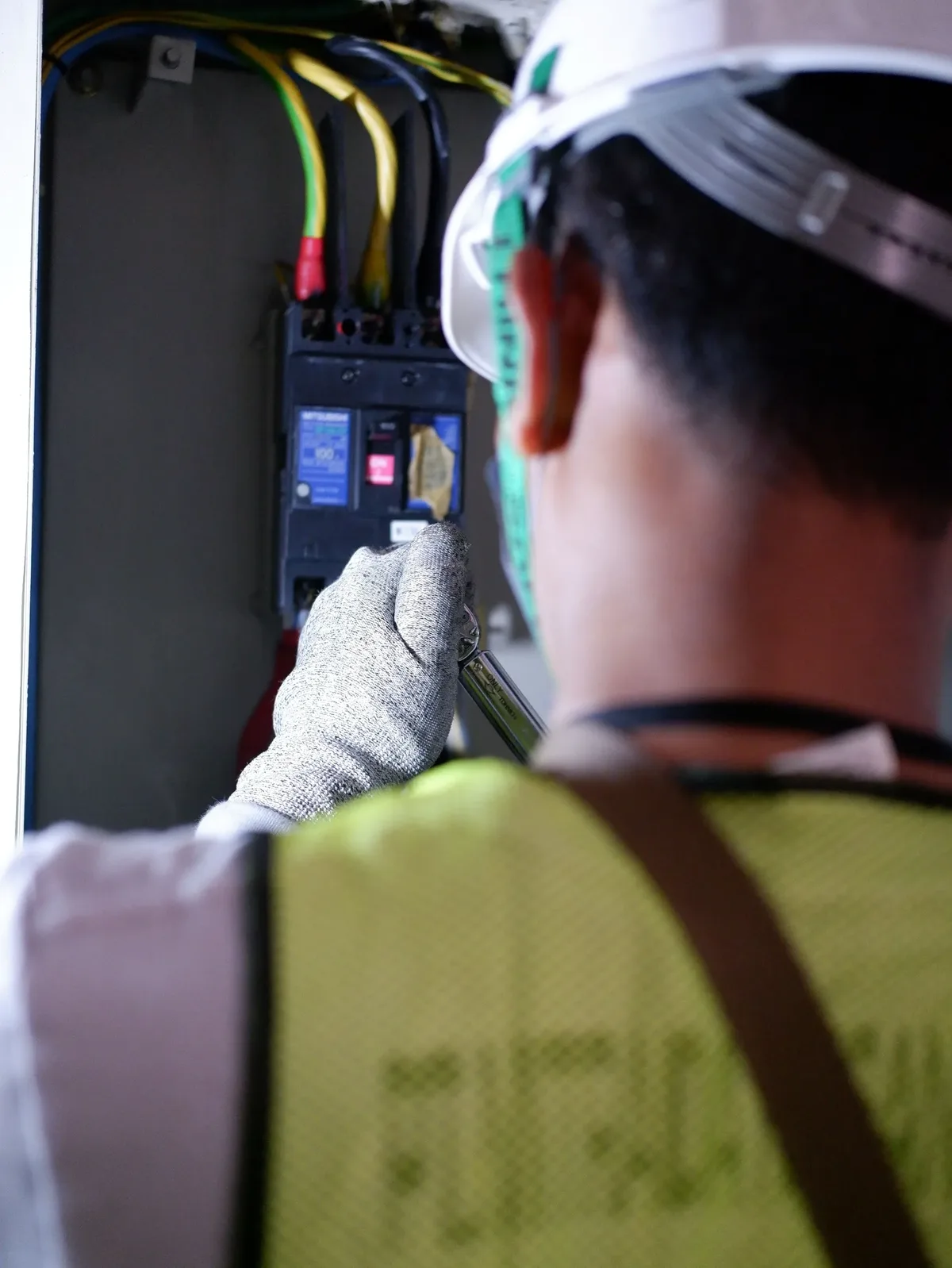
A breaker that trips again and again, or one that will not stay reset?
What the visit checks before swapping a breaker
A breaker swap starts with the panel, not the breaker. The visit checks the bus bar the breaker sits on — a breaker on a pitted or burnt bus stab will fail again on day one if only the breaker is swapped — the panel brand and size, the load on the circuit, and whether the circuit is overloaded, shorted, or ground-faulted. A breaker that trips because of a short in the wiring needs a different fix than one that trips because two circuits are feeding one breaker, and the diagnostic tells them apart before anything is replaced.
The replacement itself is a listed breaker for your panel, because mixing brands that merely fit is a shortcut inspectors flag. The visit also checks whether the circuit now needs arc-fault or ground-fault protection it did not have when it was fitted — bedrooms and living areas take AFCI protection, wet and damp areas take GFCI — and whether the panel is a Federal Pacific or Zinsco unit, where a single replacement breaker is usually the wrong fix. Our Federal Pacific vs Zinsco guide explains why those panels change the scope.
When one breaker is not the fix
A single failed breaker usually gets replaced, and the job is done. But the visit turns into a panel decision in three cases: more than one breaker has been acting up, the panel has no open slots left, or a major load is being added — an EV charger, a tankless water heater, or a second air conditioner on a 100-amp service. In those cases the honest call is a panel upgrade or a subpanel, decided by the load calculation, not by the number of breakers that tripped. Our electrical panel upgrade Fort Pierce page covers the capacity question, and our electrical panel repair guide explains which panel faults are repaired and which mean replacement.
Island homes add one more case: the outdoor panel. Salt air corrodes the same bus bars and connections a new breaker depends on, so a breaker that fails in an outdoor island panel is checked against the panel's condition, not swapped on its own. Our electrical repair on Hutchinson Island guide covers the island's fault pattern — salt air, surge damage, pool and spa circuits, and full condo panels — and this guide does not repeat it.
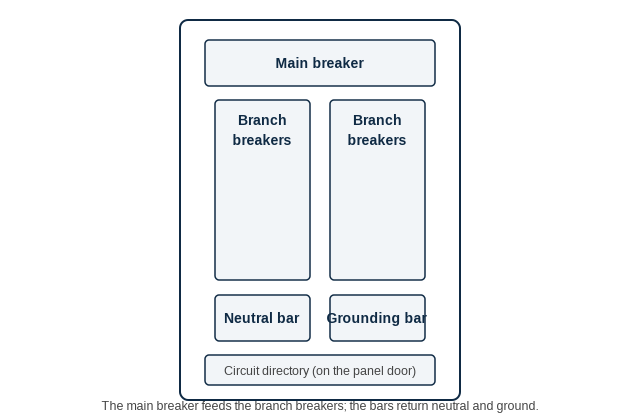
The island angle: salt air and outdoor panels
Salt air is the fault other neighbourhoods do not have, and it is the first thing a Hutchinson Island breaker visit checks. Salt settles on outdoor panels, disconnects, and GFCI outlets, and over time it corrodes connections and fittings that would last decades inland. The signs are green or white crust on terminals, a GFCI that trips for no clear reason, an outdoor outlet that works in dry weather and fails after rain, and a panel that hums where it used to run quiet.
Corrosion is also why an island breaker swap is never just a swap. The visit tests the circuit, checks the connections, and looks at the bus — because a new breaker on a corroded bus is a repair that fails twice, once at the breaker and once at the panel. A buzzing or humming panel is the sound version of the same story, and our panel buzzing guide explains what each sound means and when to call the same day.
A panel that hums, or a breaker that runs warm?
Safety: what never to do
Never keep resetting a breaker that trips straight back. Reset once, note what was running, and call if it trips again — each reset after a fault wears the breaker and hides the cause. Never open the panel to look: the test is done with power on, and a hot or discoloured plate, a burning smell, or a switch that buzzes means stop and call. If you smell burning, see discolouration around the breaker, or hear crackling from the panel, treat it as an emergency and leave the circuit off.
And never fit a breaker yourself. Breaker work is panel work, and panel work is done with the power off, the right listed part, and the bus and connections checked — the same visit that replaces the breaker also proves the circuit is safe to energise again. A breaker that trips once during a thunderstorm, or when the microwave, the space heater, and the toaster ran on one circuit, and then resets and has held ever since, does not need replacing at all — the one trip was the breaker doing its job.
What to have ready when you call
A breaker visit on Hutchinson Island goes faster when six things are ready. Your address in ZIP 34949 or 34950, and whether the home is a house or a condo — a condo may need association approval for panel work, and a rental needs the landlord's written permission first. Your panel's brand and size, and whether it buzzes, hums, or runs warm. Which breaker trips, what runs on that circuit, and whether the fault follows rain or the air conditioner starting. Whether the breaker feels loose, warm, or smells of burning — if it does, say so first and leave the circuit off. And whether the panel is Federal Pacific or Zinsco, because that changes the fix before the visit starts.
Those answers turn a call into a visit that starts with the right check, instead of a visit that starts by searching for the problem. Circuit breaker replacement Hutchinson Island Fort Pierce homes get right is settled at the panel and the bus, before the next storm season tests them again. Call (772) 218-3629 any time; we are open 24/7, and same-day service is available. For the wider picture, our circuit breaker replacement guide covers the standalone signs and the three-way distinction, our electrical repair service covers what a repair visit involves, and the Hutchinson Island area page covers the work we do in ZIP 34949 and 34950.
Circuit Breaker Replacement Hutchinson Island Fort Pierce: frequently asked questions
What are the signs a circuit breaker needs to be replaced?
A breaker that trips repeatedly under a normal load, will not stay reset, feels warm or hot, buzzes or crackles, shows scorch marks or a burnt smell, or has a toggle that feels loose and will not click firmly on. Any one of those means replacement should be on the radar, and two or more at the same time means do not wait. A breaker that stops tripping at all is the most dangerous sign of all.
Can I replace a circuit breaker myself?
No. Breaker work is panel work, and it is done with the power off, the right listed part for the panel, and the bus and connections checked. Never open the panel yourself — the test is done with power on, and a hot or discoloured plate, a burning smell, or a switch that buzzes means stop and call. The visit replaces the breaker and proves the circuit is safe to energise again.
My breaker will not reset — what do I do?
Reset once, with the devices on that circuit unplugged. If it trips straight back, or will not stay in the on position, leave it off and call — the breaker, the bus, or the wiring has a fault, and each reset after a fault wears the breaker and hides the cause. If you smell burning or see scorching, treat it as an emergency and leave the circuit off.
Is it the breaker, or is the circuit overloaded?
The three-way test tells them apart. A breaker that trips once after a clear overload and holds is doing its job. A breaker that trips below its rated amperage, will not reset, or runs warm with a normal load is faulty. A circuit that trips every time the same big appliance starts is undersized — the fix is a dedicated circuit, not a bigger breaker. The visit runs the test before anything is replaced.
Does a Federal Pacific or Zinsco panel change the fix?
Yes. When the breaker you want replaced lives in a Federal Pacific Stab-Lok or Zinsco panel, or when the bus bar itself is pitted and overheated, a single replacement breaker is usually the wrong fix — the safe call is a full panel replacement with a code-compliant panel, not another breaker on failing equipment. The visit checks the panel brand before promising anything.
What should I tell you when I call about a breaker on Hutchinson Island?
Your address in ZIP 34949 or 34950, whether the home is a house or a condo, your panel's brand and size, which breaker trips and what runs on that circuit, and whether the breaker feels loose, warm, or smells of burning. With those answers, the call ends with a clear scope and a written price. Call (772) 218-3629, 24/7.
Ready to talk?