
Circuit Breaker Replacement in Lakewood Park, Fort Pierce
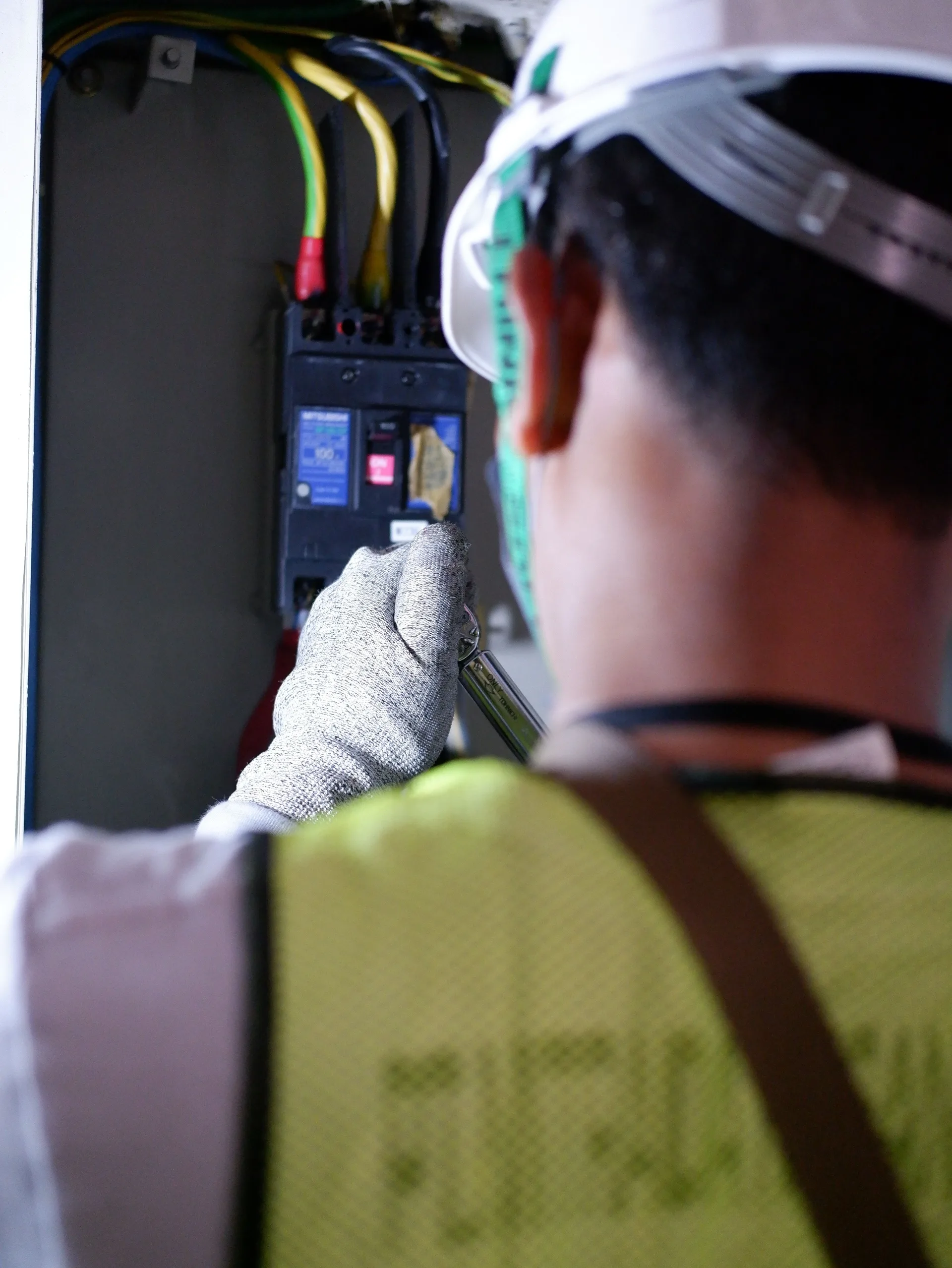
Circuit breaker replacement Lakewood Park Fort Pierce homes need starts with one question: is the breaker the fault, or is the circuit? In ZIP 34946 and 34950, in the northern Fort Pierce subdivisions around Lakewood Park itself, the visit tests the breaker before anything is replaced.
Call Now to Speak to a Specialist
Open 24 hours a day, 7 days a week.
A circuit breaker that has failed looks a lot like a circuit that is overloaded, and the two need different fixes. Circuit breaker replacement Lakewood Park Fort Pierce homes get right starts with testing: the load on the circuit, the breaker itself, and the bus it sits on. Exact price is confirmed on the call.
The signs the breaker itself has failed
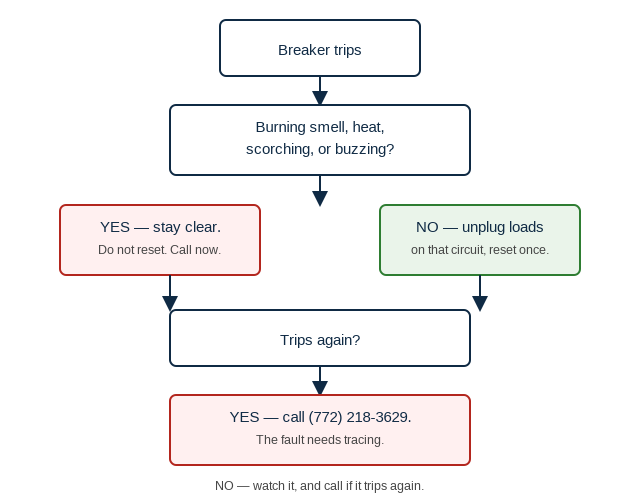
A failed breaker gives itself away in a handful of ways. It will not stay reset: it trips the moment you switch it back on, even with nothing plugged in on that circuit. It trips under loads it used to carry without trouble, and the trips get more frequent over weeks rather than staying occasional. It feels loose or wobbly in the panel, or it sits at an angle the other breakers do not. And it shows heat or damage: the breaker itself feels warm, the panel smells of burning, or there are scorch marks on the breaker or on the bus it clips onto. Any one of those signs is a reason to stop resetting and call — and a breaker that trips the moment it is reset has already told you its answer.
Age and brand matter too. A breaker that has tripped hundreds of times over decades wears out: the mechanism that should trip at the right current stops tripping at the right threshold, which is how a small fault becomes a dangerous one. Panels from the brands inspectors flag — Federal Pacific and Zinsco — carry breakers with known concerns, and a failed breaker in one of those panels is a panel conversation, not a single-breaker swap. Circuit breaker replacement Lakewood Park Fort Pierce homes need starts with the panel brand and the breaker age, because both change what a replacement means.
A tripping breaker is not always a failed breaker
Most breakers that trip have not failed at all — they are doing their job. A circuit that carries more than its breaker rating trips on overload: the air conditioning and another large appliance starting together is the pattern Lakewood Park homes show most, and the fix is the load, not the breaker. A short circuit trips instantly and violently, and a ground fault trips a GFCI or AFCI breaker for a different reason again. A worn breaker is the fourth case, and it is the only one a replacement fixes. That is why the visit tests before it replaces: a new breaker on an overloaded circuit trips just as faithfully as the old one, and the fault stays in the wall.
The test that separates the cases is simple to describe and not a homeowner job: measure the load on the circuit against the breaker rating, test the breaker itself, and inspect the bus and the connections. If the load is over the rating, the answer is load or circuits, not a breaker. If the breaker fails its test, the answer is a replacement at the same rating. If the bus is pitted or burnt, the answer is panel work, because a new breaker will not hold on a damaged bus. Our breaker-tripping guide explains what each kind of trip looks like and when to stop resetting, and our circuit breaker replacement guide covers the three-way distinction — tripping circuit, failed breaker, failing panel — in full.
Breaker trouble in Lakewood Park?
Lakewood Park homes: what the visit finds most
Lakewood Park is family homes in the northern Fort Pierce subdivisions around Lakewood Park itself, in ZIP 34946 and 34950, and the electrical faults there follow the houses. Breakers trip when the air conditioning runs with another large appliance. Lights dim when a motor starts. A garage outlet goes dead while the one beside it still works. And panels run short of spare capacity for a charger or a workshop — the house has grown, the loads have grown, and the panel has not. None of those is a breaker failure on its own, and the visit treats each one as a fault to be found, not a part to be swapped on a guess.
Garage power is the Lakewood Park pattern worth naming. A garage that has gained a freezer, a workshop, or an EV charger on circuits that were wired for a light and an opener will trip, and the trips will look like a failing breaker because they happen on the same circuit every time. The fix is usually a dedicated circuit for the new load, or a panel with room for one — not a new breaker, and never a bigger breaker to stop the tripping. Our Lakewood Park area page covers the work we do in the neighbourhood, and our panel upgrade page covers what happens when the panel itself is the limit.
What the visit checks before a breaker is replaced
The visit runs in an order: the load, the breaker, then the panel. The load on the circuit is measured against the breaker rating, with the appliances that were running when it tripped. The breaker is tested — whether it holds, whether it trips at the right current, whether it feels loose or shows heat or scorching. Then the panel: the bus the breaker clips onto, checked for pitting or burning, and the panel brand and age, checked against the ones inspectors flag. Only when the breaker fails its test is a replacement fitted, and it is fitted at the same rating as the circuit it protects — never a higher rating to stop the tripping, because the rating protects the wiring, and a bigger breaker lets the circuit carry more than its wiring can safely take.
The visit also checks what the breaker protects. A breaker that feeds a garage, a kitchen, or a pool circuit carries different loads and different risks, and a GFCI or AFCI breaker that trips may be doing exactly what it was fitted to do. The replacement, where one is needed, is the same type and rating as the one it replaces, and the circuit is tested after the swap to confirm the fault is gone rather than assumed gone. Our panel repair guide covers which panel faults are repaired and which mean replacement instead, and our 100-amp versus 200-amp guide explains how a load calculation settles the service size when the panel is the limit.
Not sure if it is the breaker or the circuit?
What a breaker replacement costs: the factors
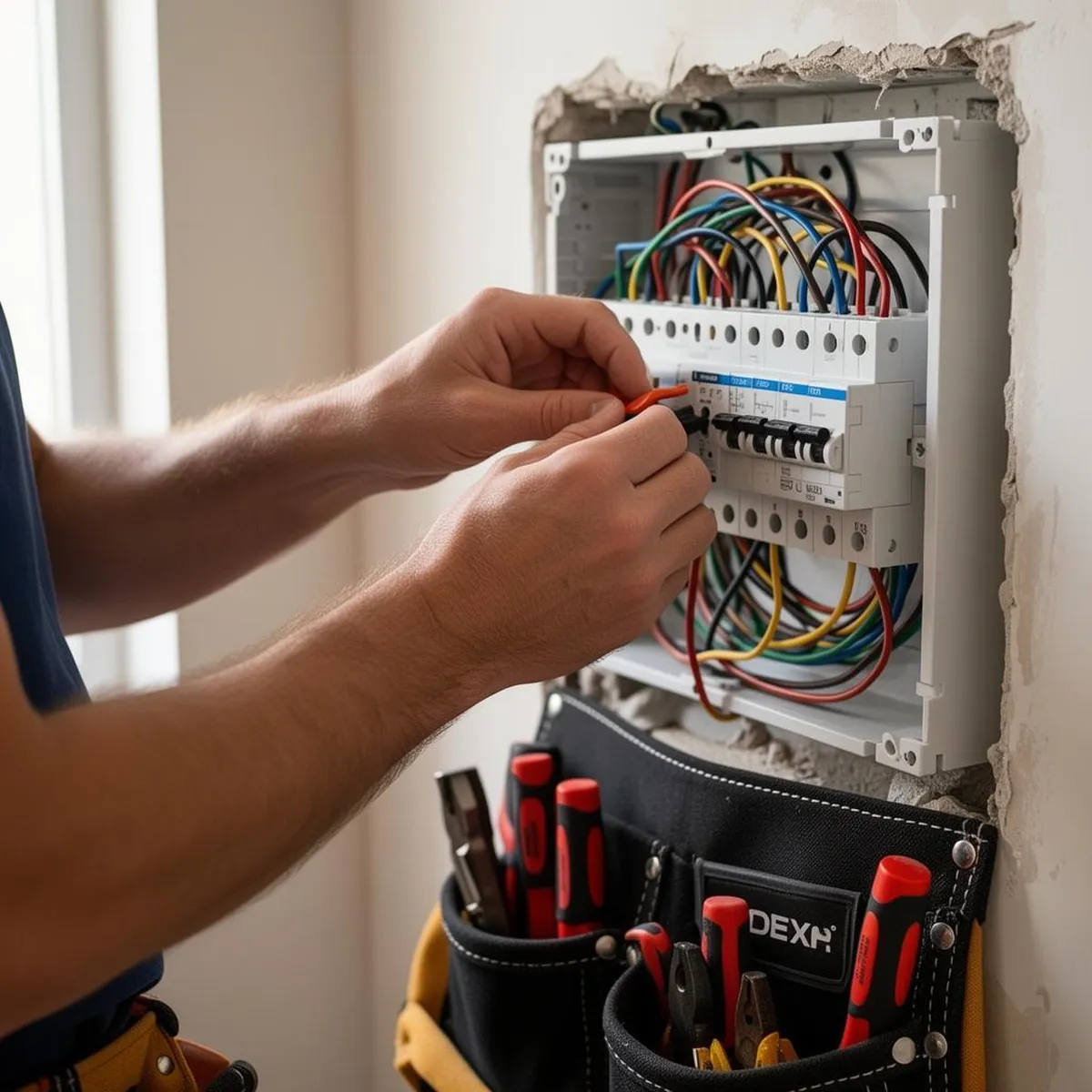
A breaker replacement is a small job with a price that moves on a few factors, and the honest answer is the factors, not a figure. The breaker type matters: a standard single-pole breaker, a double-pole breaker for a 240-volt circuit, and a GFCI or AFCI breaker are different parts at different scopes. Panel access matters: a panel that is easy to reach and has room to work in is a shorter visit than one buried behind storage or fitted in a tight closet. The condition of the bus matters: a clean bus takes a new breaker in minutes, and a pitted or burnt bus turns a breaker swap into panel work. And the permit and inspection route matters: some panel work needs a permit and an inspection, and that route is confirmed on the call for the exact job, not assumed.
What moves the price most is what the visit finds around the breaker. A failed breaker on a sound panel in good condition is the smallest version of the job. A failed breaker in a panel that is full, damaged, or one of the brands inspectors flag is a bigger conversation, and the visit is honest about that before any work starts. The call ends with a written price for the job as scoped — the breaker, the testing, and the return if one is needed — and the exact figure is confirmed on the call, because no single Fort Pierce figure fits every panel.
When a breaker replacement is a same-day call
Most breaker replacements are scheduled visits, but some are same-day. Call the same day when there is a burning smell or scorch marks at the panel, when the panel buzzes or the breaker feels hot, when a breaker sparks, when the same breaker trips again and again and will not stay reset, or when the fault has taken out a circuit the house cannot do without — the refrigerator, the air conditioning, or the only bathroom. If there is smoke or any sign of fire, call 911 first, then call us. Do not keep resetting a breaker that trips again and again, and do not open the panel yourself: the parts inside stay live even when one breaker is off.
When you call, have the answers ready that the visit starts from: your address in ZIP 34946 or 34950, which breaker it is and what it feeds, what happens when it trips, what was running when it happened, and whether the panel brand is known — Federal Pacific, Zinsco, or a fuse box. Circuit breaker replacement Lakewood Park Fort Pierce homes get right starts with those answers, and the call ends with a clear scope and a visit time. Call (772) 218-3629 any time; we are open 24/7, and same-day service is available.
Circuit Breaker Replacement in Lakewood Park, Fort Pierce: frequently asked questions
How do I know if my breaker needs replacing or my circuit is overloaded?
By testing, not by guessing. An overloaded circuit trips when the load passes the breaker rating — the air conditioning and another large appliance together is the usual pattern. A failed breaker trips with little or no load, will not stay reset, or feels loose or hot. The visit measures the load and tests the breaker, and the test says which one it is.
Can I replace a circuit breaker myself?
No. Breaker work is panel work, and the parts inside a panel stay live even when one breaker is off. A breaker fitted at the wrong rating, or onto a damaged bus, can let a circuit carry more than its wiring can take. The visit fits the replacement at the same rating and tests the circuit after the swap.
Why does my new breaker keep tripping?
Because the fault is the circuit, not the breaker. A new breaker on an overloaded circuit trips just as faithfully as the old one. The causes to check are the load on the circuit, a short or ground fault, a loose connection, and the condition of the bus the breaker clips onto — the visit tests each one in turn.
What does a breaker replacement visit check first?
The load on the circuit, then the breaker, then the panel. The load is measured against the breaker rating, the breaker is tested for whether it holds and trips at the right current, and the bus is inspected for pitting or burning. Only a breaker that fails its test is replaced.
Can I fit a bigger breaker to stop the tripping?
Never. The breaker rating protects the wiring on that circuit, and a bigger breaker lets the circuit carry more than its wiring can safely take. If a circuit trips because the load has grown, the answer is more circuits or a panel with room for them — not a bigger breaker.
What should I tell you when I call about a breaker in Lakewood Park?
Your address in ZIP 34946 or 34950, which breaker it is and what it feeds, what happens when it trips, what was running when it happened, and whether the panel brand is known. With those answers, the call ends with a clear scope and a visit time. Call (772) 218-3629, 24/7.
Ready to talk?