
Generator Transfer Switch vs Interlock Kit Fort Pierce
Generator transfer switch vs interlock kit in Fort Pierce: the two safe ways to connect a portable generator to home circuits, compared for panel fit, ease in an outage, and load control, for homes in 34950 and 34946 including Lakewood Park.
For a Fort Pierce home with a portable generator, the generator transfer switch vs interlock kit Fort Pierce question has no single winner. A transfer switch gives a defined set of backup circuits that are simpler to run in the dark, while an interlock kit gives more circuit choice, provided you manage the load yourself.
Generator Transfer Switch vs Interlock Kit Fort Pierce: the short answer
If you want the simplest outage routine, a manual transfer switch usually wins: the backed-up circuits are chosen in advance, so on outage night you flip a selector and run the circuits you already agreed. If you want flexibility — a different set of circuits in a summer storm than in a winter outage, or a panel where a transfer switch would waste circuits you rarely need — a panel-specific interlock kit usually wins, as long as everyone who might run it understands load management.
That is the whole decision in one paragraph, but the details decide it: panel compatibility, generator size, whether anyone is home to run the sequence, and whether the generator is portable or standby. The rest of this post works through each one, so you can call with the facts that actually change the recommendation. Exact price, timing, and availability are confirmed on the call, once we know the panel, the generator, and the circuits.
Why backfeed is the problem both devices solve
Backfeed is generator power travelling the wrong way: out of your panel, back through the meter, and onto the utility lines that repair crews assume are dead. A generator plugged into a wall outlet with a male-to-male cord — sometimes called a suicide cord — creates exactly that path, and it is dangerous and unlawful to use. It can injure a line worker, damage the generator when utility power returns, and start a fire in the house.
Both devices in this comparison exist to break that path before it can form. A transfer switch physically separates the backed-up circuits from the utility feed before connecting them to the generator. An interlock physically blocks the main breaker and the generator breaker from being on at the same time. Different mechanisms, same promise: utility and generator power can never meet in your panel.
Running a generator through an outlet? Stop — call us first.
How a manual transfer switch works
A manual transfer switch is a separate box wired between your panel, the utility feed, and the generator inlet. In normal use it sits on utility power. When the power goes out, you start the generator, connect it to the outdoor inlet, and flip the transfer switch selector from utility to generator. Only the circuits wired through the switch receive generator power, and the rest of the house stays dark — which is a feature, not a fault, because it keeps the load inside what the generator can carry.
The circuits are chosen when the switch is installed, so the outage routine is short and repeatable: fridge, a few lights, the well or sump if you have one, fans, and charging points, for example. That pre-selection is why transfer switches suit homes where several people might need to run the setup, or where the generator is modest and the margin for error is small. Our automatic transfer switch installation in Fort Pierce page covers the version that switches itself, which pairs with standby generators rather than portable ones.
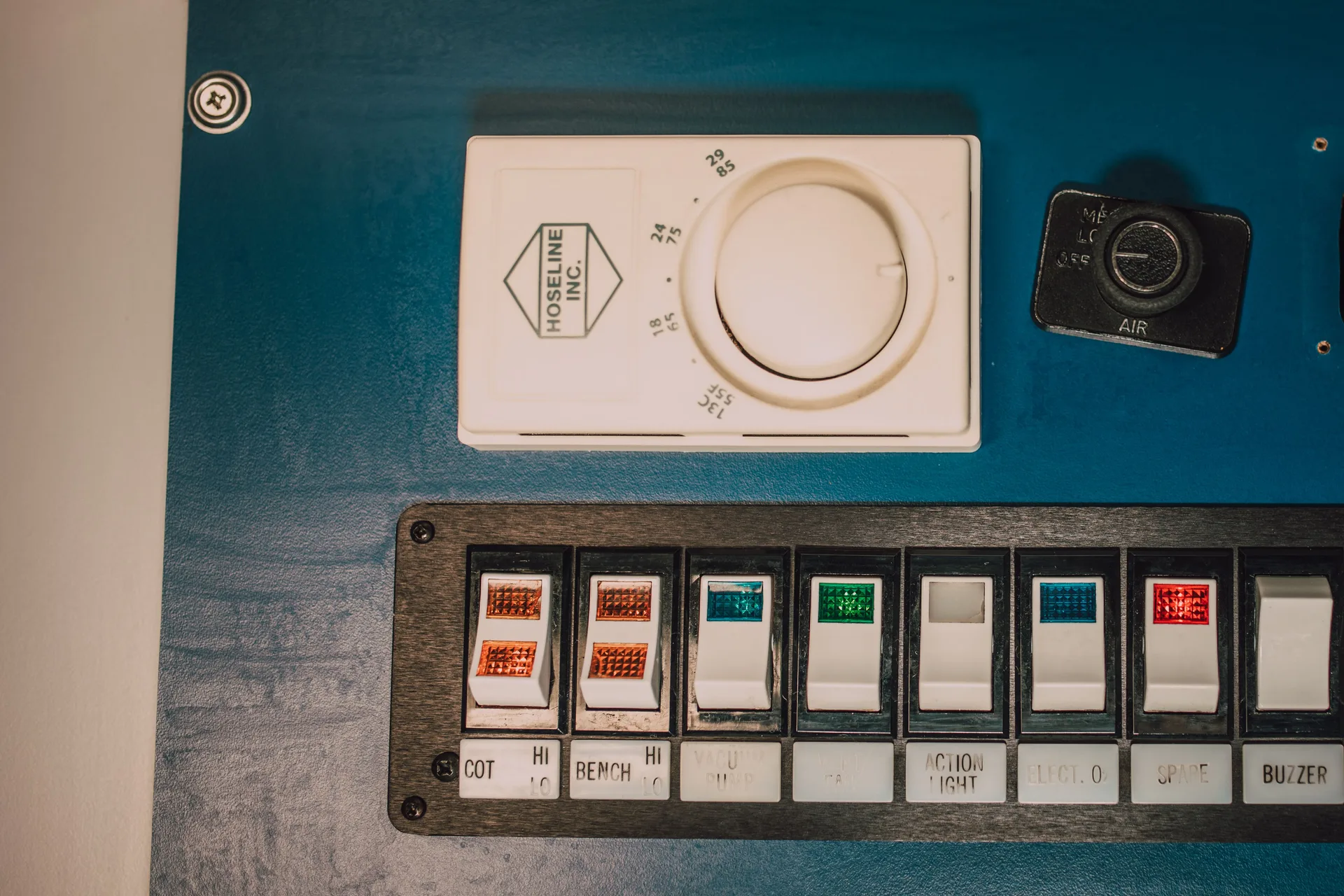
How a generator interlock kit works
An interlock kit is a mechanical plate fitted to your existing main panel. It sits over the main breaker and a dedicated generator breaker so the two can never both be on: slide the plate one way and the main is blocked off while the generator breaker can close; slide it back and the generator breaker is blocked while the main can close. You still need an outdoor inlet box wired to that generator breaker, and you still start the generator and connect it by cord, exactly as with a transfer switch.
The difference is what happens next. With an interlock, generator power reaches the main panel itself, so in principle any circuit in the panel can be switched on — but only within the generator's real capacity. That flexibility is genuine, and it is also the responsibility: turn on the air conditioning, the range, and the dryer together on a portable generator and you will overload it, trip it, or damage it. The kit prevents backfeed; it does not prevent overload. Load discipline is the homeowner's job, every outage.
Transfer switch vs interlock kit compared
This generator transfer switch vs interlock kit Fort Pierce comparison keeps the focus on the seven questions that change the recommendation.
| Question | Manual transfer switch | Interlock kit |
|---|---|---|
| What it is | A separate switch box wired to selected circuits | A mechanical plate on your existing main panel |
| How it stops backfeed | Separates the backed-up circuits from the utility feed | Blocks the main and generator breakers from both being on |
| Circuits available | The circuits chosen at install, fixed in advance | Any panel circuit, within generator capacity |
| Ease in an outage | Simpler: flip the selector, run the agreed circuits | More steps: breaker sequence plus load choices |
| Panel fit | Works across many panels, as a separate box | Only if a compatible, approved kit exists for your exact panel |
| Load control | Built in, by the circuit selection | Up to the person running it, every time |
| Automatic option | Yes, as an automatic transfer switch with a standby generator | No, an interlock is always manual |
Which fits your Fort Pierce home?
Start with the panel, because it can settle the question before anything else. Some panels have no compatible interlock kit, or only a kit that no longer meets current requirements, and in that case a transfer switch is the honest answer regardless of preference. Other panels accept a listed kit cleanly, and then the choice turns on how you live with outages. Tell us the panel brand and model on the call, or send a photo of the panel label, and we can check compatibility before a visit.
Next, consider the generator and the household. A portable generator with a modest output pairs naturally with a transfer switch, because the pre-selected circuits keep the load honest. A larger portable, run by someone comfortable with a breaker sequence and a load list on the panel door, pairs well with an interlock. A standby generator changes the conversation entirely: it needs an automatic switch, not either manual option in this post, and our generator installation in Fort Pierce page covers that setup. If nobody will reliably be home, awake, and able to run a manual sequence during a storm outage, say so on the call — that fact alone can rule out both manual options.
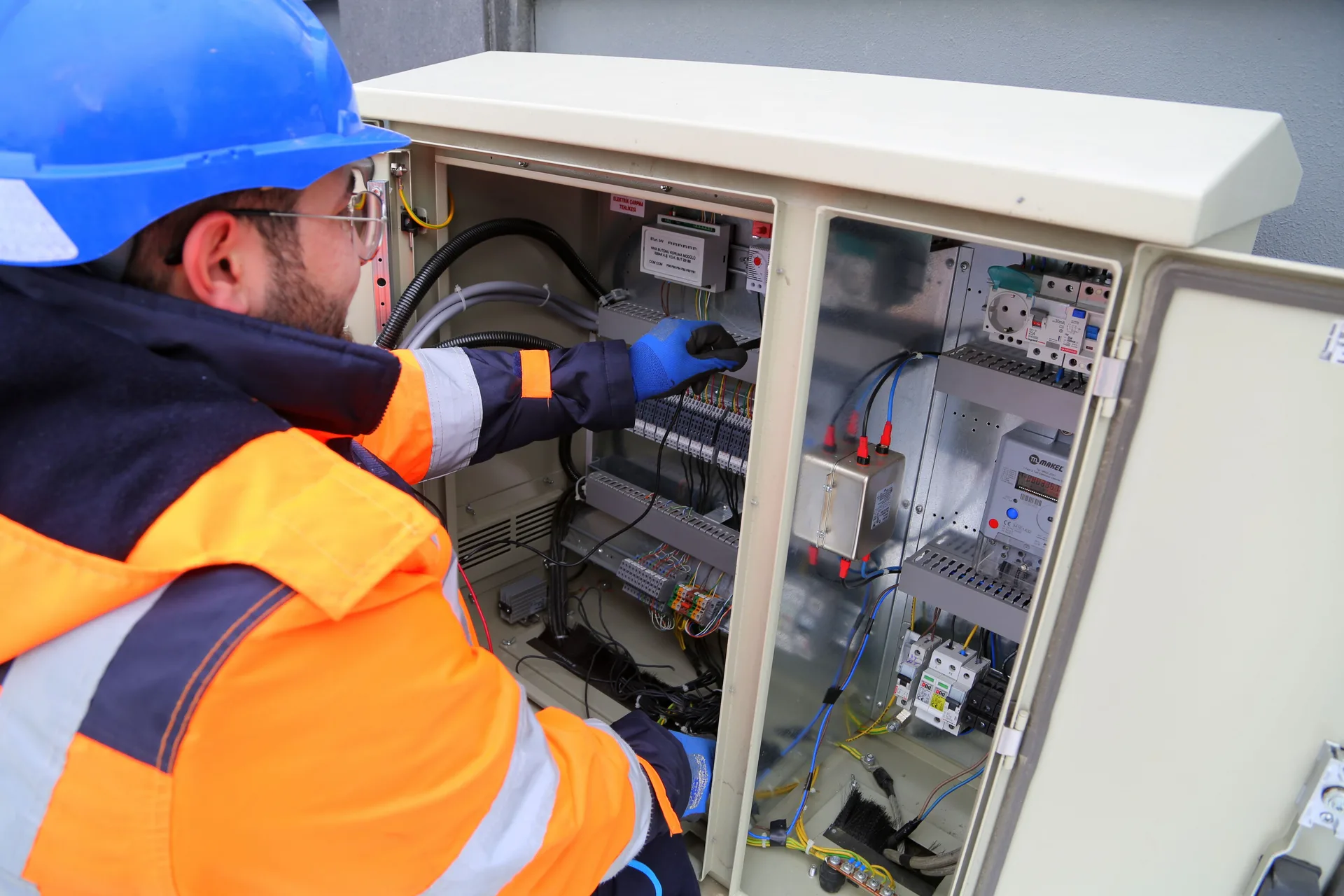
Fort Pierce storm reality: what an outage actually looks like
Fort Pierce outages usually arrive with a storm, at night, with the house already hot and the fridge already warming. That is the worst moment to learn a new breaker sequence, which is why we recommend a written load list on the panel door and a practice run in daylight before storm season. Run the sequence once when the power is on, with the generator off, so the motions are familiar when they count.
Storm preparation is wider than this one device, and our hurricane electrical prep checklist for Fort Pierce walks through the panel, surge, and outage plan in order. Sizing matters too: a switch or interlock cannot make a small generator carry a whole house, and our guide to sizing a Generac generator explains how essential circuits are counted against whole-home cover. For keeping a generator ready between storms, see our generator exercise and battery checks.
What changes the cost of a transfer switch or interlock install
No honest price exists before we know the panel, the generator, and the circuits. What moves the cost is the device itself, whether the panel accepts a kit or needs a separate switch box, the inlet location and cable run, and whether the panel needs room made or work done first. A kit on a compatible panel and a switch box on a full panel are different jobs, though both end with safe backup power.
That is why we give your exact range on the call, after hearing the panel and the generator. If the job turns out bigger — a panel with no compatible kit, or a service arrangement that rules out an interlock — we will say so before work starts. Nothing here is a price, and no price from another town is presented as a Fort Pierce price.
How the install visit runs, step by step
- Tell us the panel brand and model, the generator size, and the circuits you cannot lose.
- We check panel compatibility, inlet location, and spare capacity.
- We fit the switch box or the interlock kit, plus the outdoor inlet.
- We test the full sequence: utility off, generator on, circuits live, then back again.
- We leave a written load list on the panel and walk you through the sequence.
If the panel itself is the problem — old, damaged, or full — that is fixed first, because neither device can make an unsound panel safe. Start at our Electrician in Fort Pierce, FL homepage for the full service list, or call (772) 218-3629 and describe the panel and the generator.
Decision checklist before you call
- What is the panel brand and model, and is there a compatible interlock kit?
- Is the generator portable or standby, and what can it actually carry?
- Which circuits must stay on, and which can wait?
- Who will run the sequence, and will they be home during an outage?
- Where can an outdoor inlet go, close to where the generator will run?
- Do you want fixed simplicity or flexible circuit choice?
Answer three and the visit starts planned. Answer none and call anyway — describing the panel and the generator is enough.
Frequently asked questions
Is a generator interlock kit safe?
Yes, when it is a listed kit made for your exact panel, installed correctly, with a proper outdoor inlet. It physically prevents the main breaker and the generator breaker from being on at the same time, which stops backfeed. What it cannot do is stop overload, so the person running it must keep the total load inside the generator's capacity.
Is a transfer switch better than an interlock kit?
Neither is better for every home. A manual transfer switch is simpler in an outage because the backup circuits are fixed in advance. An interlock kit is more flexible because it can feed any panel circuit, but it needs load discipline every time. Panel compatibility, generator size, and who runs the setup decide which fits your home.
Can I install an interlock kit or transfer switch myself?
Both devices involve panel wiring, a generator inlet, and code requirements, and mistakes can create backfeed or overload. This is electrician work: the panel, the kit compatibility, and the full test sequence are checked on the visit, and any permit that applies is explained on the call before work starts.
What is backfeed, and why is a suicide cord dangerous?
Backfeed is generator power flowing back onto utility lines that repair crews assume are dead. A male-to-male cord through a household outlet creates that path with nothing to stop it, and it can injure a line worker, damage the generator, and start a fire. Never use one; use a transfer switch or an interlock with a proper inlet instead.
Can an interlock kit power my whole house?
Only within the generator's capacity. An interlock makes panel circuits available, but a portable generator cannot carry a whole house at once. The air conditioning, range, and dryer together will overload most portables, so a written load list, kept on the panel door, is part of the install.
Do I need an automatic transfer switch instead?
An automatic transfer switch fits standby generators, because it detects the outage, starts the generator, and switches the circuits itself, even when nobody is home. Portable generators still need someone to fuel and start them, so a manual switch or an interlock is the matching choice for a portable.
Your next step for generator backup in Fort Pierce
Describe the panel, the generator, and the circuits you cannot lose, and call. We are open 24 hours a day, 7 days a week, and same-day service is offered; exact timing is confirmed on the call. If a generator is currently connected through an outlet cord, disconnect it and call before running it again.
Panel, generator, circuits — call and we will match the device.