
Track Lighting Installation Fort Pierce, FL
Track lighting installation Fort Pierce fits rooms where one ceiling light leaves dark corners, for homes in Downtown Fort Pierce and Lakewood Park, ZIPs 34950 and 34946. This guide explains where track lighting works, the H, J, and L track types, dimming, and what moves the quote.
Call Now to Speak to a Specialist
Open 24 hours a day, 7 days a week.
Track lighting installation Fort Pierce turns one ceiling fixture into a row of adjustable heads, each aimed where the light is needed. Kitchens, art walls, and retail displays are the rooms where it earns its keep, and the track type, heads, and dimmer are chosen before anything is fitted. Exact price is confirmed on the call.
What track lighting is, and when it fits
Track lighting is a powered rail fixed to the ceiling, with separate light heads that clip onto it and can be moved and aimed along the rail. One ceiling feed becomes several points of light, and each head can be turned to a different target: the worktop, the artwork, the shelf, the till. That is the whole idea, and it is why track lighting installation Fort Pierce suits rooms where the light needs to move with the room.
The rooms where it earns its keep are easy to name. A kitchen island, where the work happens in one line and the light should follow it. A wall of artwork or photographs, where each piece deserves its own beam. A shop or gallery, where the display changes and the light should change with it. A hallway or reading nook, where one well-aimed head does the work of a row of fixed fittings.
It is not the answer for every room. A low ceiling makes a track feel close and busy, and a room that wants soft, even light in every corner is better served by fixed fittings that spread light rather than aim it. Track lighting is a directional tool, and the visit decides whether your room is a directional room. Our lighting installation page explains how a room is planned before anything is fitted.
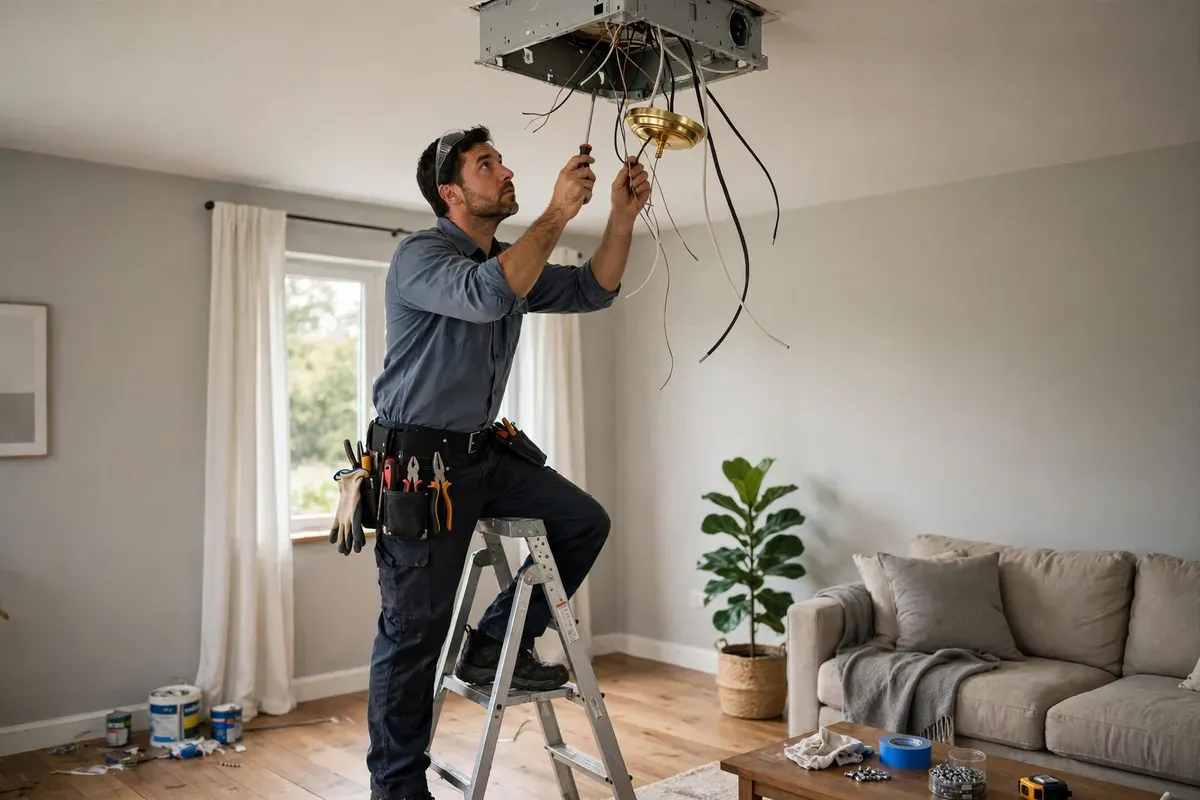
H, J, and L track: the compatibility rule that matters most
There are three common track families in the United States, called H, J, and L after the manufacturers that set their standards, and they do not interchange. A head made for an H track will not fit a J or L track, and a head made for one will not work on the other, so the first decision in any track lighting installation Fort Pierce job is which track is already on the ceiling, or which one the new job will use.
The families differ in their conductors: H has three, while J and L have two, with different spacing. That difference is why mixing them fails, and why the safest route is to keep every part in one family from one manufacturer. If you already have a track and want new heads, the track type is identified first, and the heads are bought to match it, not the other way round.
Monorail and cable tracks are the flexible cousins of the straight linear track: a monorail bends around a curve, and a cable system hangs on wires for a lighter look. Both follow the same rule, which is that heads, track, and dimmer are chosen as one system. The visit identifies the track you have or specifies the track you need, and the parts are ordered to match.
A room that is bright in the middle and dark where you work?
Track lighting vs recessed lighting: which room gets which
The honest comparison is that track lighting and recessed lighting solve different problems. Recessed downlights sit flush in the ceiling and spread even light across a room, which is what a living room or bedroom usually wants. Track lighting aims light at a target, which is what a kitchen island, an art wall, or a display shelf wants. One is even light, the other is aimed light, and most homes use both in different rooms.
There are rooms where track wins outright. A ceiling that cannot take recessed cans, because there is no space above it or the structure will not allow it, can still carry a surface-mounted track. A room whose layout will change, a shop that rearranges displays, or a gallery that rotates work, needs light that moves, and a track moves while a recessed can does not. A vaulted or sloped ceiling is another track room, because a track can be mounted to follow the slope where recessed cans would sit at the wrong angle.
There are rooms where recessed wins. A low, flat ceiling in a room that wants soft light everywhere is a recessed room, and a room where the track itself would be the thing you notice is better lit from fittings that disappear. Our recessed lighting page explains the other half of this choice, and the visit is where the two are weighed for your room.
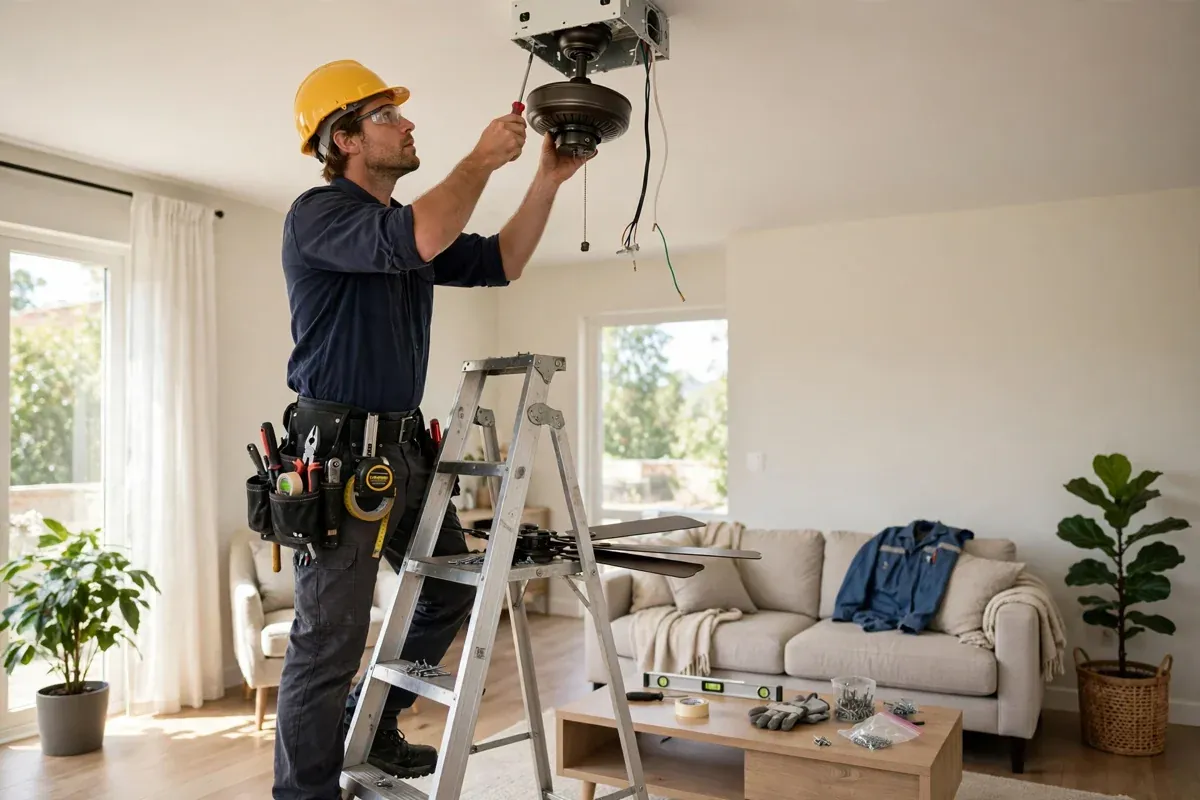
Where to put the track: aiming and layout
A track is placed by what it has to light, not by where the ceiling looks empty. Over a kitchen island the track runs along the island, with heads aimed down at the worktop and spaced so the light overlaps without leaving dark gaps. On an art wall the track sits a couple of feet out from the wall, with each head aimed at its own piece at an angle that keeps glare off the glass. For a wall-wash effect the heads are aimed at the wall itself, so the wall becomes the light.
Spacing follows the beam. Narrow spot heads throw a tight beam and sit further apart, while wider flood heads sit closer together so their light overlaps. As a rough guide from lighting practice, track heads are commonly spaced around eighteen to twenty-four inches apart, closer over a worktop and further apart for accent work, but the exact layout is drawn for the room, not guessed from a rule of thumb. The ceiling height, the beam angle, and the target all move the numbers.
The track also has to be supported properly, with fixings at regular intervals along its length, and it has to be fed from a junction box that can carry it. A long track needs more than one support, and a track that turns a corner needs a connector made for that track family. Those are the details the visit checks before the track is ordered, and they are the reason the work is done by a licensed electrician rather than fitted as a weekend job.
A room that is bright in the middle and dark where you work?
Heads, bulbs, and dimming: the choices that decide the look
The heads decide what the light does. Spot heads throw a narrow beam at one target, flood heads spread light across a surface, and pendant heads hang from the track for a softer, lower light over a table or island. The same track can carry different heads in different positions, which is the point of the system: the kitchen end can have task heads while the art end has accent heads.
Most track lighting today uses LED heads, which run cool, last longer than the halogen heads they replaced, and dim cleanly when the dimmer matches them. The dimmer is the part people get wrong. LED heads need a dimmer made for LED loads, and the wrong pairing is what causes flicker and buzz, so the dimmer is chosen with the heads, not after them. Our dimmer switch guide explains the compatibility question and the flicker causes in full.
Colour matters too, and it is worth deciding before the heads are ordered. Warm light suits a living room and a dining table, while cooler light suits a worktop and a display. A single room can mix them if the heads are chosen deliberately, but a room where every head is a different colour temperature looks accidental. The visit is where those choices are made, with the room in front of you, not from a catalogue page.
What the visit looks like, and what moves the quote
A track lighting visit starts with the room and the ceiling. The electrician checks the existing junction box and whether it can carry the track, the circuit the track will sit on, and the ceiling itself: flat, sloped, or vaulted, and what it is made of. Those answers decide the track length, the number of heads, the feed point, and whether the job is a straight swap for an existing fixture or a new circuit altogether.
What moves the quote is the scope, not the track alone. The length of track, the number and type of heads, the dimmer, the ceiling work, and whether a new circuit or a longer cable run is needed are the cost factors, and the exact price is confirmed on the call and the visit in a written, itemised estimate. Whether the job needs a permit is confirmed for your address on the call, as part of the same conversation.
One caution applies to every track job: never fit a head or a track from a different family to save money, because it will not fit and it will not be safe. The parts are ordered as one system, the track is mounted to a box that can carry it, and the circuit is checked before the lights go on. That order, survey first and parts second, is what a licensed electrician visit is for.
Track lighting in Fort Pierce rooms: kitchens, shops, and galleries
In Fort Pierce the rooms that ask for track lighting are easy to picture. A kitchen in Lakewood Park where the island is the worktop and the light should follow it. A shop in Downtown Fort Pierce where the display changes with the season and the light should change with it. A gallery wall in a Lincoln Park home where each piece deserves its own beam. The track is the same in each room; the layout is what changes.
Older homes ask one extra question, which is the condition of the existing box and circuit. A home whose wiring is older may need the circuit checked before a track is added, and the visit will say so plainly if that is the case. Our chandelier and under-cabinet lighting guide covers the other fittings that often share a kitchen with a track, and the same visit can weigh them together.
If your room has a dark corner that one ceiling light never reaches, describe the room on the call: what the room is used for, where the light should fall, and what is on the ceiling now. Call (772) 218-3629 and we will confirm the next visit we can offer. The Downtown Fort Pierce and Lakewood Park area pages show the neighbourhoods this guide covers.
Track Lighting Installation Fort Pierce, FL: frequently asked questions
What is track lighting installation?
Track lighting installation is fitting a powered rail to the ceiling, with separate light heads that clip onto it and can be moved and aimed along the rail. One ceiling feed becomes several points of light, each aimed where it is needed, such as a kitchen island, an art wall, or a shop display. The track type, heads, and dimmer are chosen as one system.
Is track lighting better than recessed lighting?
It depends on the room. Track lighting is better where light must be aimed at a target or moved when the room changes, such as a kitchen island, an art wall, or a shop display. Recessed lighting is better where a room wants soft, even light from fittings that disappear into the ceiling. Most homes use both, in different rooms, and the visit weighs them for your room.
Can track lighting be dimmed?
Yes, most modern LED track heads can be dimmed, but the dimmer must be made for LED loads and matched to the heads, or the lights will flicker or buzz. The dimmer is chosen with the heads, not after them, and the visit confirms the pairing. Smart heads are another route, dimmed from an app instead of a wall dimmer.
How much does track lighting installation cost in Fort Pierce?
Exact price is confirmed on the call and the visit, in a written, itemised estimate. What moves the quote is the track length, the number and type of heads, the dimmer, the ceiling work, and whether a new circuit or a longer cable run is needed. The visit checks the existing box and circuit before anything is priced.
Can track lighting go on a vaulted or sloped ceiling?
Yes, and a sloped ceiling is one of the rooms where track lighting wins over recessed fittings, because a track can be mounted to follow the slope while recessed cans would sit at the wrong angle. The mounting, the supports, and the head angles are checked on the visit, because not every fixture suits an angled surface.
Do I need a permit for track lighting in Fort Pierce?
Whether the job needs a permit, and who pulls it, is confirmed on the call and the visit for your address. A straight swap for an existing fixture and a new circuit are different jobs, and the permit route follows the scope. The visit confirms it before work starts, so nothing is fitted on an assumption.
Ready to talk?