
Warm Outlet in Fort Pierce: What It Means and What to Do
A warm outlet Fort Pierce homeowners notice is an early warning, not a quirk: heat at an outlet or switch in Lakewood Park or Fort Pierce South, in ZIP 34946 or 34950, usually means a loose connection or an overloaded circuit — stop using it and call.
Call Now to Speak to a Specialist
Open 24 hours a day, 7 days a week.
An outlet should never feel warm. A warm outlet Fort Pierce homes show usually means heat is building where it should not — at a loose connection, inside a worn outlet, or on a circuit carrying more than it was built for. Stop using that outlet, unplug what is in it, and call. Exact price is confirmed on the call.
What a warm outlet is telling you
An outlet should feel the same temperature as the wall around it. When the face of an outlet or the plate of a switch feels warm, something is turning electricity into heat where it should not be — usually at a connection that has loosened, inside a device that has worn out, or on a circuit that is carrying more load than it was built for. A warm outlet Fort Pierce homes show is not a quirk to live with; it is the earliest warning a circuit gives, and it is worth a call the day you notice it, not the week after.
The one exception is the charger, not the outlet. A phone or laptop charger can feel warm while it works — that heat belongs to the charger itself. The outlet it plugs into should still feel cool. If the outlet face, the plug, or the wall around the outlet feels warm, the heat is coming from the outlet or the wiring behind it, and the charger is not the cause. The same test applies to a switch: a dimmer switch can feel slightly warm in normal use, but a standard switch plate that feels warm to the touch is a warning, not a feature.
The five causes behind a warm outlet
Most warm outlets come down to one of five causes, and the visit tells them apart by testing rather than by guessing. A loose connection is the most common: the screw or push-in terminal holding a wire to the outlet loosens over years of heating and cooling, the contact gets worse, and the poor contact turns into heat. An overloaded circuit is next: too many high-draw appliances on one circuit, or one appliance that draws more than the circuit was built for, and the outlet runs hot because the circuit is working past its design.
A third cause is the push-in, or backstabbed, connection: wires pushed into holes at the back of an outlet instead of wrapped around the screws, which loosen with age and are a known source of heat. A fourth is the outlet itself: a device that has been in the wall for decades, or one that has already overheated once, can fail internally and run warm even under a light load. The fifth is aluminium wiring, found in some Fort Pierce homes from the 1960s and 1970s: aluminium expands and contracts more than copper, so its connections loosen over time and show up as warmth, flicker, or a breaker that trips for no clear reason.
Warm outlet in your home?
What to do right now
Stop using the outlet. Unplug whatever is in it, and do not plug anything else in to test whether it still works — a warm outlet that still works is still a fault. If you know which breaker feeds the outlet and you can reach the panel safely, switch that circuit off and leave it off. Do not open the outlet or the panel yourself: the fault is inside the box or behind the plate, and the parts in a panel stay live even when one breaker is off. If you smell burning, see scorch marks, hear buzzing or crackling, or the outlet is hot rather than warm, treat it as urgent: switch the circuit off if you can do so safely, keep clear of the outlet, and call. If there is smoke or any sign of fire, call 911 first.
What not to do matters as much as what to do. Do not keep using the outlet for a light load and hope the warmth goes away — heat from a loose connection gets worse, not better, and it can damage the wiring behind the wall. Do not fit a different plug, an adapter, or a power strip to spread the load; the fault is at the outlet, not at the plug. And do not reset a breaker that trips on the same circuit again and again: a breaker that trips is doing its job, and repeated resetting can turn a small fault into a damaged circuit. Our breaker-tripping guide explains what each kind of trip looks like and when to stop resetting.
What the visit checks
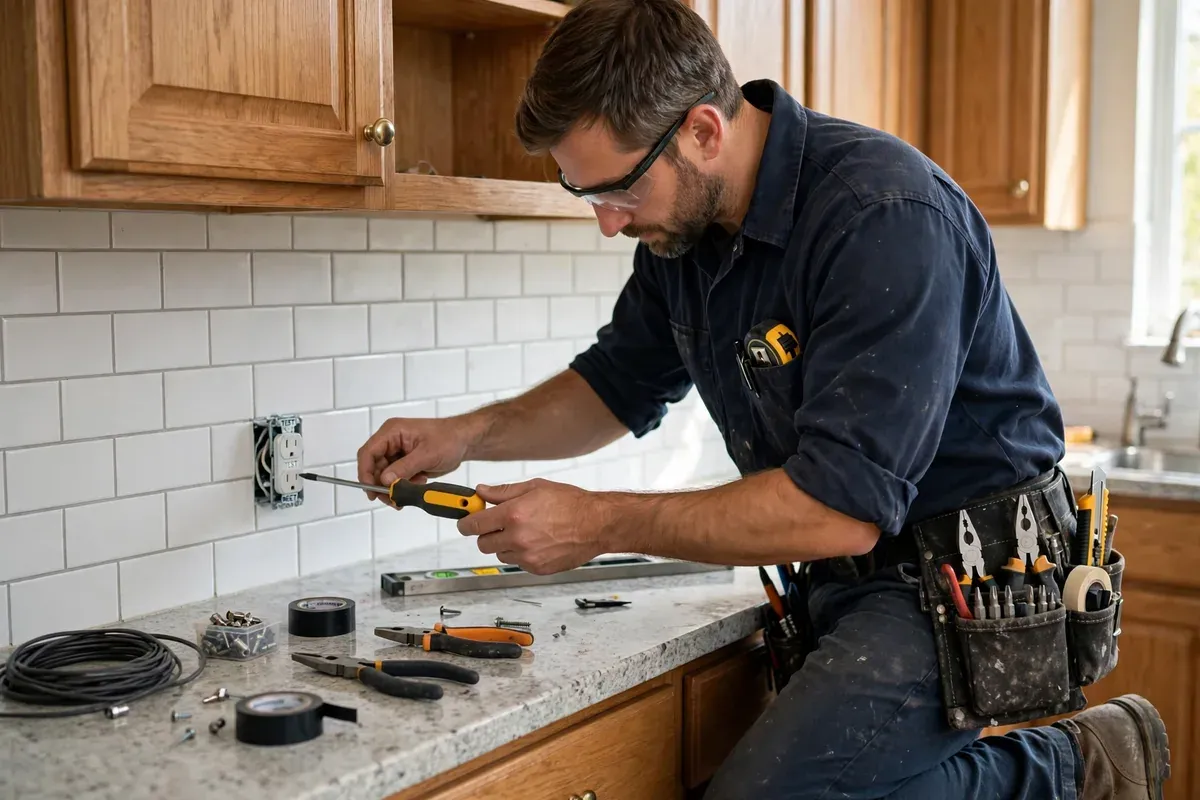
The visit starts at the outlet and works outward. With the circuit off, the electrician opens the box and checks the connections: whether the wires are tight on the screws, whether a push-in connection has loosened, whether the device shows scorching or melting, and whether the wiring behind it is copper, aluminium, or an older type that changes the repair. The breaker for that circuit is tested too, and the load on the circuit is measured, because a warm outlet can be the symptom of an overloaded circuit rather than a faulty outlet — and replacing the outlet on an overloaded circuit is money spent on the wrong fix.
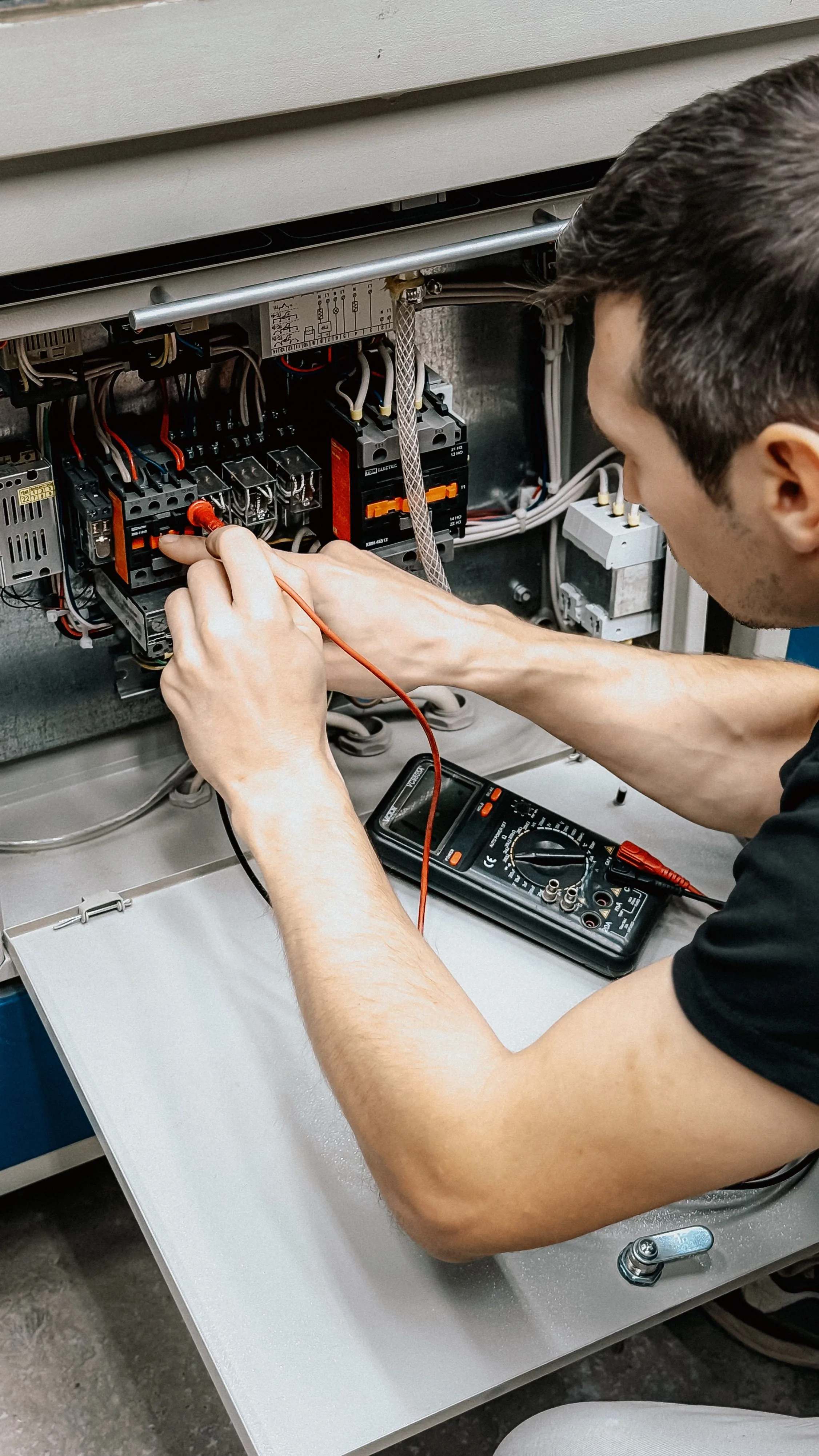
The check does not stop at the one outlet. The other outlets on the same circuit are tested, because a loose connection at one box can make a second outlet on the same circuit run warm, and because a fault that shows up in two places points to the circuit rather than to one device. The panel is checked for the same reason: a warm outlet and a buzzing panel together point to a connection problem at the panel, and a panel that is itself one of the brands inspectors flag changes the conversation from a repair to a replacement. Our outlet and switch service covers the fitting work, and our wiring repair guide explains how a fault is traced when the problem is in the circuit rather than the device.
Not sure whether it can wait?
Repair, replace, or rewire: how the decision is made
Most warm outlets end in a repair: the outlet is replaced, the connections are remade properly — wires wrapped around the screws, not pushed into the back — and the circuit is tested before the visit ends. Where aluminium wiring is the cause, the repair is a connection made for aluminium, with a connector rated for aluminium wire, and the joint is built to stay tight through years of heating and cooling. That is a repair, not a workaround, and it is the fix the visit recommends when the wiring itself is sound and only the connections have failed.
A bigger answer fits when the fault is not at one outlet. A circuit that keeps overheating because it carries more than it was built for needs the load split across more circuits, not a new outlet. A panel with a damaged bus, or a panel brand that inspectors flag, needs the panel conversation rather than another device swap. And wiring that fails outlet after outlet, room after room, points toward a partial or full rewire rather than another single repair. The visit is honest about which it is: a repair that will run warm again in a month is not a repair. Our aluminium wiring repair page covers the aluminium case in full, and our GFCI versus AFCI guide explains why a GFCI will not save a warm outlet — it protects against shock, while heat from a loose connection is a different fault.
When a warm outlet is a same-day call
Some warm outlets can wait for a scheduled visit; others cannot. Call the same day when the outlet is hot rather than warm, when there is a burning smell or scorch marks, when the outlet buzzes, crackles, or sparks, when the breaker for that circuit trips again and again, or when the warmth has spread to the switch plate beside it or to the wall around the outlet. The same applies when more than one outlet on the same circuit feels warm: that points to the circuit, and a circuit fault is not a next-week job. If there is smoke or fire, call 911 first, then call us.
A warm outlet Fort Pierce homes show is still worth a prompt call even when none of those signs is present. Heat does not fix itself, and a connection that is loose today is looser in a month. Note which outlet it is, which room it is in, what was plugged in when you noticed it, and whether the breaker for that circuit has tripped — those four answers are what the call needs, and they are what the visit starts from. Our emergency guide covers what to do when an electrical fault turns urgent, and it is the page to read if you are unsure whether your outlet is a same-day call or a scheduled one. Call (772) 218-3629 any time; we are open 24/7, and same-day service is available.
Warm Outlet in Fort Pierce: What It Means and What to Do: frequently asked questions
Is a warm outlet dangerous?
Yes, treat it as a warning. Heat at an outlet means resistance where there should be none, and a loose connection that runs hot can damage the wiring behind the wall or start a fire. Stop using the outlet, switch the circuit off if you can do so safely, and call. If there is smoke or any sign of fire, call 911 first.
Why is my outlet warm even with nothing plugged in?
Because the heat is in the outlet or the wiring, not in the appliance. A loose connection, a worn outlet, or a fault on the circuit can run warm with nothing plugged in at all — and warmth with no load is a stronger warning, not a weaker one, because it points to the circuit rather than to something you plugged in.
Can I keep using a warm outlet if it still works?
No. An outlet that still works can still be a fault: the heat comes from a connection that is failing, and using the outlet keeps feeding that heat. Unplug what is in it, leave the circuit off if you can do so safely, and call. A warm outlet that still works is a repair waiting to happen, not a reason to wait.
What makes an outlet get hot?
The usual causes are a loose connection at the outlet, a circuit carrying more load than it was built for, a push-in connection that has loosened with age, a worn or damaged outlet, or aluminium wiring whose connections have loosened. The visit tells them apart by testing the outlet, the circuit, and the panel, rather than by guessing.
Should I switch the breaker off?
If you know which breaker feeds the outlet and you can reach the panel safely, yes — switch that circuit off and leave it off until the visit. If you are not sure which breaker it is, or the panel is warm, buzzing, or hard to reach safely, leave the panel alone and call. Never remove the panel cover.
What should I tell you when I call about a warm outlet?
Which outlet it is and which room it is in, whether it feels warm or hot, whether there is a burning smell, scorch marks, or buzzing, what was plugged in when you noticed it, and whether the breaker for that circuit has tripped. With those answers, the call ends with a clear scope and a visit time. Call (772) 218-3629, 24/7.
Ready to talk?