
Whole-Home Surge Protection vs Power Strips Fort Pierce
Whole home surge protection vs power strips Fort Pierce compared for panel units, outlet strips, joule ratings and layered cover in 34950 and 34946, including Lakewood Park and Fort Pierce North, so every circuit and every sensitive device is guarded.
Call Now to Speak to a Specialist
Open 24 hours a day, 7 days a week.
A whole-home unit at the panel guards every circuit in the home, while a power strip guards only the devices plugged into that one outlet — so the strongest setup is both, layered. A plain strip with no joule rating guards nothing at all. Call (772) 218-3629 before you rely on strips alone.
Whole home surge protection vs power strips Fort Pierce: the panel unit
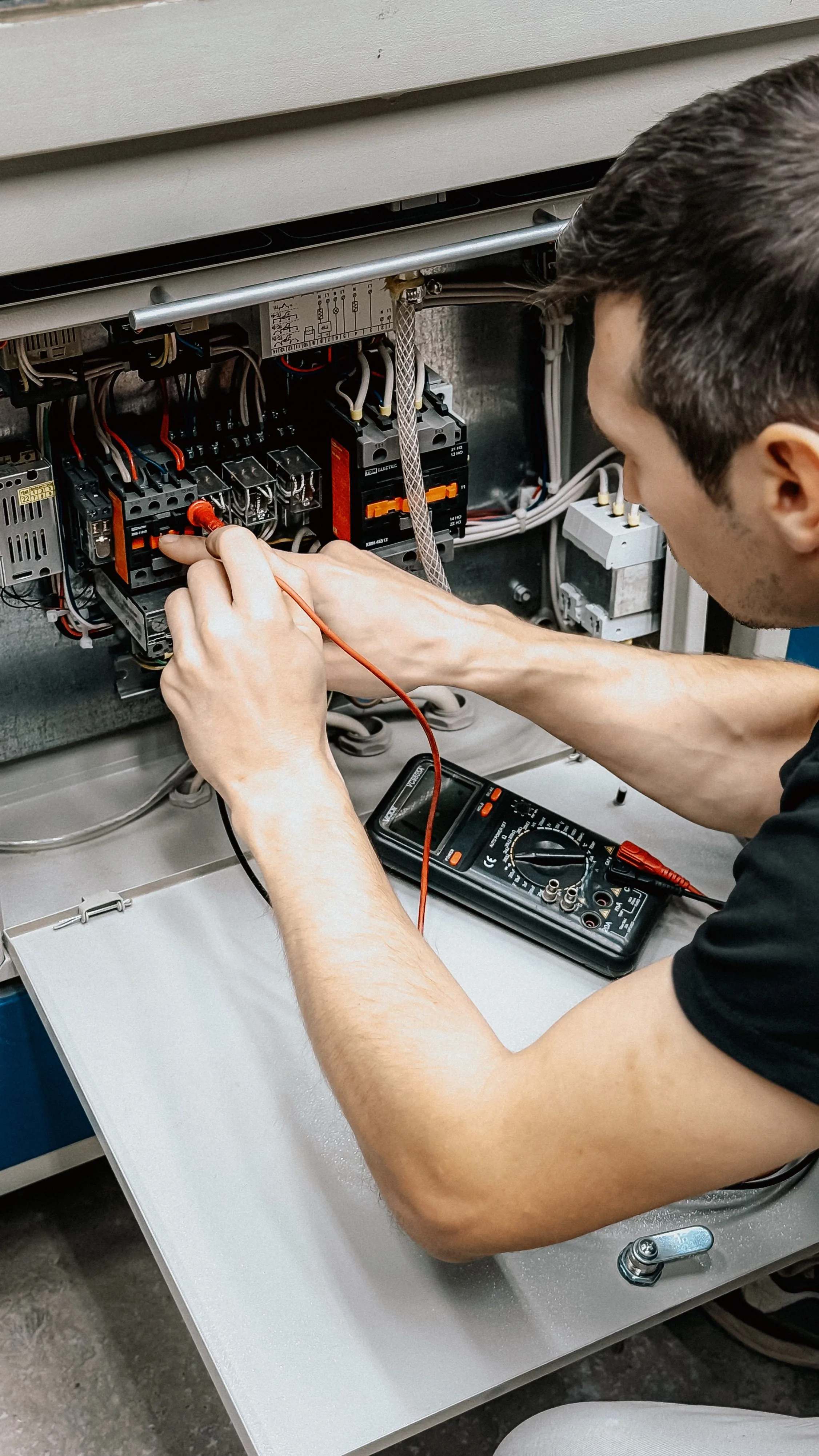
A whole-home surge protector, technically a Type 2 surge protective device, is wired at or inside the main electrical panel, across the incoming lines. Its job is to sit at the front door of the electrical system and clamp large surges — from the utility side or from nearby lightning — before they fan out to the branch circuits. Inside it, metal oxide varistors act as a gate that stays open at normal voltage and slams shut into a low-resistance path to ground the instant voltage climbs past its threshold, diverting the excess energy instead of letting it flood the home.
That position is the whole point. Because it sits before the circuits, one panel unit guards every outlet, every circuit and every hardwired appliance in the home at once: the HVAC system, the water heater, the built-in oven, the garage door opener, and everything plugged into every outlet. Our whole-house surge protection service in Fort Pierce covers the panel fitting itself, and our whole-house surge protection and Florida lightning guide explains what panel protection can and cannot do when lightning is near.
What a power strip does, and the plain-strip trap
A plug-in surge strip sits at the outlet, right where the electronics live, and uses the same varistor technology in a smaller package. It earns its place in two ways: it clamps the smaller external spikes that slip past the panel unit or were never large enough to trip its threshold, and it catches the internal surges generated close by, when motors such as an air conditioner compressor or a refrigerator cycle on and off. For a desk, a television or a home office, that outlet-level layer is genuinely useful.
But here is the trap many homes fall into: many products sold as power strips are not surge protectors at all. A basic power strip is nothing more than extra outlets on a cord, a splitter with no protective components inside. Plug expensive electronics into one of those and you have convenience and zero surge protection. Check before you trust a strip: a real surge protector carries a joule rating and usually a protection-status light. If it has neither, it is a splitter, not protection, whatever the packaging suggested.
Surge protection questions in Fort Pierce?
Whole-home unit vs strip, side by side
Put the two side by side and the difference is coverage, not just size. The panel unit protects the whole home from one location, handles the large surges, and needs a licensed electrician to install, because it is wired into the panel. The strip protects one outlet, handles small surges, plugs in with no install, and wears out faster because its smaller components absorb less energy over their life. Neither figure is a reason to pick one and skip the other: the panel unit cannot sit at your desk, and the strip cannot guard the air conditioner wired straight into the panel.
That is why the strongest setup is layered. The panel unit does the heavy lifting on large incoming surges, and quality strips mop up at the most sensitive electronics. Our surge protector installation cost factors guide explains what moves a panel-unit quote — device type, panel work, layers and inspection — and our surge protection checker tool walks through which parts of a home are already covered and which are not.
Where strips alone leave a Fort Pierce home exposed
Strips alone leave three gaps that matter on the Treasure Coast. First, hardwired equipment: no strip can protect an HVAC system, a water heater or a built-in appliance, and those are among the most expensive items a surge can damage. Second, size: a serious nearby lightning surge or a large utility-side spike can overwhelm a small strip outright, while a panel unit is built for far larger energy. Third, silent wear: varistors degrade with every surge they absorb, and a strip whose protection has worn out often looks exactly like a working one, unless its indicator light has gone out and someone notices.
Whole home surge protection vs power strips Fort Pierce is therefore not a contest with one winner. A home with only strips is guarded at a few outlets and nowhere else; a home with only a panel unit is guarded everywhere at the panel level but has no second layer at its most sensitive gear. The layered home has both, and that is the setup worth aiming for. If breakers are also tripping when large loads run together, our breaker keeps tripping guide explains what that symptom points to, and the Fort Pierce Electric Pros homepage lists the full range of repair and panel work we cover.
What to have ready when you call
- Whether the home already has a panel surge unit, and whether its indicator light, if any, is still lit.
- Which electronics matter most: computers, televisions, networking gear, and any home office equipment.
- Whether the home has hardwired equipment worth guarding, such as HVAC, a water heater or a garage door opener.
- Whether surges have already caused damage, or breakers trip when motors cycle on.
- Your panel's brand and size, so the call can settle whether a panel unit fits as the panel stands.
A whole home surge protection vs power strips Fort Pierce call with those five answers ends with a clear layered plan, not a guess. Exact price and timing are confirmed on the call, and the panel unit is fitted by a licensed electrician — panel work is never a do-it-yourself job.
Whole-Home Surge Protection vs Power Strips Fort Pierce: frequently asked questions
What is the difference between whole-home surge protection and a power strip in Fort Pierce?
Whole home surge protection vs power strips Fort Pierce comes down to where each device sits: a whole-home unit is wired at the main panel and guards every circuit in the home, while a power strip guards only the devices plugged into that one outlet. The panel unit catches large surges as they enter; the strip catches smaller spikes at the outlet. Neither replaces the other.
Does a power strip protect my whole home?
No. A power strip protects only what is plugged into it, and a plain power strip with no surge rating protects nothing at all — it only adds outlets. Hardwired equipment such as an HVAC system, a water heater, a built-in oven and a garage door opener can never plug into a strip, so a strip alone leaves them unguarded.
Do I need both a whole-home unit and surge strips?
For the strongest setup, yes: layered protection. The panel unit handles the large incoming surges, and quality point-of-use strips add a second layer at sensitive electronics such as computers, televisions and networking gear, catching smaller spikes that slip past the panel unit and surges generated inside the home when motors cycle.
How do I tell a surge strip from a plain power strip?
A real surge strip carries a joule rating, which states how much surge energy it can absorb over its life, and usually a protection-status light that stays lit while its protection is still working. A plain strip has neither, because it absorbs nothing. If your strip has no joule rating and no indicator light, treat it as extra outlets only.
Do surge protectors wear out?
Yes. The metal oxide varistors inside both panel units and strips absorb surge energy and degrade a little with every event, so protection fades over time and after large hits. A strip whose indicator light has gone out, or a unit that has taken a major nearby lightning surge, should be checked and replaced — call (772) 218-3629 and we will check what is still protecting the home.
How much does whole-home surge protection cost in Fort Pierce?
There is no fixed figure, because the home decides it: the panel type and room, the device chosen, and whether point-of-use strips are added at the same visit. Call (772) 218-3629 for your exact range and a written price before work starts; cost factors, not invented prices, are what a web page can honestly give.
Ready to talk?