
Expand Your Breaker Panel or Upgrade It in Fort Pierce
To expand breaker panel Fort Pierce capacity, first work out whether the panel is short of spaces or short of power. For homes in ZIP 34950 and 34946, from Downtown to Fort Pierce North, here is how the visit decides between a subpanel, tandem breakers, and a full upgrade.
Call Now to Speak to a Specialist
Open 24 hours a day, 7 days a week.
When you need to expand breaker panel Fort Pierce capacity, the first question is whether the panel is short of spaces or short of power. A subpanel or tandem breakers fix a shortage of spaces; only a panel upgrade fixes a shortage of capacity — and the load calculation, not the empty slots, decides which one your home needs.
Spaces or capacity: the two different problems
A panel that cannot take another circuit has one of two problems, and they are fixed differently. The first is a shortage of spaces: every breaker slot is filled, but the service — the total power the house can draw — still has room. The second is a shortage of capacity: the home’s calculated load is already at or near what the service can deliver, whether or not any slots are empty. Counting empty slots answers the wrong question, because a panel can be full of breakers while the service has room, and a panel can have empty slots while the load is already at the limit.
That is why the visit starts with a load calculation, not a slot count. The calculation adds up what the house actually runs — air conditioning, range, dryer, water heater, and whatever new load is planned — and measures it against the main breaker size. If the total fits with room to spare, the problem is spaces, and to expand breaker panel Fort Pierce capacity the visit adds a subpanel or tandem breakers. If the total is already at the limit, no amount of extra spaces helps, and only an upgrade solves it. Our 100-amp vs 200-amp service guide explains what those sizes mean, and our electrical panel upgrade page covers the capacity question in full.
The three ways to expand a panel
When the service has room, there are three ways to make it. Tandem breakers — sometimes called space-saver or twin breakers — put two 120-volt circuits into a single slot, and swapping one standard breaker for a tandem frees a slot for the new circuit. They only belong in a panel whose label lists them as accepted; a panel that was never rated for tandem breakers must not take them, and the visit checks the label before recommending them. A subpanel is the second route: a smaller breaker box fed from a double-pole breaker in the main panel, holding the new circuits in one place. It suits a cluster of new circuits in one area — a garage, a workshop, a room addition, or an EV charger — and our subpanel installation page covers that work.
The third route is a same-size panel swap: replacing the main panel with a larger one that holds more breaker spaces, without changing the service size. It fits a home whose service is adequate but whose panel is small, old, or out of spaces in a way a subpanel cannot tidy. All three routes add spaces; none of them adds capacity. Every amp a subpanel or a tandem breaker delivers still comes out of the main service, so the load calculation still has to fit — expanding a panel never manufactures new power.
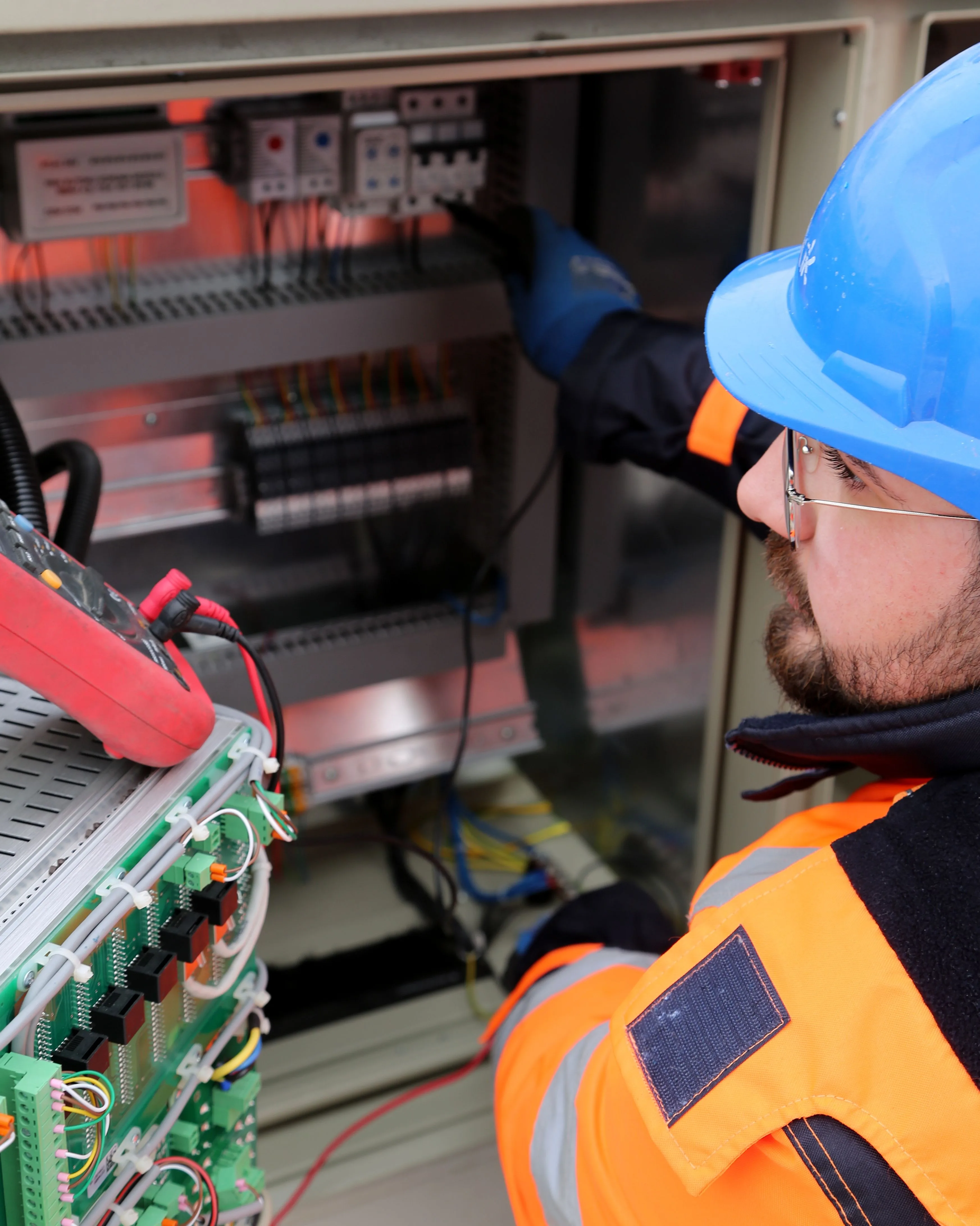
A panel that is already full, or a new load that needs room?
When expanding is the right answer
Expanding is the right answer when the load calculation shows headroom. The signs are practical: the main breaker is 200 amps and the calculated load sits well under it; the panel is in good condition, with no heat damage, no corroded bus, and breakers that hold; and the new circuits serve one area, so a subpanel keeps the work tidy. A homeowner adding a handful of circuits — a dedicated circuit for a home office, a garage circuit, or a single EV charger on a panel with room — is usually an expansion job, and the visit confirms it with the calculation rather than guessing from the slot count.
Expanding also fits when the new load is modest and the future is settled. If no further big loads are planned — no hot tub, no second EV charger, no tankless water heater — a subpanel or a pair of tandem breakers can carry the home for years. The visit still asks what comes next, because an expansion that fits today and blocks tomorrow is the wrong saving. When the answer is expansion, the work is smaller, faster, and cheaper than an upgrade — but only because the service already had the room.
When only an upgrade solves it
An upgrade is the answer when the total demand already exceeds what the service can deliver. The usual shape is a 100-amp service in a home that now runs central air, an electric range, a dryer, and a water heater — and then adds an EV charger, a hot tub, or a workshop full of tools. The breakers trip under normal use, not just in storms, and no rearrangement of slots changes the arithmetic: the house needs more power than the service entrance can supply. Our panel upgrade cost factors guide lists what moves that quote, and our EV charger panel capacity guide shows how the same question plays out for a single charger.
An upgrade is also the answer when the home is about to grow. A room addition, a tankless electric water heater, or a second EV charger can each push a borderline service over the line, and doing the upgrade before the new load arrives is cheaper than doing it after the breakers start tripping. The upgrade replaces the main panel and usually raises the service size — most often from 100 amps to 200 — along with the meter base and service conductors. It solves both problems at once: more spaces and more power.
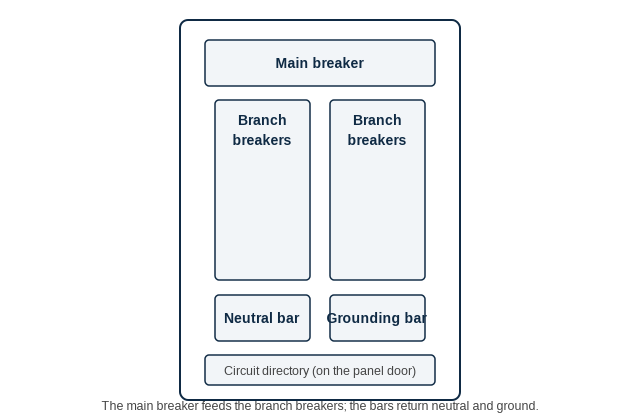
Not sure whether your panel needs more spaces or more power?
The stop signs: when replacement comes before either choice
Some panels are not candidates for expansion at all. A Federal Pacific Stab-Lok or Zinsco panel, a fuse box instead of breakers, a panel with heat damage, a corroded bus bar, or breakers that buzz, run warm, or smell of burning — each of these is a stop condition, not a detail. Expanding such a panel adds circuits to equipment that should not carry the ones it already has. Our Federal Pacific vs Zinsco guide explains why those two brands are replace-first panels, and our signs your house needs rewiring guide covers the wider warning signs.
The same rule covers a panel that is simply worn out. Bus bars corrode, connections loosen, and breakers that once held tight get sluggish with age. A panel nearing the end of its working life, already carrying tandem breakers it was never listed for, or showing scorch marks around a breaker, needs replacement before any expansion is discussed. Never open the panel yourself to check any of this — the inspection is the electrician’s job, and the visit reads the label, the bus, and the connections safely.
What the visit checks before recommending anything
The visit checks four things before recommending expansion or upgrade. First, the panel itself: brand, age, condition, and whether its label lists tandem breakers. Second, the main breaker size and the load calculation — what the house draws today against what the service can supply. Third, the circuits that already exist, and whether any of them are doubled up, mislabelled, or carrying loads they were never meant to carry. Our how to read breaker panel labels guide explains what the directory card and the main breaker number tell you, and our circuit breaker replacement guide covers what a failing breaker looks like.
Fourth, the plan: what new loads are coming, and when. An EV charger, a workshop, a tankless water heater, and a hot tub each change the calculation differently, and the recommendation has to fit the next few years, not just the next circuit. The visit ends with a clear recommendation — expand, upgrade, or replace first — and a written price for the work. Exact price, timing, and availability are held for the call, because the answer depends on the panel and the plan, not on a catalogue.
What moves the quote, and what to have ready when you call
What moves the quote is the route chosen, the panel work involved, the length of any new cable run, and whether the job needs a permit and inspection. A pair of tandem breakers on a listed panel is the simplest job. A subpanel in a garage is the middle of it. A full service upgrade, with a new meter base and service conductors, is the other end — and the difference between the three is the panel and the plan, not the breaker. Our panel upgrade cost factors guide lists what moves a quote, and the visit turns those factors into a written price for your address.
When you call to expand breaker panel Fort Pierce capacity, bring your panel brand and size, the main breaker number, what new load you are adding, and whether any breakers trip today. Tell us your street and ZIP — 34950 or 34946 — and whether the panel is Federal Pacific, Zinsco, or a fuse box, if you know. Call (772) 218-3629 any time; we are open 24/7, and same-day service is available. Our electrical panel upgrade page and our subpanel installation page cover the two routes in full, and the Fort Pierce Electric Pros homepage covers everything else we do in Fort Pierce.
Expand or Upgrade Your Breaker Panel? Fort Pierce: frequently asked questions
Does adding a subpanel give my home more power?
No. A subpanel adds breaker spaces by branching a feeder circuit off the main panel into a second box. It does not increase the total power the house can draw — every amp the subpanel delivers still comes out of the main service. A subpanel solves a shortage of spaces, not a shortage of capacity.
Are tandem breakers safe?
Only in a panel whose label lists them as accepted. Tandem breakers put two 120-volt circuits into one slot, which is fine when the panel was rated for them. In a panel that was never listed for tandem breakers, they are a safety and code problem. The visit checks the panel label before recommending them.
How do I know if my service is 100 amps or 200 amps?
The main breaker number is the service size, and it is printed on the main breaker itself. Our how to read breaker panel labels guide explains where to find it. The number alone does not settle the question, though — the load calculation decides whether that size still fits the house.
Can I add a subpanel for an EV charger?
Yes, when the load calculation fits. An EV charger is a large load, so the visit checks the panel capacity first. If the service has room, a subpanel gives the charger its own circuits. If the service is already at its limit, the answer is an upgrade instead. Our EV charger panel capacity guide explains the check.
My panel is Federal Pacific. Can I still expand it?
No — replace it first. Federal Pacific and Zinsco panels are replace-first panels, and expanding one adds circuits to equipment that should not carry the ones it already has. Our Federal Pacific vs Zinsco guide explains why, and the visit confirms the brand before any other work is discussed.
What should I tell you when I call about expanding my panel?
Your panel brand and size, the main breaker number, what new load you are adding, and whether any breakers trip today. Your street and ZIP — 34950 or 34946 — helps too. With those answers, the call ends with a clear recommendation and a written price. Call (772) 218-3629, 24/7.
Ready to talk?