
Home Battery vs Generator in Fort Pierce
Home battery vs generator Fort Pierce is the backup-power question most homeowners ask before hurricane season: one stores energy and runs silent, the other burns fuel and runs for days. For homes in ZIP 34950 and 34982, from Maravilla to Fort Pierce South, here is how the choice is made.
Call Now to Speak to a Specialist
Open 24 hours a day, 7 days a week.
A battery carries the essentials through a short outage and switches over in near silence; a standby generator carries the whole house through a multi-day outage for as long as its fuel lasts. The right choice depends on how long your outages run, what must stay on, and how much upkeep you will do.
What each one actually does in an outage
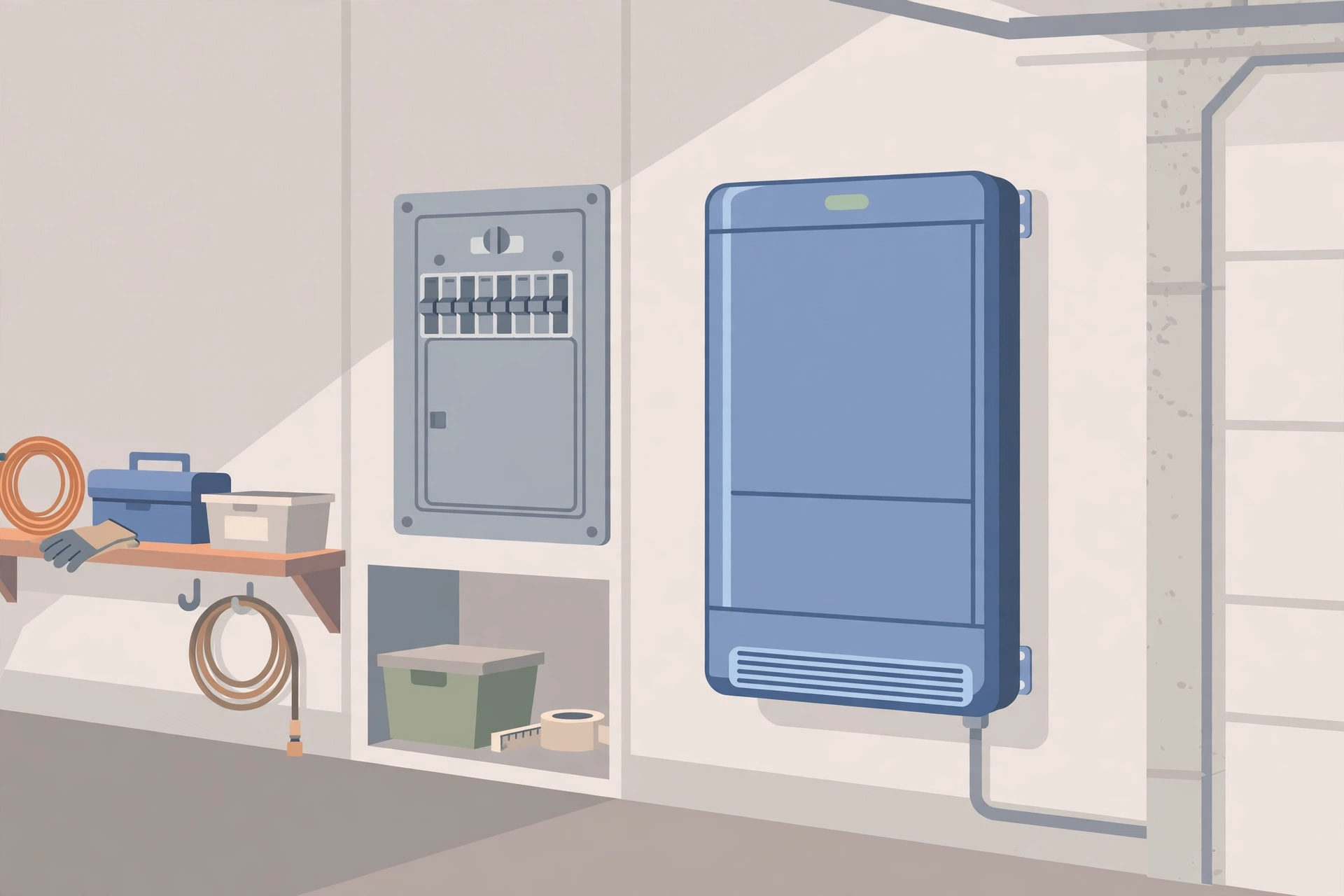
A home battery stores energy from the grid, or from solar panels on the roof, holds it, and discharges it the moment the grid drops. The switchover is near-instant, it runs silent, and it gives off no exhaust, which is why the unit usually mounts on a garage wall beside the panel. Our home battery backup guide covers what a battery installation involves and how it is sized by the circuits it must carry.
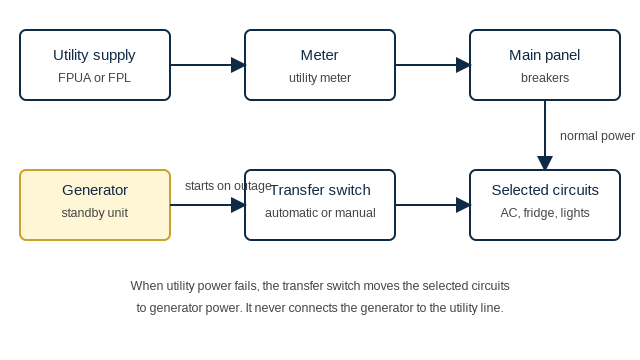
A standby generator burns natural gas or propane, sits outside the home, and starts itself seconds after the grid fails through an automatic transfer switch. It keeps running for as long as its fuel lasts, which is what makes it the multi-day answer. If you are weighing a portable unit against a standby unit first, our portable vs standby generator guide compares the two machines side by side.
How long each one keeps the lights on
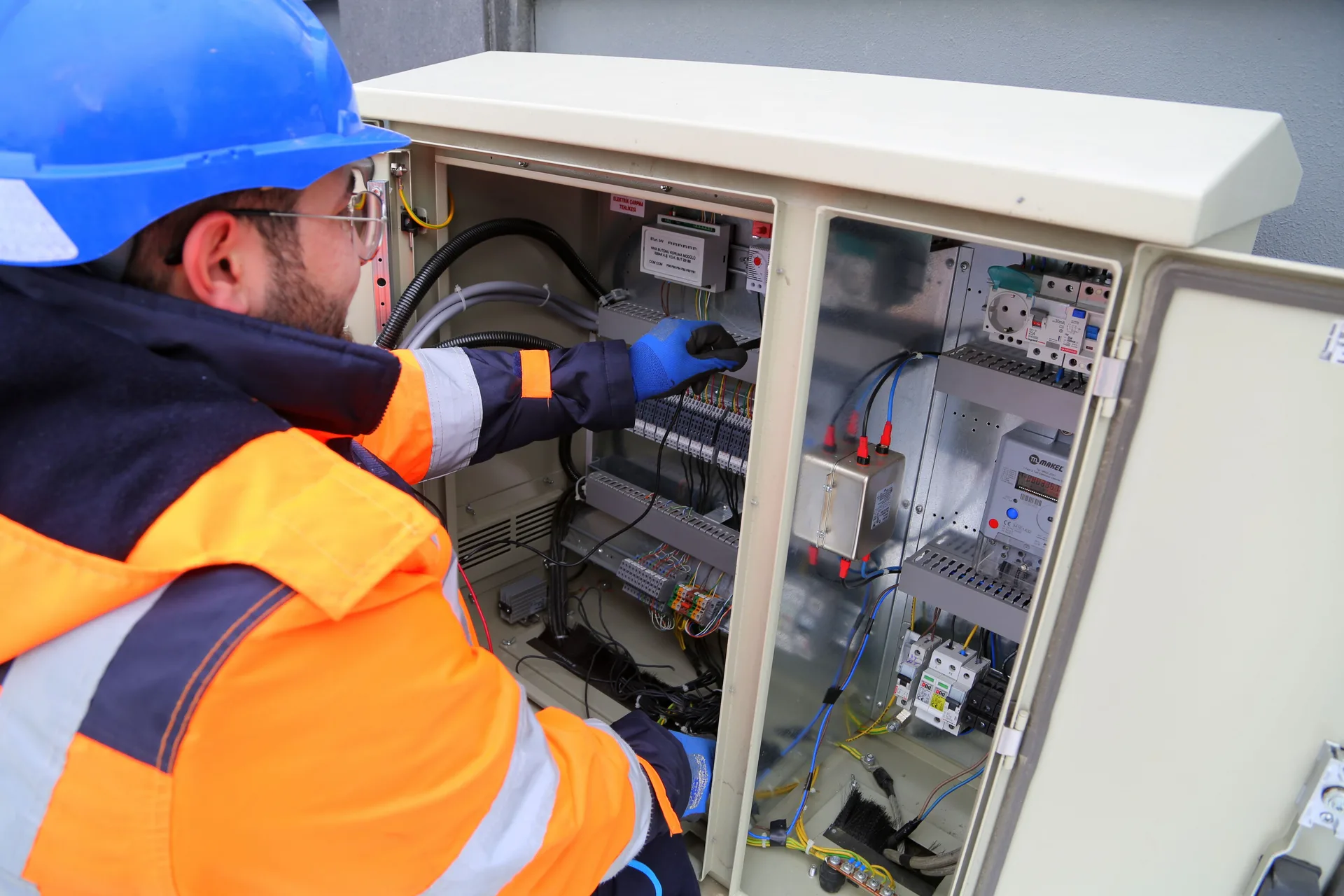
A battery on stored charge alone carries the essentials for hours, not days: refrigerator, lights, router, fans. Solar panels stretch that further by refilling the battery during the day. That is the honest limit of stored energy. It is a bridge across a short outage, not a week of whole-home power, and anyone selling it as the second is overselling it.
A standby generator carries a multi-day outage because its fuel keeps coming, so the question becomes which loads it must carry and in what order. Essentials come first: refrigerator, lights, router, fans. The big loads come second: air conditioning, water heater, EV charger. The load order decides the size of either system, and our home generator installation guide explains how sizing, the transfer switch, fuel, and testing fit together.
A battery for the short outages, or a generator for the long ones?
The noise, exhaust, and placement question
A battery is silent and gives off no exhaust, so it mounts on a garage wall and nobody in the house hears it working. A standby generator is an engine, so it lives outside, and noise and exhaust become placement questions: how far from bedrooms and neighbours, and which way the exhaust points. That placement is part of the quote, not an afterthought, and it is settled before anything is installed.
Two safety rules apply to every generator, portable or standby. A generator must never run indoors or in a garage, and it must never feed the house through a household outlet. Power goes through a proper transfer switch, which is what stops the generator from backfeeding into the grid and endangering line workers. Our transfer switch vs interlock kit guide explains how each one stops backfeed and which fits your panel.
Upkeep and the fuel plan
A battery asks for very little. There is no fuel to store, no oil to change, and no weekly exercise run to remember. It is checked during a service visit, and that is most of the upkeep there is, which suits a homeowner who wants backup power that mostly looks after itself.
A standby generator is a machine that has to be kept ready. It needs an annual service, a fuel plan that holds up when the gas supply is interrupted, and regular exercise runs so it starts when it is needed. Our generator installation companies guide explains what to ask before choosing an installer, and the service schedule is part of that conversation.
The hybrid: a battery for the gap, a generator for the long haul
Home battery vs generator Fort Pierce is not a contest with one winner. It is a question of outage length: the battery bridges the gap and carries short outages in silence, and the generator carries the multi-day ones that follow a hurricane. Many Fort Pierce homes pair the two, so the battery handles the first hours and the generator takes over for the days after.
Solar makes the pair stronger. A battery paired with solar recharges during the day, so a short outage can stretch much further, and the generator stays in reserve for the nights and the cloudy days. Our home battery backup guide covers how a battery works with new solar, or with panels that are already on the roof.
Not sure which backup fits your house?
Cost factors, not prices
What moves a battery quote is the capacity of the unit, the panel work it needs, and whether it pairs with solar. What moves a generator quote is the size of the unit, the fuel line, the transfer switch, and the placement: a long gas run or a tight side yard changes the work. Exact price, timing, and availability are held for the call, because both systems are sized to the house, not to a catalogue.
The honest way to compare them is by what each one buys you. A battery buys silent, instant backup for the essentials through a short outage. A generator buys days of whole-home power at the cost of fuel, noise, and upkeep. Our Generac cost factors guide lists the factors that move a generator quote, and our Generac generator installation page covers what the install itself involves.
What to have ready when you call
A home battery vs generator Fort Pierce decision is settled by four answers: how long your outages usually run, what must keep running, whether fuel or solar is the easier plan, and how much upkeep you want to do. Bring those answers to the call, along with your panel size and whether solar is already on the roof.
Those answers turn a call into a visit that starts with the right check, instead of a visit that starts by searching for the problem. Call (772) 218-3629 any time; we are open 24/7, and same-day service is available. For the battery side, our home battery backup installation page covers the service, our generator installation page covers the standby side, and the Fort Pierce Electric Pros homepage covers everything else we do in Fort Pierce.
Home Battery vs Generator Fort Pierce: frequently asked questions
Which is better for a hurricane outage, a home battery or a standby generator?
It depends on how long the outage runs. A battery carries the essentials through a short outage in silence and switches over almost instantly, and solar stretches it further. A standby generator carries the whole house through a multi-day outage for as long as its fuel lasts. For a hurricane, where outages can run for days, the generator is the multi-day answer, and a battery paired with it covers the first hours.
Can a home battery run the air conditioner?
The air conditioner is one of the biggest loads in the house, so it is the load that decides whether a battery can carry it. A battery sized for the essentials — refrigerator, lights, router, fans — will not carry a whole-home air conditioner through a long outage. The visit runs a load calculation first, then sizes the battery to the circuits it must actually carry.
Does a standby generator need a transfer switch?
Yes. An automatic transfer switch starts the generator seconds after the grid fails and moves the house between grid power and generator power. It is also what stops the generator from backfeeding into the grid. A generator must never feed the house through a household outlet, and it must never run indoors or in a garage.
Can a home battery work without solar panels?
Yes. A battery charges from the grid and discharges when the grid drops, with or without solar panels on the roof. Solar panels extend it by refilling the battery during the day, which is why many homeowners add a battery to panels they already have — but solar is an addition, not a requirement.
What upkeep does each one need?
A battery needs very little: no fuel to store and no exercise runs to remember, with a check during a service visit. A standby generator needs an annual service, a fuel plan, and regular exercise runs so it starts when it is needed. If you want backup power that mostly looks after itself, that difference matters.
What should I tell you when I call about backup power in Fort Pierce?
Your address in ZIP 34950 or 34982, how long your outages usually run, what must keep running — refrigerator, lights, router, fans, air conditioning — whether solar is already on the roof, and your panel size. With those answers, the call ends with a clear scope and a written price. Call (772) 218-3629, 24/7.
Ready to talk?