
Portable vs Standby Generator in Fort Pierce
Choosing a portable vs standby generator Fort Pierce home comes down to how long outages last, what must keep running, and who is home to start it. For homes in ZIP 34950 and 34946, this guide compares fuel, runtime, transfer switches, and sizing.
Call Now to Speak to a Specialist
Open 24 hours a day, 7 days a week.
A portable generator is the lower-cost, hands-on choice for essentials during a short outage; a standby generator is the permanent, automatic choice for whole-home or multi-day cover. The right pick depends on your outage pattern, your must-run list, and your panel — not on the size of the unit alone.
The two machines, side by side
A portable generator is a wheeled unit you store, then roll out when the power fails. It runs on gasoline — some models also take propane — and you start it by hand, fill it by hand, and feed the house through extension cords or, properly, through an inlet box and an interlock kit at the panel. It is built for essentials: the refrigerator, a few lights, fans, the router, and phone chargers. It is not built to run a whole house at once, and it will not start itself while you are away.
A standby generator is a fixed appliance that lives outside on a concrete pad, wired into your panel through an automatic transfer switch and fed by natural gas or a propane tank. When the grid fails it starts itself, waits a few seconds for the engine to settle, and moves the house onto generator power without anyone touching it. When the grid returns it switches back and shuts down. Our home generator installation guide walks through what a standby install involves, step by step — sizing, transfer switch, fuel, and testing — and this comparison does not repeat it here.
What must keep running decides the size
Both machines are sized the same way: from the list of what must keep running, not from the size of the house. Start with the essentials — refrigeration, a few lights, fans, the internet router, and, where it applies, a well pump or a medical-equipment circuit — then separate must-run from nice-to-have. The air conditioner is usually the largest starting surge, because motors draw two to three times their running watts at startup, and the size follows that surge. That list is the first step in any portable vs standby generator Fort Pierce comparison. Our Generac sizing guide explains the essential-circuits method in full.
That list is also what separates the two machines in practice. A portable generator covers a short essentials list for a few hours. A standby generator covers the same list for days, and a larger one covers the whole house, including the air conditioner, because it is sized from the same list with the same surge math. If the list includes central air, a well pump, or medical equipment, the portable option narrows fast — and if the list is a fridge, lights, and phones for a few hours, the standby option is more machine than the outage needs.
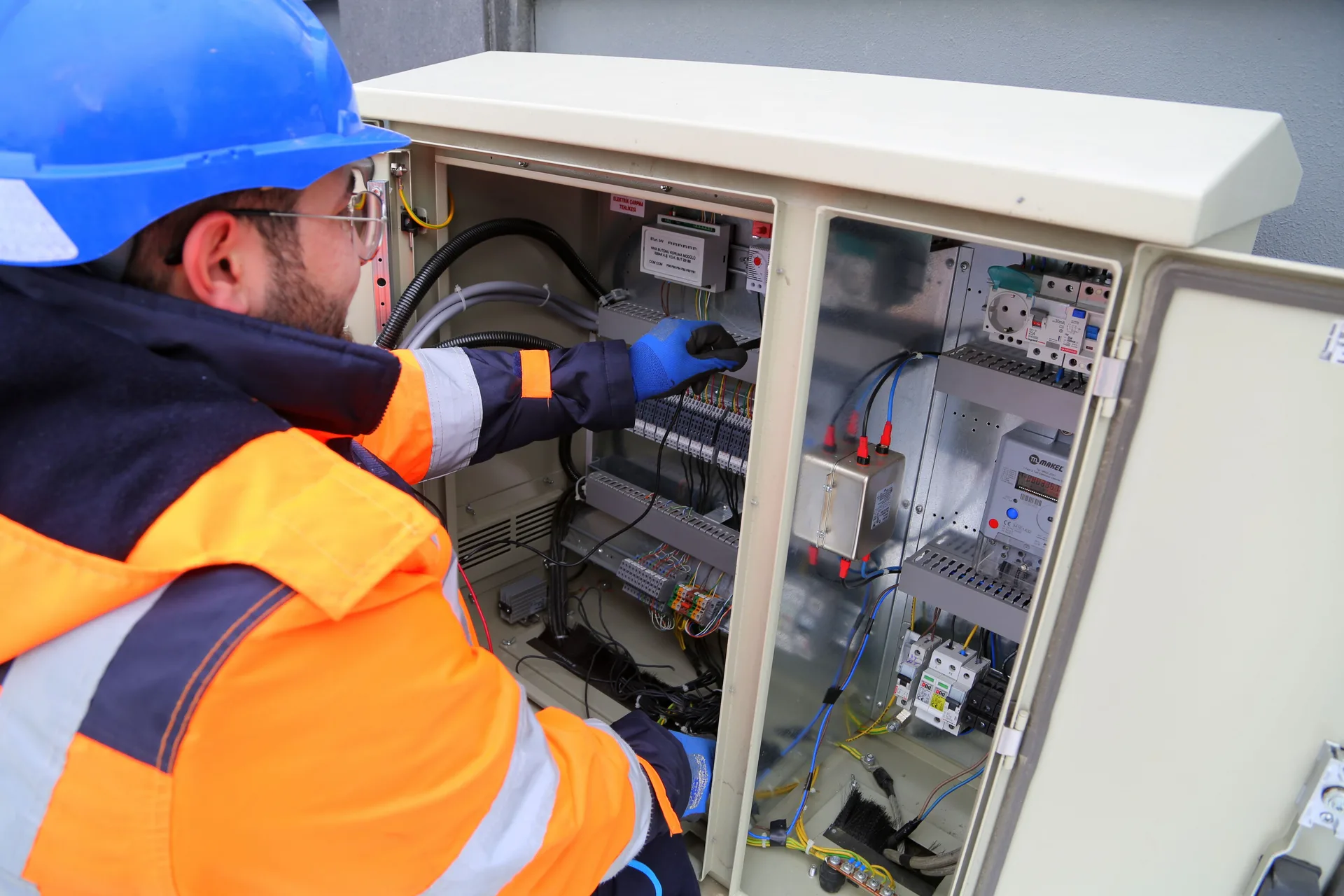
A portable unit for essentials, or a standby unit for the whole house?
Fuel: cans in the garage vs a line that never runs dry
A portable generator drinks gasoline from a tank you fill yourself, which means the runtime is the tank plus whatever fuel you stored — and refuelling means going outside in the storm, letting the unit cool, and pouring fuel in the dark. Gasoline stored for months goes stale without stabiliser, and a unit that sat all year may not start on the night it matters. That is the hands-on cost of the lower entry price.
A standby generator is fed by a gas line or a propane tank, so it runs as long as the fuel supply lasts — days, not hours — with no refuelling trips and no stored cans. The trade is that the fuel work is part of the install: the gas line, the tank siting, and the meter or tank capacity all have to be settled before the unit goes in. Our propane gas line guide covers tank siting, the line route, and who does the fuel work.
The transfer switch is the safety line
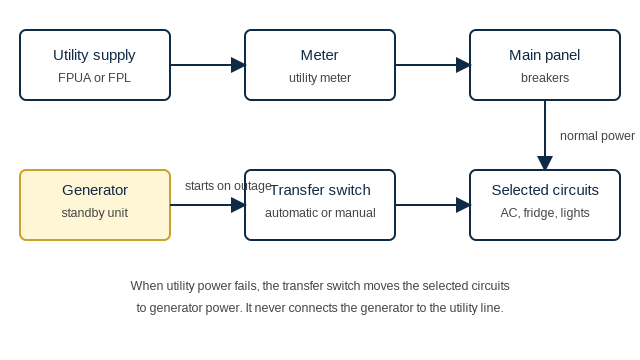
Whichever machine you choose, the power must reach the house through proper transfer equipment — never through a household outlet. Feeding a generator into a wall outlet, known as backfeeding, is dangerous and illegal: it can energise the lines outside your home and injure a lineworker, and it can destroy the generator when the grid returns. A portable generator connects through an inlet box on the outside wall and a listed interlock kit at the panel; a standby generator connects through an automatic transfer switch. Our transfer switch vs interlock kit guide explains how each one stops backfeed, which fits your panel, and who should run the sequence.
The switch is also where the two machines feel most different. With a portable unit, you are the switch: you roll it out, start it, plug in, and flip the interlock in the right order. With a standby unit, the automatic transfer switch does all of it, including the weekly exercise run that keeps the engine ready. That difference matters most when the outage starts while nobody is home, or in the middle of the night — the standby unit does not wait for anyone.
Where each one sits
A standby generator sits on a level pad outside, on high ground where water will not rise around it, with clear space on all sides for air and for servicing, close to the transfer switch and close to the fuel supply. Placement has to respect clearances to windows, vents, property lines, and the gas meter, and the exact distances are a question to confirm for the address — local rules decide them. Flood-prone and low-lying spots are the wrong place for a machine that must run during a storm.
A portable generator is stored dry and run outdoors, at least 20 feet from doors, windows, and vents, with the exhaust pointing away from the house — the distance the U.S. Consumer Product Safety Commission recommends. It must never run indoors, in a garage, or under a covered porch, even with the door open: carbon monoxide is odourless, and it kills in a storm season every year. Our portable generator safety guide covers placement, carbon monoxide alarms, cords, refuelling, and shutdown in full.
Not sure which machine fits your outage pattern?
Upkeep, and what goes wrong
A portable generator asks for attention between storms: stabilised fuel, fresh oil, a start-up run every few months, and a check that the cords and the inlet box are sound. A standby generator asks for a professional eye instead — the weekly exercise cycle that circulates oil, charges the battery, and runs self-diagnostics, plus an annual service that covers oil and filter, air filter, spark plugs, a battery test under load, and a transfer-switch test. A missed or failed exercise is diagnostic data, not a nuisance: check the controller and the fault codes. Our generator exercise and battery guide covers the upkeep calendar, and our generator repair signs guide covers what each warning sign points to.
The most common failure on either machine is the same one: it was not ready when the outage arrived. A portable unit with stale fuel and a dead pull cord, or a standby unit with a battery that was never replaced on schedule — the battery is replaced every two to three years, because a dead battery is the most common no-start cause. Readiness is a calendar, not a hope, and the calendar is the same whichever machine you own.
Cost factors, not prices
The installed cost of either option moves on the same factors: the size of the unit, the transfer equipment, the fuel work, the pad, the panel work, and the permit and inspection route. A portable unit's entry price is lower because there is no permanent install — but the inlet box and interlock kit, the cords, and the fuel storage are real costs of doing it safely. A standby unit's price is higher because the install is the product: engine, switch, fuel line, pad, and panel work, all permitted and inspected. Our Generac cost-factors guide explains what moves a standby quote, and our generator installer comparison guide explains how to compare installer quotes like for like. Exact prices are held for the call, because the size, the fuel route, and the panel differ by home.
There is also a third option worth one line: a home battery. It is silent, needs little maintenance, and recharges from solar, but it covers chosen circuits for hours to a day, not a whole house for a week. Our home battery backup guide compares stored power with generator power, and some homes end up with both — the battery for the short outage, the generator for the long one.
Which one fits your Fort Pierce home?
Choose a portable generator if your outages are short, someone is home to run it, and the must-run list is essentials only — fridge, lights, fans, router, phones. Choose a standby generator if outages run for days, if the list includes central air, a well pump, or medical equipment, or if the house is empty when storms hit. A portable vs standby generator Fort Pierce decision is really a decision about your outage pattern, and the pattern is the thing to get honest about before you buy.
When you call, bring the list: what must keep running, how long your longest recent outage lasted, whether anyone is home during the day, and your panel's size and brand. With those answers, the call ends with a clear scope and a written price — and with the machine that fits the house, not the one that looked biggest in the catalogue. Call (772) 218-3629 any time; we are open 24/7, and same-day service is available. For the wider picture, our generator installation service and our Generac generator installation service cover the standby route, and our automatic transfer switch installation service covers the switch that makes either machine safe.
Portable vs Standby Generator in Fort Pierce: frequently asked questions
Can a portable generator power my whole house?
Not in the usual sense. A portable generator covers an essentials list — refrigerator, a few lights, fans, router, phone chargers — fed through an inlet box and an interlock kit. Whole-home cover, including central air, needs a standby generator sized from a load calculation, because the starting surge of the air conditioner alone is more than a portable unit carries.
Is a standby generator worth it in Fort Pierce?
It depends on your outage pattern. If outages run for days after a storm, if the must-run list includes central air, a well pump, or medical equipment, or if the house is empty when storms hit, a standby generator earns its place. If outages are short and someone is home to run a portable unit, the portable option may cover the house for less. That is the portable vs standby generator Fort Pierce question in one line: how long are your outages, and what must keep running through them?
What is the difference between an interlock kit and a transfer switch?
Both stop backfeed, and both are the only safe way to connect a generator to a house. An interlock kit is a listed device at the panel that lets a portable generator feed chosen circuits through an inlet box, with you doing the switching. An automatic transfer switch moves the house onto a standby generator by itself, seconds after the grid fails. The panel and the machine decide which one fits.
How far from the house must a portable generator run?
At least 20 feet from doors, windows, and vents, with the exhaust pointing away from the house — the distance the U.S. Consumer Product Safety Commission recommends. Never run one indoors, in a garage, or under a covered porch, even with the door open, and fit carbon monoxide alarms in the house. Our portable generator safety guide covers the full placement and shutdown routine.
Does a standby generator need a permit?
Panel and switch work usually needs a permit and inspection, and the exact route is a question to confirm for the address, because it depends on the job and the jurisdiction. The visit settles it before any work starts, and the quote covers the permit and inspection steps that apply.
What should I tell you when I call about a generator?
Your address in ZIP 34950 or 34946, your must-run list, how long your longest recent outage lasted, whether anyone is home during the day, your panel's size and brand, and whether natural gas or propane is available at the address. With those answers, the call ends with a clear scope and a written price. Call (772) 218-3629, 24/7.
Ready to talk?