
Tankless Electric Water Heater Electrical Requirements in Fort Pierce
Tankless electric water heater Fort Pierce homes consider needs more than a wall and a water line: an electric unit runs on several dedicated 240-volt circuits, and the panel and service must carry the load. In Lakewood Park, ZIP 34946 and 34950, the visit starts with a load calculation.
Call Now to Speak to a Specialist
Open 24 hours a day, 7 days a week.
An electric tankless water heater heats water as it flows, so it draws a lot of power while it runs — a whole-house unit can draw as much as most of a home's service. Tankless electric water heater Fort Pierce installations start with the model's own specification sheet and a load calculation. Exact price is confirmed on the call.
Why an electric tankless heater needs so much power
A standard tank water heater keeps a tank of water hot around the clock, and it does that work slowly, on a single circuit. An electric tankless heater has no tank: it heats water as it flows through the unit, which means it must deliver all of its heat in the seconds the water passes through. That is why a whole-house electric tankless unit draws so much power while it runs — roughly 100 to 150 amps, depending on the model, which is most of what a typical home service can supply. The number is not a flaw in the unit; it is the price of heating water on demand, and it is the reason the electrical work matters more than the plumbing.
The contrast with a tank heater is the quickest way to see it. A standard electric tank heater runs on one 30-amp to 40-amp circuit, because it heats slowly and stores the result. A whole-house electric tankless unit splits its heating across several elements, each on its own dedicated circuit, and the total draw is several times larger. A gas tankless unit is different again: it burns gas to heat the water, so it draws only a small amount of electricity for its controls and ignition, and its electrical needs are a single small circuit — but it needs a gas line sized and connected, and that fuel work is confirmed on the call.
The circuits, breakers and wire a whole-house unit needs
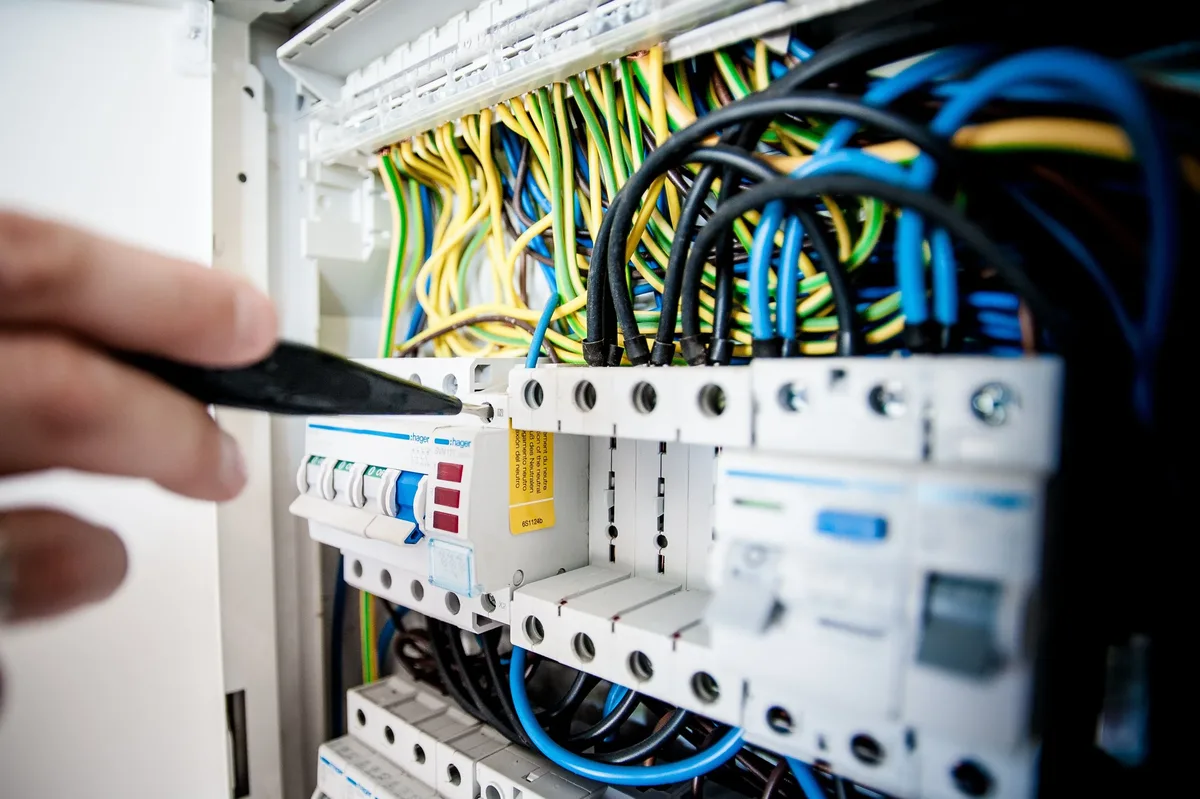
A whole-house electric tankless unit runs on 240 volts, and it needs several dedicated circuits — two, three, or four double-pole breakers, depending on the model, each on its own wire run back to the panel. That is six to eight breaker spaces in the panel, and the wire for each circuit is sized to the model's own specification sheet, not to a rule of thumb. The breakers are sized the same way: the electrician applies the continuous-load rule, which sizes a breaker at 125% of the load it will carry, so a circuit that draws 40 amps needs a 50-amp breaker. The model's manual is the controlling reference throughout — there is no universal breaker or wire size for every electric tankless heater, and a size taken from another model is a guess.
The cable route matters as much as the breaker count. Each circuit needs its own run from the panel to the unit, and long runs, tight spaces, and outdoor or garage locations all add work. The unit also needs a disconnecting means — a way to isolate it from power for service — as the model's manual and the local rules require. None of this is a homeowner job: the circuits are 240-volt, the panel work is live, and the sizing depends on a load calculation the visit performs. Tankless electric water heater Fort Pierce installations start with the specification sheet and the panel, not with a breaker bought on a guess.
Thinking about a tankless heater?
Will your panel and service carry it?
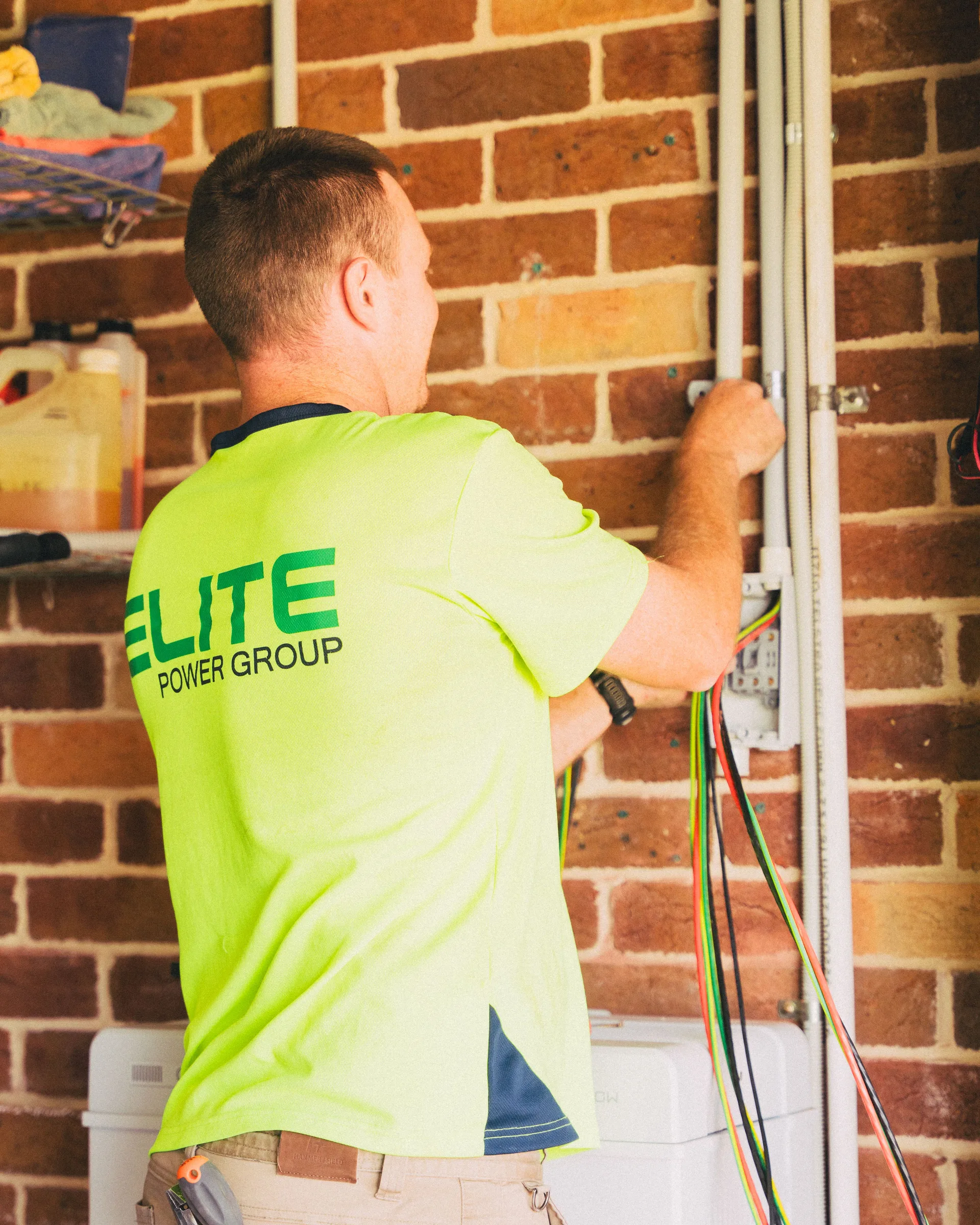
The question every tankless electric water heater Fort Pierce installation turns on is whether the home's service and panel can carry the unit alongside everything else the house runs. The visit answers it with a load calculation: the range, the dryer, the air conditioning or heat pump, the water heater, and any EV charger are added up under the code's rules for how much of each to count, and the total is compared with the size of the main service, printed on the main breaker at the top of the panel. A 200-amp service does not mean 200 spare amps — most of it is already spoken for — and a home that already runs an EV charger, a pool heater, and a large air conditioner may have little room left for a unit that draws 100 amps or more.
A 100-amp service is usually not enough for a whole-house electric tankless unit, and the visit will say so plainly where that is the case. A 200-amp service is often workable, but only the calculation decides — a 200-amp panel with no spare breaker spaces, or one that is already carrying heavy loads, can still need work. The answers are a subpanel, a service upgrade, or a smaller unit that fits the home's capacity, and the visit lays out which one fits before anything is bought. Our 100-amp versus 200-amp guide explains how the load calculation settles the service size, and our panel upgrade page covers what a service upgrade involves.
Point-of-use units are a different job
Not every electric tankless heater is a whole-house unit. A point-of-use unit serves one tap or one bathroom — a guest bathroom, a garage sink, a small addition — and it needs a single dedicated circuit, often a single 60-amp breaker, rather than the several circuits a whole-house unit needs. The draw is far smaller, the panel space is two breaker spaces rather than six or eight, and the load calculation is usually straightforward. For one bathroom or one sink, a point-of-use unit can be the right answer where a whole-house unit would need a service upgrade the home does not justify.
The choice between the two is a question of demand, not preference. A point-of-use unit that serves one shower well will not serve three bathrooms at once, and a whole-house unit sized for one bathroom will run short when the household grows. The visit starts from the home's hot-water demand — how many bathrooms, how many fixtures run at once — and matches the unit to it, rather than fitting the largest unit the panel can carry or the smallest one the budget allows. Our appliance dedicated circuits guide explains the same logic for the home's other heavy appliances, and it is the same test: one appliance, one dedicated circuit, sized to the load.
Not sure your panel can carry it?
What the visit covers, step by step
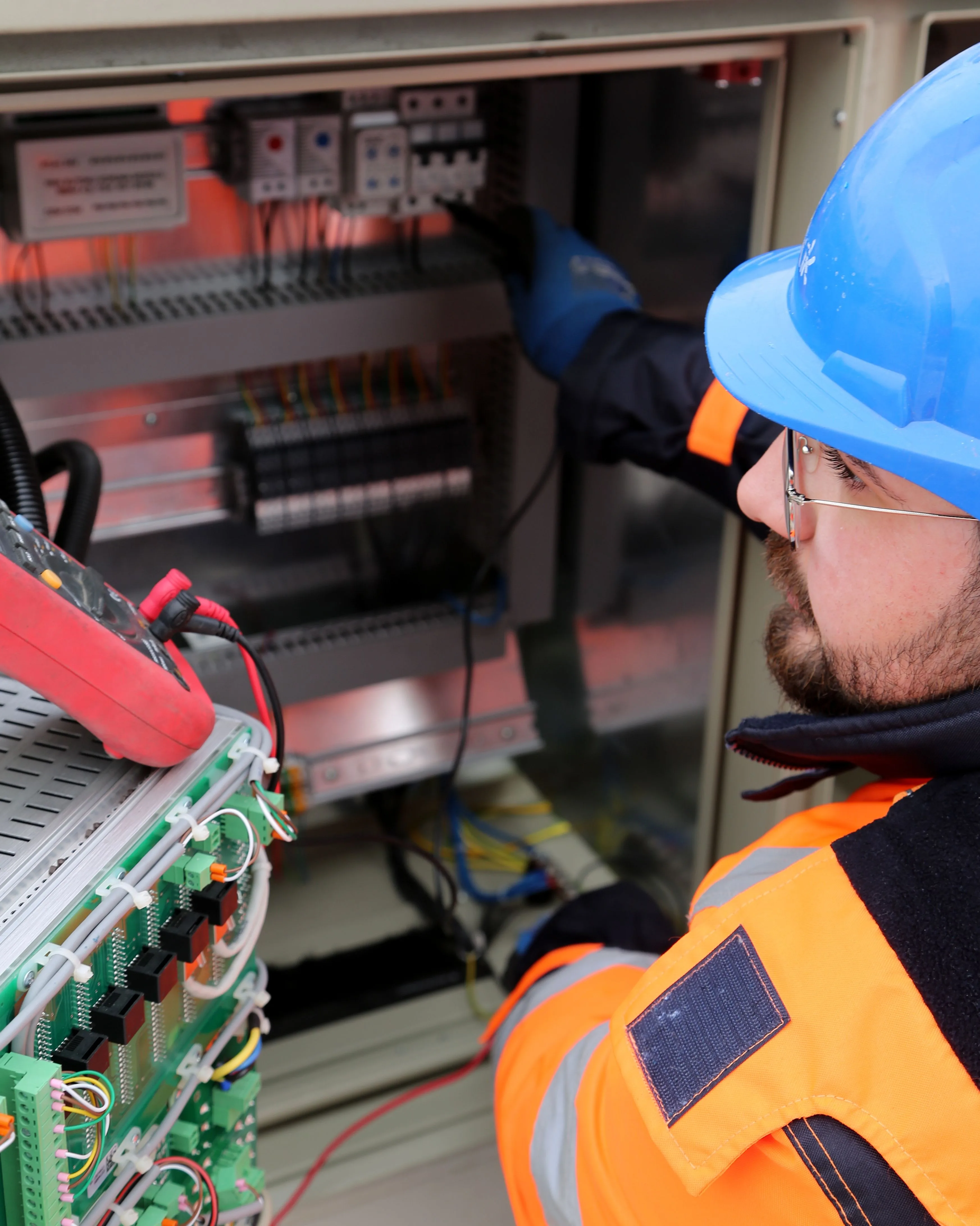
A tankless visit runs in an order. First the demand: how many bathrooms and fixtures the unit must serve, and whether the answer is whole-house or point-of-use. Then the model's specification sheet: the voltage, the number of circuits, the breaker ratings, and the wire sizes the manufacturer requires. Then the panel and service: the load calculation, the spare breaker spaces, the condition of the panel, and the cable route from the panel to where the unit will sit. The water side is checked too — the location, the water connections, and the access for service — because a unit that is hard to reach is a unit that is hard to maintain.
The permit and inspection route is confirmed on the call for the exact job, not assumed: a new circuit and a panel change usually need a permit and an inspection, and the visit confirms which office and which steps apply to the address. For a gas unit, the gas line is part of the same conversation: the line must be sized for the unit, and the fuel work is confirmed on the call rather than priced from a guess. Our panel upgrade cost-factors guide covers the factors that move a panel job's price, and our EV charger panel capacity guide covers the same load-calculation logic for another heavy load.
Cost factors, not a price
A tankless installation is several jobs in one — the unit, the circuits, the panel work, and the water connections — and the price moves on all of them. The unit size matters: a larger whole-house unit needs more circuits, more breaker spaces, and more wire than a point-of-use unit. The cable run matters: a short run from a panel beside the unit is a smaller job than a long run across the house. The panel matters most: a panel with space and capacity takes the circuits as they are, while a panel that needs a subpanel or a service upgrade changes the scope entirely. And the permit and inspection route, and any water-side work, are part of the same figure.
No single Fort Pierce figure fits every home, so the honest answer is the factors and a call. The visit ends with a written price for the job as scoped — the circuits, the panel work, the unit's electrical connection, and the return if one is needed — and the exact figure is confirmed on the call, because a home with a 200-amp panel and a short cable run is a different job from a home with a 100-amp panel and a long one. Tell us the model you are considering, or the number of bathrooms and fixtures, and the call ends with a clear scope. Call (772) 218-3629 any time; we are open 24/7, and same-day service is available. Our breaker panel labels guide shows how to read the main breaker size and the spare spaces before you call.
Tankless Electric Water Heater Electrical Requirements in Fort Pierce: frequently asked questions
What size breaker does an electric tankless water heater need?
It depends on the model. A whole-house electric unit uses several double-pole breakers — two, three, or four, depending on the model — each sized to the circuit it feeds under the continuous-load rule. A point-of-use unit usually needs a single breaker. The model's own specification sheet controls the size, and a size taken from another model is a guess.
Do I need a panel upgrade for a tankless water heater?
Often, for a whole-house electric unit — especially on a 100-amp service, or a panel with no spare breaker spaces. A 200-amp service is often workable, but only a load calculation decides. The visit performs the calculation and lays out whether the answer is a subpanel, a service upgrade, or a smaller unit.
How many amps does an electric tankless water heater use?
A whole-house electric unit draws roughly 100 to 150 amps while it is actively heating water, depending on the model. A point-of-use unit draws far less. The draw is what makes the load calculation essential: the unit's demand is added to the home's other loads and compared with the size of the service.
Can a tankless water heater run on my existing water heater circuit?
No. A standard electric tank heater runs on a single 30-amp to 40-amp circuit, and a whole-house electric tankless unit needs several dedicated 240-volt circuits at a far larger total draw. The existing circuit cannot carry the new unit, and the visit scopes the new circuits the unit needs.
Is a gas tankless water heater different electrically?
Yes. A gas unit burns gas to heat the water, so it draws only a small amount of electricity for its controls and ignition, on a single small circuit. It needs a gas line sized and connected for the unit instead, and that fuel work is confirmed on the call rather than priced from a guess.
What should I tell you when I call about a tankless water heater?
The model you are considering, or the number of bathrooms and fixtures the unit must serve, the size of your panel and how many spare breaker spaces it has, and what else runs on the panel — an EV charger, a pool heater, a large air conditioner. With those answers, the call ends with a clear scope. Call (772) 218-3629, 24/7.
Ready to talk?