
Electrical Repair in White City, Fort Pierce
Electrical repair White City Fort Pierce starts by finding which building holds the fault — the house, the garage, or an outbuilding at the back of the plot. For larger western plots in ZIP 34950, reached by Okeechobee Road and Midway Road, here is what the visit checks first.
Call Now to Speak to a Specialist
Open 24 hours a day, 7 days a week.
Electrical repair White City Fort Pierce follows the plot, not just the symptom. The fault may sit in the house, in the garage, or in an outbuilding, and the cable run between them matters as much as the fault itself. The visit finds the building and the circuit first, then tests from there.
The White City repair pattern: house, garage, or outbuilding
White City sits on larger western plots, farther from the city core, and the electrical issues follow the plot size. A fault may sit in the house, in the garage, or in an outbuilding at the back of the plot, and the cable run between them matters as much as the fault itself. That is why the visit starts by finding which building and which circuit is involved, then testing from there, instead of guessing at the panel and hoping the guess holds.
The western setting also changes the questions callers ask. They ask about power to a workshop that runs tools all day, lights that cover a long driveway, and backup power for a home that sits farther from the city core. Each one has a practical answer that starts with load: what runs, what runs at the same time, and what the panel and the cable runs can carry. Our White City area page covers the work we do across the western edge, and our electrical repair service page covers the repair work itself.
Breakers that trip when the workshop runs
The most common White City repair call is a breaker that trips when the workshop runs. Tools draw hard when they start, and a circuit that also feeds the garage lights or a freezer can trip the moment a saw or compressor kicks in. A breaker that trips once and resets is usually an overload. A breaker that trips again as soon as it is reset, trips with nothing plugged in, or feels warm is a different problem — a failing breaker, a loose connection, or a circuit that was always one tool away from tripping. Our breaker keeps tripping guide separates the harmless causes from the warning signs, and tells you when to stop resetting.
The fix depends on what the visit finds. An overloaded circuit may need its load split or a dedicated circuit for the tools. A failing breaker needs replacing — our circuit breaker replacement guide covers what that visit looks like. A workshop that keeps outgrowing its circuits needs a subpanel of its own, fed from the main panel, so the tools stop borrowing capacity from the house. Never replace a breaker with a larger one: the wiring is sized for the original breaker, and upsizing it is a fire risk.
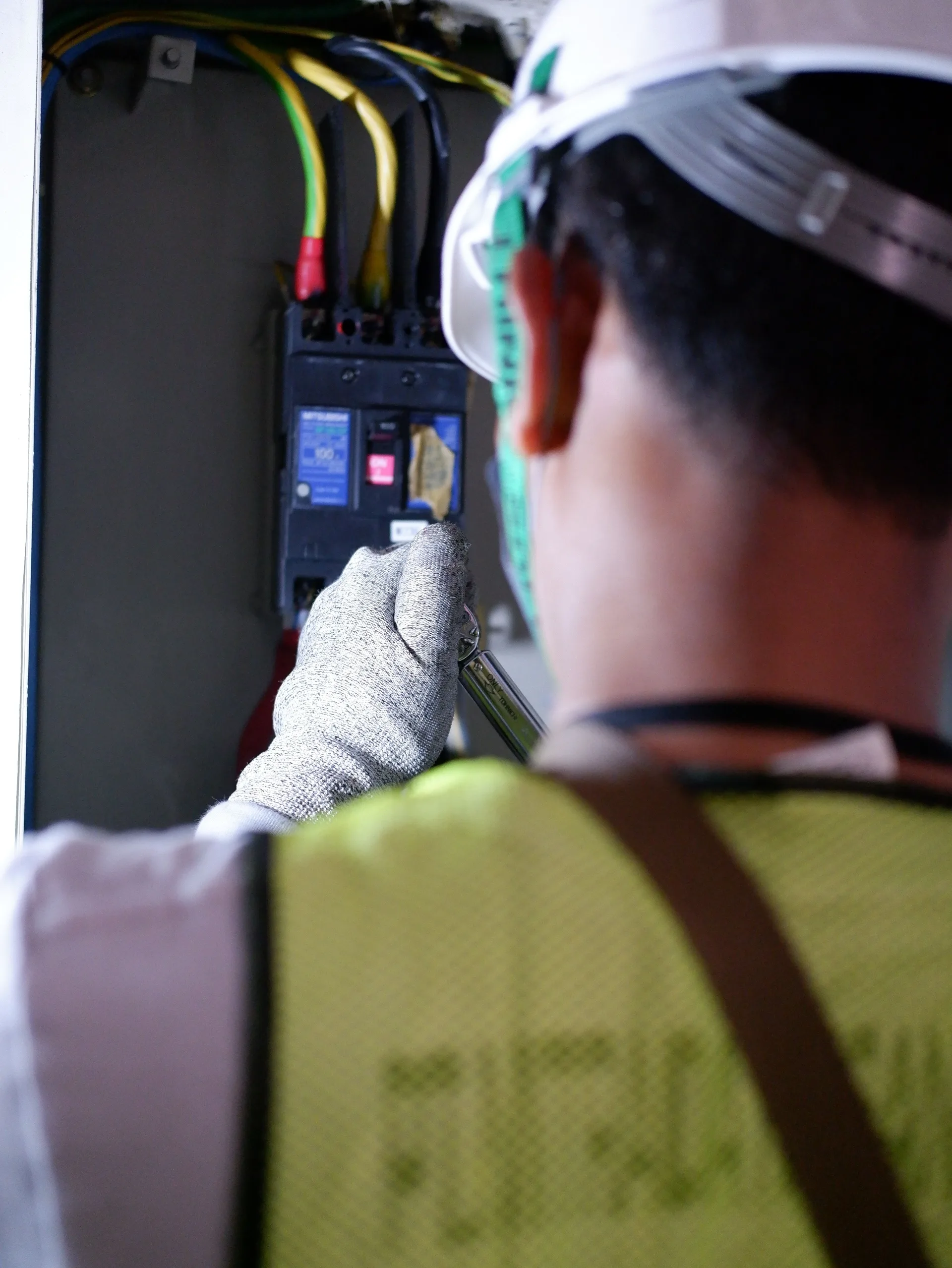
A breaker that keeps tripping, or an outlet that has gone dead?
Flickering lights and dead outlets
Lights that flicker when a large tool starts usually point to load or a loose connection, and the pattern tells the visit where to look. One bulb flickering is usually the bulb. One room flickering is that room’s circuit. Lights flickering across the whole house, especially when some get brighter while others dim, point to a loose main connection — and that is a same-day call. Our flickering lights guide explains which patterns are harmless and which are warnings.
A dead outlet usually traces back to one of three things: a tripped GFCI in another room, a tripped or failed breaker, or a loose connection at the first outlet in the run. On a larger plot the run can be long, and the GFCI that protects the outlet may sit in a different building altogether. Our outlet not working guide walks through the safe checks, and the point at which to call instead of trying again. If outlets fail one after another over time, that is a pattern of loose connections, which arc and overheat — and it deserves a visit, not another reset.
Warm outlets, burning smells, and buzzing: stop and call
An outlet or switch plate that feels warm is telling you something is generating heat behind the wall, and the most common cause is a loose wire connection at the terminal. Resistance generates heat, and heat is what starts fires. A burning smell near an outlet, switch, fixture, or panel means wire insulation is melting, and buzzing or crackling from an outlet or the panel means arcing — electricity jumping across a gap at a loose connection. Our warm outlet guide and our panel buzzing guide cover what each sign means.
If you notice any of these, stop using the outlet or circuit, switch the circuit off at the breaker if you can do so safely, and call. Do not keep resetting a breaker that trips straight back, and never open the panel yourself to look — the main lugs stay energised even when individual breakers are off, and the inspection is the electrician’s job. A warm outlet, a burning smell, or a buzzing panel is a same-day call, not a weekend job.
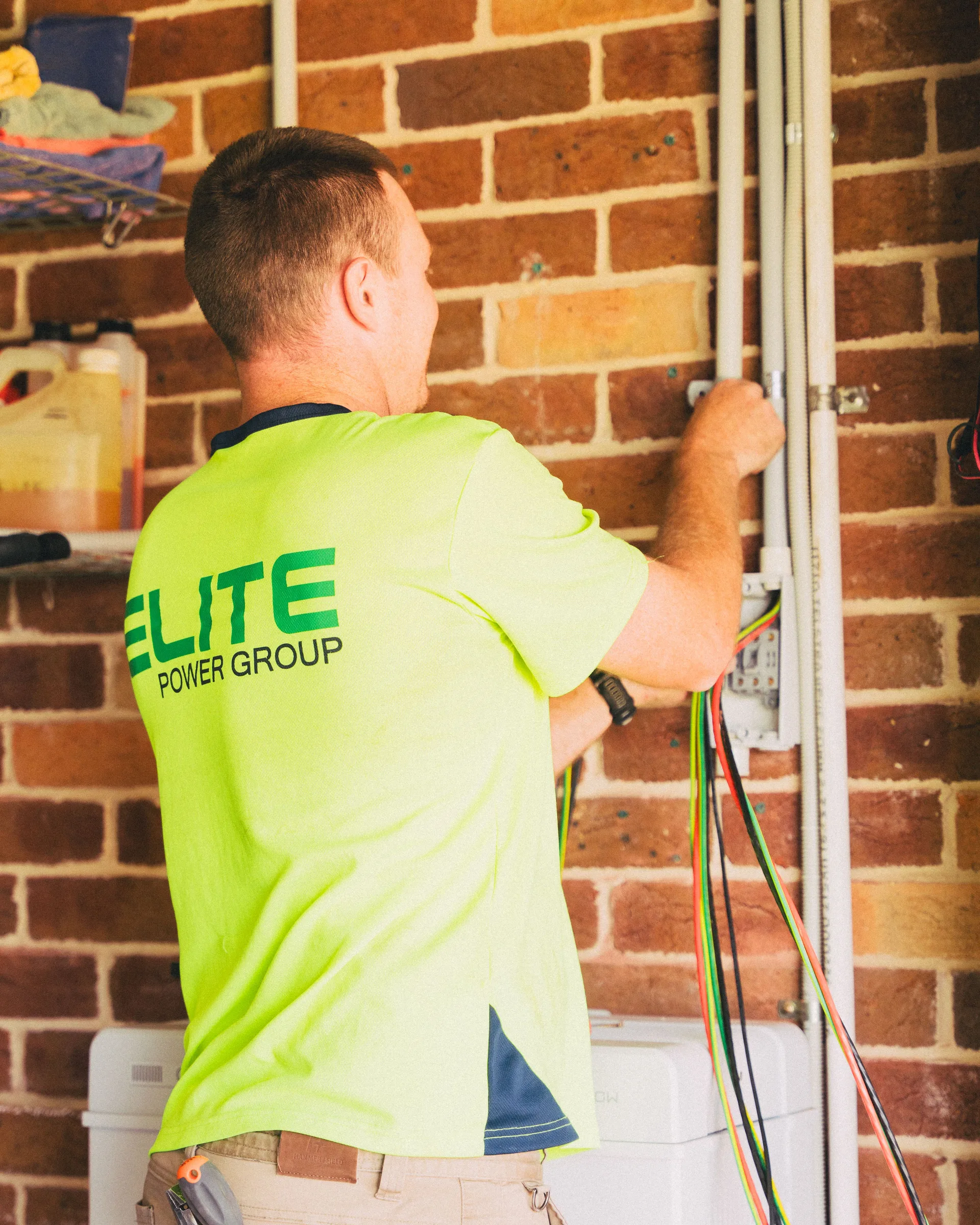
Warm outlet, burning smell, or buzzing panel? Stop and call.
Outdoor and security lighting across a bigger yard
A bigger yard needs more light, and the circuits behind it need the same care as the ones inside. Lights that cover a long driveway, a workshop approach, or an outbuilding need weatherproof fittings, GFCI protection, and cable runs that suit the distance — a long run changes the work, and an outdoor run needs protection a garage run does not. Our landscape and outdoor lighting service page covers the design side, and the repair visit checks the circuits that feed it.
The common faults are the same ones the house shows, spread over a longer run: a GFCI that trips and takes a whole stretch of lights with it, a connection that has loosened where the cable enters a fitting, or a circuit that was never sized for the load it now carries. The visit traces the run, finds the weak point, and fixes the circuit — not just the light. Storm season makes this matter more on the western edge: a home farther out is on its own for longer when the power goes down, so the panel, the surge protection, and the generator plan are worth settling before the season.
The panel question behind the repair
A repair that keeps coming back usually has a panel behind it. A panel that is full, a service that is undersized for the workshop and the house together, or a Federal Pacific or Zinsco panel that should have been replaced years ago — each one turns a simple repair into a repeat visit until the panel question is settled. Our electrical panel upgrade page covers the capacity question, and our Federal Pacific vs Zinsco guide explains why those two brands are replace-first panels.
The usual answer on a larger plot is a subpanel for the garage or workshop, fed from the main panel, so the tools stop competing with the house for the same capacity. Our subpanel installation page covers that work. If the service itself is at its limit, the answer is an upgrade instead — and the load calculation, not the slot count, decides which one. The repair visit raises the panel question when the symptoms point there, rather than fixing the same breaker twice.
What the visit checks first, and what to have ready
Electrical repair White City Fort Pierce is settled by finding the building, the circuit, and the cause — in that order. The visit finds which building holds the fault, tests the circuit that feeds it, and traces the symptom to its cause instead of swapping parts and hoping. A tripping breaker, a dead outlet, and a flickering light can each have several causes, and the right fix depends on which one the testing finds.
Bring your street and ZIP 34950, whether the fault is in the house, the garage, or an outbuilding, what trips and when it happens, and whether anything feels warm, smells of burning, or buzzes. Tell us whether the home has a garage, a workshop, or an outbuilding, and whether the panel is Federal Pacific, Zinsco, or a fuse box, if you know. Call (772) 218-3629 any time; we are open 24/7, and same-day service is available. Our White City area page covers the work we do on the western edge, and the Fort Pierce Electric Pros homepage covers everything else we do in Fort Pierce.
Electrical Repair White City Fort Pierce | 24/7: frequently asked questions
Why does my breaker trip only when I run workshop tools?
Tools draw hard when they start, and a circuit that also feeds the garage lights or a freezer can trip the moment a saw or compressor kicks in. A breaker that trips once and resets is usually an overload. A breaker that trips again as soon as it is reset, or feels warm, is a failing breaker or a loose connection — and that needs a visit.
One outlet is dead but the rest of the room works — what is it?
Usually one of three things: a tripped GFCI in another room, a tripped or failed breaker, or a loose connection at the first outlet in the run. On a larger plot the GFCI that protects the outlet may sit in a different building altogether. Our outlet not working guide walks through the safe checks, and the point at which to call instead of trying again.
My lights flicker across the whole house. Is that urgent?
Yes. One bulb flickering is usually the bulb, and one room flickering is that room’s circuit. Lights flickering across the whole house, especially when some get brighter while others dim, point to a loose main connection — and that is a same-day call.
An outlet feels warm. Should I keep using it?
No. A warm outlet means something is generating heat behind the wall, usually a loose wire connection at the terminal. Stop using it, switch the circuit off at the breaker if you can do so safely, and call. Do not keep using an outlet that feels hot or shows scorch marks.
Can you add circuits to my garage or outbuilding?
Yes. A garage or outbuilding that keeps outgrowing its circuits usually needs a subpanel of its own, fed from the main panel, so the tools stop borrowing capacity from the house. The visit checks the load calculation first, then sizes the subpanel to the workshop. Our subpanel installation page covers that work.
What should I tell you when I call about a repair in White City?
Your street and ZIP 34950, whether the fault is in the house, the garage, or an outbuilding, what trips and when it happens, and whether anything feels warm, smells of burning, or buzzes. With those answers, the call ends with a clear scope and a written price. Call (772) 218-3629, 24/7.
Ready to talk?