
Lower Your Power Bill: Electrical Upgrades in Fort Pierce
Lower your power bill Fort Pierce starts with the electrical system, not the thermostat alone: LED lighting, ceiling fans, smart controls and a healthy panel. For homes in ZIP 34950 and 34946, from Downtown Fort Pierce to Fort Pierce North, these upgrades cut waste the air conditioner never sees.
Call Now to Speak to a Specialist
Open 24 hours a day, 7 days a week.
The fastest way to lower your power bill in Fort Pierce is to stop paying for electricity that never becomes light, cool air, or useful work. Old bulbs turn most of their power into heat, fans and controls run loads nobody uses, and a tired panel wastes energy as heat at loose connections. The upgrades below fix each leak.
LED lighting: the biggest single saving
Start with the bulbs, because lighting is the upgrade with the clearest payoff in a Fort Pierce home. An incandescent bulb turns most of its energy into heat rather than light, so it warms the room your air conditioner is trying to cool — you pay twice, once for the bulb and once for the cooling. Efficiency guides commonly cite LED bulbs using up to 75% less energy than incandescent bulbs for the same brightness, and LEDs run cool enough to touch, which means less heat dumped into the room. That is the whole case for LED lighting conversion Fort Pierce homeowners ask about: the same rooms, the same brightness, far less power, and less heat for the air conditioner to remove.
The conversion is more than swapping bulbs. Recessed cans, under-cabinet strips, and outdoor fixtures each need the right LED type, and a dimmer that worked with incandescent bulbs may flicker or buzz with LEDs — our dimmer switch installation guide explains the compatibility check, and our LED flicker guide explains what flicker or buzz after a swap usually means. A lower your power bill Fort Pierce plan that starts with lighting also lasts: LEDs outlive incandescent bulbs many times over, so the fitting is done once and the saving repeats every month. Our LED lighting conversion Fort Pierce service covers the fitting, and our lighting installation service covers new fixtures and layouts.
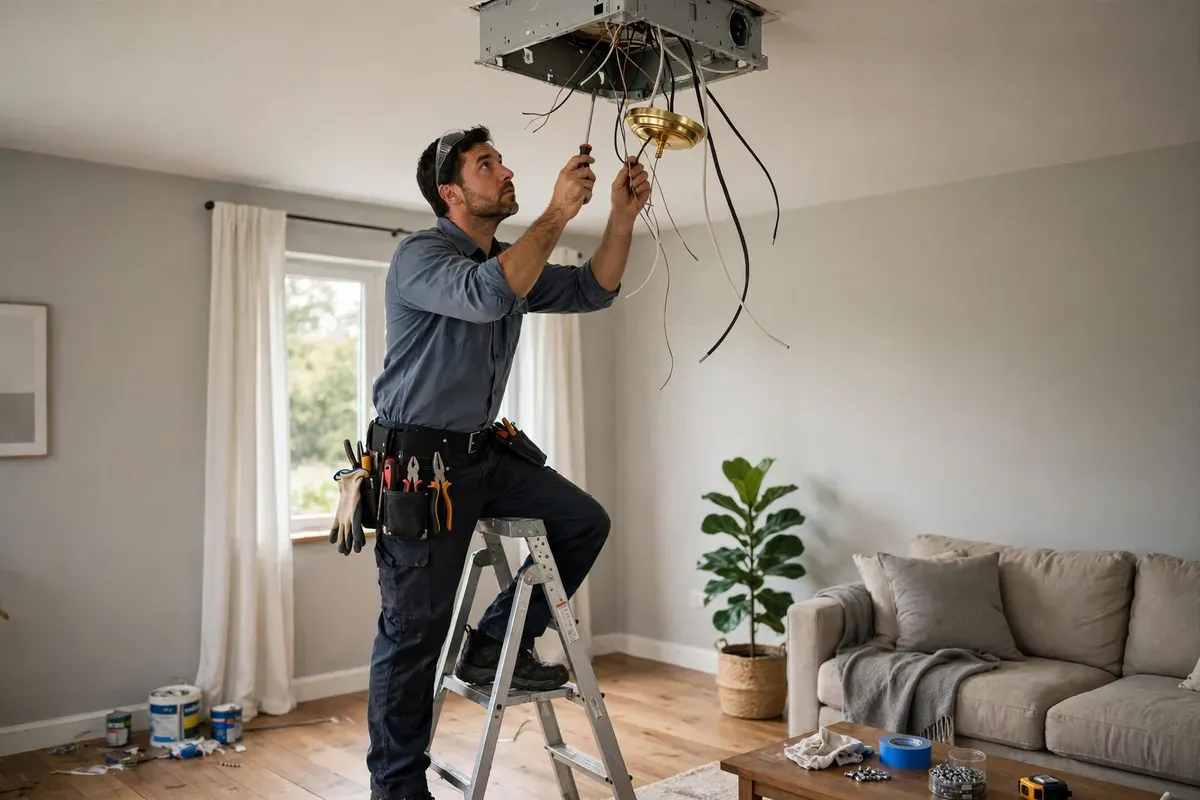
Ceiling fans that let the thermostat rest
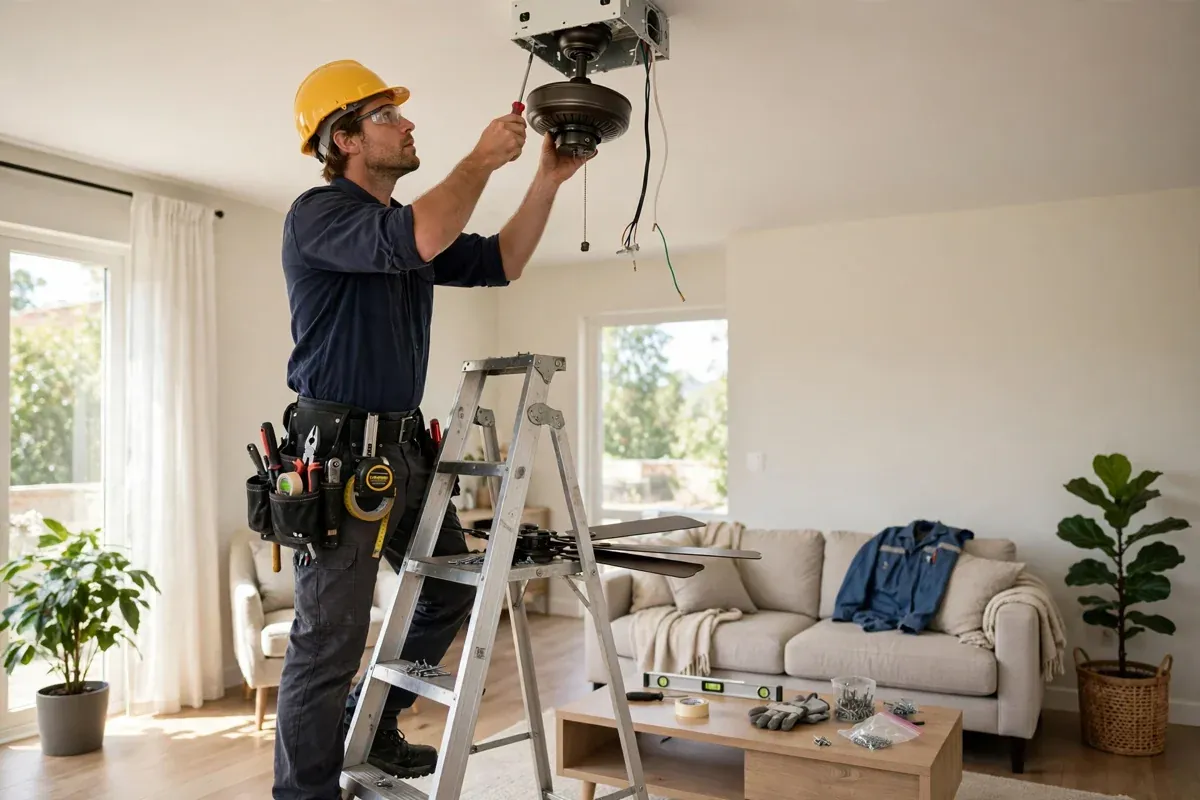
A ceiling fan does not cool a room — it moves air across skin, which makes the same temperature feel cooler. That distinction is the whole point: with a fan running, a room feels comfortable at a thermostat setting a degree or two higher than it would without one, and the air conditioner cycles less. Efficiency guides treat fans as cooling support, not cooling itself, and the saving comes from the air conditioner running less, not from the fan using almost nothing. The fan is the cheap half of the pair; the air conditioner is the expensive half.
The fitting matters more than the fan. A fan needs a box rated for its weight and movement — a light-duty box will not hold it — and our ceiling fan rated box guide explains what a retrofit brace does and why the box is checked before the fan goes up. A wobbling fan, a humming fan, or a fan that only works on one speed is usually a fitting or control problem, not a fan problem. Our ceiling fan installation Fort Pierce service covers the fitting, and the same visit can check the switch and the circuit feeding it.
A hot room and a power bill that climbs with it?
Phantom loads: the power you pay for while nothing runs
Some of the power on a Fort Pierce bill is spent by devices that look switched off. Televisions, game consoles, chargers, printers, and set-top boxes keep drawing a small standby current so they can wake instantly — the phantom load, or vampire load. One device draws almost nothing; a house full of them, running twenty-four hours a day, adds up. Efficiency guides put phantom loads at as much as 10% of a monthly bill, which makes them worth finding even though no single device looks guilty.
The fix is unglamorous and it works: smart power strips that cut power to peripherals when the main device switches off, switched outlets for the entertainment centre, and chargers unplugged when nothing is charging. A lower your power bill Fort Pierce visit can map which circuits carry standby loads all day and which ones go quiet at night — the panel directory tells the story once it is read properly. Our guide to reading breaker panel labels explains how the directory is laid out, and our outlet and switch installation service covers switched outlets and smart switches that make the fix automatic.
Phantom loads are also a diagnostic clue. A circuit that draws power with everything in the room switched off is either standby loads or a fault — and the two feel identical from the bill. If the standby draw is far larger than the devices in the room explain, the visit checks for a failing device or a wiring fault before it calls the draw normal. That is the difference between a saving and a warning sign, and it is decided at the panel, not from the bill.
Smart switches, dimmers, and sensors
The cheapest electricity is the electricity never used, and controls are how a home stops using it. A smart switch turns lights off on a schedule. An occupancy sensor turns them off when the room empties. A dimmer trims a bright room to the level it actually needs. None of these changes the bulbs — they change how long the bulbs burn and how hard they burn. In a Fort Pierce summer, when lights run into the evening and rooms sit empty during the day, the hours saved are the saving.
Controls also fix the dimmer problem that makes people give up on LEDs. An old leading-edge dimmer chops the power in a way LED drivers dislike, which is why a new LED can flicker or buzz on a dimmer that worked for years with incandescent bulbs. A trailing-edge dimmer made for LEDs, set with the right low-end trim, ends the flicker — and our dimmer switch installation guide explains the check before a new dimmer goes in. Our smart home wiring service covers switches, sensors, and the circuits behind them, and the same visit can put the porch, garage, and outdoor lights on schedules that match how the home is actually used.
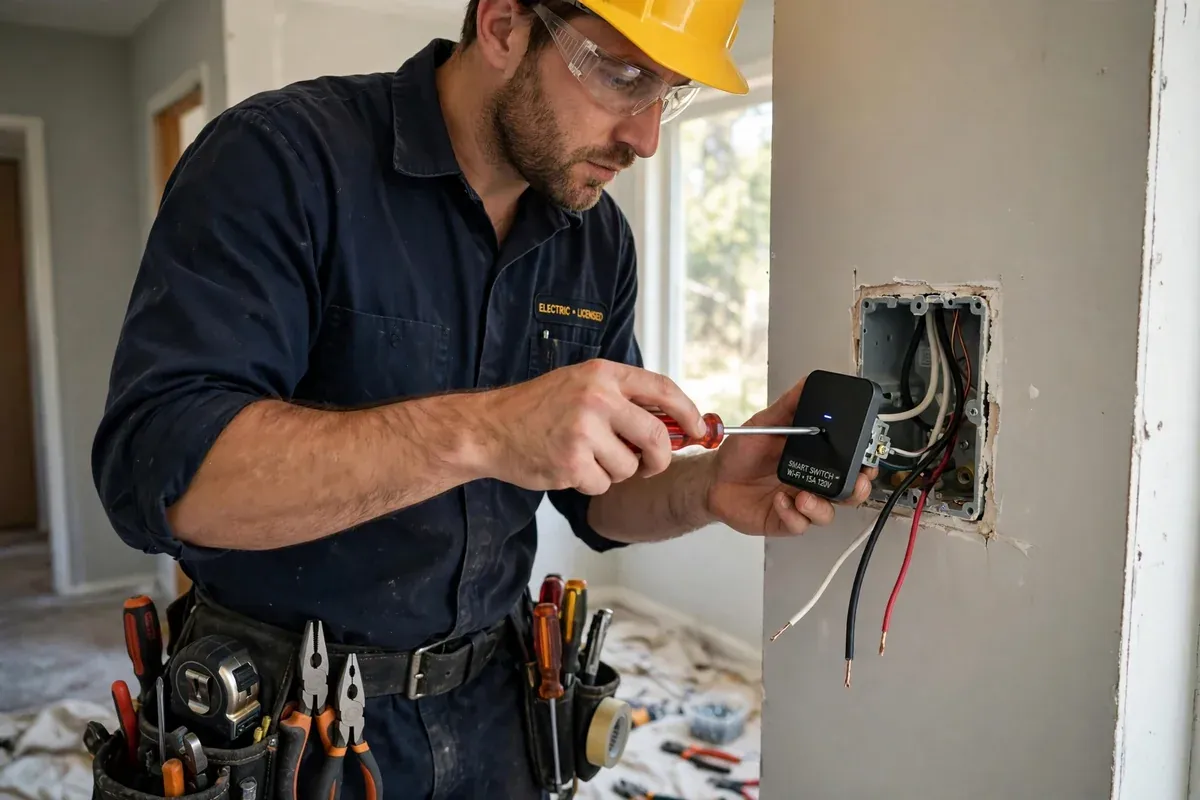
A smart panel that shows where the power goes
A smart panel does not lower a bill by itself — it shows where the power goes, circuit by circuit, so the waste stops being a guess. The panel reports which circuits run all day, which ones spike at the same hour every evening, and which ones draw power at 3 a.m. when the house is asleep. That is the information a lower your power bill Fort Pierce plan runs on: the air conditioner circuit, the water heater circuit, the pool pump circuit, and the circuits that should be quiet but are not.
The monitoring also catches faults early. A circuit whose draw climbs month by month is a motor wearing out, a connection loosening, or a device failing — and the panel shows the climb before the bill does. Our smart electrical panel guide explains where a smart panel helps most and where a standard panel serves just as well, and our smart electrical panel installation service covers the fitting. A panel upgrade is a separate decision from monitoring — the electrical panel upgrade Fort Pierce page covers capacity — but the two are often done together, because a panel opened for one reason is cheaper to finish for both.
The panel itself: loose connections waste power as heat
The last leak is inside the panel. A loose or corroded connection creates resistance, and resistance turns electricity into heat before it ever reaches an appliance — power paid for, delivered as warmth inside a metal box. The signs are a panel that buzzes or hums, a breaker that feels warm, lights that dim when a large load starts, or a faint hot smell near the panel. Our panel buzzing guide explains which sounds are normal and which mean call the same day, and our electrical panel repair guide explains which panel faults are repaired and which mean replacement.
Salt air makes this worse on the Treasure Coast: corrosion builds on outdoor panels and fittings over time, and a connection that was tight five years ago may not be tight now. That is why a panel check belongs in any bill-lowering plan — not because the panel is the biggest saving, but because a panel wasting power as heat undermines every other upgrade. Never open the panel yourself to check: the test is done with power on, and it belongs to the visit. The visit tightens what can be tightened, replaces what is worn, and tells you plainly whether the panel is part of the bill or not.
A panel that buzzes, a breaker that runs warm, a bill that keeps climbing?
What to have ready when you call
A bill-lowering visit in Fort Pierce goes faster when five things are ready. Your address in ZIP 34950 or 34946, and whether the home is a house, a condo, or a rental — a rental needs the landlord’s written permission first. Your panel’s brand and size, and whether it buzzes, hums, or runs warm. Which rooms have old bulbs, which rooms have fans, and which circuits run all day. Whether the goal is LED conversion, smart controls, a smart panel, or all three. And the bill itself, or at least which months climb highest, because the pattern points at the cause.
Those answers turn a call into a visit that starts with the right check, instead of a visit that starts by searching for the problem. Lower your power bill Fort Pierce homes get right is settled one upgrade at a time, starting with the biggest saving and ending with the panel that carries it all. Call (772) 218-3629 any time; we are open 24/7, and same-day service is available. For the wider picture, our whole-house surge protection guide explains the lightning protection that belongs on the same panel, and the Fort Pierce Electric Pros homepage lists the services and areas we cover.
Lower Your Power Bill: Electrical Upgrades in Fort Pierce: frequently asked questions
Which electrical upgrade saves the most on a Fort Pierce power bill?
LED lighting conversion, first. Efficiency guides commonly cite LED bulbs using up to 75% less energy than incandescent bulbs for the same brightness, and LEDs run cool, so the air conditioner has less heat to remove. Lower your power bill Fort Pierce plans start with lighting because the saving repeats every month and the fitting is done once.
Do ceiling fans really lower a power bill?
They lower the air conditioner’s work, not the temperature. A fan moves air across skin, so a room feels comfortable at a thermostat setting a degree or two higher than it would without one, and the air conditioner cycles less. The fan needs a box rated for its weight and movement — a light-duty box will not hold it.
What is a phantom load?
Power drawn by a device that looks switched off — televisions, game consoles, chargers, printers, and set-top boxes keeping a small standby current so they can wake instantly. Efficiency guides put phantom loads at as much as 10% of a monthly bill. Smart power strips and switched outlets cut them automatically.
Will a smart panel lower my bill by itself?
No. A smart panel shows where the power goes, circuit by circuit, so the waste stops being a guess — which circuits run all day, which spike every evening, and which draw power at 3 a.m. The saving comes from what you change after seeing it: the schedules, the standby loads, and the failing device the panel exposes.
Does an old panel waste electricity?
It can. A loose or corroded connection creates resistance, and resistance turns electricity into heat inside the panel before it reaches an appliance — power paid for and delivered as warmth. A buzzing or humming panel, a warm breaker, or lights that dim when a large load starts are the signs. Never open the panel yourself; the test is done with power on.
What should I tell you when I call about lowering my power bill?
Your address in ZIP 34950 or 34946, your panel’s brand and size, which rooms still have old bulbs, which rooms have fans, and whether the goal is LED conversion, smart controls, a smart panel, or all three. With those answers, the call ends with a clear scope and a written price. Call (772) 218-3629, 24/7.
Ready to talk?