
Generator Installation in Waterstone, Fort Pierce
Generator installation Waterstone Fort Pierce starts with one question for a subdivision home: what must keep running when the power goes out? For Waterstone homes in ZIP 34951 and 34950, off Midway Road and Jenkins Road, this guide builds the essentials list first, then sizes, switches and tests the generator.
Call Now to Speak to a Specialist
Open 24 hours a day, 7 days a week.
A Waterstone generator is not bought by square footage or panel size. It is bought by the list of circuits that must keep running, the largest motor that has to start, and the switch that connects the two. Get the list right and the rest — sizing, fuel and testing — follows from it.
Start with the essentials list, not the generator size
Generator installation Waterstone Fort Pierce begins with a list, not a catalogue. Walk the house circuit by circuit and write down what must keep running in an outage: the refrigerator, a few lights, fans, the internet router, and — where the home has one — a well pump or a medical-equipment circuit. Everything else is a comfort load, not a must-run load, and the two groups are sized and switched differently.
The two-pass method keeps the list honest. First pass: safety, health and property protection — food cold, lights on, fans moving air, the router up, the well pump or medical circuit running. Second pass: comfort — the second air conditioner, the water heater, the EV charger, the pool pump. A circuit that lands in the first pass earns generator power; a circuit in the second pass earns it only if capacity remains. Our home generator installation guide explains the whole-home scope this list feeds into, and our generator sizing guide explains how the list becomes a size.
Write the list down before anyone quotes a size. A list built from the house as it is — the loads it actually runs — is the only list that survives contact with the panel. The Waterstone area page already sketches this approach for subdivision homes; this post goes deeper, because the list is where a generator installation succeeds or fails, and it is decided at the kitchen table, not at the panel. See the Waterstone area page for the neighbourhood facts this post builds on.
Size from the largest starting surge, not square footage
Motors draw two to three times their running watts at startup, and the air conditioner compressor is usually the largest starting surge in a Fort Pierce home. That surge is the number the generator is sized by — not the square footage of the house and not the rating on the panel. A home that adds up its running watts and forgets the surge buys a generator that stalls the first time the compressor kicks in.
The method is simple to state and worth doing properly. Add the running watts of the must-run list, then add the largest starting surge on top — the compressor, or the well pump where the home has one. If the total fits the generator, the must-run list runs; if it does not, the list shrinks or the generator grows. Square footage never enters the sum, and neither does the panel rating: the panel tells you what the house can carry, not what the generator must produce. Our sizing guide works through the method in full, and the generator size estimator gives a starting point to bring to the call.
A well pump deserves a note of its own. Where a Waterstone home has one, its start surge matters as much as the air conditioner’s — a pump that cannot start leaves the house without water in the middle of an outage, which is exactly when water matters most. Name it in the first pass of the essentials list, not the second, and size for it.
Not sure which circuits belong on the must-run list?
The switch decision: essential-circuits subpanel or whole-home switch
Once the list exists, the switch follows it. An essential-circuits subpanel feeds only the must-run circuits — the refrigerator, lights, fans, router, and the well pump or medical circuit — and leaves the rest of the house dark in an outage. A service-rated whole-home switch feeds the whole panel, with load management deciding what runs when. The subpanel is the smaller job and the smaller generator; the whole-home switch is the bigger job and the bigger generator, and the choice is the list, not the budget.
Load management is what makes a whole-home switch work on a generator that cannot carry the whole house at once. Smart modules shed the big loads — the second air conditioner, the water heater, the EV charger — when demand nears capacity, then restore them when the load falls. The must-run circuits never shed; the comfort circuits wait their turn. Our automatic transfer switch installation service covers the switch itself, and our transfer switch versus interlock kit guide explains why the power goes through a proper transfer switch and never through a household outlet.
A manual switch is a different job again — it waits for someone to be home, walk outside, and switch over. A standby generator with an automatic switch starts itself when the grid fails, which is the whole point of a standby set: the house is covered whether anyone is home or not. The generator installation service page and the Generac installation page cover the fitting, and the sister posts for St. Lucie Village, Lakewood Park, Hutchinson Island, Fort Pierce South and White City show how the same decision plays out in other Fort Pierce neighbourhoods.
The panel and service check comes first
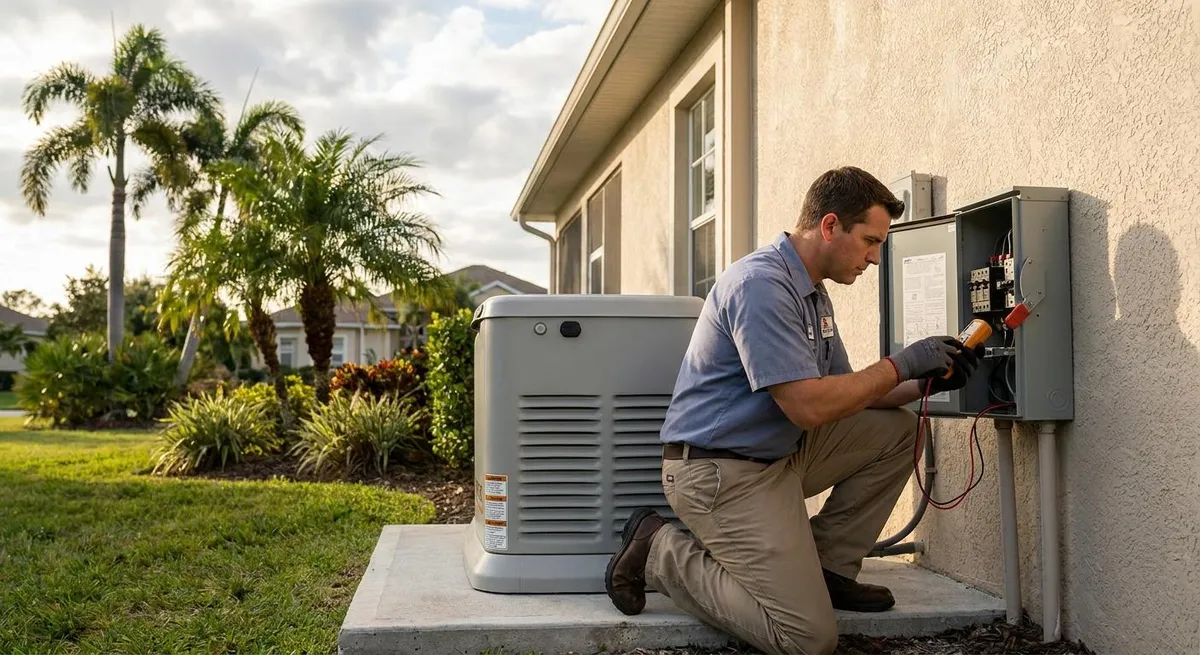
Panel capacity checks are the most-called-for work in Waterstone, and a generator job starts the same way: the panel and service are checked before anything is ordered. The check answers three questions — is there capacity for the transfer switch, are there spare breaker spaces, and does the load calculation hold once the generator circuits are added? A panel that cannot carry the switch is not a failed job; it is a job with a panel step in it, and the panel step is planned before the generator arrives, not discovered after it.
A newer subdivision panel is usually in good condition — the question is room, not age. The visit reads the panel label, counts the spaces in use, adds up the loads already served, and works out what the generator circuits add. If the numbers fit, the job stays a generator job. If they do not, the options are load management, a subpanel, or a full panel upgrade, and each one is explained before anything is decided. Our electrical panel upgrade service covers the upgrade, and our panel repair guide explains which panel faults are repaired and which mean replacement.
Federal Pacific and Zinsco panels are the exception to the newer-panel rule: both are obsolete, and a generator switch is not fitted to either without the panel being dealt with first. Our Federal Pacific versus Zinsco guide explains why, and the panel is checked on the same visit as the generator survey, so the decision is made once.
A panel that is full before the generator arrives?
The fuel plan: natural gas or on-site propane
A standby generator needs fuel on site or on tap — no trip to buy fuel in the middle of a storm. The two options for a Waterstone home are natural gas from the street or propane stored on site, and the right one is a question to confirm for the address — is the gas line within reach, and is there room for a tank? The answer decides the trenching, the tank placement, and how long the generator can run before the fuel needs attention.
Propane runtime is limited by tank size: a small tank runs the must-run list for a shorter outage, a larger tank for a longer one, and the tank is sized with the list, not against it. Natural gas runs as long as the supply runs, which is why the gas-line question comes first. Our propane and gas line guide explains the line and tank questions to ask, and our guide to choosing a generator installer explains what a quote should show before it is accepted.
Fuel is also a cost-factor question, not a price question: the line length, the trenching, the tank size, and the pad all change what the job takes, and the exact price is held for the call. Our Generac cost-factors guide lists the factors without inventing a price, and the same rule holds here — no dollar figure in this post is a quote.
The readiness plan: weekly, monthly, annual
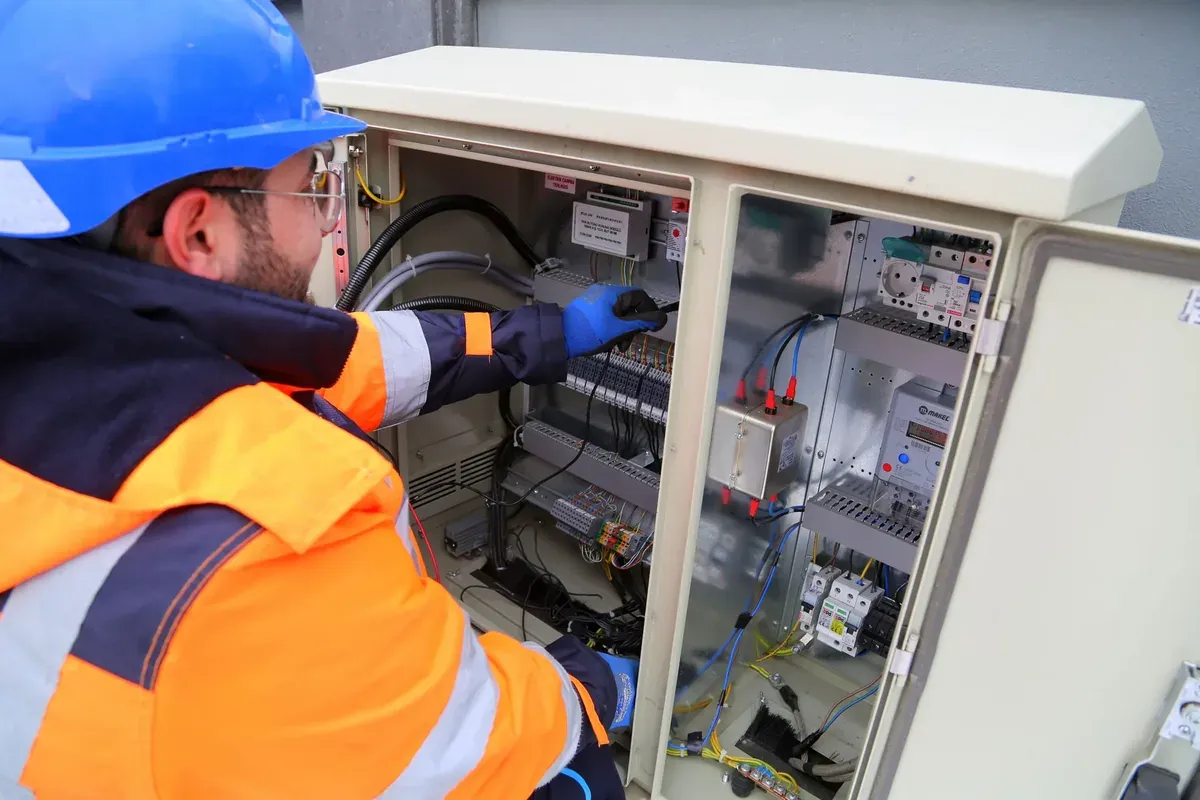
A standby generator that never runs is a generator that fails quietly. The weekly exercise cycle — about ten to twenty minutes, running itself — circulates the oil, charges the battery, burns off moisture, and runs self-diagnostics. A missed or failed exercise is diagnostic data, not a nuisance: check the controller and the fault codes, because the exercise is the generator telling you it needs attention before the storm does.
The monthly owner walk-around takes a few minutes: oil level, fuel lines, battery terminals and corrosion, clearances, and debris around the unit. The annual professional service is the deeper pass — oil and filter, air filter, spark plugs, battery test under load, transfer-switch test, and a loaded test that proves the switch will carry the house. The weekly exercise runs unloaded; it does not prove the switch will carry the house, and only the loaded test does that. Generator installation Waterstone Fort Pierce is finished when the readiness calendar is running, not when the unit is bolted down.
The starter battery is replaced every two to three years on schedule, not on failure — a dead battery is the most common no-start cause, as a general framing, and a battery that is replaced on schedule never gets the chance to fail in a storm. Our generator maintenance guide covers upkeep in full; this post’s maintenance section is the Waterstone readiness calendar — the weekly, monthly and annual rhythm for a subdivision home — not a second maintenance guide.
A generator that has not exercised itself in weeks?
What to have ready when you call
A generator call for a Waterstone home goes faster when five things are ready. Your street off Midway Road or Jenkins Road, in ZIP 34951 or 34950. Your panel’s brand and size, and whether it has spare spaces. Your essentials list — the must-run circuits from the first pass. Whether the home has natural gas or needs a propane tank, and whether there is a well pump or a medical-equipment circuit. And when you want it done: our best time to install guide explains the timing, and the portable generator safety guide covers the portable set that bridges the gap until the standby unit is in.
Those answers turn a call into a visit that starts with the right check, instead of a visit that starts by searching for the problem. Generator installation in Waterstone is settled one decision at a time — the list, the surge, the switch, the panel, the fuel, and the calendar — and each decision is made on the call, in plain language, with the price held for the visit. Call (772) 218-3629 any time; we are open 24/7, and same-day service is available. For the wider picture, the Fort Pierce Electric Pros homepage lists the services and areas we cover, and the Waterstone area page covers the neighbourhood itself.
Generator Installation in Waterstone, Fort Pierce: frequently asked questions
What should a Waterstone generator keep running first?
The must-run list from the first pass: the refrigerator, a few lights, fans, the internet router, and — where the home has one — a well pump or a medical-equipment circuit. Generator installation Waterstone Fort Pierce starts with that list, because the list decides the size, the switch, and the fuel plan. Comfort loads — the second air conditioner, the water heater, the EV charger — wait for capacity that remains after the must-run list is covered.
How big a generator does a Waterstone subdivision home need?
As big as the must-run list plus the largest starting surge — usually the air conditioner compressor, or the well pump where the home has one. Motors draw two to three times their running watts at startup, so the surge is added on top of the running watts, not averaged into them. Square footage and the panel rating never enter the sum; the sizing guide works through the method in full.
Whole-home switch or essential-circuits subpanel — which fits Waterstone?
It follows the list. An essential-circuits subpanel feeds only the must-run circuits and leaves the rest of the house dark — the smaller job and the smaller generator. A service-rated whole-home switch feeds the whole panel, with load management shedding the second air conditioner, water heater, or EV charger when demand nears capacity. The panel check decides which one the house can carry.
Does the panel need upgrading before a generator?
Not always. The panel and service are checked first — capacity for the transfer switch, spare breaker spaces, and the load calculation with the generator circuits added. A newer Waterstone panel is usually in good condition; the question is room. If the numbers do not fit, the options are load management, a subpanel, or a full panel upgrade, explained before anything is decided.
How often should a standby generator exercise itself?
Weekly, for about ten to twenty minutes, running itself. The cycle circulates the oil, charges the battery, burns off moisture, and runs self-diagnostics. A missed or failed exercise is diagnostic data — check the controller and the fault codes. The monthly owner walk-around and the annual professional service, including a loaded transfer-switch test, complete the calendar.
Natural gas or propane for a Waterstone generator?
It is a question to confirm for the address. Natural gas runs as long as the supply runs, if the line is within reach. Propane is stored on site, and runtime is limited by tank size — the tank is sized with the essentials list. The gas-line and tank questions, the trenching, and the pad are cost factors, and the exact price is held for the call.
Ready to talk?