
Natural Gas vs Propane Generator in Fort Pierce
Natural gas vs propane generator Fort Pierce — fuel choice decides how long a standby unit runs in an outage, what it powers, and what it needs from your property, from a gas line on Hutchinson Island to a propane tank in Fort Pierce South, ZIPs 34950 and 34949.
Call Now to Speak to a Specialist
Open 24 hours a day, 7 days a week.
Natural gas or propane: the short answer
Natural gas vs propane generator Fort Pierce is a property question before it is a brand question: the right fuel follows what reaches your home, how long an outage might last, and how much power the generator must carry. This guide compares the two fuels on those three points, so the call starts from your property, not a brochure.
Availability first: does a gas line reach the house?
A standby generator can only burn the fuel that reaches it, so the first check is the property, not the brochure. Some Fort Pierce homes already have a natural gas supply feeding a water heater, a range or a furnace, and for those homes a gas connection is usually a short run from the meter to the unit. Many other homes have no gas pipe at all, and for those homes propane is not a choice between two fuels — it is the only fuel, delivered by truck and stored in a tank on the property.
Extending a gas main to a home that has never had one is a separate project with the gas utility, and it is not part of a generator install. The visit settles availability before anything else is sized or quoted: if a line reaches the property, the two fuels can be compared honestly; if it does not, the comparison is over and the work becomes tank siting, line route and regulator. Bring the question to the call and we will check what reaches your address.
Runtime: an unlimited pipe against a tank you watch
Natural gas wins the runtime argument on paper: the supply arrives through a pipe, so the generator keeps running for as long as the line holds and the outage lasts, with no tank to empty and no delivery to arrange. That is the whole appeal — a week-long outage after a hurricane is a different problem when the fuel never runs out. Propane answers with a limit set by the tank: the unit runs until the stored fuel is gone, and how many days that buys depends on the tank size and the load the house is carrying.
Tank size is therefore a sizing decision, not an afterthought: a small cylinder of the kind used for a barbecue is measured in hours, not days, and it has no place in a standby install. Residential standby work uses tanks measured in hundreds of gallons, and the right size follows the must-run list and the longest outage the household wants to cover. Top the tank up before a named storm, and check the gauge the way you would check any other reserve.
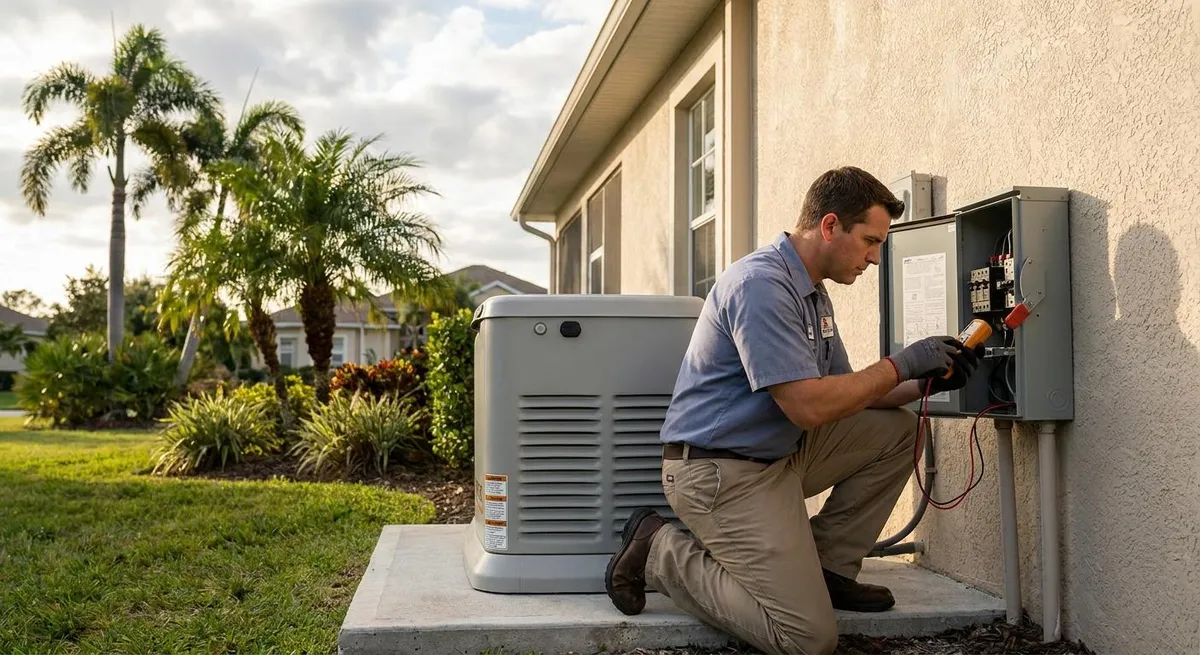
Not sure which fuel reaches your home, or how long a tank would last?
Output: the same engine is rated lower on natural gas
The same standby engine does not make the same power on both fuels, and the makers say so in their own ratings: a unit is published with a lower rating on natural gas than on propane, because natural gas carries less energy in each cubic foot than propane does. The gap is not a defect in either fuel — it is the physics of the two gases — but it matters at sizing time, because a unit chosen on its propane rating will quietly deliver less if it actually runs on natural gas.
Size against the fuel you will actually run, and check the rating for that fuel on the unit you are buying, not the headline figure. Our generator sizing guide works from the must-run list and the starting load of the motors on it, and the fuel rating is part of that arithmetic. A generator that is right on paper for one fuel and short on the other is the most common sizing mistake in the fuel choice, and it is avoided by reading the right line of the rating.
Storm cover: what fails, and what keeps running
A hurricane tests both fuels in different ways. Natural gas depends on the pipeline staying intact and pressurised: in most outages the gas keeps flowing while the power is out, because the pipe network does not need the electricity grid to move gas, but the supply is not guaranteed, and major damage to the network can interrupt it. Propane depends on nothing outside the property: the tank is a reserve that does not care about the grid or the pipeline, and it keeps the unit running until it is empty.
The trade is independence against logistics. A propane home needs a delivery after a long outage, and deliveries slow down when every tank in the county empties in the same week — which is why the tank is topped up before the storm, not after it. A natural gas home needs no delivery at all, and that is the fuel's strongest card in a long outage. The Fort Pierce version of the question is which failure worries you more: a pipeline interruption, or a tank running dry while trucks are busy elsewhere.
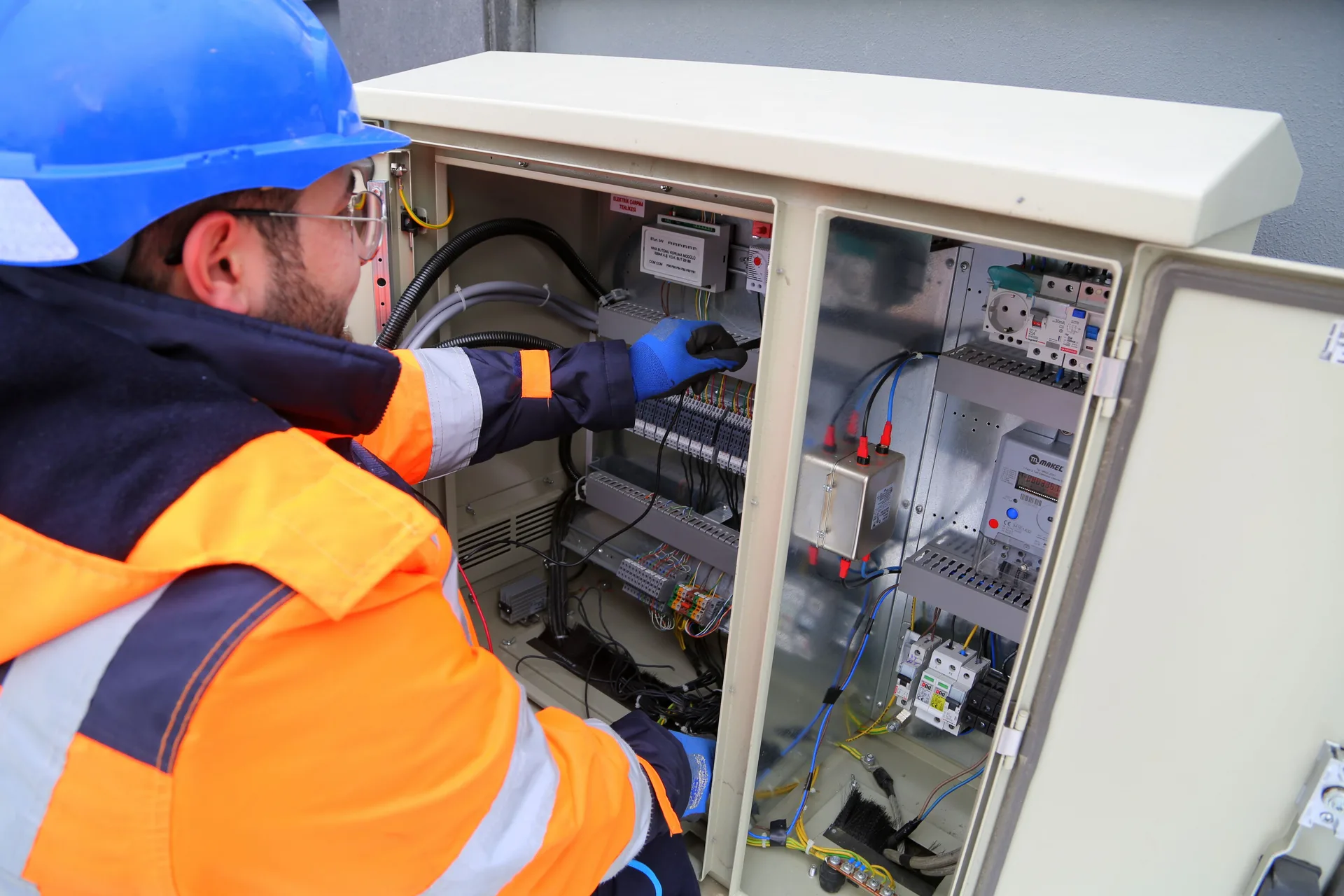
Tank and line: what the property has to give up
Propane asks the property for space: a tank that sits clear of the house and the boundary, a line route from the tank to the generator, and a regulator that delivers fuel at the pressure the engine needs. The tank is usually set above ground at the back of the plot, and the route is agreed on the visit so it does not cross a driveway, a patio or a drain field. Natural gas asks for a connection instead: a gas line from the meter to the unit, with enough capacity for the generator's appetite. Our propane gas-line guide sets out the tank, route and testing questions for the propane side.
A standby generator is a large gas load — often comparable to, or bigger than, every other gas appliance in the house put together — so the existing gas supply may need a larger meter or regulator before the unit is connected. That is gas-trade work, confirmed on the visit, and it is part of the fuel scope, not an extra discovered on install day. Either way, the fuel side is quoted with the electrical side, so the install arrives as one complete job. The Generac installation cost-factors guide explains how fuel scope sits among the other factors that move an installed generator quote.
Natural gas vs propane at a glance
The table below puts the two fuels side by side. Read the row about your property first — supply, runtime and storm cover all follow from it.
| Factor | Natural gas | Propane |
|---|---|---|
| Supply | Piped from the utility, always on | Delivered by truck, stored in a tank |
| Runtime | As long as the line holds | Until the tank empties |
| Output | Lower rating for the same unit | Higher rating for the same unit |
| Storm cover | No delivery needed; depends on the pipeline | Independent of grid and pipeline; needs a delivery after a long outage |
| What the property needs | A gas line with enough capacity | Tank space, a line route and a regulator |
| Best for | Homes already on gas, and long outages | Homes off the gas main, or where independence matters |
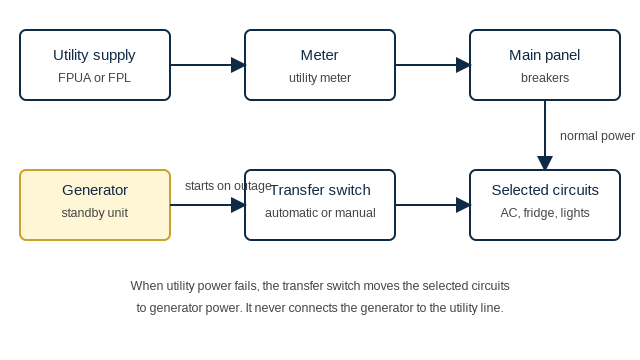
Choosing between a gas line and a propane tank? Talk it through before you buy the unit.
Cost factors only: what moves the fuel side of the quote
Exact price and timing are confirmed on the call, and the fuel side of a generator quote moves on a short list of factors. For natural gas, the factors are the gas connection work, whether the meter or regulator needs upsizing for the generator's appetite, and the length of the line from the meter to the unit. For propane, the factors are the tank size and siting, the line distance and route, whether trenching is needed, and the coordination and testing of the complete system.
Generator size shapes both lists, because a larger unit burns more fuel at full load, so size sets the tank that makes sense and the line capacity that makes sense. The transfer switch, the panel work and the permit and inspection route sit on top of the fuel scope, and the quote follows the property check. Our home generator installation guide sets out the install sequence the quote covers, and the generator companies guide sets out what to ask any installer before the work is agreed.
Which fuel fits which Fort Pierce home
Natural gas vs propane generator Fort Pierce comes down to three facts about the property: whether a gas line reaches it, how long an outage the household wants to cover, and how much the generator must carry at once. A home already on gas, planning for long outages, usually fits natural gas. A home off the gas main, or one that wants a reserve it controls and can top up before a storm, usually fits propane.
Either way, the sizing guide comes before the fuel brochure: the must-run list decides the unit, the unit decides the fuel demand, and the fuel demand decides the tank or the line. The generator load-management guide explains how the must-run list is trimmed when the unit cannot carry everything, and the automatic-vs-manual transfer switch guide explains the switching choice that sits between the generator and the house. A portable unit is a different question — our portable-vs-standby guide covers that choice — and gasoline, not gas, is the usual portable fuel.
What the visit checks, and what to have ready for the call
The visit starts with the three facts above, then checks the panel and the transfer switch, the gas availability and meter capacity or the tank space and line route, and the must-run list against the unit size. The fuel decision is settled on that visit, not guessed from a brochure, and the quote that follows covers the electrical half and the fuel half as one complete job. The generator installation page and the Generac installation page set out the fitting scope the visit agrees.
Natural gas vs propane generator Fort Pierce is settled by the property, the outage pattern and the load list — not by the brochure. Call (772) 218-3629 any time; we are open 24/7, licensed and insured, with 23 years of experience and Master Electrician Certification. The rest of our generator work is on the Fort Pierce Electric Pros homepage.
Natural Gas vs Propane Generator in Fort Pierce: frequently asked questions
Which fuel is better for a standby generator in Fort Pierce?
It depends on what reaches your property. A home with a natural gas supply usually suits natural gas: no tank, no delivery, and runtime for as long as the line holds. A home without a gas line suits propane, stored in a tank on the property and independent of the grid and the pipeline. The visit checks availability first, then weighs runtime, output and storm cover for your address.
Does a natural gas generator run during a power cut?
Yes, as long as the gas line holds. The pipe network does not need the electricity grid to move gas, so in most outages the supply keeps flowing while the power is out. That is the fuel's strongest card in a long outage. It is not a guarantee, though: major damage to the network can interrupt supply, which is why the storm-cover question is part of the decision.
How long will a propane tank run a standby generator?
Tank size and load decide, so there is no single figure for every home. A larger unit burns through stored fuel faster, and a house carrying air conditioning, refrigeration and lights uses more than a house on essential circuits alone. The visit sizes the tank against the must-run list and the longest outage the household wants to cover, and the tank is topped up before a named storm, not after it.
Will my generator make less power on natural gas?
Yes. Makers publish a lower rating for the same unit on natural gas than on propane, because natural gas carries less energy in each cubic foot. The gap is the physics of the two gases, not a fault in either fuel. Size against the fuel you will actually run, and read the rating for that fuel on the unit you are buying, not the headline figure for the other fuel.
Can a generator switch from propane to natural gas later?
Some standby units can be converted between fuels with the maker's kit; others are built for one fuel only. Whether yours can change is a model question, and the change is fuel-trade work, not a job to improvise. If a future fuel change matters to you, say so on the call, so the unit is chosen with that option in mind from the start.
What should I have ready when I call about generator fuel?
Whether natural gas is available at your property, where a propane tank could sit, the loads you want covered in an outage, and the generator size if you already know it. With those facts the call can say whether the fuel scope is straightforward or needs a site visit first. Call (772) 218-3629, 24/7.
Ready to talk?