
Outlet Replacement in Fort Pierce: When a New Outlet Is the Fix
Outlet replacement Fort Pierce decides itself once you read the device: a burnt, loose, cracked or sparking outlet in ZIP 34945 or 34950, from homes near the Indian River Lagoon to properties along US 1, is a replace job — not a reset, and not a wait-and-see.
Call Now to Speak to a Specialist
Open 24 hours a day, 7 days a week.
Outlet replacement Fort Pierce homes need is easy to recognise once you know the seven signs below: scorch marks, a plug that falls out, a faceplate that has cracked, sparks on plug-in, or a GFCI test that fails. This guide reads each symptom, settles replace against reset and rewire, and walks through the visit and cost factors.
Seven signs the outlet itself has failed
An outlet has one hard job: grip a plug and carry current, thousands of times without complaint. When it starts to fail, it tells you in one of seven ways, each pointing at the device rather than the circuit behind it. One sign is enough to book the visit.
First, the burnt outlet Fort Pierce homeowners sometimes find behind a bed or a kitchen appliance: brown or black marks on the faceplate, or a smell of hot plastic near the slots. Scorching means heat has already been made inside the box. Second, the loose outlet Fort Pierce renters and owners both meet: the whole device wobbles when a plug is pushed in, because its mounting has worked slack.
Third, the cracked outlet: a faceplate split across a slot, or a body cracked where the plug enters. A crack lets dust and moisture in and weakens the grip on the plug. Fourth, the outlet that will not hold a plug: a charger slides straight back out, or hangs at an angle and only works propped up. The outlet won't hold a plug Fort Pierce searchers describe is the commonest replace signal we see: the spring contacts inside have lost their grip.
Fifth, the sparking outlet Fort Pierce calls come in about most urgently: a flash or a pop when a plug goes in or comes out. One small spark on a heavy appliance can happen, but sparks that repeat, or sparks with a smell or a mark, are arcing inside a worn device. Sixth, the failed GFCI outlet test Fort Pierce homeowners discover on a routine check: TEST does not cut the power, or RESET will not stay in with nothing plugged in. The protection is gone, and an outlet that powers things without working protection looks safe and is not.
Seventh, the two-prong ungrounded outlet still in daily use: two slots, no ground hole, feeding a modern appliance that expects a ground. That is a different decision — our two-prong ungrounded outlets guide owns the three allowed fixes — but where the device itself is also worn, cracked or loose, the answer is a replacement fitted to the right fix. Every one of these seven is a faulty-outlet replacement case in Fort Pierce, not a reset case. If your outlet shows any of them, stop using it and call us; our warm outlet guide covers the heat symptom, and our outlet and switch installation page covers the wider device work.
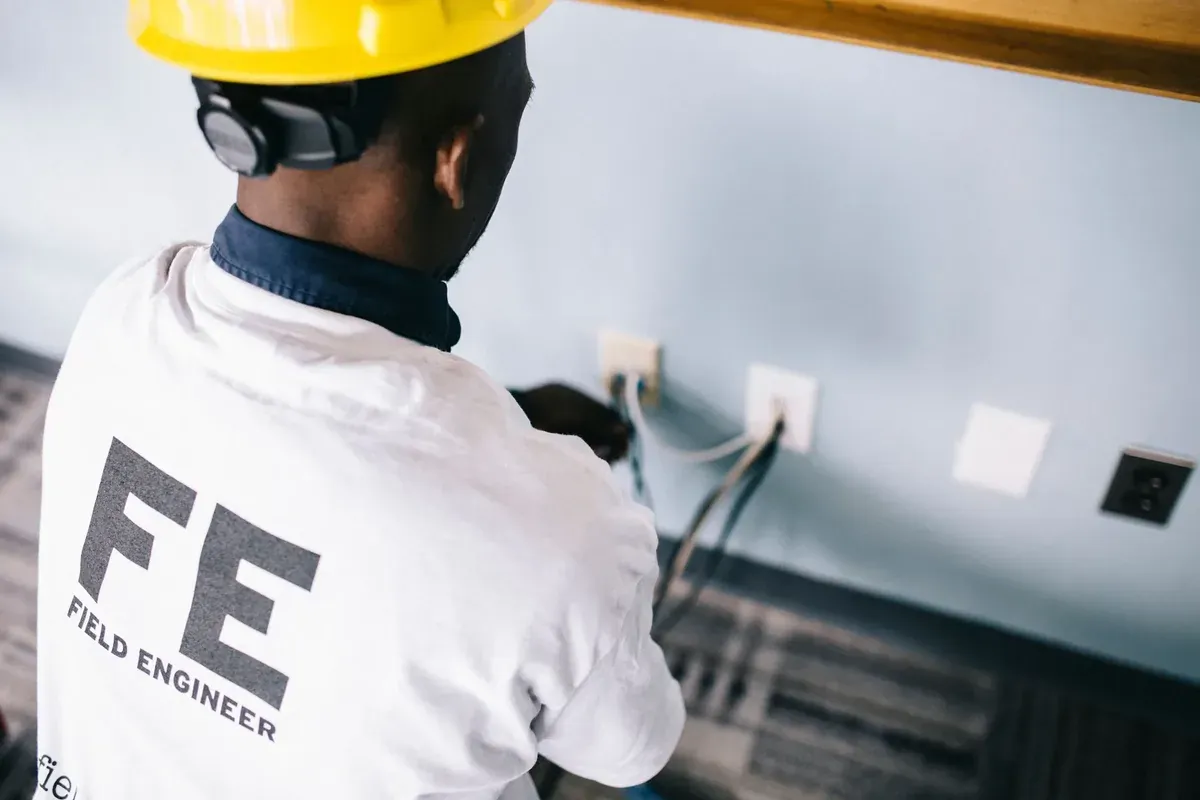
A plug that falls out, or scorch marks on the faceplate?
Replace, reset, or rewire: the decision in one table
Three jobs look alike from the hallway, and the outlet replacement vs GFCI reset Fort Pierce question confuses homeowners most. The table settles it: a reset belongs to a protection device that has tripped, a replacement belongs to a device that has failed, and a rewire belongs to a circuit whose wiring cannot carry the load it needs.
| What you see | The job | Why |
|---|---|---|
| GFCI tripped, faceplate clean, no heat or smell | Reset | The protection did its job; the device is healthy |
| Scorch marks, crack, loose grip, sparks, failed test | Replace the outlet | The device itself has failed and cannot be repaired |
That three-way check is what outlet replacement Fort Pierce visits are booked for: the visit tests the device, then the circuit behind it, so the fix lands on whichever one failed. A reset is covered in full by our GFCI reset guide — this post does not repeat it. Where the breaker itself is the suspect, our breaker tripping guide sorts overload, short circuit and a worn breaker, and our electrical panel repair guide explains which panel faults are repaired.
Why Fort Pierce searchers keep asking about outlets
The search pattern behind this post is worth stating plainly. In Google Trends today, "outlet replacement" shows as Breakout in three separate views — generator installation in the US over the past 90 days, EV charger installation in the US over the past 90 days, and EV charger installation in the US over the past 12 months. People researching generators and EV chargers are asking about outlet replacement at the same time, and the topic had no post of its own on this site. These are relative-interest readings only — no search volumes and no Fort Pierce city-level rank or value, because no city-level data exists. The recurring searcher phrasings match the seven signs above: an outlet that will not hold a plug, an outlet sparking, a burnt outlet, a loose outlet, an outlet not working after a GFCI reset, and a failed GFCI test.
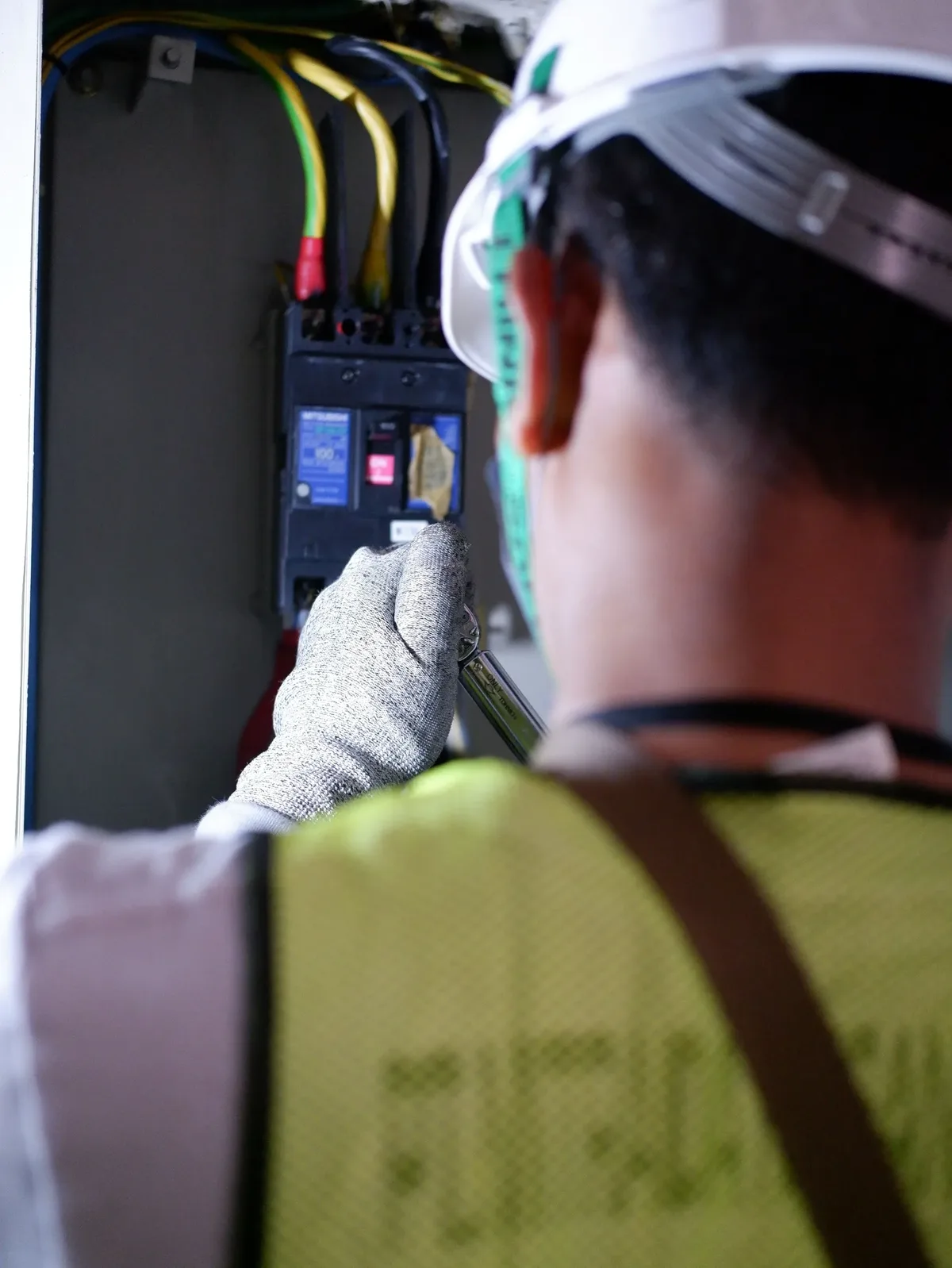
Not sure whether your outlet needs a reset or a replacement?
What happens during a replacement visit, step by step
The swap itself takes minutes; the checks around it take the visit. First the circuit comes off at the panel, and the outlet is tested dead before anything is touched. Then the old device comes out and the box is read: the wiring type, the condition of the conductors, whether a ground wire is present, and whether the box itself is sound.
Next the new device goes in, matched to the room: a GFCI outlet where water and electricity can meet, a tamper-resistant outlet where the code calls for one, and AFCI protection where the circuit requires it — the next section sets out which goes where. The connections are made to the device terminals, the device is seated square in the box, and the circuit is switched back on and tested under load, so the visit ends with proof the new device holds a plug and passes its own test where it carries protection.
The visit never fits a new outlet and leaves the cause behind. If the old device failed because the circuit is overloaded, the visit says so and prices the dedicated circuit on its own terms; our dedicated circuits guide covers that job. If the panel behind it is failing, the visit says that too, and our panel upgrade page covers the capacity question.
Which outlet goes in: GFCI, tamper-resistant, and AFCI
Not every replacement is a like-for-like swap, and the room decides the device. A GFCI outlet goes where water and electricity can meet — kitchens, bathrooms, garages, laundry areas and outdoor boxes — because it cuts the power fast when current leaks to ground. Our GFCI outlet installation page covers the fitting, and our GFCI versus AFCI guide explains what each one protects against.
A tamper-resistant outlet goes where the code calls for it — living areas and bedrooms, and anywhere children can reach a socket. Its shutters stay closed until both prongs press in together. AFCI protection watches for arcing — the sparking inside damaged wiring that a breaker alone cannot see — and it belongs on living-area circuits, where a damaged wire can arc behind a wall.
The wrong device in the wrong room is a real mistake. A standard outlet where a GFCI belongs strips shock protection from the room; a three-prong outlet where no ground exists is the trap our two-prong guide warns about. The visit reads the room, the circuit and the panel, then fits the device the room needs.
Fort Pierce wear: humidity, salt air, and older boxes
Fort Pierce outlets work harder than inland ones. Humid air condenses inside exterior and garage boxes, rain finds worn covers, and salt air near the Indian River Lagoon corrodes terminals and cover screws over time — corrosion on a terminal is a poor connection, and a poor connection is heat. Older boxes add their own wear: hardened insulation, devices swapped several times on short wires, and heavy appliances that wear contacts faster than a bedroom lamp.
An outdoor outlet that trips after every rain?
Cost factors: what moves the price of a replacement
No honest page can print one figure for every replacement, because the device is the smallest part of the job. The outlet replacement cost factors Fort Pierce homeowners ask about are how many outlets need replacing, which device each room needs, what the box behind it holds, and whether the circuit behind it is sound. A single standard outlet in a sound box is a short visit; a GFCI in a corroded outdoor box is a longer one.
Access matters too: an outlet behind a heavy bookcase takes longer to reach. The condition of the wiring behind the device moves the price most — sound conductors and a ground wire in place mean a straight swap, while brittle insulation, a missing ground, or a box that needs replacing mean the visit grows into a repair. Call (772) 218-3629 for your exact range and a written price before work starts; our electrical inspection page covers the wider check when several outlets are suspect.
Safety: what never to do with a damaged outlet
Never open the panel yourself: finding the fault means working with the power on, and that test belongs to the electrician. Never tape a plug into a loose outlet, and never force a plug to stay in — a plug that will not stay in is telling you the contacts have failed, and holding it in place keeps a poor connection carrying current. Never use an outlet that has sparked, smells of burning, or shows scorch marks: leave its circuit off and call now.
Never swap a GFCI for an ordinary outlet to stop the trips, never fit a three-prong outlet where no ground wire exists, and never open an outlet box to chase a loose wire yourself: a loose connection can arc when disturbed. For fire or injury, call 911 first. Our electrical safety guide covers the wider household rules, and our electrical repair page covers a fault that runs wider than one outlet.
What to tell us when you call
To replace an outlet Fort Pierce homeowners call about, we need four answers: which room, what you saw, whether it is a GFCI or an ordinary outlet, and whether other outlets on the same circuit misbehave. Those answers let the call end with a clear scope, the right device for the room, and a written price.
In the end, outlet replacement Fort Pierce homeowners ask for comes down to one visit that reads the symptom, checks the circuit behind it, and fits the device the room needs. Call (772) 218-3629 any time — we answer 24/7, same-day service is available, and we are licensed and insured, with 23 years of experience and Master Electrician Certification. Read our licensed electrician guide before you hire anyone, or start from the Fort Pierce Electric Pros homepage.
Outlet Replacement in Fort Pierce: frequently asked questions
How do I know if my outlet needs replacing or just a reset?
A reset is the right first step only when the outlet is a GFCI that has tripped, with a clean faceplate and no heat, smell or scorching. Replacement is the answer when the device itself has failed: scorch marks, a cracked face, a plug that falls out, sparks on plug-in, or a GFCI test that fails with nothing plugged in. The visit settles which one your outlet needs.
Is a sparking outlet an emergency?
Yes — treat it as one. A sparking outlet means current is jumping where it should not, and the arcing can heat the box and the wiring behind it. Stop using that outlet, leave its circuit off if you can reach the breaker safely from a dry spot, keep everyone away, and call (772) 218-3629 now. Fire or injury means call 911 first.
Why will my outlet not hold a plug any more?
The spring contacts inside the outlet have lost their grip. Every plug-in bends those contacts a little, and after years of use — or heavy use by one appliance — they stop gripping the prongs tightly. A loose grip means a poor connection, and a poor connection means heat where the prongs meet the contacts. The device has to come out and a new one has to go in.
Can I replace an outlet myself?
No — leave this one to us. The swap is made with the circuit off, after the box and wiring behind it have been checked, and the proving test runs with the power on, which is why a homeowner never opens the outlet box or the panel. We fit the right device for the room and test the outlet under load before we leave — short, but not a homeowner job.
What does a failed GFCI test mean for the outlet?
A GFCI test that fails means the protection is gone, even if the outlet still delivers power. Pressing TEST should cut the power; if it does not, or RESET will not stay in with nothing plugged in, the device has worn out or a fault remains on the circuit. Either way the device has to be replaced: an outlet that powers things without working protection looks safe and is not.
What should I tell you when I call about an outlet in Fort Pierce?
Which room it is in, what you saw — scorch marks, sparks, a crack, a plug that falls out — and whether the outlet is a GFCI with TEST and RESET buttons or an ordinary one. Tell us if other outlets on the same circuit misbehave. With those answers in hand, we agree the scope and a written price on the call. Call (772) 218-3629, 24/7.
Ready to talk?