
Light Fixture Installation in Fort Pierce
Light fixture installation Fort Pierce — a new fixture may look right and still be wrong for the ceiling box, the wiring, the controls or the location: the fixture-for-box check for homes in ZIP 34950 and 34951, from Downtown to Hutchinson Island.
Call Now to Speak to a Specialist
Open 24 hours a day, 7 days a week.
Light fixture installation in Fort Pierce: the short answer
Light fixture installation Fort Pierce is decided before the fixture is hung: the ceiling box, the wiring, the controls and the location all have to match the fixture, and a mismatch is found on the visit — not after the fixture is already up. This guide sets out the check in the order it is done.
Step one: the fixture-for-box match
Light fixture installation Fort Pierce starts with the match, not the fixture: the new fitting has to suit the ceiling box, the wiring, the controls and the location, and a fixture that looks right can still be wrong on any one of them. Too heavy for the box, wired for controls that are not there, hung where a damp-rated body belongs, or set too low over a walkway — each of those is found on the visit, before the fixture is hung, and each of them changes the job.
That check is the whole spine of this guide, and it is done in the order the work is done: the box first, then the wiring, then the control, then the location, then the question of whether the job is a swap or permit work. Our ceiling-fan-rated-box guide owns the box-rating ground in full, and this post links to it rather than repeating it. The lighting installation service page sets out the fitting scope the visit agrees.
Step two: the ceiling box and its weight rating
The ceiling box must be suitable for the fixture and its weight. A standard fixture box carries 35 to 50 pounds, and a heavier fixture needs a box rated for the load, secured directly to a joist or braced between joists — the weight rating is a property of the box and its support, not of the canopy that covers it. A decorative canopy does not correct an unsuitable or loose box, and a box that flexes when it is pushed must be replaced first, before any fixture is hung from it.
The check is a hands-on one: the box is pushed, the screws are checked, and the support behind it is confirmed, because a fixture hanging from an under-rated box is a repair waiting to happen. A fan-rated box is a different rating again, and our ceiling-fan-rated-box guide owns that ground — this post links to it rather than re-deriving it. If the box is sound and rated for the fixture, the job moves on to the wiring.
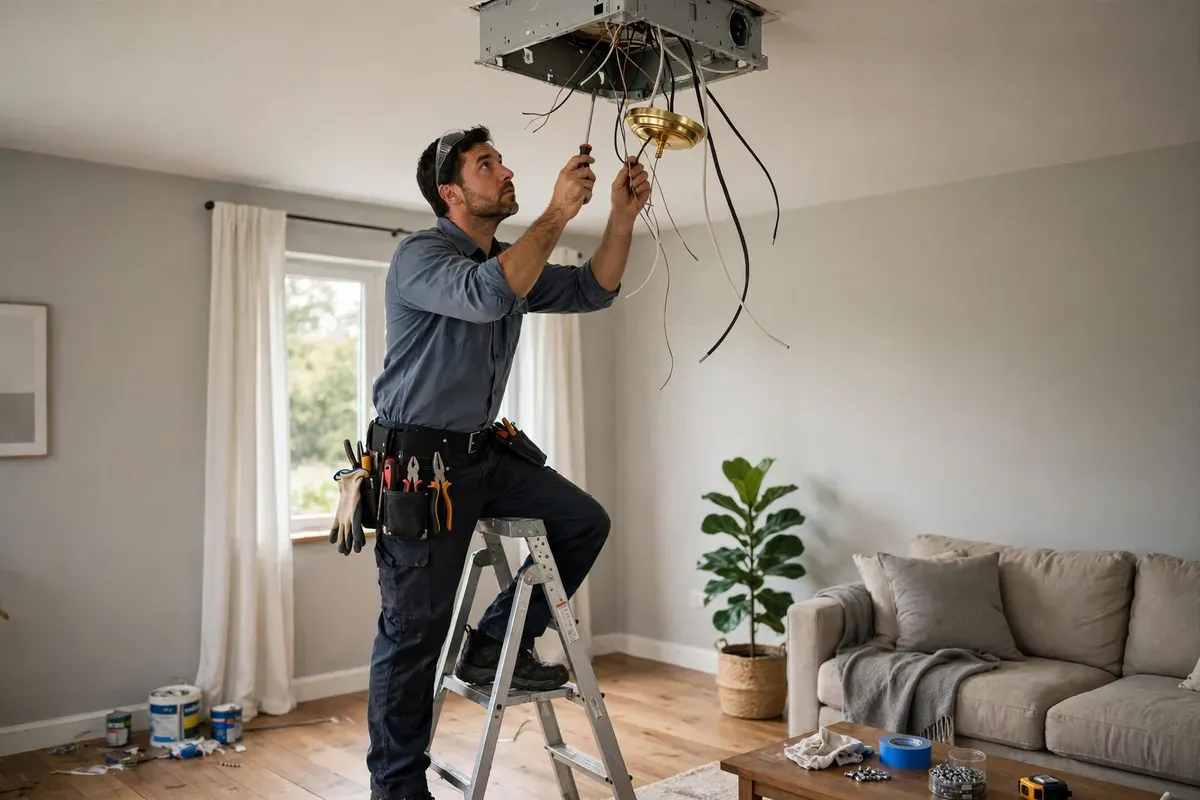
New fixture picked out? Check the box before it goes up.
Step three: the wiring and the ground
The circuit is switched off at the panel and verified off with a tester before a wired fixture is touched — that step is not skipped, and it is not taken on trust from the wall switch alone. The ground wire is then confirmed present and landed, because a metal fixture on ungrounded wiring has nowhere safe to send a fault. The visit checks the insulation at the same time: brittle, cracked or heat-damaged insulation is a stop condition, not a detail to work around.
No ground wire, brittle insulation, or unfamiliar wiring means the fitting stops and an electrician is called — that is the rule, and it is the same rule our lighting-repair guide uses for a fixture that has already failed. A like-for-like swap on sound wiring in a listed box is a service-level visit; anything that needs the wiring put right first is a different job, and the visit says so before the fixture comes out of its box.
Step four: the control — switch, dimmer or smart
The control is noted before the fixture is wired: one switch, multiple switches, a dimmer, a timer, or a smart control, and the fixture and the bulbs must both be labelled dimmer-compatible before a dimmer is part of the job. Not every LED bulb dims cleanly, and an old incandescent dimmer often cannot read the low load of an LED at all — the fix is an LED-rated dimmer, not a different bulb.
That is why the dimmer is confirmed before the wiring, not after the fixture is up and flickering. Our dimmer-switch-installation guide owns the fitting ground, and the LED flicker-and-buzz guide owns the diagnosis when a light already flickers or buzzes on a dimmer — this post links to both rather than re-deriving either. A fixture that cannot dim cleanly on the control it is wired to is a callback, not a finished job.
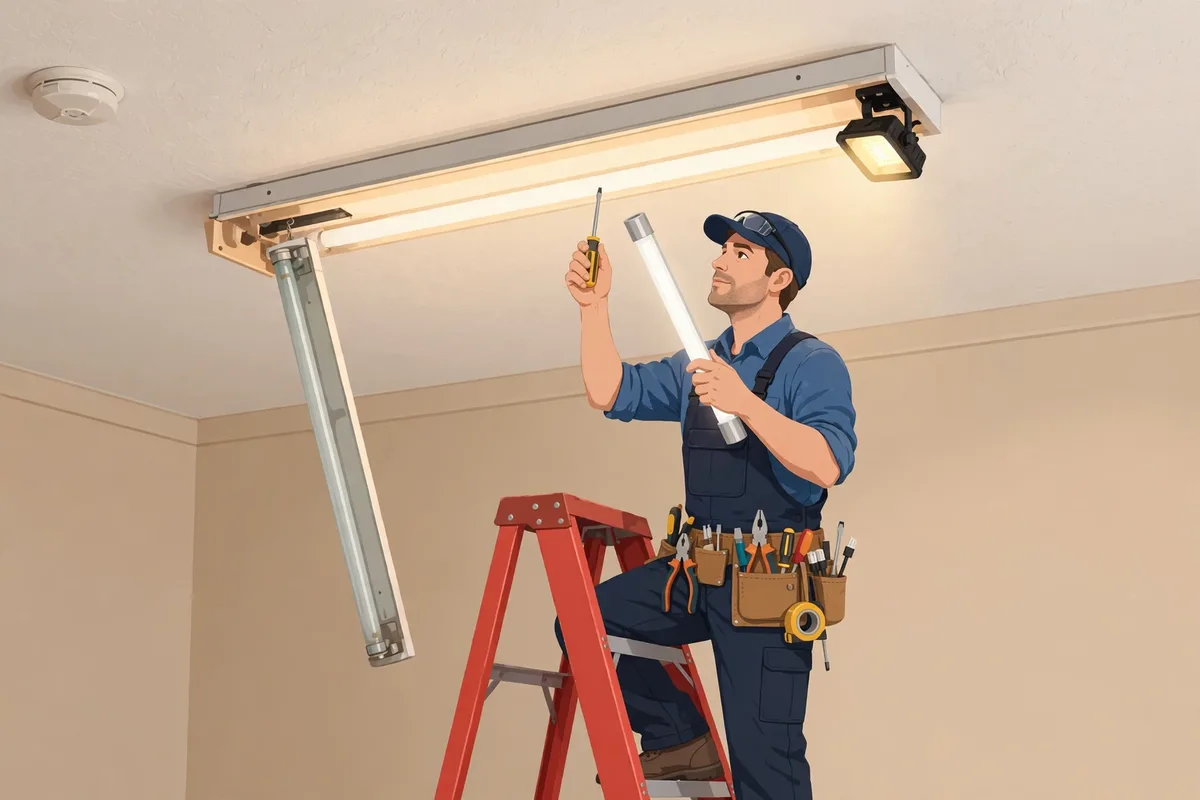
Step five: the location and the rating
The location decides the rating. A lanai or a damp bath needs a damp- or wet-rated body, not an indoor canopy with an open chain, because salt air punishes indoor fixtures — the finish pits, the screws corrode, and the socket fails long before the bulb does. A bath over a shower needs the right rating, not a close-enough indoor flush-mount, and the rating is read from the fixture's label, not guessed from how it looks.
Sloped ceilings need an angled adapter or a fixture designed for sloped installation, so the fitting hangs level instead of pulling sideways on the box. Our outdoor-kitchen-and-patio guide owns the wet-location device ground, and this post links to it rather than repeating it. A fixture that is right for the room it hangs in lasts; one that is merely close enough becomes a repair.
Step six: new fixture or replacement — and when it is permit work
A like-for-like swap on sound wiring in a listed box is a service-level visit: the old fixture comes down, the new one goes up on the same box, and the controls stay as they are. Moving the box, adding a new ceiling point, or opening a finished ceiling for a brace is permit work under St. Lucie County permitting and the Florida Building Code, and it is quoted as a different job from the swap — the visit says which one it is before any ceiling is opened.
The same line holds for the fixture families this post links to rather than covers: the chandelier-and-under-cabinet guide owns chandelier ground, the track-lighting guide owns track ground, and the recessed-lighting service page owns recessed ground. A pendant, a flush-mount, a semi-flush or a sconce follows the same fixture-for-box check as the rest, and the ceiling-fan service page covers the heavier ceiling work where a fan, not a light, is the load.
Cost factors only: what moves a light fixture quote
Exact price and timing are confirmed on the call, and a light fixture quote moves on a short list of factors: the fixture type and weight, the box condition and support, the wiring condition, the dimmer or control work, and any permit step. A light swap on a sound box is a different job from a heavy pendant that needs a braced box, and both are different again from a new ceiling point that needs the ceiling opened.
The box check sits underneath the quote, because it decides whether the job is a swap at all. A smoke detector on the same ceiling stays put on its own circuit — the smoke and carbon monoxide detector page covers that fitting, and this post links to it rather than re-covering it. The visit runs the check in the order above, and the quote follows the visit.
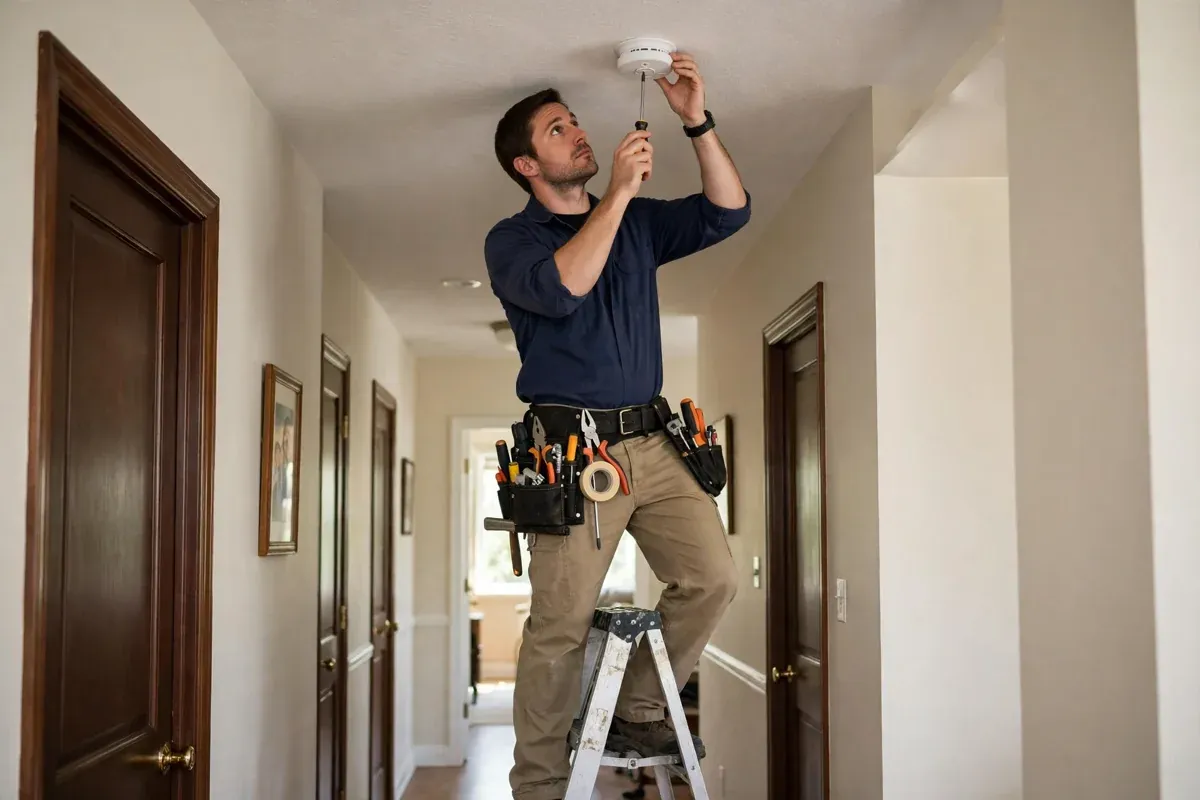
Fixture too heavy for the box, or no ground wire in the ceiling? Call before you hang it.
What the visit checks, and what to have ready for the call
The visit runs the check in order: the fixture against the box, the box against its rating, the wiring and the ground, the control against the bulbs, and the location against the rating. The fixture type and weight, the ceiling height, the box condition, the switch or dimmer type, and the room it hangs in are all noted before the fitting starts, and anything the check turns up — a flexing box, a missing ground, a dimmer that cannot read the bulbs — is put right before the fixture goes up.
Light fixture installation Fort Pierce is a fixture-for-box decision, and it is made before the fixture is hung, not after. Call (772) 218-3629 any time; we are open 24/7, licensed and insured, with 23 years of experience and Master Electrician Certification. The lighting installation page sets out the fitting scope the visit agrees, and the electrical inspection page covers the assessment that starts it. See the rest of our work on the Fort Pierce Electric Pros homepage.
Light Fixture Installation in Fort Pierce: frequently asked questions
Can any ceiling box hold a new light fixture?
No. A standard fixture box carries 35 to 50 pounds, and a heavier fixture needs a box rated for the load, secured directly to a joist or braced between joists. A decorative canopy does not correct an unsuitable or loose box, and a box that flexes when it is pushed must be replaced first, before any fixture is hung from it.
What if my ceiling has no ground wire?
Stop and call an electrician. A metal fixture on ungrounded wiring has nowhere safe to send a fault, and brittle or damaged insulation is a stop condition, not a detail to work around. The visit puts the wiring right first, and the fixture is fitted only on sound, grounded wiring.
Will my new LED fixture work with my old dimmer?
Not always. The fixture and the bulbs must both be labelled dimmer-compatible, and an old incandescent dimmer often cannot read the low load of an LED at all — the fix is an LED-rated dimmer, not a different bulb. Dimmer compatibility is confirmed before the fixture is wired, not after it is up and flickering.
Can I put an indoor fixture on a lanai or in a bath?
No. A lanai or a damp bath needs a damp- or wet-rated body, not an indoor canopy with an open chain, because salt air punishes indoor fixtures — the finish pits, the screws corrode, and the socket fails long before the bulb does. A bath over a shower needs the right rating, and the rating is read from the fixture's label, not guessed from how it looks.
When is a light fixture job permit work?
Moving the box, adding a new ceiling point, or opening a finished ceiling for a brace is permit work under St. Lucie County permitting and the Florida Building Code. A like-for-like swap on sound wiring in a listed box is a service-level visit — the old fixture comes down and the new one goes up on the same box.
What should I have ready when I call about a light fixture?
The fixture type and weight, the ceiling height, whether the box flexes when pushed, the switch or dimmer type, and the room it hangs in — a lanai or a bath needs a different rating from a bedroom. Mention whether the ceiling has a ground wire if you know. Call (772) 218-3629, 24/7.
Ready to talk?