
Circuit Breaker Replacement in Downtown Fort Pierce
Circuit breaker replacement Downtown Fort Pierce starts with the diagnosis, not the part: for homes and shops in ZIP 34950, around the Sunrise Theatre, the Fort Pierce City Marina and the Downtown Farmers Market, a tripping breaker can mean a worn breaker, a stretched circuit, or a tired panel.
Call Now to Speak to a Specialist
Open 24 hours a day, 7 days a week.
Circuit breaker replacement Downtown Fort Pierce is a diagnosis job before it is a parts job: the visit works out whether the breaker failed, the circuit is overloaded, or the panel itself has reached its limit — because each answer points at a different fix, and fitting a new breaker for the wrong cause wastes the visit.
The Downtown pattern: one breaker, two kinds of building
Downtown Fort Pierce mixes shops, restaurants and homes on the same streets, and that mix is what makes a Downtown breaker different from a breaker anywhere else in the city. Around the Sunrise Theatre, the Fort Pierce City Marina and the Downtown Farmers Market, older buildings run full panels, shop equipment and signs stretch circuits that were sized for quieter days, and salt air wears the outdoor fittings near the lagoon. A home breaker and a shop breaker fail the same way, but the circuit behind each one is different — so the diagnosis starts with the building, not the breaker. Our Downtown area page covers the work we do across the district.
The calls we hear most from Downtown follow the mix. A shop breaker trips at peak hours, when the kitchen kit, the cold storage, the lighting and the signs all draw at once. A dead outlet in a shopfront often traces back to a tripped GFCI or a loose wire upstream, not to the outlet itself. And an older apartment over a shop can share a panel with the business below it, so the fault and the fix have to be planned around trading hours and whoever holds the keys. Our electrical repair guide for Downtown covers the fault pattern across these mixed buildings.
Replace, reset, or panel work: the diagnosis in four checks
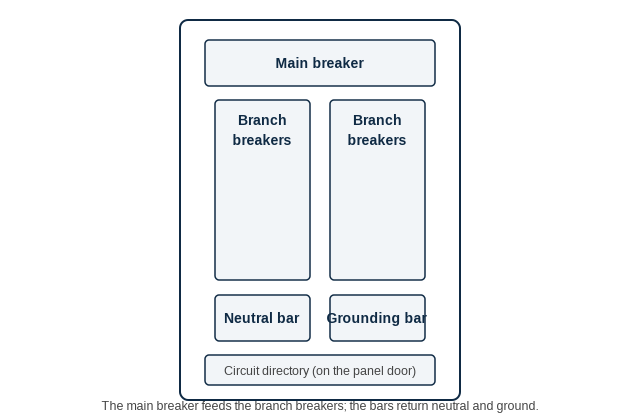
Circuit breaker replacement Downtown Fort Pierce follows four checks, in order, and the order matters. First, what the breaker did: one trip after a clear overload, followed by a reset that holds, is the breaker doing its job. Second, what the breaker feels and looks like: a loose toggle, warmth, a burning smell, or scorch marks. Third, what the panel says: the brand, the bus bar the breaker sits on, and whether any slots are left. Fourth, what the circuit carries: a shop's signs and kitchen kit, or a home's air conditioner and laundry. Our breaker tripping guide explains what overload, short circuit, ground fault, and a worn breaker each look like, and our breaker troubleshooter tool walks through the same checks.
Each answer points at a different fix, and that is the point of the four checks. A breaker that did its job once needs the cause of that one trip found, not a new part. A breaker that has failed needs the listed replacement for that panel, fitted after the bus and connections are checked. A circuit that has been outgrown needs a dedicated circuit, because a bigger breaker on wiring rated for less is never the fix. And a panel problem needs panel work, not another breaker on failing equipment. Our expand-or-upgrade guide explains how the visit decides between a subpanel, tandem breakers and a full upgrade — this post stays with the breaker itself.
A breaker that keeps tripping, or one that will not stay on?
The five failures that mean replace
Five failures mean the breaker itself has to go. A breaker that will not stay on, or trips straight back the moment it is reset. A breaker that trips again and again on the same circuit under a normal load, with nothing new plugged in. A breaker that feels warm or hot to the touch. A burning or acrid smell at the panel, or scorch marks on the breaker face. And a toggle that feels loose or spongy, or will not click firmly into the on position. Any one of those means replacement is on the radar, and two or more at the same time means do not wait.
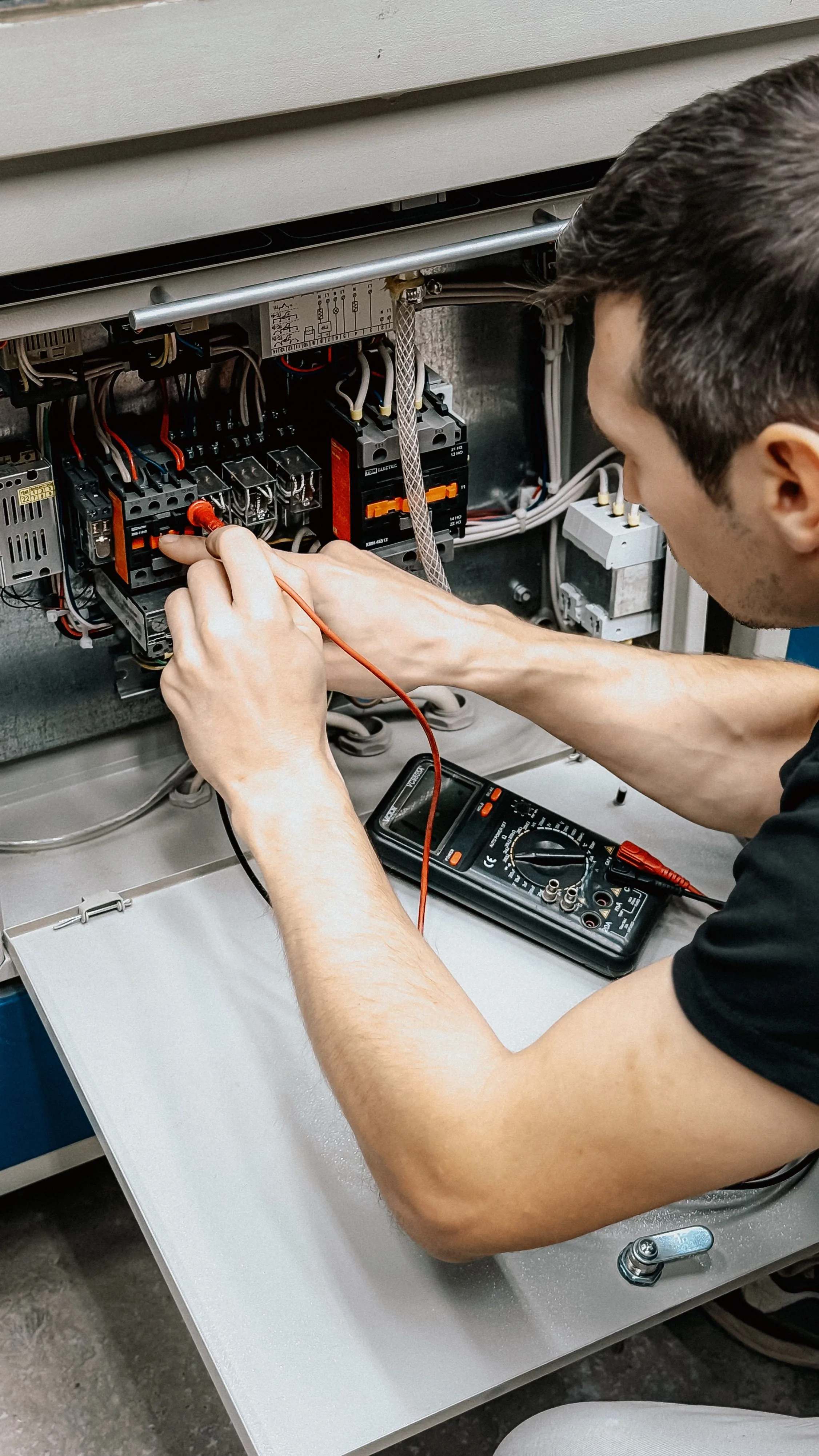
The failure that makes no noise is the one to fear in a Downtown shop, because a shop notices a dead circuit, not a tripping one. A breaker is supposed to cut power when there is too much current, and if it can no longer do that job, the wiring overheats with no safety shutoff — while the shop keeps trading underneath it. That is why a breaker that has stopped tripping is treated as more dangerous than one that trips too often, and why the visit tests the trip mechanism instead of assuming it works. A panel that buzzes or hums deserves the same attention: our buzzing panel guide explains which sounds are ordinary and which mean call now.
The replacement sequence: what the visit actually does
The replacement itself is a short sequence, and every step matters. The power goes off first. Only a listed breaker for your panel goes in, because a breaker from another brand that merely fits is a shortcut an inspector will flag. The bus stab the breaker sits on is checked before anything is swapped — a new breaker on a pitted or burnt bus fails again on day one — and the connections are checked with it. The visit also looks at protection: does the circuit now need arc-fault or ground-fault protection it did not have when it was fitted, AFCI for living areas and GFCI for wet and damp ones? Our how to read breaker panel labels guide explains where to find the main breaker number and the directory card, and our electrical panel repair guide explains which panel faults are repaired and which mean replacement.
Then the circuit is proved, not assumed. The visit energises the circuit again and tests it under load, so the breaker that was fitted is the breaker that holds — and the panel is labelled before the visit ends, so the next person to open it knows which breaker feeds what. Not every trip ends in a replacement. A breaker that trips once — a storm surge, or the microwave, a space heater and a toaster all on one circuit at once — and then resets and holds has done exactly what it was fitted to do. The visit leaves that breaker alone and finds the cause of the one trip instead.
A humming panel, or a breaker that feels warm?
When one breaker is not the fix
Most of the time, one failed breaker is one job, and the visit ends with the swap. It becomes a panel decision in four cases: more than one breaker has been acting up, the panel has no open slots left, a major load is being added, or the panel is a Federal Pacific or Zinsco unit where one replacement breaker is usually the wrong fix. Then the honest call is panel work, and the load calculation makes it, not the count of breakers that tripped. Our expand-or-upgrade guide covers the subpanel and upgrade routes, and our Federal Pacific versus Zinsco guide explains why those two brands are replace-first. Our Federal Pacific replacement and Zinsco replacement pages cover the work.
Downtown adds its own version of the panel decision. A shop adding refrigeration, a sign circuit or a kitchen line can push a full panel over the edge, and a mixed building can add a landlord approval step on top of the permit. The panel may sit in a shared space or behind a counter, so the visit is planned around trading hours and whoever holds the keys. Our commercial electrician page covers shop and restaurant work, our subpanel page covers the room-maker route when the service is sound and only short of spaces, and our panel upgrade page covers the capacity question.
Downtown circuits: signs, kitchens, and salt air
Downtown circuits have their own fault pattern, and it starts outdoors. Sign and display lighting run outside all year, restaurant kitchens run cooking lines, extraction and refrigeration on circuits that never rest, and the outdoor GFCI near the lagoon trips after rain because water is getting into a fitting — not because the device has failed. Salt air corrodes fixture housings, panel edges and outdoor fittings, and a breaker that trips only in wet weather is usually pointing at a joint or a fitting, not at the breaker itself. Our salt-air corrosion guide explains how the coast wears outdoor gear, and our GFCI outlet page covers the protection those circuits need.
The safety rules for a Downtown breaker are the same as anywhere else, and they do not bend for a shop that needs to trade. A breaker that trips straight back gets one reset, with the devices on that circuit unplugged — after that it stays off, because every reset after a fault wears the breaker and hides the cause. The panel is never opened by the homeowner, because the test is done with power on. A burning smell, scorching around a breaker, or crackling from the panel means the circuit stays off and the call is urgent. Our emergency electrician page and our electrical emergency guide explain the signs in full.
A shop circuit that trips at peak hours?
Cost factors and what to have ready when you call
What moves the quote is the breaker and what sits behind it: the listed part for your panel, the condition of the bus bar, the panel brand, and whether a dedicated circuit or panel work follows the swap. Access matters Downtown too — a panel in a shared space or behind a counter takes longer to reach than one on an open wall. Our panel upgrade cost-factors guide lists what moves a panel quote, our electrical repair page covers the wider repair work, and the visit turns those factors into a written price for your address. No dollar figure is given here — the exact price is held for the call.
Circuit breaker replacement Downtown Fort Pierce is settled at the panel and the bus, and the visit starts with the diagnosis, not the part. Call (772) 218-3629 any time; we are open 24/7, and same-day service is available. We are licensed and insured, with 23 years of experience and Master Electrician Certification. The sister posts cover the same diagnosis in Fort Pierce South, on Hutchinson Island and in Lakewood Park — and the Downtown area page covers the work we do in ZIP 34950. Or start at the Fort Pierce Electric Pros homepage.
Circuit Breaker Replacement in Downtown Fort Pierce: frequently asked questions
What are the signs a circuit breaker needs replacing in a Downtown building?
Start with the trip pattern: a breaker that trips repeatedly on the same circuit is telling you something. Then the toggle — one that is loose, or will not click on, has worn out. Then look at the panel: scorch marks, a burning smell, warmth, or a buzzing or crackling sound. Any one puts replacement on the radar; two or more together means do not wait. A breaker that has stopped tripping is the most dangerous sign of all.
My breaker will not reset — what do I do?
Try one reset, with everything on that circuit unplugged. If the breaker trips straight back, or will not stay in the on position, leave it off and call us — the fault is in the breaker, the bus or the wiring, and every reset after a fault wears the breaker and hides the cause. If there is a burning smell or scorching around the breaker, treat it as an emergency, leave the circuit off, and call.
How does the visit tell a bad breaker from an overloaded circuit?
By the trip pattern. One trip after a clear overload, followed by a reset that holds, is the breaker doing its job. A breaker that trips below its rated amperage, will not reset, or runs warm on a normal load is faulty. A circuit that trips every time the same big appliance starts is undersized, and the fix is a dedicated circuit, not a bigger breaker. The visit runs that test before anything is replaced.
Can I replace a circuit breaker myself?
No — and in a Downtown building the answer is firmer, not softer. The work is done with the power off, with the listed breaker for that panel, and with the bus and connections checked before the new breaker goes in. The panel is never opened by the homeowner, because testing is done with power on. The visit fits the breaker, tests the circuit under load, and leaves the panel labelled.
Does a Federal Pacific or Zinsco panel change the fix?
Yes, and it changes it before the visit starts. A breaker in a Federal Pacific Stab-Lok or Zinsco panel, or on a bus bar that is pitted and overheated, is not a one-breaker job — fitting another breaker onto failing equipment only moves the failure along. The honest call is a panel replacement, and the visit confirms the brand before any other work is discussed.
What should I tell you when I call about a breaker Downtown?
Your street and ZIP 34950, whether the building is a shop, a restaurant or a home, and whether a landlord must approve the work. Your panel's brand and size, which breaker trips and what runs on that circuit, and whether it feels loose, warm, or smells of burning. With those answers, the call ends with a clear scope and a written price. Call (772) 218-3629, 24/7.
Ready to talk?