
Electrical Panel Upgrade in White City, Fort Pierce
Electrical panel upgrade White City Fort Pierce for a home on a larger western plot in ZIP 34950, where the garage or outbuilding keeps adding workshop loads: the tools that trip the panel, the load calculation that decides, and the upgrade itself.
Call Now to Speak to a Specialist
Open 24 hours a day, 7 days a week.
An electrical panel upgrade White City Fort Pierce job starts with the workshop load list, not the panel label: table saw, compressor, dust collector and welder, plus the house loads that run at the same time. A NEC load calculation adds up what runs together, and the visit settles whether the answer is a subpanel, a replacement, or an upgrade.
Larger plots, longer runs, and a workshop that keeps growing
White City sits on the western side of Fort Pierce, where the plots are larger and the house often comes with a garage, an outbuilding, or both. That extra space is exactly what turns into a workshop: a table saw here, a compressor there, a dust collector, a welder, a freezer, a charger — each one ordinary on its own, and together more than the panel was sized for. Our White City area page frames the work as workshop panel capacity, and this post owns the upgrade decision it leads to.
The workshop version of the capacity question is different from a panel that is simply old. The loads arrive one tool at a time, each with its own circuit, and nothing trips until the day two or three of them run together — the saw and the dust collector, the compressor kicking in while the lights are on. Motors draw more current when they start than when they run, so the pattern of use matters more than any single tool name: what runs together on a busy day is the load the panel has to carry.
The signs the workshop has outgrown the panel
The signs are the trips, the flicker, the full breaker row, and the new tool itself — breakers that trip when a tool starts, especially when two start together; lights that dim when the compressor kicks in; a panel that feels warm, buzzes, or smells of burning; a breaker row with no spare spaces left for the next 240V circuit; or a fuse box, or a 60–100A service, in a house that now runs a workshop as well as a home. Each one is a reason to look closer, and the last sign is the one White City homeowners most often miss: adding a 240V tool, a welder circuit, or an EV charger in the garage is a capacity trigger, not just a new circuit, and the right time to check the panel is before the new circuit goes in, not after the first trip. A 4-point inspection flags the same items — an obsolete brand, a fuse box, and visible damage — so a panel that fails the inspection usually fails one of the two questions here too.
Two of those signs come with a safety rule that does not bend: the inside of a panel is not a homeowner's inspection, because the bus bars behind the cover stay live even with the main breaker off, so the cover stays on and the panel stays our job. A burning smell or scorch marks around the panel mean calling now, not looking closer: keep clear, do not touch anything that looks or smells hot, and let us come to it. Sparks or smoke mean 911 first. Our buzzing guide and our White City breaker post cover the buzzing check and the breaker-diagnosis ground, and our breaker-label guide shows how to read the panel label without opening the panel — linked here, not repeated.
Workshop tools tripping the breaker?
The capacity check: what runs together
A NEC load calculation decides capacity, not a count of breaker slots: it adds up what runs together — the house loads, central air, water heater and dryer, plus the workshop loads, table saw, dust collector, compressor and welder — and sets the total against the main breaker rating. A 100-amp service copes with standard appliances, but it runs out of headroom fast once workshop tools join the evening stack. The total that matters is the simultaneous one: a saw and a dust collector running together, with the lights on and a space heater in the corner, is a different load from either tool alone.
The White City version of this check is the busy-day list: tell us what runs together, and we size the conversation around that day, not an easy one. A 240V tool needs its own dedicated circuit, a welder typically needs its own 30, 40 or 50-amp dedicated circuit depending on the type, and an EV charger in the garage needs a dedicated 240V circuit too — each one is a circuit the panel has to have room and capacity for, and garage receptacles need GFCI protection as well. When the simultaneous total passes what the service can carry, the answer is a 200 amp panel upgrade White City Fort Pierce job, not a bigger breaker. Our 100-amp versus 200-amp guide works through the comparison, our EV charger panel-capacity guide covers the charger ground, and our home-office and workshop dedicated-circuits page covers the circuit side of the job. Our White City EV charger post covers the charger decision itself, linked here, not repeated.
Subpanel, replacement, or upgrade: three different jobs
With the calculation done, the decision is one of three jobs. A subpanel in the garage is the room-maker: it puts the workshop circuits where the work happens, keeps the long runs across a larger plot short, and groups the tool circuits together — and it fits when the panel is sound, the service has headroom, and the house needs more circuits. A subpanel adds breaker spaces fed from the main panel, and no capacity of its own, so it answers a full row and never answers a failed calculation.
A panel replacement swaps the breaker box for a new one at the same amperage: the usual job for a Federal Pacific or Zinsco panel in a house that has enough power, or for a panel that is damaged but right-sized. An upgrade raises the amperage, which makes it a different job from either of the other two. An electrical panel upgrade White City Fort Pierce job is a capacity job first and a box swap second: the new panel is only the visible part, and the service behind it is what actually changes. Homeowners usually ask about electrical panel replacement White City Fort Pierce here; the honest answer starts from what the brand or the condition forces. Our expand-or-upgrade guide covers the choice, our panel upgrade service page covers the scope, our subpanel installation page covers the room-maker, our panel-repair guide covers the repair ground, and our Federal Pacific versus Zinsco guide covers the two brands that always mean replacement.
What an upgrade changes on the day — and the run to the garage
Raising the amperage changes the service, not just the box: the service entrance conductors get bigger, the meter base is rated for the new size, and the mast and weatherhead — the homeowner-owned parts between the utility and the panel — are often replaced with them, and the grounding comes up to the same standard. Upgrade day follows one order: power is disconnected by the utility before anything is touched and reconnected only after the inspection. Out comes the old panel; in go the new meter base, conductors, mast and grounding — and the new panel is fitted, tested and inspected before the power comes back.
On a larger western plot the run matters as much as the panel: the cable route to a detached garage or outbuilding, the feeder that supplies a garage subpanel, and the grounding electrode and disconnect at the outbuilding are part of the same job, planned before work starts. The three parts are checked as one system — house panel, run, and workshop panel — because a fault in any one of them shows up as a trip at the bench. Before regulated work starts, a permit generally has to be in place, and the office that handles yours depends on your exact address.
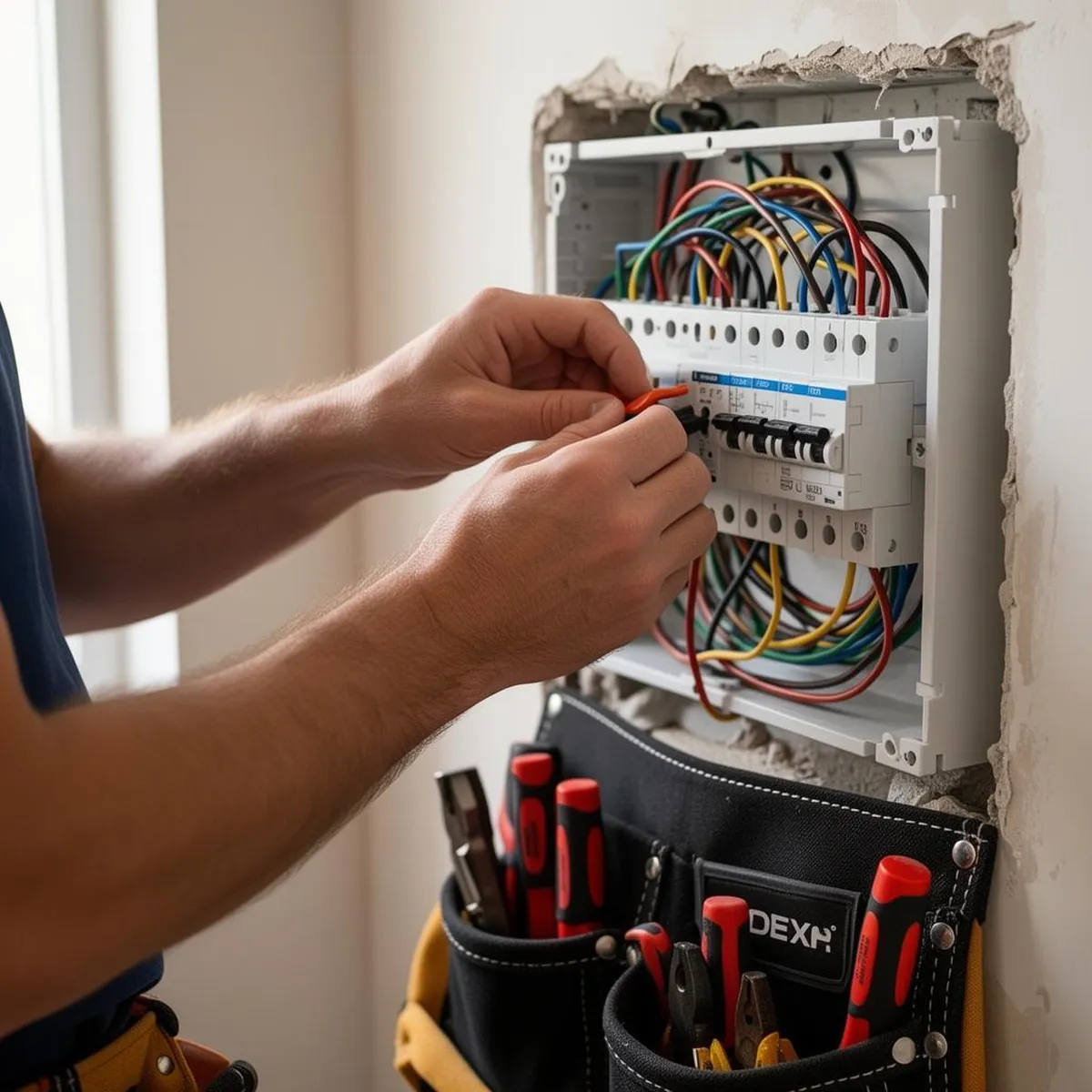
Wondering what shapes the scope?
What sets the cost — cost factors only
No price lives in this post: the exact figure is held for the call. Job type comes first: a straight panel swap is one scope, a service upgrade that also replaces the meter base, the service entrance conductors and the mast is another. Then comes the panel spare spaces and total load, the cable route, the parts involved, and any permit step. A long cable run across open ground to an outbuilding costs more in labour and materials than a short indoor run, while a repair on a sound panel stays small. Homeowners usually ask about panel upgrade cost factors White City Fort Pierce at this point; the honest answer starts from those factors, not from a printed figure. Our panel upgrade cost-factors guide works through each factor in turn, and attaches no invented price to any of them.
The visit sequence — and what to have ready for the call
The visit starts at the panel: the brand, the main breaker size, the spare spaces, and the condition signs — age, corrosion, heat damage, the state of the meter base, and whether the brand is one of the obsolete two. Then comes the load list, circuit by circuit — house loads and workshop loads together — and the load calculation, setting the running total against the service size to settle whether the house needs 100 amps or 200. The verdict comes last — repair, subpanel, replace at the same size, or upgrade. Our electrical inspection page covers the assessment, our White City repair post covers the repair ground, our White City generator post covers generator readiness, and our licensed-electrician guide covers the hiring and verification ground. Our Waterstone panel-upgrade post covers the same decision for a newer subdivision home.
A call goes faster with four things ready: your street in ZIP 34950 and the age of the house; the panel brand and size, and whether the breaker row is full; the workshop list — the tools, what runs together on a busy day, and whether the garage or outbuilding is attached or detached; and whether the panel has ever felt warm, buzzed, or smelled hot.
A larger plot, a workshop that keeps growing, and a calculation that settles the answer — that is the White City panel decision in one line. The panel, the wiring history and the load list differ on every White City street, so the visit is what turns them into a verdict. Call (772) 218-3629 any time about an electrical panel upgrade White City Fort Pierce job; we are open 24/7, licensed and insured, with 23 years of experience and Master Electrician Certification.
Electrical Panel Upgrade in White City, Fort Pierce: frequently asked questions
When does a White City panel need an upgrade instead of a repair?
A repair fits one fault in a sound panel — a single bad breaker, a loose connection, a damaged circuit. An upgrade fits a workshop home whose load calculation fails: the table saw, dust collector and compressor, running together with the house loads, pass what the service can carry — or a panel that fails the condition check, corroded, heat-damaged or an obsolete brand. The visit answers both questions first, and the verdict follows from the answers.
How does the visit settle the 100-amp or 200-amp question for a workshop home?
By listing what runs together on a busy workshop day — saw, dust collector, compressor, lights, heater — adding the house loads, and setting that simultaneous total against the main breaker rating. A 100-amp service that already runs most of the list has no room for the next tool, and that is when 200 amps enters the conversation.
Will a garage subpanel fix a White City panel that keeps tripping?
When the problem is space, not power, yes. A subpanel in the garage gives the workshop circuits somewhere to live, keeps the long runs short, and works when the service still has headroom for the loads. When the trips come from a failed load calculation, a subpanel changes nothing, because it adds breaker spaces and no capacity at all.
Does a Federal Pacific or Zinsco panel in White City always mean replacement?
Yes — the brand decides before the load calculation gets a say. A Federal Pacific Stab-Lok or a Zinsco panel carries a failure record no repair can undo, so the visit confirms the brand on the label first and plans the replacement. Whether the new panel should also be larger is a second question, settled by the workshop load list once the unsafe box is out of the picture.
What happens on upgrade day, and who takes care of the permit and the utility?
Power goes off first: the utility disconnects the service before anything is touched, and reconnects it only after the inspection passes, so the home is without power for the length of the changeover. The new meter base, service entrance conductors, mast and grounding go in with the panel, the workshop circuits move across or gain their new subpanel, and the job is tested and inspected before power returns. A permit generally has to be in place before regulated work starts, under St. Lucie County permitting and the Florida Building Code.
What should I have ready when I call about a panel upgrade in White City?
Your street in ZIP 34950 and the age of the house come first, then the panel brand and size and whether the breaker row is full. Add the workshop list — the tools, what runs together on a busy day, whether the garage or outbuilding is attached or detached — and whether the panel has ever felt warm, buzzed, or smelled hot. Call (772) 218-3629, 24/7.
Ready to talk?