
Circuit Breaker Replacement in White City, Fort Pierce
Circuit breaker replacement White City Fort Pierce starts with the symptom read, not the part: for homes on larger western plots in ZIP 34950, reached by Okeechobee Road and Midway Road, a tripping breaker can mean a worn breaker, a loose connection, or a panel at its limit.
Call Now to Speak to a Specialist
Open 24 hours a day, 7 days a week.
Circuit breaker replacement White City Fort Pierce is a diagnosis job before it is a parts job: the visit reads the trip pattern, checks the breaker, the bus bar and the connections, and only then decides whether the fix is one breaker, a panel repair, or a full panel replacement.
White City setting: larger plots, more buildings, longer runs
Circuit breaker replacement White City Fort Pierce starts with the plot, not the panel. White City sits on larger western plots, farther from the city core, reached by Okeechobee Road and Midway Road — and a fault may sit in the house, the garage, or an outbuilding at the back of the plot, with a cable run between them that matters as much as the fault itself. Our White City area page covers the work across the neighbourhood, and our White City repair post covers the wider repair ground — this post owns the breaker diagnosis.
That setting changes what a tripping breaker means. A workshop running tools all day, a charger in the garage, and a long outdoor run each load a different circuit, and the breaker that trips may be answering to the tool, the run, or the breaker. The diagnosis sorts those apart before any part is ordered, because each one points at a different fix — a breaker that trips only when the workshop compressor starts is a different job from one that trips with nothing running.
Five signs the breaker itself has failed
Five signs point at the breaker itself, and the visit reads them together. First the toggle: one that will not snap firmly on has worn out. Next the temperature: a breaker body, or the panel door beside it, that feels warm. Then the reset that fails at once, the breaker dropping back out the moment it is switched on. Then the repeat trip on a circuit carrying only its usual load. Last the smell or the mark: a burning odour at the panel, or scorch marks on the breaker.
The same signs show up in the words homeowners search with — a breaker won't reset White City, a breaker that trips with nothing running, a hot breaker, a buzzing panel, scorch marks around the breaker — matching the bad circuit breaker signs White City guides list first. One of these signs means a replacement is worth planning; two together mean it should not wait. The failure no one notices is the one an electrician fears most: a breaker that has stopped tripping at all, so the wiring can overheat with no safety shutoff while the house carries on. So the visit checks with a meter whether the breaker still lets go when it should, and never forces the toggle to find out.
Two rules hold while you wait. Leave the panel cover on: the testing that finds the fault runs with power on, so it is the electrician's work, not a homeowner's. Never hold, tape or force a breaker into the on position — a breaker that will not latch may be sitting on a fault it is doing its job to stop.
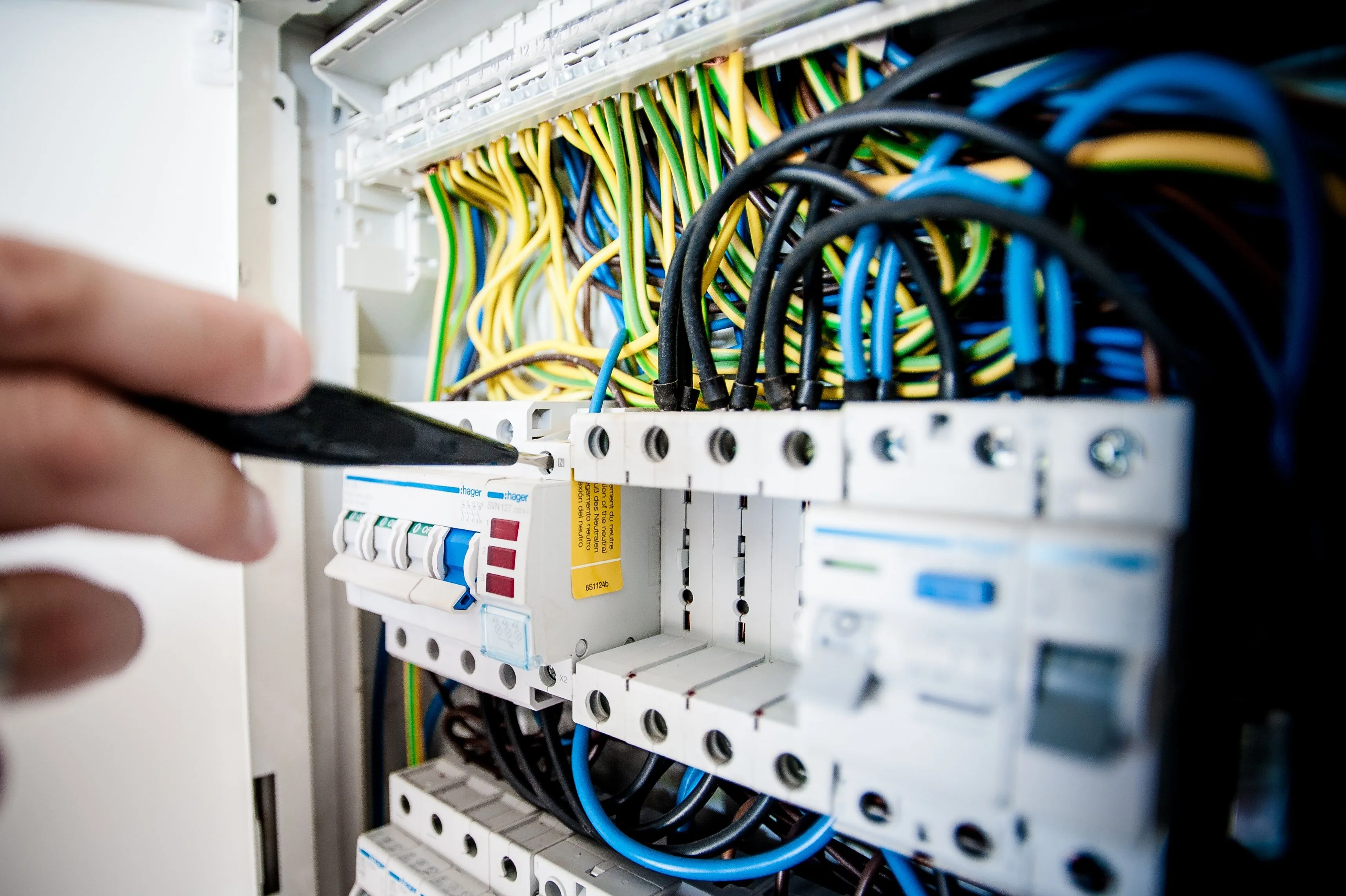
A breaker that runs warm, or trips with nothing running?
Breaker or panel: the three outcomes
The replacement call is decided by what the bus bar and the panel show, not by the age of the breaker alone, and the visit runs a three-way test before any part is ordered. A single trip after an obvious overload, with a reset that holds, means the breaker did its job — the work is finding what caused it. A breaker that lets go below its rated amperage, refuses to stay reset, or runs warm on an ordinary load has failed, and the listed replacement for that panel is the answer. A circuit that drops out every time the same workshop tool starts is short of capacity — the answer is a dedicated circuit, never a larger breaker.
The bus bar hides behind the breakers, and it is where a swap can go wrong: a clip that has loosened arcs against the bus and burns the finger it sits on, so a fresh breaker on that damaged finger trips again within days — which is why the bus stab is inspected before anything is fitted. An electrical panel repair White City job is the middle outcome: the bus or a connection is repaired, the panel stays. Our electrical panel repair guide separates the faults that can be repaired from the ones that mean replacement, and our panel upgrade cost-factors guide works through what moves a quote.
What the checks find decides among three endings. A breaker-only job: the breaker has failed, the bus is clean and the panel is sound, so the listed replacement goes in and the circuit is proven. A panel repair: a bus finger or a connection is damaged while the panel itself is sound, so the damage is repaired before any new breaker is fitted. A panel replacement: several breakers misbehaving at once, no open slots left, a major load being added, or a Federal Pacific Stab-Lok or Zinsco panel — one more breaker on failing equipment only moves the failure along. A Federal Pacific panel White City visit and a Zinsco panel White City visit both start the same way: the brand is confirmed first. Our Federal Pacific versus Zinsco guide lays out the case for treating those two brands as replace-first, our expand-or-upgrade guide covers the subpanel and upgrade routes, and our electrical panel upgrade page covers capacity.
The one-reset test — and what never to do
Reset once, properly: switch the breaker fully to off, then firmly back to on, with every device on that circuit unplugged. If it trips straight back, or will not stay in the on position, leave it off — the fault sits in the breaker, the bus or the wiring. A breaker that holds after one reset has done its job, and the visit looks for what caused the single trip instead of replacing a sound part.
Three things never help, whatever the hour: resetting again and again, taping or holding the toggle on, and fitting a larger breaker to stop the tripping. Repeated resets hide a short or an overheated wire. A held-on breaker cannot protect the circuit. A larger breaker protects a wire it was never sized for, so the wire overheats instead of the breaker tripping. All three turn a small fault into a damaged circuit, and all three are reasons the call should come before the next reset. A burning smell, scorch marks, crackling from the panel, or a breaker that is hot to the touch means the circuit stays off and the call is urgent — say so at the start of the call, and if you see sparks or smoke, call 911 first. Our emergency electrician page covers urgent calls, and our breaker troubleshooter tool walks through the same one-reset test before you call.
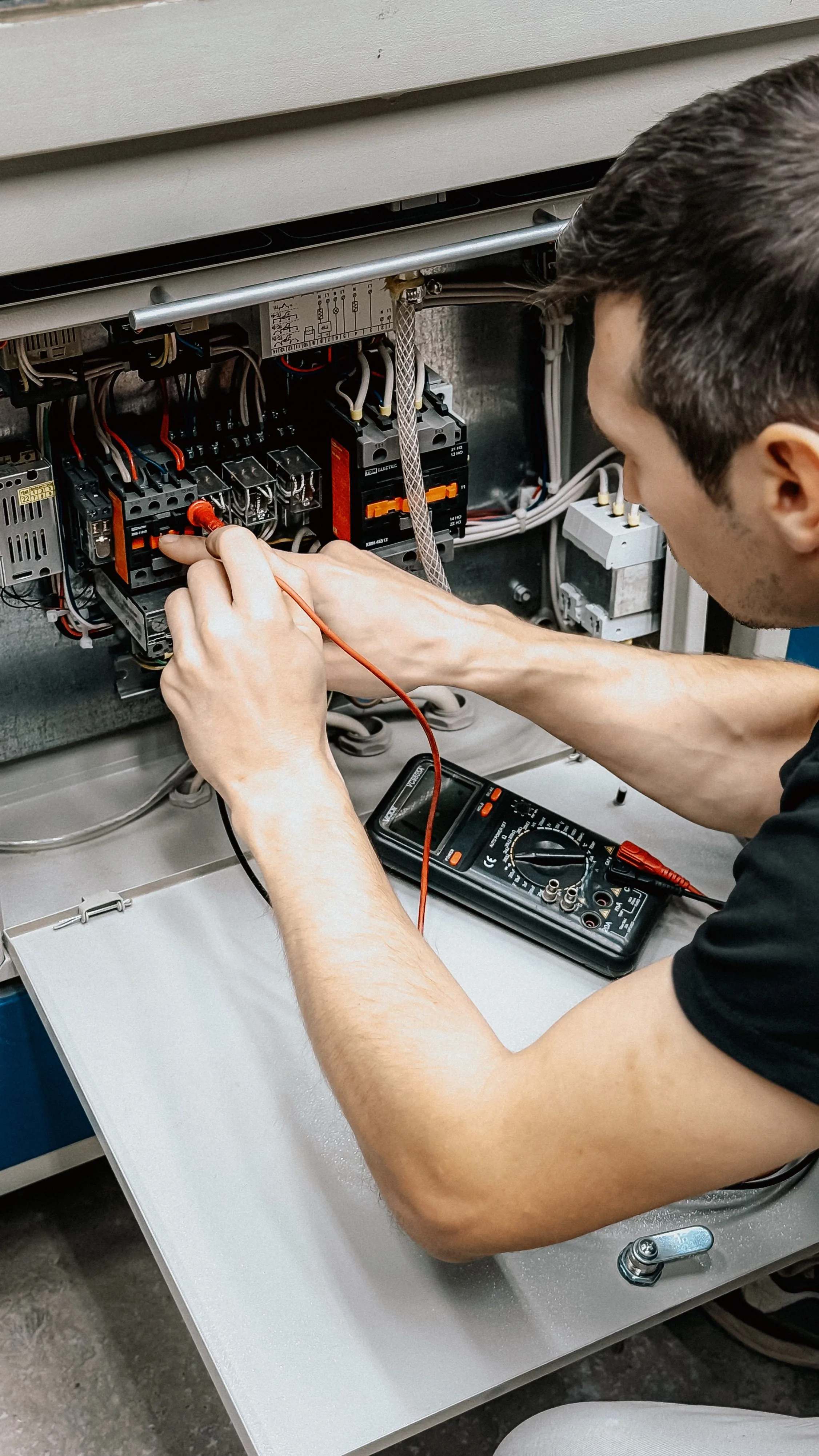
Several breakers acting up at once?
What the visit checks, step by step
Fitting the breaker takes minutes; the checks around the fitting take the visit. The power goes off first, then the panel is read — brand, bus, and the directory card on the door. The replacement is the breaker listed for that panel, never a lookalike from another brand that happens to fit. Before it goes in, the bus stab it will sit on is checked for pitting and burn marks, and the connections beside it are checked. Our general circuit breaker replacement Fort Pierce guide covers the same test for homes anywhere in the city.
The visit also checks the protection the circuit was fitted without: arc-fault protection for living areas, ground-fault protection for wet and damp ones. Our how-to-read-breaker-panel-labels guide shows where to find the main breaker number and the directory card, and our GFCI outlet installation page covers wet-area protection.
The last step is proof, not assumption. Once the new breaker is in, the circuit is switched back on and run under its usual load, so the visit ends knowing the breaker holds, and the panel directory is corrected before the visit ends. A subpanel installation White City job is the answer when the panel is sound and the service has headroom but the row is full — the subpanel adds spaces, never capacity. Our electrical inspection page and our how-often-inspection guide cover the wider check.
Garage, workshop and outbuilding circuits: the White City trip pattern
Workshop circuits are the White City trip pattern. A compressor starting against a tired breaker trips it; a welder that has drawn the same load for years trips a breaker whose contacts have loosened; a GFCI on a damp outbuilding run may be answering to water in a fitting. The visit tells those three apart by testing the breaker, the GFCI and the load separately, because a new breaker fitted onto a wet connection trips again the same evening — the breaker keeps tripping White City pattern, read at the load and the run together, never at the breaker alone.
The long run is the other half of the pattern. Power to a garage or outbuilding travels farther than an indoor circuit, and a loose connection anywhere along that run raises resistance and heat, loosening the connection further — the slow loop that ends in a hot breaker. A breaker that trips only when the workshop runs points at the load or the run, not at the house wiring. Our White City generator post treats tripping breakers as the symptom that starts the backup-power plan, and our White City EV post covers the capacity ground for a garage charger — this post links to both, and owns only the breaker diagnosis.
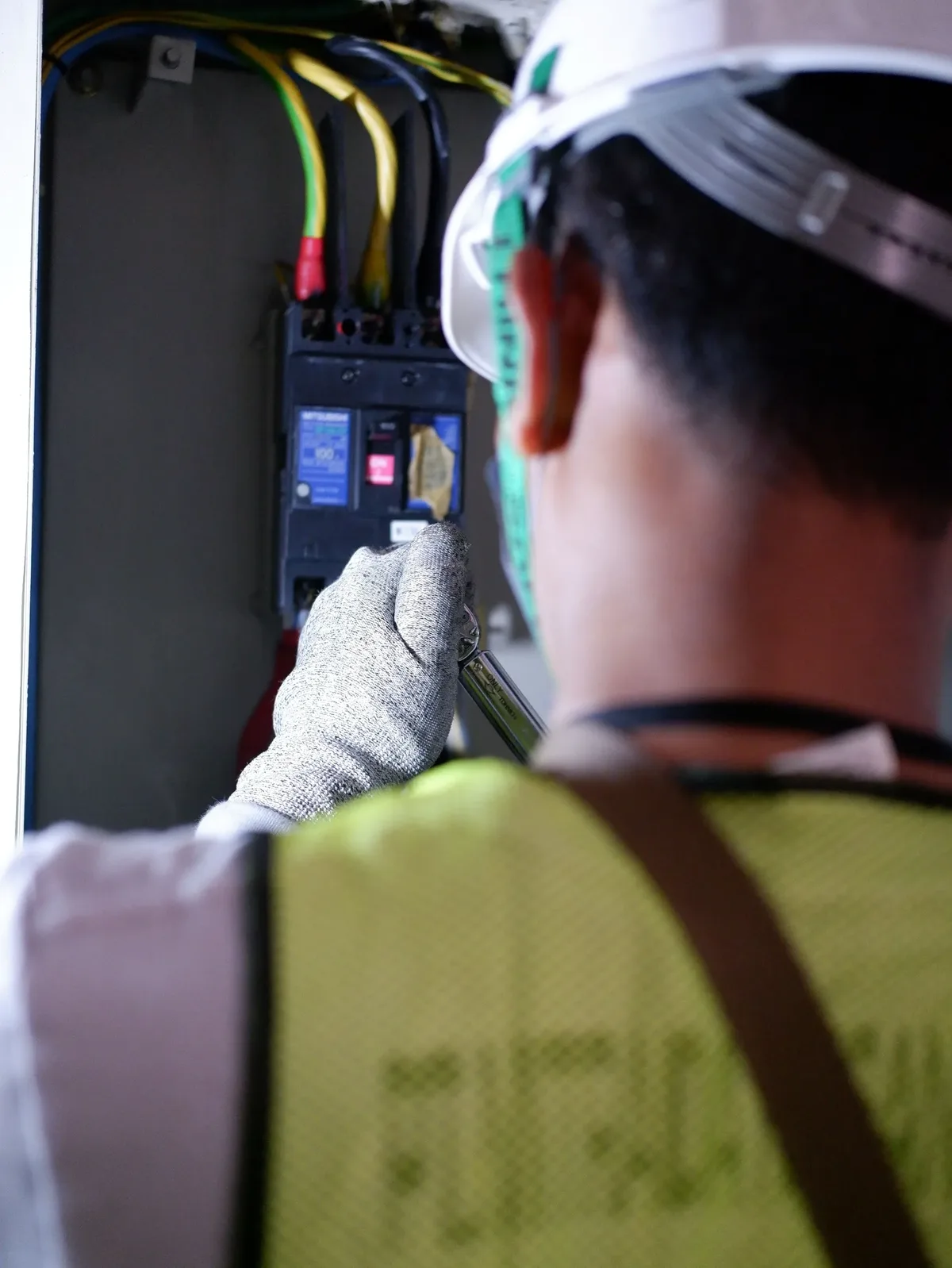
A workshop circuit that trips every time the tools start?
Cost factors and what to have ready when you call
What moves the quote is the breaker and what sits behind it: the part listed for your panel, the bus bar's condition, the panel brand, and whether the swap leads to panel work. Where the panel sits matters too — a panel at the end of a long outbuilding run takes longer to read than one on an open indoor wall. Our electrical repair page covers the wider repair work. No price appears here: the visit turns those factors into a price written for your address, after the testing, not before it.
Circuit breaker replacement White City Fort Pierce is settled at the panel and the bus, and the call is the fastest way to start. We answer around the clock, same-day service is available, and the team is licensed and insured, with 23 years of experience and Master Electrician Certification. Call (772) 218-3629. Sister posts cover the same diagnosis on Hutchinson Island, in South Beach, in Downtown, in Fort Pierce North, in Fort Pierce South, in Lakewood Park, in Lincoln Park and in St. Lucie Village — or start at the homepage.
White City breaker replacement: frequently asked questions
What are the signs a breaker needs replacing in a White City home?
Read the breaker as a set of signs. A toggle that will not click firmly on has worn out. A breaker that keeps tripping on its ordinary load, or will not stay on once reset, has failed. Heat, a burning smell, scorch marks, or a buzz from the panel all tell the same story. One sign means a replacement is worth planning; two mean it should not wait.
My breaker will not reset — what do I do?
Reset once only, with every device unplugged: switch the breaker fully to off, then back to on. A breaker that trips back, or refuses to stay in the on position, stays off — the fault sits in the breaker, the bus or the wiring. Never hold, tape or force it on. A burning smell or scorching around the breaker is an emergency: leave it off and call now.
Why would a breaker trip when nothing is running?
A breaker that trips with nothing running is usually answering a fault, not a load. A worn breaker trips below its rated amperage, a loose connection arcs and heats until the breaker lets go, and a damp joint on a long outbuilding run can leak enough current to trip it. The visit tests breaker, connections and circuit separately. Leave the circuit off until it is checked.
Can I replace a circuit breaker myself?
No. The swap is done with the power off, with the breaker listed for your panel, and only after the bus stab and connections have been checked. The testing runs with the power on, which is why a homeowner never opens the panel. The visit fits the breaker, proves the circuit under load, and corrects the directory before leaving — quick work, but not a homeowner job.
Does a Federal Pacific or Zinsco panel change the fix in White City?
Yes — it changes the fix before the visit starts. A Federal Pacific Stab-Lok or Zinsco panel, or a bus bar that is pitted and overheated, is not a one-breaker job: another breaker on failing equipment only moves the failure along. The honest call is a panel replacement, confirmed by checking the panel brand first.
What should I tell you when I call about a breaker in White City?
Your street and ZIP 34950, which building the job is in, and its distance from the house panel. The panel brand and size, which breaker trips and what runs on that circuit, and whether it feels loose, warm, or smells of burning. Tell us if the circuit feeds a workshop, a charger, or outdoor lighting. Those answers set the scope and visit time. Call (772) 218-3629, 24/7.
Ready to talk?