
EV Charger Installation Hutchinson Island Fort Pierce
EV charger installation Hutchinson Island Fort Pierce means a Level 2 charger that lives outdoors in salt air, on a barrier-island panel that already carries pool equipment and central air. For homes in ZIP 34949 near Jetty Park, here is the order of the work.
Call Now to Speak to a Specialist
Open 24 hours a day, 7 days a week.
A Level 2 charger on Hutchinson Island is a 240-volt dedicated circuit that lives outside year-round, so EV charger installation Hutchinson Island Fort Pierce starts with the outdoor panel, a NEC load calculation, and the salt-air hardware check — then picks the charger, the parking spot, and the charging schedule.
Step one: outdoor Level 2 or a garage install
On Hutchinson Island the first decision is where the charger sleeps. Many island homes have no garage: the car parks on a driveway, under a carport, or in a condo parking area open to the sky, so the charger lives outside in salt air for its whole working life. An outdoor EV charger Hutchinson Island Fort Pierce has to be built for that from the start. A garage install is easier when the car already parks in one — but a garage full of pool equipment may have no free wall near the spot.
What "outdoor" demands is a short list. The enclosure must be weatherproof and corrosion-resistant, rated for rain and for air that carries salt. The connection needs an in-use cover, so the plug or hardwired entry stays protected while charging and while idle. GFCI protection guards the outdoor run — EV charger GFCI protection Fort Pierce homes need as standard, because a charger circuit that lives outside meets water. The cable needs a place to hang off the ground, by the car's charge port, without crossing a walkway. See our EV charger installation service page for the Level 1/Level 2/DC fast charging and hardwired-versus-NEMA comparison.
Connector choice is smaller: a Tesla Wall Connector suits a household that drives a Tesla, while a universal charger with a J1772 connector — or a NACS connector, the plug Tesla uses and other makers are adopting — suits a household with more than one make. Our Tesla vs universal charger guide compares the two. Either way, enclosure, cover, and GFCI protection are chosen for salt air, not a garage wall.
Charger living outside in salt air, or a garage install?
Step two: the salt-air hardware check
Salt air never takes a day off on a barrier island, and a salt air EV charger Fort Pierce install has three pieces of hardware to check, not one. Salt air reaches the charger, the connection where power meets it, and the outdoor panel's breakers, lugs, and disconnect. A charger fitted onto a corroded panel inherits the damage, so the panel verdict comes first — as our Hutchinson Island area page frames it, visits start at the outdoor panel, where salt air hits first.
The visit looks for the signs salt air leaves behind: green or white crust on terminals, a stiff disconnect, screws that no longer turn cleanly, and heat on the panel door. A panel can look fine from the driveway while corrosion grows at the lugs inside, so the check means opening it and testing with a meter. Never open the panel yourself; the inspection is the electrician's job. A panel that is warm, buzzing, or smelling of burning, or scorch marks around the panel or charger, need urgent attention — do not touch suspect equipment, stay clear, and call us; call 911 first if you see sparks or smoke. Our salt-air corrosion guide and Hutchinson Island repair post cover that ground.
Island hardware is chosen for wet, coastal conditions: a weatherproof EV charger Fort Pierce homes can leave outside year-round, sealed boxes, sound connections, and a GFCI-protected outdoor run. A hardwired EV charger Hutchinson Island install has one fewer exposed connection than a plug-in unit, with no outlet to corrode. The visit walks the cable route before pricing the job, and settles surge protection at the panel on the same walk — see our surge protection guide and surge protection service.
Step three: the panel capacity check, decided by a NEC load calculation
A Level 2 charger Hutchinson Island Fort Pierce homes add at 40–48A is the single most common capacity trigger in the free-tool sources checked for this post, joining pool equipment and central air conditioning on the same panel. EV charger panel capacity Hutchinson Island is therefore a question about the whole panel, not the charger alone. The check is a NEC load calculation, adding up the loads as they run together — charger, air conditioner, pool pump, water heater — against what the service can carry. It is not a count of empty breaker slots: a panel with spare slots and no spare capacity is still full. See our panel capacity guide and 100-amp vs 200-amp comparison.
Condition is checked in the same visit, because on the island capacity and condition fail together — a corroded panel, a warm breaker, or scorch marks change the conversation before any charger work is discussed. Our Hutchinson Island panel-upgrade post covers the island panel's salt-air condition check and the double trigger. If a breaker keeps tripping, stop resetting it and call us. Our Hutchinson Island breaker post covers breaker diagnosis.
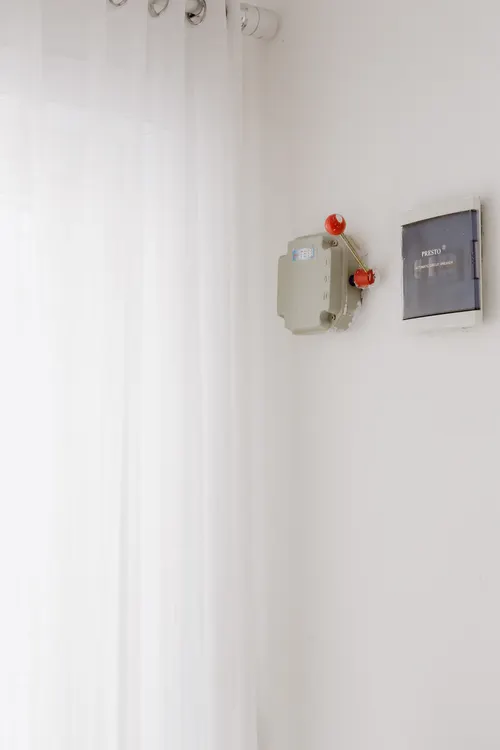
Panel already carrying the pool pump and the air conditioner?
Step four: load management or a panel upgrade, stated plainly
When the load calculation says the panel cannot carry everything at once, there are two honest answers. EV charger load management Hutchinson Island means a load-management device lets the charger share the service without an upgrade: it holds the charger off while another big load runs, then lets it resume. A smart charger set to run overnight does the same job by schedule. Our time estimator tool gives a rough sense of charge times.
A panel upgrade is the other answer, and it is a bigger job. An upgrade raises the amperage the service can carry, with a larger meter base, larger service entrance conductors, and often a new mast and weatherhead. It fits when the panel is corroded through, the service is too small even without a charger, or load management cannot cover the home's loads — and not when scheduling alone would have done the job. Our panel upgrade service page and expand vs upgrade guide cover the upgrade decision and the middle options. A subpanel is the third option when the panel is sound with capacity but no room — see our subpanel installation page; it adds spaces, not capacity.
Step five: the condo rule on the island
Many island homes are condos, and the parking space may be a limited common element or an exclusively designated parking area. A condo EV charger Hutchinson Island install is governed by Florida Statute 718.113(8): a condo board or declaration may not prohibit a charger in the owner's limited common element or exclusively designated parking area, subject to the statute's conditions. The building's documents, parking layout, and panel-to-space route set what the install looks like.
The honest split is this: condos have a statutory frame that protects the charger, while a homeowners association is a different matter — HOA documents decide, and there is no equivalent statutory right. Association rules about panels and shared areas can affect what work is possible, so mention your building type when you call. Our condo and HOA EV charger guide carries the full statutory framing and the HOA position. Renters need the owner's permission, not the building's — see our rental-property guide. The sister posts — South Beach and St. Lucie Village — share the vocabulary, but this post owns the outdoor, salt-air charger.
Step six: permit, inspection, and the utility check by exact address
Whether your job needs a permit depends on your exact address and the job itself. A charger that only adds a circuit inside a garage is a different job, permit-wise, from one that changes the panel or runs cable outdoors on a barrier island. The visit settles the permit question for your address before work starts, and confirms the inspection on the same visit. Our permit guide sets out what the question turns on.
The same address check settles which utility serves you — checked by exact address, not assumed from the island name. Give your exact address when you call so no visit stalls on paperwork. An electrical inspection settles a panel of unknown age or condition. Businesses face the same questions with shared parking and more than one charger — see our businesses guide.
Condo parking, a permit question, or a panel that needs checking first?
Step seven: what sets the cost — factors only, no figures
Exact price, timing, and availability are held for the call; this post gives cost factors only. The figure follows the job, not the charger: panel condition and capacity, cable-run length, charger type, and whether the unit sits outdoors behind weatherproofing. A short run on a panel with room is the simplest job; a long outdoor run on a full or corroded panel is the other end of it. Our cost factors guide lists each factor. No dollar figures appear here: third-party figures checked for this post disagree, and we do not quote invented figures. Call (772) 218-3629 with your street, building type, and panel details for a written price before any work starts.
Our Hutchinson Island generator post covers the same salt-air placement question for a generator. The other posts in this family — Downtown, Fort Pierce North, Fort Pierce South, Lakewood Park, Lincoln Park, Maravilla, White City — each own the same charger decision in their own neighbourhood.
What the search interest shows — and what it does not
Google Trends, checked 21 November 2026, puts the West Palm Beach–Ft. Pierce metro first of the Florida metros for EV charger installation in both periods — past 90 days and past 12 months — at a relative interest value of 100 in each. It is the only service family to lead both Florida views, for the third straight day, and the only family in the US top 10, at number 7 of 117 metros over the past 90 days (value 18) and number 7 of 150 over the past 12 months (value 26). The rising query behind it is "ev charger installation near me", up 100% in Florida over the past 12 months and up 90% in the US over the same period. Those are Trends relative-interest figures, not search volumes — regional context, not Fort Pierce evidence.
The honest limits matter more: Fort Pierce itself does not appear in the city-level Trends lists for EV charger installation in either period, so no Fort Pierce city-level figure exists to quote. And the shared Florida burst that began 3–6 November has ended: the 21 November Florida 90-day values are 0, a partial day, across the families checked. No rising-demand claim is built here. The advice stands on the panel, the load list, and the salt air — not on a trend line. Our licensed electrician guide covers how to check the electrician before the work starts.
What to have ready when you call
EV charger installation Hutchinson Island Fort Pierce is settled by the panel first and the charger second. Answer the capacity-and-condition question, choose the charger for the way the car is driven, and site it where the cable run is shortest. Bring your street address in ZIP 34949, or ZIP 34950, whether the home is a condo or a house, the panel brand and size, Tesla Wall Connector or universal charger, and where the car parks. Add what else shares the panel. With those answers the call ends with a clear scope and a written price. Call (772) 218-3629 any time; we are open 24/7. See our Hutchinson Island area page and the homepage.
EV charger on Hutchinson Island: frequently asked questions
Can a Level 2 charger live outdoors on Hutchinson Island year-round?
Yes, when it is built for the spot: a weatherproof, corrosion-resistant enclosure, an in-use cover on the connection, GFCI protection on the outdoor run, and a cable stored off the ground. The visit checks the outdoor panel and cable route for corrosion first, because a charger on a corroded panel inherits the damage.
Will my island panel carry a 40–48A Level 2 charger with the pool pump and air conditioner?
A NEC load calculation decides, adding up charger, air conditioner, pool pump, and water heater as they run together against what the service can carry. Room means the charger fits; a tight panel means load management, overnight scheduling, or a subpanel, with an upgrade only when none fits.
What is the difference between load management and a panel upgrade on the island?
A load-management device lets the charger share the service without an upgrade: while another big load runs it holds the charger off, then lets it resume once the panel has room. A panel upgrade raises the amperage the service can carry, which means a larger meter base, larger service entrance conductors, and often a new mast.
Can my condo board stop me installing a charger in my parking space?
Florida Statute 718.113(8) says a condo board or declaration may not prohibit a charger in the owner's limited common element or exclusively designated parking area, subject to the statute's conditions. The building's own documents, the parking layout, and the route from the panel to the space still shape the install. A homeowners association is different: HOA documents decide, with no equivalent statutory right.
Does an island charger install need a permit?
It depends on your exact address and on the job. A charger that only adds a circuit inside a garage is a different job, permit-wise, from one that changes the panel or runs cable outdoors. The visit settles the permit question for your address before work starts, and confirms the inspection on the same visit.
What should I tell you when I call about a charger on Hutchinson Island?
Start with your street address in ZIP 34949, or ZIP 34950, and whether the home is a condo or a house. Then add the panel brand and size, Tesla Wall Connector or universal charger, where the car parks, and what pool equipment shares the panel. The call ends with a clear scope and a written price. Call (772) 218-3629, 24/7.
Ready to talk?