
Generator Installation in South Beach, Fort Pierce
Generator installation South Beach Fort Pierce starts with the pool-home load question, not the catalogue: on the south barrier island in ZIP 34950, near Jetty Park and the Fort Pierce Inlet State Park, the pool pump, pool heater and spa decide the generator size and the management plan.
Call Now to Speak to a Specialist
Open 24 hours a day, 7 days a week.
Generator installation South Beach Fort Pierce is decided by a load list before a size: list what must stay on in an outage, face the pool pump, pool heater and spa as separate 240V outdoor loads, check whether the beach panel can carry them, and only then choose the generator and the transfer switch.
Step one: the pool-home load question
A South Beach home runs its biggest loads outside the walls. The pool pump turns on a timer through the day, the pool heater holds the water warm through the cooler months, and the spa sits ready beside them — all three drawing on 240V circuits that run in the open, in salt air, all year. Before any generator size is discussed, the household makes the list: what must stay on when the grid goes down. Lights, the refrigerator, the air handler and the water heater are the usual indoor answers.
The outdoor loads are the part that changes the answer, because they are the loads most guides leave out. The pump needs its running watts and its starting watts counted, since a motor draws several times its running watts as it starts. The heater is the heavyweight of the three, and it is the load most likely to be locked out of generator power entirely. That is why the pool-home question comes first — a generator planned around the indoor loads alone will be undersized for the house as it actually runs. The South Beach area page describes this beach community on the south barrier island, reached via US 1 near Jetty Park and the Indian River Lagoon, and our pool and spa electrical service covers the circuits themselves.
Step two: the beach-panel readiness check
With the load list in hand, the next question is the panel, and a South Beach panel is asked two questions at once. Can it carry the loads — the air conditioner, the pool pump, the water heater, and any newer load such as an EV charger? And is it still in good condition, after years of salt air working on its connections, breakers and bus? A panel can fail either question on its own. Capacity without condition is a panel that trips or overheats; condition without capacity is a panel that simply has no room left.
The generator inherits whichever failure the panel has. A transfer switch needs a home on the panel, and a panel with no spare breaker space — or one already crowded with doubled-up breakers — may need rework or replacement before it can take one. Federal Pacific, Zinsco or a fuse box is the replace-first stop condition: no generator work starts on one. And a house on a 100-amp service that has since added central air, a pool pump, an electric range or a bigger kitchen may already be at its limit — a generator does not add capacity to the service, it only carries what the service can already feed. The three panel verdicts themselves — repair, subpanel, replace — are set out in our Lincoln Park generator post; this post asks the same check in its beach form, capacity-with-pool-loads plus salt-air condition. Our Federal Pacific versus Zinsco guide explains why those brands are replace-first, and our Federal Pacific replacement, Zinsco replacement, subpanel installation and electrical panel upgrade pages cover the work that follows. The South Beach EV charger post covers the added-load angle for a home charging a car here.
Pool pump, heater and spa all on one panel?
Step three: lockout versus shed for the pool and spa
Once the panel passes, the pool and spa get sorted into three buckets, and the sorting is the load-management plan. The pool heater is the lockout candidate: set to never run on generator power at all. That is the simplest load management there is — one decision, made once, that removes the heaviest outdoor load from the generator entirely. A pool that goes unheated through an outage is a pool that is still there when the power returns.
The pool pump is the staged or shed load. It can be dropped when demand threatens supply and restored in priority order once the peak passes, or kept off for the whole outage if the household chooses — the water keeps for a day or two without circulation. The spa is a managed load, restored late or not at all, depending on what else is running. The plan — which circuits shed, which stay at the top, which are excluded entirely — belongs in writing before the quote is agreed, so the household knows what stays on and what does not. Our Maravilla generator post works through load ranking and the shed order in full, and our automatic transfer switch installation service covers the switch the plan runs through. Generator load management in South Beach is a written plan first and a set of relays second.
Step four: the transfer decision, driven by the pool circuits
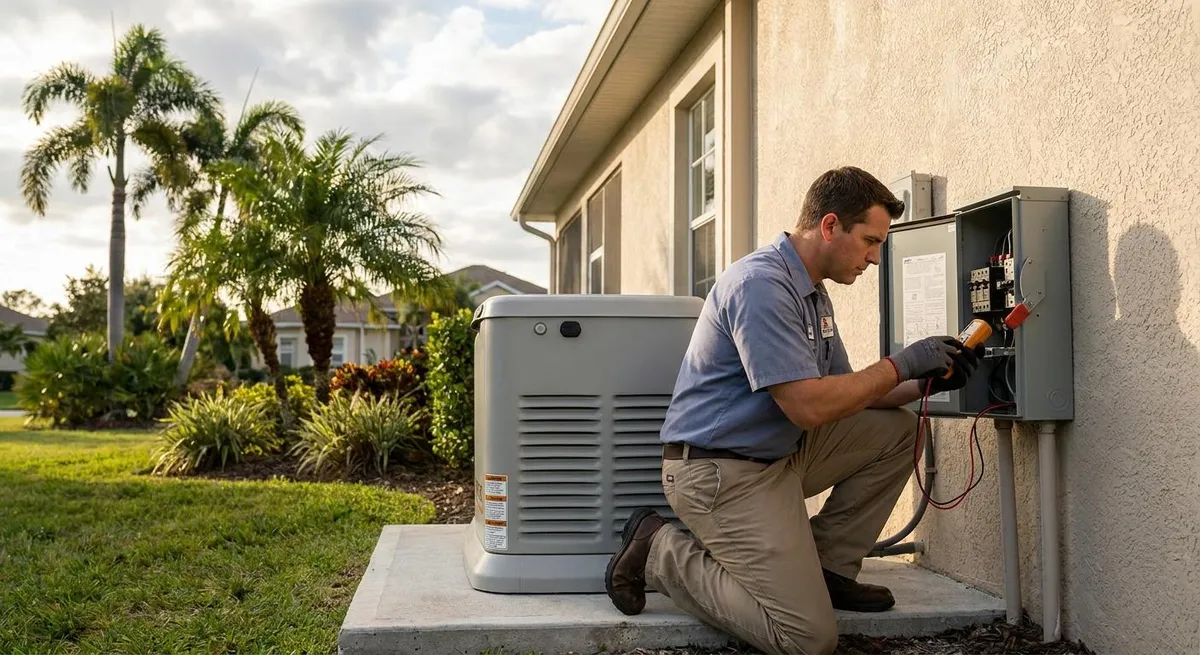
The transfer decision is where the pool circuits stop being a detail and start being the swing factor. Whole-home transfer moves everything the panel feeds onto the generator, sized for the full home load, with load management holding the pool loads back. Selected-circuit transfer moves only the chosen circuits onto a smaller panel, and the pool loads sit outside it. A pool home that puts its pool circuits on backup needs a bigger generator or a stricter shed plan than one that leaves them off — and that is the choice the transfer decision really is.
There is no wrong answer, only a mismatch to avoid: a whole-home switch with a generator too small for the pool loads it feeds, or a selected-circuit switch that leaves a circuit the household assumed was covered. The switch itself is what keeps generator power from backfeeding the grid — never a suicide cord or a double-male cord into an outlet — and the panel is the electrician's job, never opened by the homeowner. Our transfer switch versus interlock kit guide explains the switch ground, our Fort Pierce South generator post covers the whole-home, essential and load-managed shapes, and our Waterstone generator post covers the switch decision. An automatic transfer switch in South Beach is chosen for the pool circuits first and everything else second.
Not sure which transfer switch fits a pool home?
Step five: sizing by what stays on, not by square footage
Generator installation South Beach Fort Pierce is sized from the load list, not from the floor plan. Add the running watts of every circuit the plan keeps on, then add the starting watts of the largest motor that will start while the others are running — and the pool pump's starting watts are part of that total, not an afterthought. The generator must exceed the total starting load of the critical circuits running at once, or it stalls the first time the pump and the air conditioner start together.
Square footage never enters the sum, because it says nothing about what runs inside the house, and the panel rating never enters it either, because it says what the house can carry, not what the generator must produce. Two same-size homes on the same barrier island can need very different generators, once the pool loads are counted honestly. Leave headroom for the loads that come later, so the unit is not pinned at capacity on the day it is installed. Our sizing guide works through the method, our home generator installation guide covers the whole-house scope, and our generator installation service page covers the fitting. A standby generator installation in South Beach is sized this same way — from the list, never from the floor plan.
Step six: siting and storm-season readiness, by link
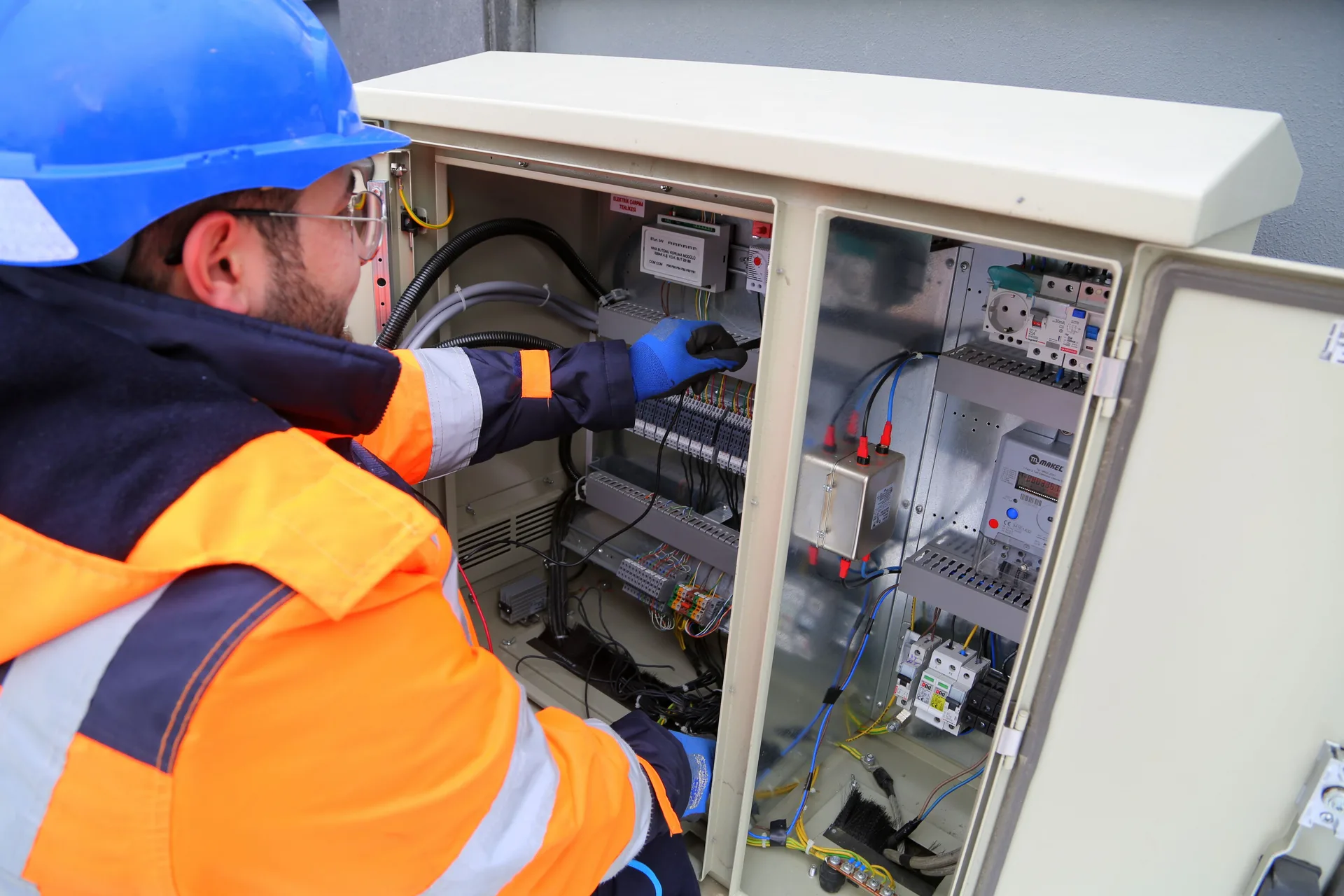
Siting is the Hutchinson Island post's ground, not this post's: salt air, water and the pad are its subject, and the same questions apply on this side of the inlet, so read that guide before choosing a spot. Placement is settled on the visit, for the address, with clearances and exhaust direction confirmed there. Our Hutchinson Island generator post owns the siting detail, and our salt-air corrosion guide explains what the air does to outdoor equipment over time.
Storm-season readiness is the area page's and the surge posts' ground: surge protection at the panel works best when the panel, the grounding and the outdoor disconnects are sound — the same three things the generator install checks. Treat the generator visit as the moment to confirm all three at once. The South Beach area page carries the surge section, our whole-house surge protection guide and surge protection versus power strips guide cover the surge ground, our whole-house surge protection service covers the fitting, and our pool bonding and GFCI guide covers the pool-side protection that sits beside it.
Wondering what stays on in your home during an outage?
Fuel, cost factors — and what to have ready when you call
Fuel is a question for the address: natural gas where the line reaches the home, propane stored on site where it does not, with runtime limited by tank size. The permit and inspection step is the same kind of question, settled on the visit for the address. Cost is a cost-factors question, not a price question, and this post gives no dollar figures: the job type, the panel and wiring condition, the access, the fuel line or tank, the pad, and any permit step all shape the scope. Our propane and gas line guide covers the line and tank questions, our Generac cost-factors guide lists the factors without inventing a price, and our panel upgrade cost-factors guide does the same for the panel step. A Generac generator installation in South Beach is priced on the visit, from the same factors.
A call goes faster when five things are ready: the street in South Beach, ZIP 34950, reached via US 1; the panel's brand and size, and its spare spaces; the load list, with the pool pump, pool heater and spa already sorted into lockout, shed or stay-on; whether the home has natural gas or needs a propane tank; and when the work should happen. Our best time to install guide covers timing, our guide to choosing a generator installer covers what a quote should show, our generator maintenance guide covers the exercise and battery routine, our inspection cadence guide covers how often the panel should be checked, and our licensed electrician guide covers hiring and verification.
Generator installation South Beach Fort Pierce comes down to six decisions in order — the pool-home load question, the beach-panel check, the lockout-and-shed plan, the transfer choice, the size from what stays on, and the siting and storm readiness that ride along with it. Each one is made on the call, in plain language, with the exact price held for the visit. Call (772) 218-3629 any time; we are open 24/7. We are licensed and insured, with 23 years of experience and Master Electrician Certification. The same family of posts covers Hutchinson Island, Lincoln Park, Maravilla, Fort Pierce South, Waterstone, Lakewood Park and White City. Or start at the Fort Pierce Electric Pros homepage, and for the repair side of a South Beach home, see our South Beach electrical repair post.
Generator Installation in South Beach, Fort Pierce: frequently asked questions
Why does a South Beach generator plan start with the pool?
The pool pump, pool heater and spa are 240V outdoor loads that run in salt air all year, and they change the size. The pump needs its running watts and its starting watts counted, and the heater is usually locked out of generator power entirely. A plan built on indoor loads alone undersizes the generator for a pool home.
What is the beach-panel readiness check?
Two questions asked together: can the panel carry the loads — air conditioner, pool pump, water heater, and any newer load such as an EV charger — and is it still in good condition after years of salt air on its connections, breakers and bus? A panel can fail either question on its own, and the generator inherits whichever failure it has.
Which pool loads get locked out, and which get shed?
The pool heater is the lockout candidate — set to never run on generator power, the simplest load management there is. The pool pump is staged or shed — dropped when demand nears supply, restored in priority order, or kept off for the whole outage. The spa is a managed load, restored late or not at all. The plan is written down before the quote is agreed.
Whole-home or selected-circuit transfer for a pool home?
Whole-home transfer moves everything the panel feeds onto the generator, with load management holding the pool loads back. Selected-circuit transfer moves only the chosen circuits onto a smaller panel, leaving the pool loads outside it. The pool circuits tip the decision: backing them up needs a bigger generator or a stricter shed plan than leaving them off.
How is a South Beach generator sized?
From what stays on, not from square footage. Add the running watts of every circuit the plan keeps on, then add the starting watts of the largest motor starting while the others run — the pool pump's starting watts included. The generator must exceed that total, with headroom left for future loads.
What sets the cost, and is a price given here?
No dollar figure is given here — the exact price is held for the call. What shapes the scope is the job type, the panel and wiring condition, the access, the fuel line or tank, the pad, and any permit step for the address. The Generac cost-factors guide lists the factors without inventing a price.
Ready to talk?