
EV Charger Installation in Waterstone, Fort Pierce
EV charger installation Waterstone Fort Pierce for a newer subdivision home in ZIP 34951 in southwest Fort Pierce, off Midway Road and Jenkins Road: the charger on a panel that already carries central air, and the growing-household loads still to come.
Call Now to Speak to a Specialist
Open 24 hours a day, 7 days a week.
EV charger installation Waterstone Fort Pierce is a panel-capacity decision before it is a charger decision: a Level 2 charger on a newer-home panel that already carries central air conditioning and a growing household's loads, in a subdivision where homes gain loads over time rather than all at once. The visit, not the charger box, decides.
Step one: garage install or a driveway install
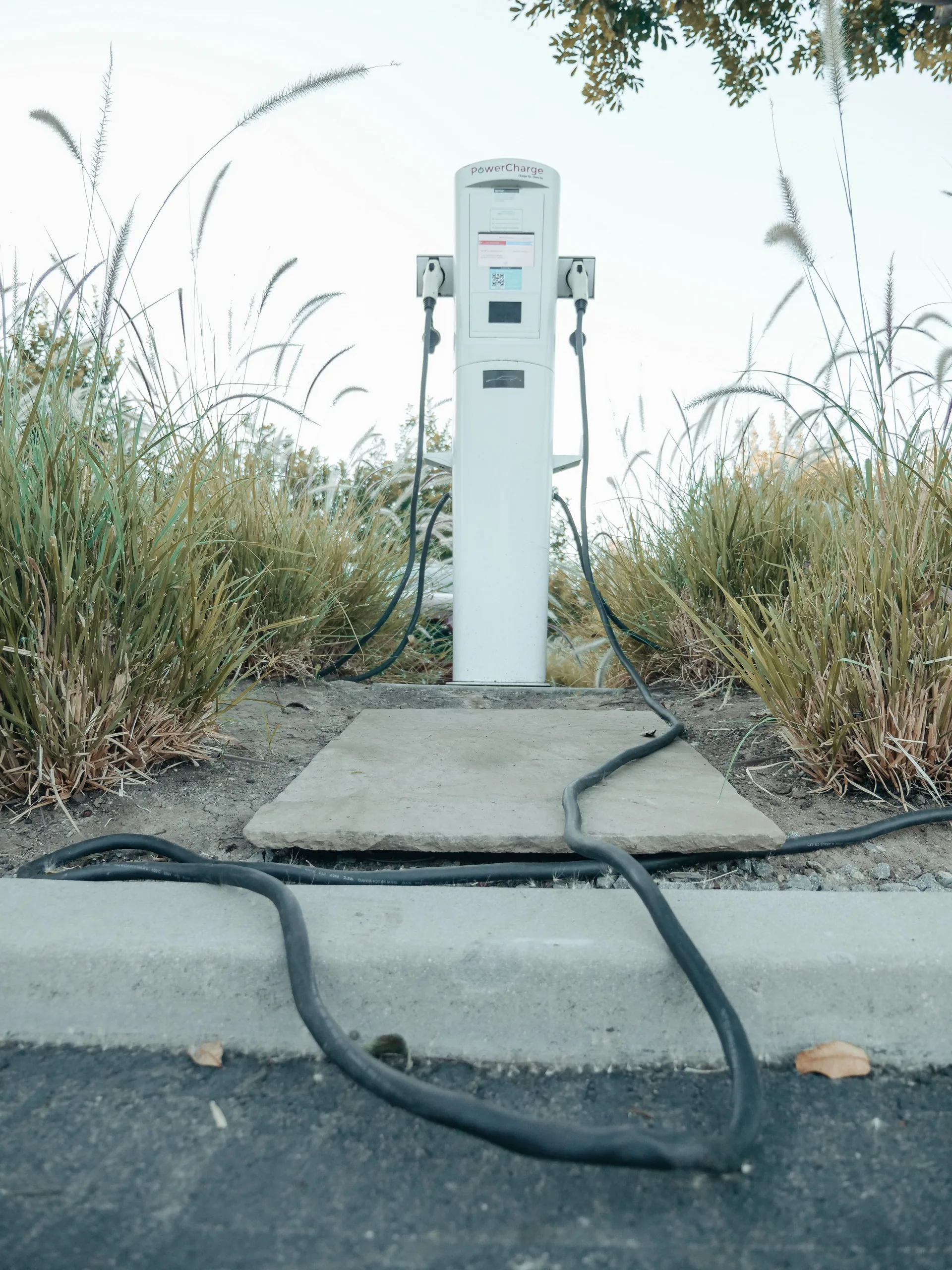
The Waterstone decision starts with where the charger lives. A garage install puts the charger under cover, a short cable run from the panel, with the car parked where it already sleeps. A driveway install puts the charger outside year-round, and what “outdoor” actually demands is the first thing to get right: an outdoor-rated charger, NEMA 3R as the common minimum and NEMA 4 or 4X for full weatherproofing and corrosion resistance, a weatherproof enclosure with an in-use cover that stays sealed while the car is plugged in, watertight fittings where the conduit enters the box, and GFCI protection on the circuit. The charger lives outside in heat, humidity and sideways rain — not under cover, not for a season.
Either way the cable has to reach the car without crossing a walkway, and the charger has to sit where the car actually parks, not where the panel happens to be. That placement question is settled on the visit, with the car, the driveway and the panel in the same conversation. Our Waterstone area page frames the charger circuit as one of the most-called-for Waterstone items; this post owns the charger decision it leads to.
One thing the Waterstone post does not do is import a salt-air spine. Waterstone is an inland subdivision, and the salt-air ground belongs to the Hutchinson Island and South Beach posts. The Waterstone weather problem is heat, humidity and rain on an outdoor charger — a different problem, with different hardware. Our Hutchinson Island EV charger post covers the island version; this one is the newer-subdivision version.
Step two: the dedicated circuit
The charger gets a circuit that serves only the charger — a dedicated circuit, never a shared dryer outlet. That rule is not negotiable, and it is the first thing a charger fitted to a borrowed circuit gets wrong: a dryer outlet is sized for a dryer, not for a charger that draws for hours at a time, and sharing it is how a circuit overheats.
Hardwired versus NEMA 14-50 is a real choice, and hardwired is often the better choice outdoors: no plug to wear out, no receptacle exposed to weather, and often faster charging. A NEMA 14-50 receptacle keeps the charger portable, which suits a household that may move the charger — but outdoors it needs the same weatherproofing, the same in-use cover and the same GFCI protection, and the receptacle itself becomes one more thing weather can reach. Our EV charger installation service page covers the dedicated circuit, the hardwired-versus-NEMA choice and the outdoor-charger ground; this post applies them to a Waterstone driveway or garage.
The circuit is sized for the charger you own, and the wiring and breaker follow the charger's rating — not the other way round. A 40–48A Level 2 charger is the single most common capacity trigger in the free-tool sources checked today, and it is the load that decides whether the panel copes or not. That is step three.
Charger planned for a Waterstone garage or driveway — and a panel that already runs the air conditioning?
Step three: the panel capacity check, decided by a NEC load calculation
Capacity is decided by a NEC load calculation, not by counting breaker slots. The calculation adds up what runs together — central air, a 40–48A Level 2 charger, the water heater, the dryer, the kitchen circuits — and sets the total against the main breaker rating. A newer Waterstone panel is usually in good condition; the question is whether it has room for the next load, and the answer comes from the calculation, not a guess.
The Waterstone version of this check is the growing household: the charger joins central air and the household's other loads, and the home will add more — a generator plan next year, a workshop circuit after that. The charger alone often tips the calculation over on a panel that coped fine until now. Our EV charger panel-capacity guide and 100-amp versus 200-amp guide cover the comparison ground; this post applies them to the Waterstone stack.
Two cautions belong here. A panel with two spare breakers can still fail the calculation, because spare spaces are room, not capacity. And the calculation counts what runs together, not what exists in the house — a charger, an air conditioner and a dryer running at once are a different total from the same three loads at different hours.
Step four: load management, a subpanel, or an upgrade
When the calculation fails, the Waterstone answer is one of three, stated plainly. A load-management device can let the charger share the service without an upgrade, throttling the charger while the air conditioner runs and giving it full power when the house is quiet. A subpanel adds breaker spaces fed from the main panel — it answers a full breaker row and never answers a failed calculation, because a subpanel adds spaces, not capacity. A panel upgrade raises the amperage, and that means a larger meter base and service entrance conductors, plus the mast and grounding brought up with them.
Which of the three fits is the visit's verdict, not a guess from the charger box. Our expand-or-upgrade guide and subpanel installation page cover the room-maker and the choice in full, and our electrical panel upgrade service page covers the upgrade itself. The EV service page's own “Panel upgrade or load management?” decision path is the same three-way choice in the charger's terms — linked here, not re-derived.
The wrong answer is the one Waterstone homeowners most often reach for first: a bigger breaker on the same service, or a charger fitted to a panel the calculation already fails. Neither adds capacity, and both leave the same trip waiting for the hottest evening of the year.
A charger, a growing household, and a panel that has to plan for both?
Step five: the subdivision pattern — plan the panel for what comes next
Waterstone homes gain loads over time rather than all at once: a charger one year, a generator plan the next. Planning the panel with that pattern in mind keeps each job smaller and avoids reopening finished walls. When you call, tell us what you run today and what you plan to add, and we will plan around both — that is the area page's own framing, and it is the reason EV charger installation Waterstone Fort Pierce is a planning decision, not a fitting decision.
The generator plan is the next load most Waterstone homes ask about, and the charger post does not re-cover it: our Waterstone generator post owns the generator-readiness ground, and the Waterstone repair post owns the “repair starts with panel capacity” framing — both linked here, not repeated. Whole-home surge protection belongs in the same plan, fitted at the panel while the service is already being worked on; our surge protection guide and surge protection service page cover that ground.
The same planning rule covers the charger itself. A Tesla Wall Connector follows the same rule as any other charger: it needs its own circuit and a panel with room for it. Our Tesla versus universal guide and Tesla Wall Connector page cover the charger choice; the Waterstone decision is the panel behind whichever charger you own.
Step six: permit, inspection, and the utility check by exact address
Regulated electrical work in St. Lucie County generally needs a permit before it starts, and the office that handles yours follows your exact address. The charger circuit is inspected like any other circuit, and the permit is part of the job, not an afterthought. Our EV charger permit guide covers the permit ground in full.
The utility check follows the same rule: it is checked by exact address, not assumed. The same address check settles whether the service change needs a utility disconnect, and which utility serves the home. No utility is named here, because the answer follows the address. Our electrical inspection page covers the assessment that settles both questions on the visit.
Step seven: what sets the cost — factors only, no figures
No dollar figure appears here: the exact price is held for the call, after the visit. The charger itself shapes the scope first — hardwired or NEMA 14-50, garage or driveway, outdoor-rated hardware or under-cover — then the cable route from the panel to the charger, then the panel: a circuit job on a panel with headroom differs from a job that also needs load management or an upgrade.
The stacked loads shape the scope too: a home that adds a generator transfer switch or surge protection at the panel in the same visit is a bigger job than a charger alone. Homeowners usually ask about EV charger installation cost factors Waterstone Fort Pierce at this point; the honest answer starts from those factors, not from a printed figure. Our EV charger cost-factors guide works through each factor in turn, with no invented price attached. Call (772) 218-3629 with the charger, the parking spot and the panel size, and the call will end with the scope set and a visit booked.
Wondering what shapes the scope of a Waterstone charger job?
What the search interest shows — and what it does not
Two figures from a Google Trends check are worth stating, with their labels attached. The West Palm Beach–Ft. Pierce metro leads both Florida EV charger installation views at 100 — the only family to lead both periods, for the fourth straight day — and it is the only family in the US top 10 in both periods, sixth of ten at 18 over 90 days and seventh of ten at 26 over 12 months. “EV charger installation near me” holds at plus 100% in Florida over the past 12 months. All three are Trends relative-interest figures, not search volumes, and no surging-demand claim is built on them.
No Fort Pierce city-level EV figure exists, so none is quoted here. The one Fort Pierce city appearance today is in the “electrician” Florida 90-day view, rank 39 of 40 at value 30 — a bottom-of-list appearance in a different family, not an EV signal. The ten live sister EV posts — Downtown, Fort Pierce North, Fort Pierce South, Hutchinson Island, Lakewood Park, Lincoln Park, Maravilla, South Beach, St. Lucie Village and White City — cover the same charger decision in other neighbourhoods; the Waterstone version is the newer-subdivision growing-household panel decision. Our Lincoln Park EV charger post and Lakewood Park EV charger post are the nearest sisters — the Waterstone post shares their charger vocabulary, not their spine.
What to have ready when you call
A call goes faster with four things ready: your street in ZIP 34951, and whether the charger goes in the garage or on the driveway; the charger you own, or the one you plan to buy, and whether it is hardwired or NEMA 14-50; the panel size, and whether the breaker row is full; and what else the household plans to add — a generator plan, a workshop circuit, a second charger. Our licensed electrician guide covers the hiring checks, and our Waterstone breaker post covers the breaker-diagnosis ground — linked here, not repeated.
Safety framing, stated once: the panel and the charger circuit are the electrician's job — never open the panel yourself. A burning smell or scorch marks around the panel or charger need urgent attention: do not touch suspect equipment. Our condo and HOA EV guide and rental-property EV guide cover the condo and rental ground — linked here only; Waterstone is subdivisions, not condos, so no condo statute is imported. Our business EV charging guide covers the commercial ground the same way.
That is the Waterstone version of the charger decision: a newer subdivision, a panel that already carries central air, and a household that will keep adding loads. EV charger installation Waterstone Fort Pierce is not a template job — the parking spot, the panel and the load list are different on every Waterstone street, and the visit is what turns them into a plan. Call (772) 218-3629 any time; we are open 24/7, licensed and insured, with 23 years of experience and Master Electrician Certification. The Fort Pierce Electric Pros homepage covers the rest.
EV Charger Installation in Waterstone, Fort Pierce: frequently asked questions
Does a Waterstone home need a panel upgrade for a Level 2 EV charger?
Not always — the load calculation decides. A 40–48A Level 2 charger is the single most common capacity trigger, and on a Waterstone panel it joins central air and the household's other loads. If the calculation shows headroom, the job stays a circuit job. If it fails, the answer is load management, a subpanel for room, or a panel upgrade for capacity. The visit runs the calculation before anything is fitted.
Can the charger go on the driveway, or does it need the garage?
It can go on the driveway, but the hardware has to be outdoor-rated: NEMA 3R as the common minimum, NEMA 4 or 4X for full weatherproofing, a weatherproof enclosure with an in-use cover that stays sealed while plugged in, watertight fittings where the conduit enters the box, and GFCI protection. A garage install keeps the charger under cover and shortens the cable run; a driveway install needs the full outdoor treatment.
Can the charger share the dryer outlet?
No. The charger gets a circuit that serves only the charger — a dedicated circuit, never a shared dryer outlet. A dryer outlet is sized for a dryer, not for a charger that draws for hours at a time. Hardwired is often the better choice outdoors, with no plug to wear out; a NEMA 14-50 receptacle keeps the charger portable but needs the same weatherproofing and GFCI protection.
Will a subpanel fix a Waterstone panel that cannot carry a charger?
Only when the problem is room, not capacity. A subpanel adds breaker spaces fed from the main panel, so it answers a full breaker row on a service that still has headroom. It adds no capacity of its own, so a panel that fails the load calculation will keep failing through a subpanel. Load management or a panel upgrade is the answer when capacity is the problem.
Does a Waterstone EV charger need a permit?
Regulated electrical work in St. Lucie County generally needs a permit before it starts, and the office that handles yours follows your exact address. The charger circuit is inspected like any other circuit. The utility check follows the same rule — checked by exact address, not assumed — and no utility is named here, because the answer follows the address.
What should I have ready when I call about a charger in Waterstone?
Start with your street in ZIP 34951 and whether the charger goes in the garage or on the driveway. Add the charger you own or plan to buy, whether it is hardwired or NEMA 14-50, and the panel size and whether the breaker row is full. Add what else the household plans to add — a generator plan, a workshop circuit, a second charger. Those answers set the scope and the visit time. Call (772) 218-3629, 24/7.
Ready to talk?